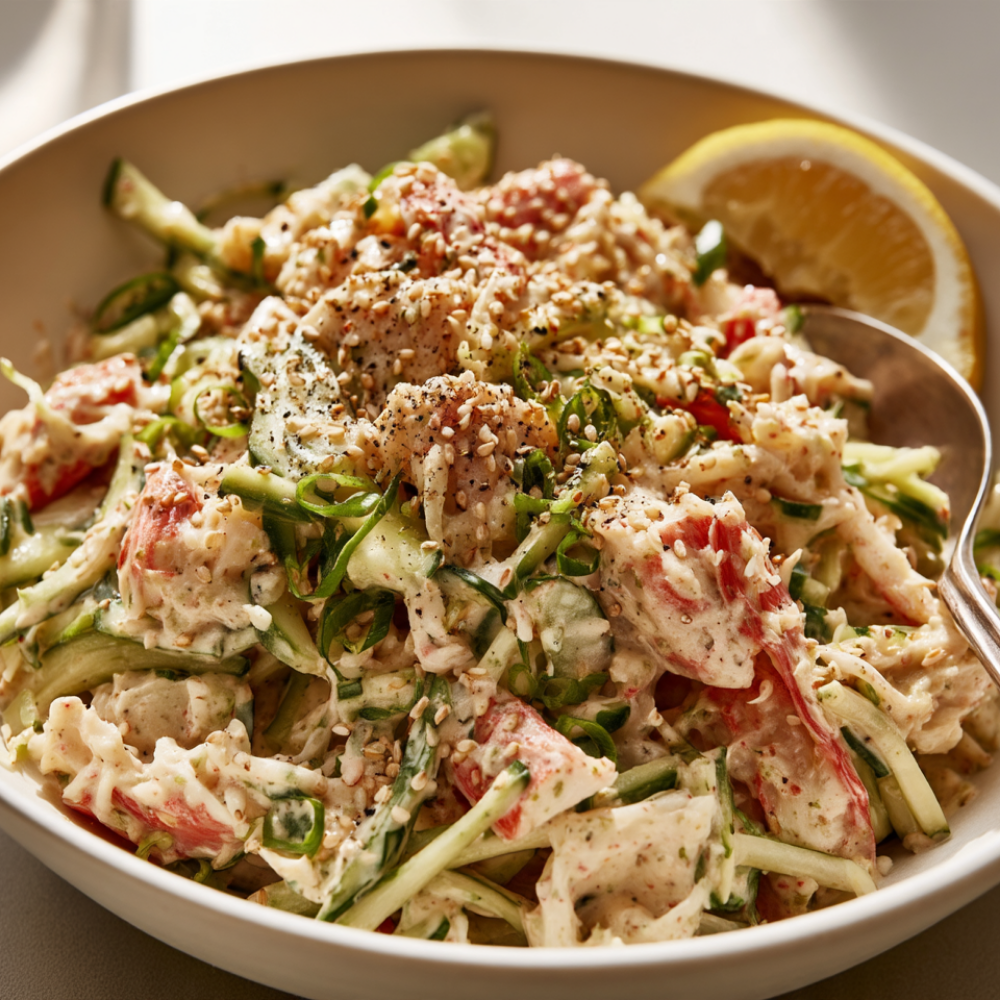

Most crab salad recipes are deli-style. They’re built on a heavy mayo base with celery and dill, and they work well on a sandwich.
But if you’ve ever tried using deli crab salad as sushi filling, you already know the problem — it’s too loose, too wet, and it turns the nori into a soggy mess.
This version is different. It’s a Japanese-inspired crab salad built specifically for sushi — the kind of creamy crab filling you find inside a California roll, a spicy kani roll, or a hand roll. Japanese-style mayonnaise provides the creamy binding.
Rice vinegar, soy sauce, and toasted sesame oil make the flavor fit naturally with sushi rice. Seed and squeeze the cucumber dry so it adds crunch without adding water.
And the whole thing is thick enough to hold its shape inside a roll.
It’s also genuinely good on its own. Serve it in lettuce cups, over rice, on a sandwich, or straight from the container with crackers: same recipe, four different meals.
About 28–30 grams of protein per serving with real lump crab. About 15–18 grams if you use imitation crab. I’ve listed both, because the difference matters and you deserve an honest number.
Why This Japanese Crab Salad Recipe Works
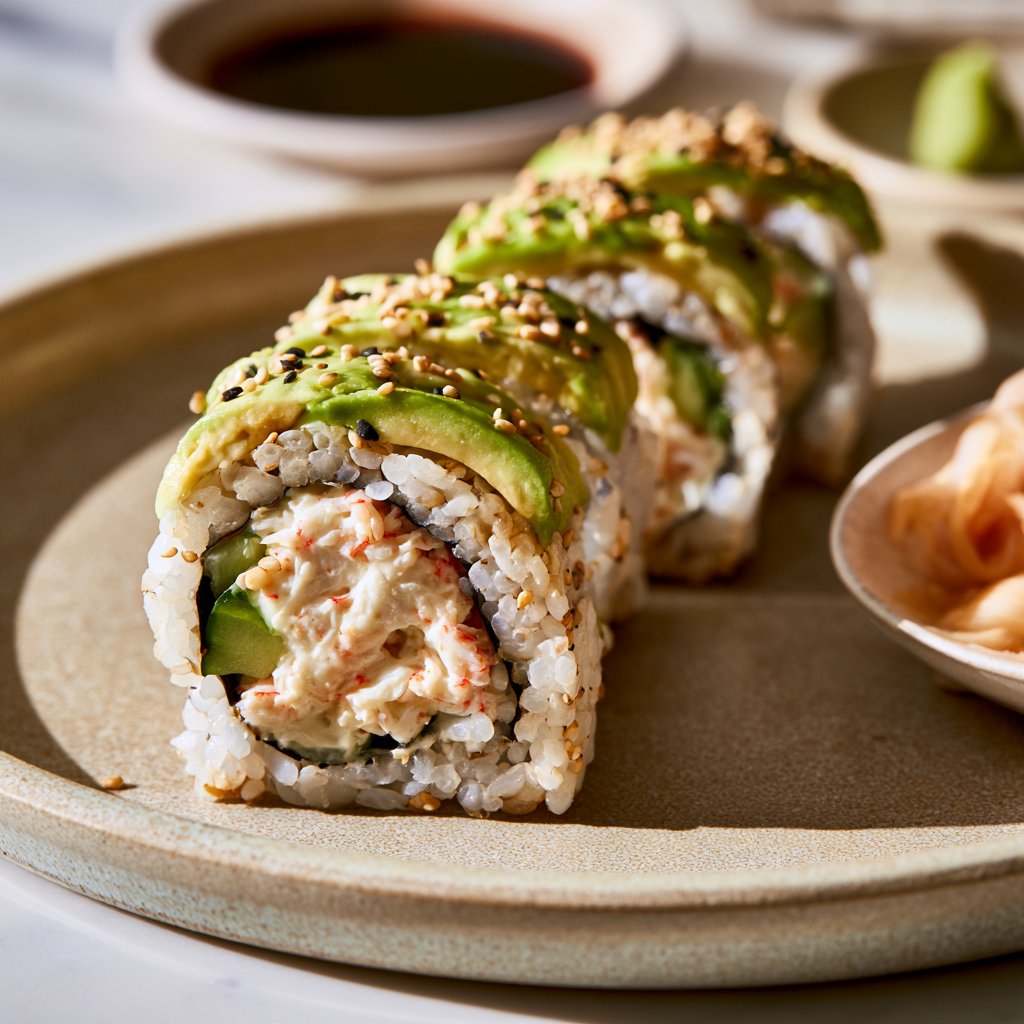
It’s built for sushi first. The dressing is thick and cohesive, the cucumber is drained, and the crab stays in tender lumps. It holds its shape inside a roll without making the nori soggy.
Japanese-style mayonnaise is the right base. Kewpie or a similar Japanese mayo is richer, tangier, and slightly sweeter than American mayonnaise. It’s what gives this salad its distinctive flavor.
Rice vinegar, soy sauce, and sesame oil make it fit with sushi rice. These three ingredients are the backbone of Japanese cooking, and they’re what make this taste as it belongs in a sushi roll rather than on a deli sandwich.
Real lump crab is high in protein and low in fat. About 17–20g of protein per 3.5-ounce serving. It’s sweet, delicate, and holds its shape when you fold it gently.
Keep the cucumber, but seed it and squeeze it dry. It adds the classic crunch you expect in a California roll, but removing the watery center keeps it from diluting the filling.
Green onions add a mild, fresh bite. They’re the right aromatic for this style of salad — milder than red onion and more traditional with Japanese flavors.
Lemon juice and zest brighten everything. Crab is delicate and slightly sweet. Lemon keeps it tasting fresh instead of heavy.
Sriracha is optional but recommended. One to two teaspoons turns this into a spicy kani-style filling, which is one of the most popular sushi fillings there is.
It’s fast and no-cook. It takes about 10 minutes from start to finish. No cooking, no chopping beyond the vegetables.
It’s meal-prep friendly. Store it in an airtight container with a paper towel under the lid, and it keeps for 3 days.
Japanese Crab Salad Recipe
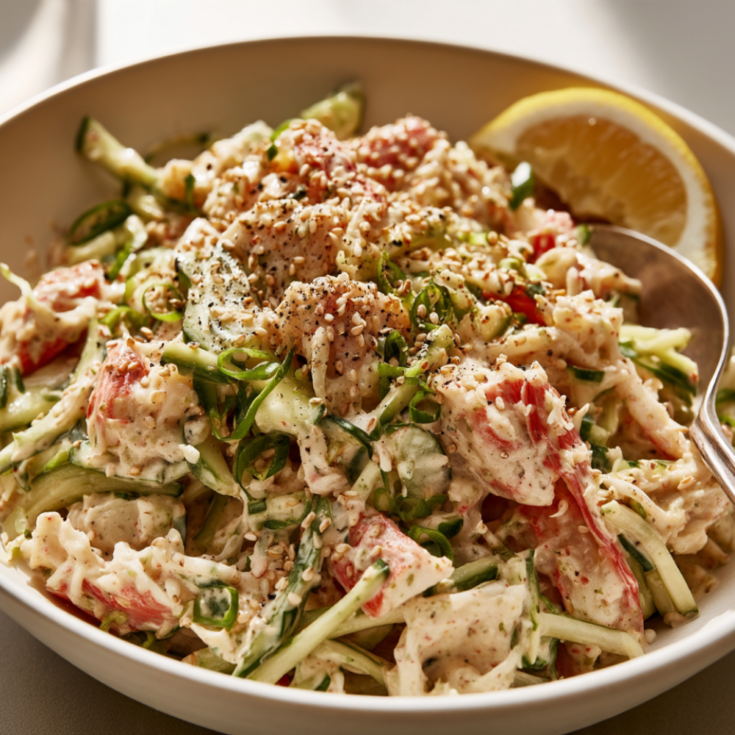
A creamy, high-protein crab salad made with real lump crab meat, Japanese-style mayonnaise, crisp cucumber, green onions, and a bright lemon-soy dressing. Thick enough for sushi rolls, but versatile enough for lettuce cups, sandwiches, rice bowls, and crackers.
Ingredients
- 1 lb lump crab meat, picked over for shells
- ⅓ cup Japanese-style mayonnaise (Kewpie or similar)
- 1 tbsp fresh lemon juice
- 1 tsp lemon zest
- 1 tsp Dijon mustard
- 1 tsp rice vinegar
- 1 tsp soy sauce or tamari
- ½ tsp toasted sesame oil
- 2 green onions, thinly sliced
- ½ English cucumber, peeled, seeded, and finely cut
- ¼ tsp kosher salt, plus more to taste
- ¼ tsp freshly ground black pepper
- 1–2 tsp sriracha (optional, for a spicy kani version)
For serving (sushi rolls):
- Seasoned sushi rice, cooled to room temperature.
- Nori sheets
- Avocado, sliced
- Cucumber, cut into thin matchsticks
- Sesame seeds
- Soy sauce, wasabi, and pickled ginger
For serving (non-sushi):
- Butter lettuce cups
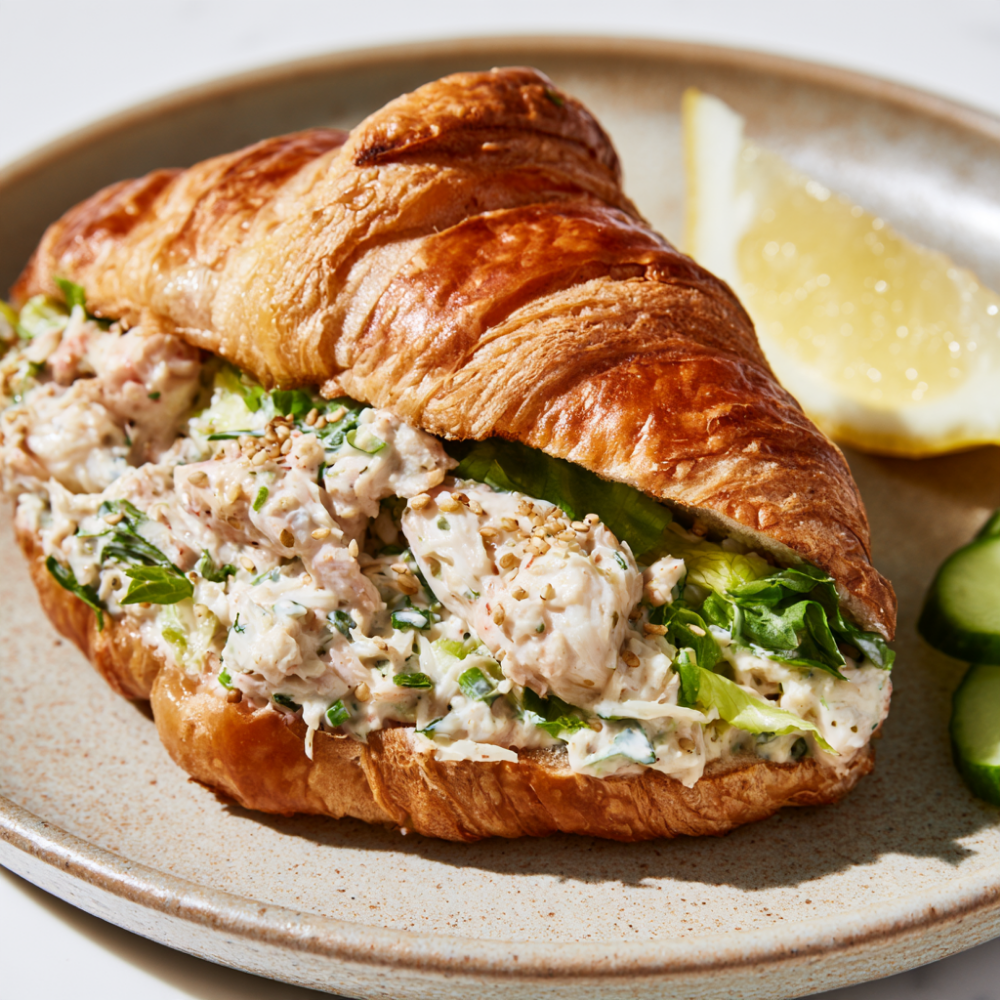
- Toasted sourdough or a croissant
- Rice bowls
- Crackers or cucumber rounds
Instructions
1. Prepare the crab. Place the crab meat in a large bowl and gently pick through it with your fingers to remove any stray shell pieces. If the crab seems particularly wet, place it in a fine-mesh strainer and let it drain for several minutes. Gently press out excess moisture without squeezing the crab dry. Keep some of the larger lumps intact for better texture.
2. Prepare the cucumber. Peel the cucumber and cut it lengthwise. Use a spoon to scoop out the watery center and seeds. Finely dice the cucumber, then place it in a clean kitchen towel or several layers of paper towels and squeeze out as much excess moisture as possible. This step is important — excess cucumber water makes the crab filling loose and can cause the nori to soften too quickly.
3. Make the dressing. In a small bowl, whisk together the mayonnaise, lemon juice, lemon zest, Dijon, rice vinegar, soy sauce, sesame oil, black pepper, and sriracha (if using). Taste before adding salt — the soy sauce and mayonnaise already provide some saltiness. The dressing should be creamy, lightly tangy, and savory rather than strongly acidic.
4. Combine the crab filling. Add the crab, cucumber, and green onions to a large bowl. Add the dressing a little at a time, folding gently with a spatula until the crab is evenly coated. You may not need all the dressing. The finished mixture should be creamy enough to hold together but thick enough not to run when spooned onto sushi rice. Avoid vigorous stirring, which can break the lump crab into a paste.
5. Chill briefly. Refrigerate the crab mixture for 15–20 minutes before making the rolls. This gives the filling time to firm up and makes it easier to handle when assembling the sushi.
6. Make the sushi rolls. Place a sheet of nori on a sushi mat, rough side up. Spread a thin, even layer of seasoned sushi rice over the nori, leaving about 1 inch uncovered along the far edge. Place a narrow line of crab salad across the lower third of the rice. Add a few pieces of avocado or cucumber if desired. Roll firmly, using the sushi mat to keep the filling compact. Moisten the uncovered edge of the nori with a little water and finish rolling to seal.
7. Slice and serve. Use a sharp, damp knife to cut the roll into 6–8 pieces, wiping the blade between cuts as needed. Serve immediately with soy sauce, pickled ginger, and wasabi.
To serve without sushi: Spoon the crab salad into butter lettuce cups, pile it onto toasted sourdough or a croissant, serve it over rice or cauliflower rice, or eat it with crackers or cucumber rounds. A lemon wedge and a sprinkle of sesame seeds on top are the perfect finish.
Notes
Protein per Serving: About 28–30g (with real lump crab) or about 15–18g (with imitation crab)
Nutrition note: Protein varies significantly depending on whether you use real crab or imitation crab, and on the specific brands you use.
Real lump crab delivers about 17–20 g of protein per 3.5 oz; imitation crab delivers about 6–8g. Use your specific ingredients to calculate accurate numbers.
Tips for the Best Japanese Crab Salad Recipe
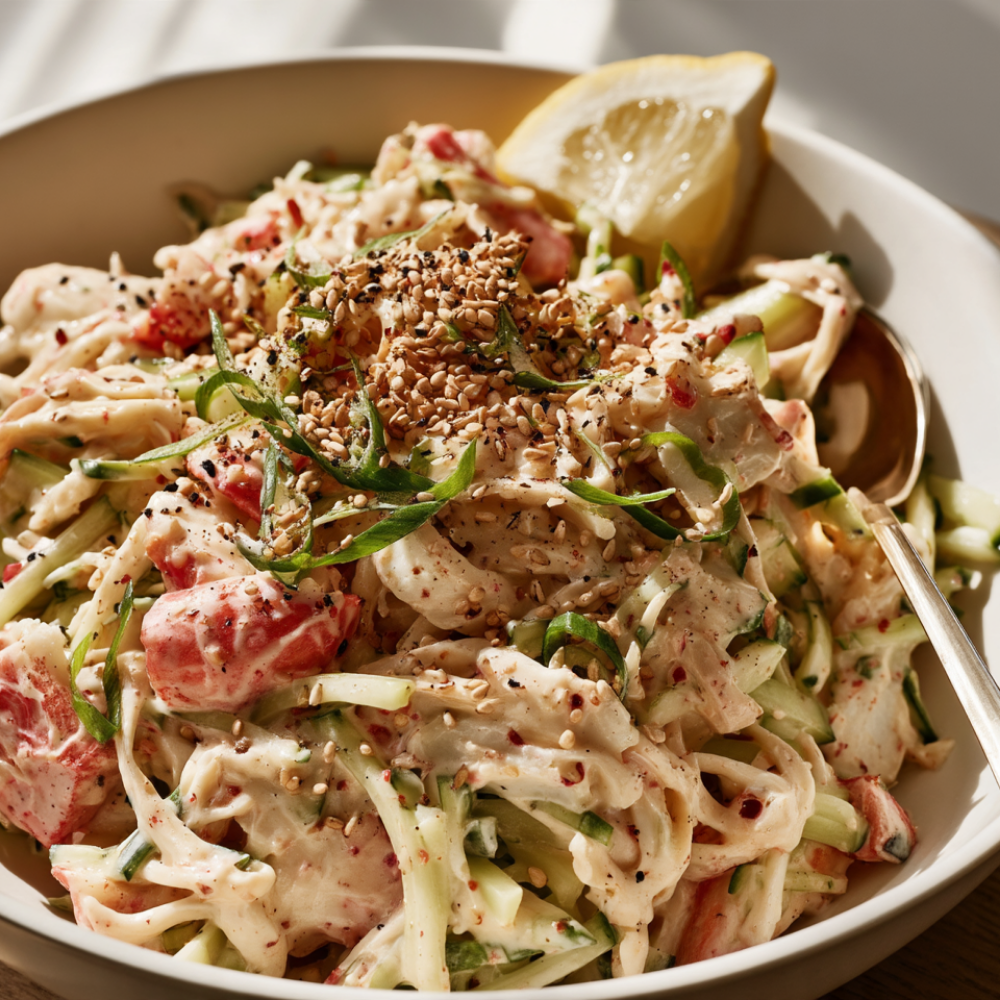
Use Japanese-style mayonnaise. Kewpie or a similar Japanese mayo is richer, tangier, and slightly sweeter than American mayonnaise. It’s what gives this salad its distinctive flavor. If you can’t find it, a regular mayonnaise with an extra ½ teaspoon of rice vinegar gets you close.
Squeeze the cucumber dry like it’s your job. Cucumber holds an enormous amount of water, and you need to remove the watery center entirely. Scoop out the seeds with a spoon, dice it, then wrap it in a clean kitchen towel and wring it out. This is the single most important step for a sushi filling that stays inside the roll.
Keep the crab lumps intact. Gently fold the salad with a spatula. Aggressive stirring breaks up the lumps and turns the salad into shreds. You want distinct pieces of crab in every bite.
Don’t add extra mayonnaise if the mixture looks dry. Once you roll it with rice and avocado, a loose crab mixture can squeeze out. Start with the amount in the recipe, and add more only if the filling truly won’t hold together.
Use 2–3 tablespoons of filling per roll. Overstuffing is the most common reason rolls fall apart—a narrow line of filling rolls more cleanly than a thick one.
Pick the crab meat over carefully. Even “picked” crab meat from the store can have stray shell fragments. Run your fingers through it gently to find any hard pieces before you dress it.
Zest the lemon before you juice it. The zest adds brightness that juice alone can’t deliver. It’s a small step that makes a real difference.
Taste the dressing before adding salt. Soy sauce and mayonnaise are both salty. Taste first, then season.
Chill the filling before rolling. Fifteen to twenty minutes in the fridge firms up the mixture and makes it much easier to handle.
Drain the filling before using it as sushi filling. A quick pass through a fine-mesh strainer removes any excess moisture before it hits the nori.
Store with a paper towel under the lid. Place a paper towel over the top of the container before sealing it to absorb excess moisture. It keeps the salad fresher for longer.
Don’t freeze it. Crab salad doesn’t freeze well — the texture of the crab gets mealy, and the dressing separates.
Easy Variations
Spicy Kani Crab Salad (Japanese Restaurant Style)
Increase the sriracha to 1–2 tablespoons and use imitation crab (surimi) shredded into thin pieces instead of lump crab. Add 1 teaspoon of rice vinegar and a sprinkle of sesame seeds. It’s the classic spicy kani salad you’ll find at Japanese restaurants — and it works beautifully as a sushi filling for spicy crab rolls.
California Roll Filling (The Classic)
Use the base recipe as written and pair it with avocado and cucumber inside the roll. Roll it rice-side-out (inside-out roll) and sprinkle with sesame seeds. It’s the California roll you grew up with, made at home.
Crab Salad for Sandwiches (Deli Version)
Skip the rice vinegar, soy sauce, and sesame oil. Use all mayonnaise (½ cup total), plus 1 teaspoon Old Bay seasoning, 1 teaspoon fresh lemon juice, and 2 tablespoons chopped celery.
Serve on a toasted split-top bun with lettuce and tomato. It’s the New England seafood-shack version.
Low-Carb Crab Salad Recipe
Skip the bread and rice entirely. Serve the salad over mixed greens with sliced avocado, cucumber rounds, and a lemon wedge. Add a drizzle of olive oil and a pinch of flaky salt—about 4g of net carbs per serving.
Storage and Food Safety
Refrigerator: Store in an airtight container with a paper towel under the lid for up to 3 days. Stir gently before serving.
Freezer: Not recommended. The crab becomes mealy, and the dressing separates after thawing.
Food safety: Crab salad is a cold, perishable dish. Keep it refrigerated until serving, and don’t leave it at room temperature for more than 2 hours. Use an insulated lunch bag with an ice pack if you’re taking it to work.
Frequently Asked Questions
How much protein is in each serving?
About 28–30g per serving with real lump crab meat, or about 15–18g per serving with imitation crab. The exact number depends on the crab you use and your portion size.
Can I use imitation crab instead of real crab?
Yes. Imitation crab (surimi) is much cheaper and works beautifully in the spicy kani version and sushi rolls. Flake it into small pieces rather than leaving it in large lumps. Just know that the protein count drops significantly.
Can I use canned crab meat?
Yes, in a pinch. Drain it extremely well and pick it over for shells. The texture won’t be as good as fresh or pasteurized refrigerated crab, but it works.
What’s the best crab for this recipe?
Jumbo lump or lump crab meat is the best choice. Jumbo lump has the largest, most intact pieces and the best texture. Lump is slightly smaller but more affordable. Claw meat is the most budget-friendly but has a stronger flavor and darker color.
How do I keep the crab salad from getting watery?
Scoop the seeds and watery center out of the cucumber, then squeeze it dry in a clean kitchen towel. Store the salad with a paper towel under the lid to absorb excess moisture. Drain the salad in a fine-mesh strainer for 5 minutes before using it as sushi filling.
Can I make this crab salad ahead of time?
Yes. It’s actually better made ahead — the flavors meld after 30 minutes in the fridge. It keeps for up to 3 days.
Can I freeze crab salad?
No. The crab becomes mealy, and the dressing separates after thawing.
Is this recipe gluten-free?
Not as written — soy sauce contains gluten. Use tamari or a gluten-free soy sauce, and confirm your mayonnaise, Dijon, and any seasonings are gluten-free. Everything else is naturally gluten-free.
What do I serve with crab salad?
Butter lettuce cups, toasted sourdough, croissants, cucumber rounds, rice bowls, or as sushi filling. A lemon wedge and a sprinkle of sesame seeds on top are the perfect finish.
Can I use this crab salad for sushi rolls?
Yes — that’s what it’s designed for. Keep it cold, thick, and drained, and use 2–3 tablespoons per roll. See the sushi section above for full rolling instructions.
What if I don’t like sriracha?
Skip it entirely. The base recipe is mild and savory. You can also serve the sriracha on the side so people can add their own heat.
More High-Protein Lunch Prep Recipes You’ll Love
- Adult Lunchable Ideas: 7 Lazy No-Cook Snack Boxes
- Smoked Salmon Meal Prep: 5 High-Protein No-Cook Recipes
- Egg Meal Prep: 5 High-Protein Make-Ahead Recipes
- Meal Prep Wraps: 4 High-Protein Recipes That Hold Up All Week
Conclusion
This Japanese crab salad recipe is the fresh, high-protein version that works as both a lunch and a sushi filling.
It features real lump crab meat, Japanese-style mayonnaise, crisp cucumber, green onions, and a bright lemon-soy dressing. About 28–30g of protein per serving with real crab, and about 15–18g with imitation crab.
The keys are simple: use Japanese-style mayonnaise, scoop the seeds out of the cucumber and squeeze it dry, fold gently to keep the crab lumps intact, add the dressing a little at a time, chill before rolling, and use 2–3 tablespoons of filling per sushi roll.
Do that, and you’ll have a crab salad that tastes as if it came from a sushi counter.
Serve it in lettuce cups, on a sandwich, over rice, or inside a roll. Full sushi roll post coming next.