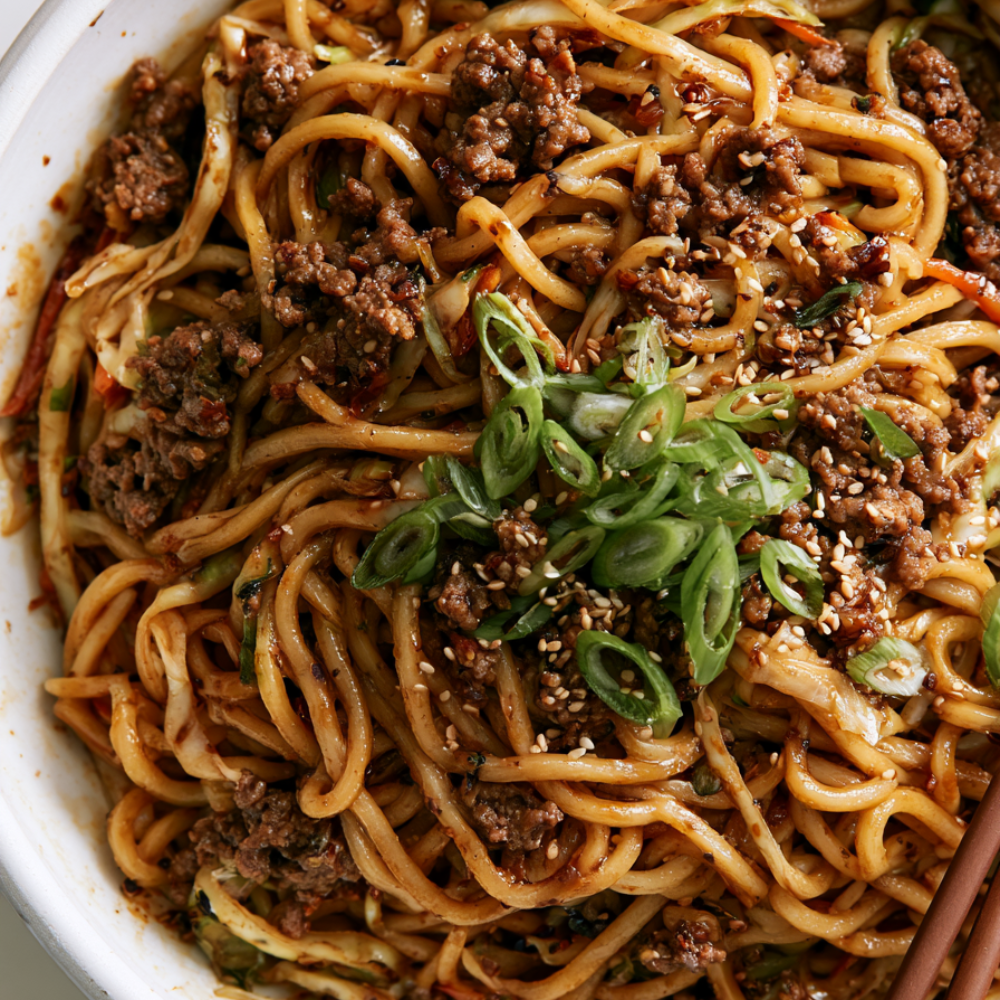

You know that moment when you’re scrolling through delivery apps, trying to justify a $25 noodle box that’ll be gone in five minutes? Me too. But here’s the thing—you can make chow mein at home that tastes every bit as good, costs half as much, and actually fills you up with real protein.
This ground beef chow mein recipe is my go-to for those nights when I want takeout flavor without the wait or the wallet shock.
The sauce is savory and rich, the noodles are perfectly slippery, and the ground beef adds a hearty punch that keeps you full for hours. Unlike takeout versions that skimp on meat, this one delivers a solid 32g of protein per serving.
It’s also one of those meals that comes together faster than the delivery driver could get to your door.
Brown the beef, whip up the sauce, toss everything in a hot pan, and dinner’s ready. No wok required, no obscure ingredients, just real food that tastes as if it came from your favorite Chinese restaurant.
Why Ground Beef Chow Mein Works
Ground beef is the unsung hero of weeknight dinners. It’s affordable, cooks in minutes, and takes on whatever sauce you throw at it. For this chow mein, the beef soaks up that garlic-ginger-soy flavor while staying tender and juicy.
The noodles are the other star. You can use chow mein noodles, ramen noodles, or even spaghetti in a pinch. They absorb the sauce and get slightly charred in the pan, giving you that takeout-style texture.
And the veggies? They stay crisp-tender, adding color, crunch, and a little nutritional punch. This is fast food you can feel good about, and it all comes together in one skillet.
High-Protein Ground Beef Chow Mein
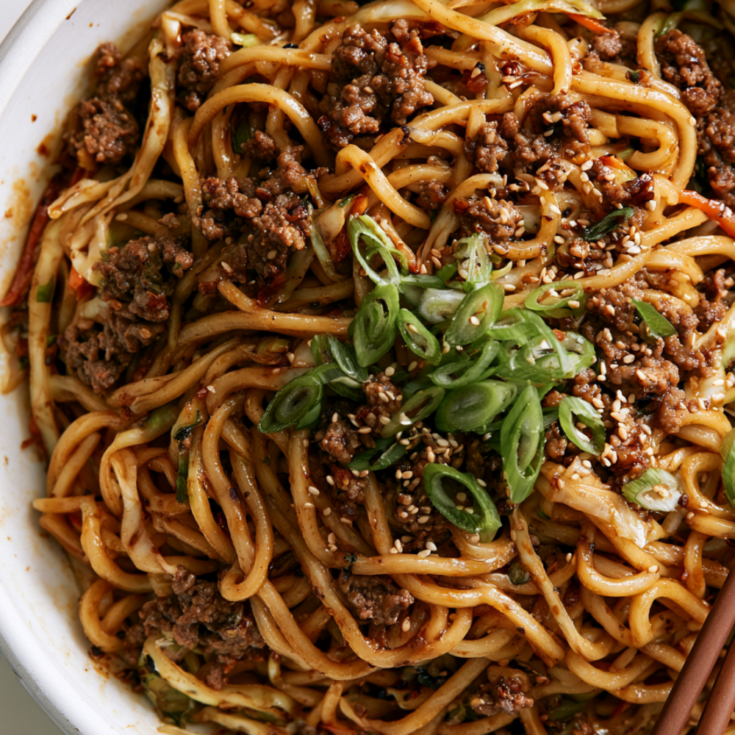
This ground beef chow mein recipe is faster than delivery and packs 32g of protein per serving. Savory garlic-ginger sauce, crisp veggies, and chewy noodles—all in one skillet. Make it tonight and skip the takeout fee.
Ingredients
For the Sauce
- 1/4 cup low-sodium soy sauce (or tamari for gluten-free)
- 2 tablespoons oyster sauce (or hoisin sauce for a sweeter profile)
- 1 tablespoon dark soy sauce (or regular soy sauce + 1 teaspoon molasses)
- 1 tablespoon brown sugar
- 2 teaspoons sesame oil
- 2 cloves garlic, minced
- 1 teaspoon grated fresh ginger
- 1/2 teaspoon white pepper (or black pepper)
- 1/4 cup beef broth or water
- 1 tablespoon cornstarch
For the Chow Mein
- 8 oz chow mein noodles, ramen noodles (discard seasoning), or lo mein noodles
- 1 lb lean ground beef (90/10 or 93/7)
- 2 tablespoons vegetable or avocado oil, divided
- 1 small onion, thinly sliced
- 2 cups shredded green cabbage
- 1 cup shredded carrots
- 1 cup bean sprouts (optional)
- 3 green onions, sliced (for garnish)
- Toasted sesame seeds (for garnish)
Instructions
- In a small bowl, whisk together the soy sauce, oyster sauce, dark soy sauce, brown sugar, sesame oil, garlic, ginger, white pepper, and beef broth. Add the cornstarch and whisk until completely smooth. Set aside.
- Bring a pot of salted water to a boil. Cook the noodles according to package directions until al dente (usually 2–3 minutes less than the package suggests, as they'll cook more in the pan). Drain, rinse with cold water to stop cooking, and toss with 1 teaspoon of oil to prevent sticking. Set aside.
- Heat a large skillet or wok over medium-high heat. Add the ground beef and cook, breaking it up with a spatula, until browned and cooked through, about 5–7 minutes. Season with a pinch of salt and pepper. Use a slotted spoon to transfer the beef to a plate, leaving the drippings in the pan (discard excess fat if using a fattier beef, but with lean beef, leave it for flavor).
- Add the remaining 1 tablespoon of oil to the skillet. Add the onion and cook for 2 minutes until slightly softened. Add the cabbage and carrots, then stir-fry for 2–3 minutes, until the cabbage is wilted but still slightly crunchy. Add the bean sprouts in the last minute, if using.
- Return the cooked beef to the skillet. Add the cooked noodles and pour the sauce over everything. Toss well with tongs or spatulas for 2–3 minutes, until the sauce thickens and coats every noodle and the noodles are heated through.
- Transfer to plates or a large serving platter. Top with sliced green onions and a sprinkle of toasted sesame seeds. Serve immediately.
Notes
Tip: For that slightly charred, smoky "wok hei" flavor, spread the noodles in a thin layer and let them sit undisturbed for 30 seconds before tossing. Repeat once or twice.
Nutrition Information:
Yield:
4Serving Size:
1Amount Per Serving: Calories: 755Total Fat: 33gSaturated Fat: 8gUnsaturated Fat: 25gCholesterol: 102mgSodium: 2106mgCarbohydrates: 69gFiber: 8gSugar: 16gProtein: 43g
All nutritional values provided on this website (including calories, macros, and nutrient percentages) are estimates intended for informational and educational purposes only. These values are calculated using online recipe nutrition databases and software. Because individual cooking methods, product brands, ingredient substitutions, and exact portion sizes vary, the actual nutritional content of your meal may differ from the estimates shown here.
Variations and Substitutions
Swap the protein: Ground pork, turkey, or even crumbled firm tofu work beautifully in place of ground beef. Adjust cooking times accordingly.
Make it gluten-free: Use tamari instead of soy sauce, a gluten-free oyster sauce or hoisin, and rice noodles or gluten-free ramen.
Add more heat: Stir in 1/2 teaspoon of red pepper flakes or a drizzle of chili oil with the sauce. I like to add a sprinkle of gochugaru (Korean chili flakes) for a different kind of warmth.
Bulk it up with extra veggies: Throw in some sliced bell peppers, snap peas, or baby corn alongside the cabbage for more color and crunch.
Noodle alternatives: Don’t have chow mein noodles? Spaghetti, fettuccine, or udon noodles all work well. Just adjust the cooking time to al dente.
Storage and Reheating
Refrigerator: Leftovers should be kept in an airtight container for up to 3 days. The noodles might absorb some sauce, so add a splash of broth or water when reheating to bring it back to life.
Freezer: I don’t recommend freezing this, as the noodles can become mushy. If you must, freeze the beef and sauce mixture separately from the noodles, then combine freshly cooked noodles with the reheated sauce.
Reheating: The skillet is your best friend here. Reheat over medium-high heat with a splash of broth to steam the noodles back to tenderness. The microwave works but won’t restore the pan-charred texture.
FAQ
What’s the difference between chow mein and lo mein?
Chow mein noodles are stir-fried until slightly crispy and chewy, while lo mein noodles are boiled, tossed in sauce, and served softer. This recipe leans toward chow mein because we pan-fry them with the sauce, giving them that classic takeout texture.
Can I use pre-packaged coleslaw mix for the veggies?
Yes! That’s a fantastic shortcut. Use a 10-ounce bag of coleslaw mix (cabbage and carrots) and skip the separate chopping. Just toss it in the skillet as directed.
What if I don’t have oyster sauce?
Use hoisin sauce for a sweeter, thicker sauce, or simply use 2 extra tablespoons of soy sauce and a teaspoon of sugar. It won’t be identical, but it’ll still be delicious.
Can I make this low-carb?
Swap the noodles for spiralized zucchini noodles or sautéed cabbage “noodles.” Cook them briefly in the sauce just until heated through, so they don’t turn watery.
Is this spicy?
Not at all. The white pepper adds warmth but no heat. Add red pepper flakes or chili oil for a kick.
How do I keep the noodles from sticking together?
Rinse them with cold water after boiling and toss with a little oil. Also, don’t overcrowd the pan when stir-frying—work in batches if necessary.
Can I add other proteins?
Absolutely. Shrimp, sliced chicken breast, or leftover steak are all great additions. Just cook them separately and combine at the end.
Bring the Takeout Home
There’s something deeply satisfying about making your favorite takeout dish in your own kitchen.
This ground beef chow mein recipe gives you that feeling without the delivery fee, the wait, or the mystery ingredients. It’s quick, packed with protein, and full of that savory, umami flavor you crave.
Next time you’re tempted to order in, grab a pound of ground beef and a bag of noodles instead. Dinner’s on the table in 30 minutes, and I promise, it’ll taste even better than the boxed version.