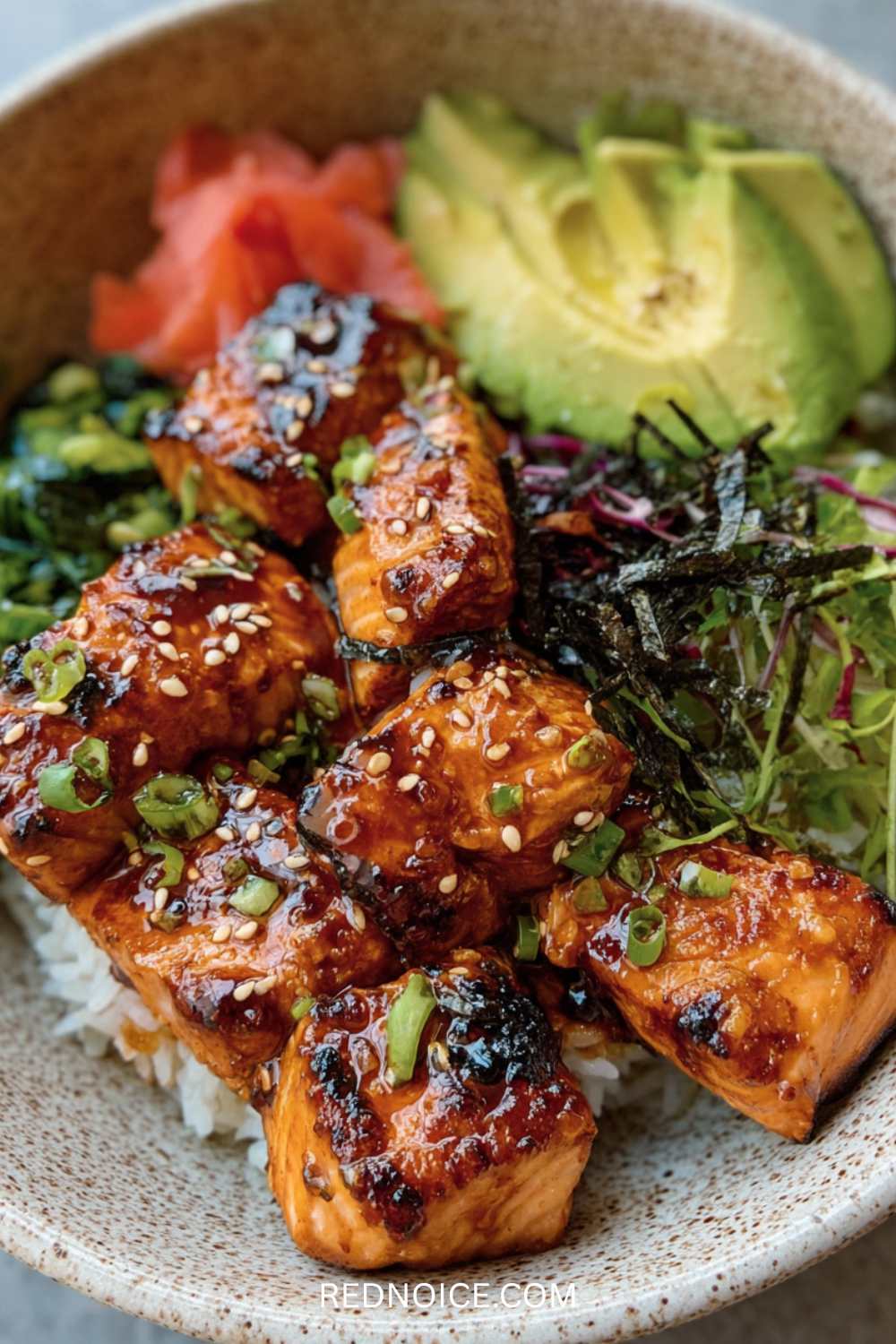

If you’re craving Asian flavors and want a salmon bowl that actually delivers, this is the one to make.
Honey glazed salmon is sweet, savory, and glossy in a way that makes it taste like something you’d order at a poke spot — except it comes out of your own oven in under 20 minutes.
It’s also one of the easiest salmon recipes in my rotation, and it’s flexible: if you have an air fryer, use it.
If the stovetop is easier, do that. The glaze works the same way on all three, and the bowl comes together with whatever cooking method fits your night.
The bowl is built in layers.
Brown rice or quinoa goes in the bottom, then the glazed salmon, then edamame, shredded carrots, cucumber, and avocado around the sides. The sesame ginger dressing gets drizzled over the whole thing at the end, and the green onions and sesame seeds go on last.
Every component is doing something — the rice is the base, the vegetables are the crunch, the avocado is the creaminess, and the dressing ties it all together.
The salmon is the star, and the honey glaze is what makes it taste like more than just baked fish.
Honey, soy sauce, fresh lemon juice, grated ginger, and minced garlic — it’s a sweet-savory glaze that caramelizes onto the salmon and pairs with the sesame ginger dressing instead of fighting it.
The two sauces are related but not identical, so you get layers of flavor instead of one note.
The bowls come out at about 43 grams of protein per serving, made with salmon, edamame, and the rice, and they take about 10 minutes of prep and 15 to 18 minutes of cooking.
It’s an easy healthy dinner that tastes like something you’d order at a poke spot, made in your own kitchen.
Why This Recipe Works
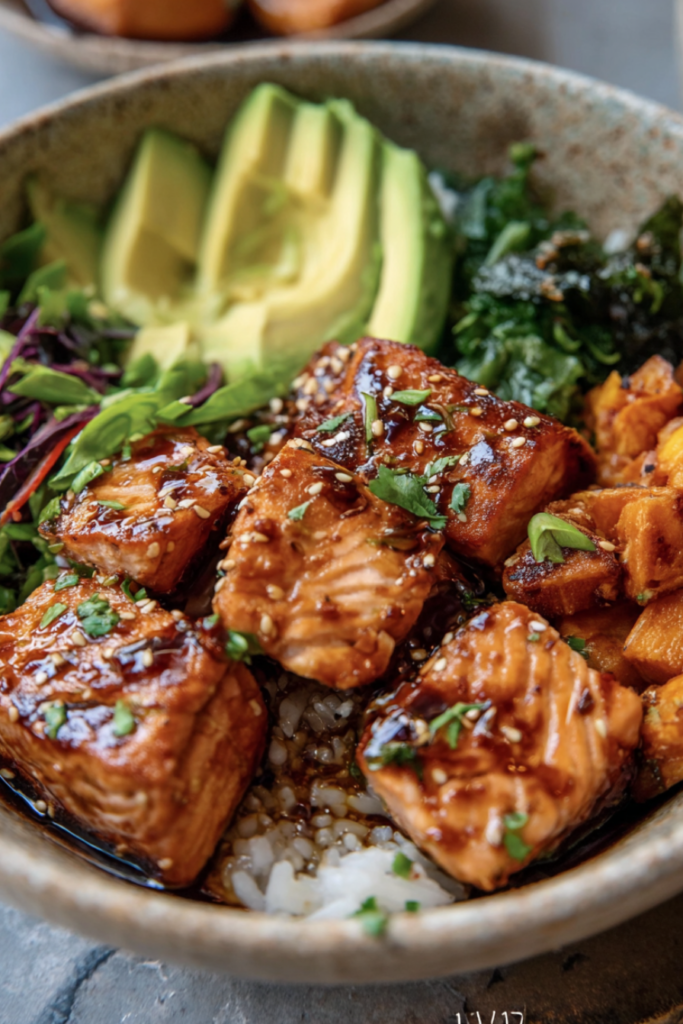
Honey glazed salmon bowls go wrong in three specific ways: burnt glaze, dry salmon, and a bowl that turns soggy by the time you eat it. Here’s how this version solves each one.
1. Glaze the Salmon Late, Not Early
Honey burns at high heat. Brushed on before the salmon goes into the oven, it darkens and turns bitter by the time the fish is cooked. This version bakes the salmon plain for 8 to 10 minutes, then brushes the honey glaze on and returns it to the oven for another 4 to 7. The glaze caramelizes onto the fish without scorching, and the flavor stays sweet and glossy.
2. Pull the Salmon at 145°F and Don’t Go Past It
Salmon is safe at 145°F, but it’s best at 135°F to 140°F after resting. This recipe pulls at 145°F, which is the food-safety minimum and still gives you tender, flaky fish — as long as you don’t go past it. The carry-over cooking after the fish comes out of the oven takes it to 150°F or so, which is still good. Past 155°F, it turns dry.
3. Layer the Bowl in the Right Order for Meal Prep
The rice goes in the bottom, the salmon goes on top, and the fresh vegetables — cucumber, avocado, and green onions — go in their own compartment or on top at the last minute. The dressing goes in its own small jar. That layering is what keeps the bowl crisp through day three instead of wilting by day two.
Ingredients That Matter
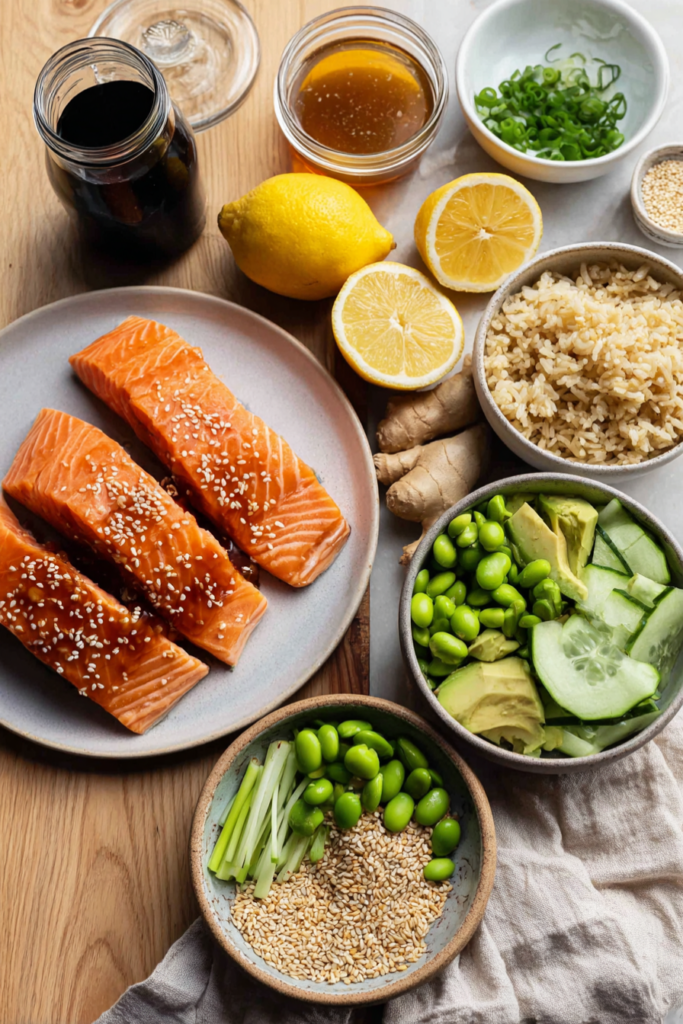
Two salmon fillets, 6 oz each. Skin-on or skinless. Skin-on is the traditional choice because the skin protects the flesh and releases easily after cooking. Center-cut fillets of even thickness cook evenly.
Olive oil, salt, black pepper, and garlic powder. The base seasoning for the salmon. It’s simple on purpose — the honey glaze and the sesame ginger dressing are doing the flavor work.
Honey. One and a half tablespoons for the glaze, one teaspoon for the dressing. The honey in the glaze is what caramelizes onto the salmon; the honey in the dressing is a background note that balances the soy and vinegar.
Low-sodium soy sauce. One tablespoon for the glaze, one tablespoon for the dressing. Low-sodium lets you control the final salt level.
Fresh lemon juice. One teaspoon. The acid cuts the sweetness of the honey and keeps the glaze from tasting cloying.
Fresh ginger, grated. Half a teaspoon for the glaze, half a teaspoon for the dressing. Fresh, not powdered — ginger is one of the defining flavors of both sauces.
Garlic, minced. Half a teaspoon for the glaze. Fresh, not powdered.
Brown rice or quinoa. One and a half cups cooked. Brown rice is the classic base; quinoa adds extra protein and a lighter texture.
Shelled edamame. Half a cup, cooked. The edamame adds protein, fiber, and a bright green pop of color.
Shredded carrots, cucumber, and avocado. The fresh components that add crunch and creaminess. Cucumber and avocado go in last to keep them crisp.
Sesame ginger dressing. Soy sauce, rice vinegar, toasted sesame oil, honey, ginger, and water. The dressing ties the whole bowl together and is different from the glaze — that’s what makes the bowl taste layered instead of one-note.
How to Make Honey Glazed Salmon Bowls
(See the recipe card below — the steps are identical and the card is the single source of truth.)
Tips and Troubleshooting
The honey glaze burned. It went on before the salmon started baking. Bake the salmon plain for 8 to 10 minutes, then glaze and return to the oven for 4 to 7 minutes.
The salmon came out dry. It cooked past 145°F, or it stayed in the oven too long after glazing. Pull at 145°F and don’t let it go past 150°F. If you don’t have a thermometer, the fish is ready when the thickest part flakes easily with a fork but is still slightly translucent in the center.
The bowl turned soggy. The dressing went on too early, or the cucumber and avocado were packed with the rice. Keep the dressing in its own jar, and add the fresh vegetables right before serving.
The glaze is too sweet. Too much honey, or the lemon juice was skipped. Taste the glaze before brushing it on — the lemon is what balances the sweetness.
The dressing is too salty. Full-sodium soy sauce instead of low-sodium. Use low-sodium, or dilute with an extra teaspoon of water.
The edamame is mushy. It was overcooked, or it was frozen edamame that was boiled instead of steamed. Steam it according to the package directions and drain it well.
The salmon skin stuck to the pan. The fish went in skin-side up. Skin-side down on the parchment is correct — the skin protects the flesh and releases easily after baking.
The bowl tastes flat. The dressing was skipped, or there wasn’t enough of it. The sesame ginger dressing is what ties the whole bowl together. Don’t skip it.
Substitutions and Swaps
Salmon → shrimp. Same quantity by weight. Shrimp cook in 6 to 8 minutes at 400°F — brush with the glaze in the last 2 minutes. Captures the “shrimp salmon bowl” keyword.
Salmon → tofu or chicken breast. Same quantity. Tofu needs to be pressed and cubed; chicken breast needs to be seared and sliced. Both work with the same glaze and dressing.
Brown rice → quinoa, farro, or cauliflower rice. Same quantity cooked. Quinoa adds protein; cauliflower rice is a lower-carb option. Captures the “low cal salmon bowl” keyword.
Edamame → shelled peas or chickpeas. Same quantity. Peas are milder; chickpeas are heartier.
Cucumber → sliced radishes or bell pepper. Same quantity. Radishes are peppery; bell pepper is sweeter.
Sesame ginger dressing → store-bought sesame ginger dressing. Works in a pinch, but the homemade version takes 2 minutes and tastes fresher.
For a lower-calorie version: use cauliflower rice, skip the avocado, and use half the honey in the dressing. The protein stays high; the calories drop. Captures “low cal salmon bowl.”
For a crispy salmon skin version: pat the skin completely dry, season it, and sear it skin-side down in a hot skillet for 3 to 4 minutes before transferring to the oven. The skin crisps up and the fish stays moist.
Storage and Meal Prep
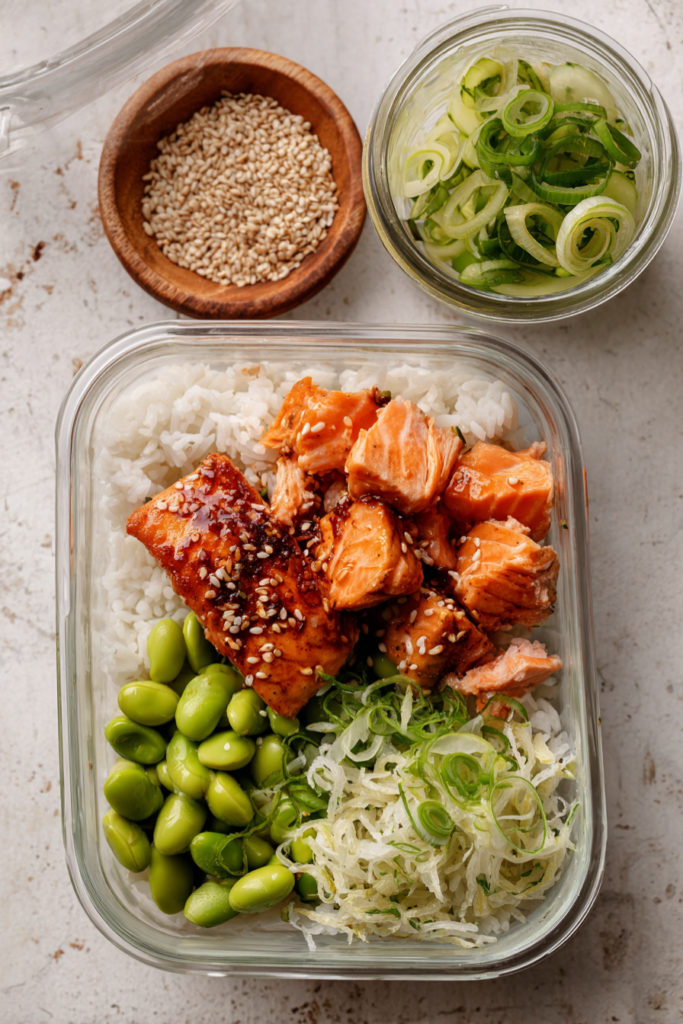
Refrigerate cooked salmon and rice in separate airtight containers for up to 3 to 4 days.
Store the dressing separately in a small jar for up to 5 days. Shake before using.
Keep cucumber and avocado separate and add them fresh when you’re ready to eat. They release moisture and brown if they sit with the other ingredients.
Reheat the salmon and rice gently in a covered skillet over low heat with a splash of water, or in the microwave at 70% power. Reheat to 145°F.
Food safety: store leftovers within 2 hours of cooking. Discard anything left at room temperature longer than that.
Honey Glazed Salmon Bowls
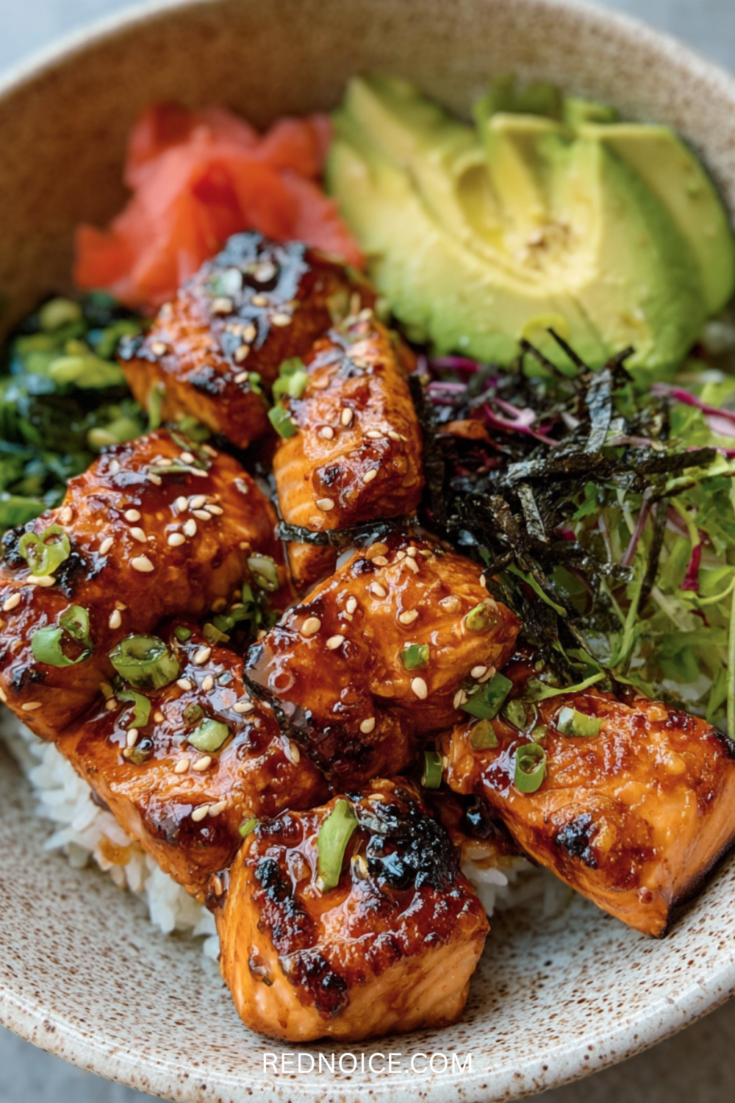
Tender, sweet-savory glazed salmon with fluffy brown rice, crunchy vegetables, creamy avocado, and a homemade sesame ginger sauce — 43g of protein per bowl.
Ingredients
For the Salmon
- 2 salmon fillets (6 oz each), skin removed or skin-on
- 1 tablespoon olive oil
- ½ teaspoon salt
- ¼ teaspoon black pepper
- ½ teaspoon garlic powder
For the Honey Glaze
- 1½ tablespoons honey
- 1 tablespoon low-sodium soy sauce
- 1 teaspoon fresh lemon juice
- ½ teaspoon freshly grated ginger
- ½ teaspoon garlic, finely minced
For the Bowls
- 1½ cups cooked brown rice or quinoa
- ½ cup shelled edamame, cooked
- ½ cup shredded carrots
- ½ cup cucumber, thinly sliced
- ½ avocado, sliced
- 2 tablespoons sliced green onions
- 1 teaspoon sesame seeds
For the Sesame Ginger Dressing
- 1 tablespoon low-sodium soy sauce
- 1 tablespoon rice vinegar
- 1 teaspoon toasted sesame oil
- 1 teaspoon honey
- ½ teaspoon freshly grated ginger
- 1 teaspoon water
Instructions
- Prepare the Salmon: Preheat the oven to 400°F. Line a baking sheet with parchment paper. Pat the salmon fillets dry and place them on the baking sheet. Brush with olive oil and season with salt, black pepper, and garlic powder.
- Make the Honey Glaze: In a small bowl, whisk together the honey, soy sauce, lemon juice, grated ginger, and minced garlic until combined.
- Bake the Salmon: Bake 8 to 10 minutes. Remove the salmon and brush generously with the honey glaze. Return to the oven for another 4 to 7 minutes, depending on thickness, until the salmon flakes easily and reaches an internal temperature of 145°F. Avoid overcooking.
- Prepare the Dressing: While the salmon bakes, whisk together the soy sauce, rice vinegar, sesame oil, honey, ginger, and water. Taste and adjust the balance if needed.
- Prepare the Vegetables: Cook the edamame according to package directions. Slice the cucumber and avocado, shred the carrots, and slice the green onions.
- Assemble the Bowls: Divide the cooked brown rice or quinoa between two serving bowls. Add one salmon fillet to each bowl, then arrange the edamame, carrots, cucumber, and avocado around the salmon.
- Finish and Serve: Drizzle each bowl with the sesame ginger dressing. Sprinkle with green onions and sesame seeds. Serve immediately.
Notes
Estimated per serving (with brown rice and full dressing): 650 to 680 calories · 43 to 46g protein · 62 to 68g carbs · 24 to 27g fat · 7 to 9g fiber · 800mg sodium
Frequently Asked Questions
How do I keep the honey glaze from burning?
Brush it on in the last 4 to 7 minutes of baking, not before. Honey burns quickly at 400°F, so it needs to be on the fish for just long enough to caramelize without darkening.
How do I know when the salmon is done?
Pull it at 145°F internal temperature. If you don’t have a thermometer, the salmon is ready when the thickest part flakes easily with a fork but is still slightly translucent in the center. Don’t go past 150°F — the fish will dry out.
Can I use frozen salmon?
Yes, but thaw it completely in the refrigerator overnight first. Frozen salmon releases a lot of water when it thaws, and wet salmon steams instead of roasting. Pat it dry before seasoning.
Can I make this ahead for meal prep?
Yes. Bake the salmon, cool it, and store it with the rice and edamame in airtight containers for up to 3 to 4 days. Store the dressing in a separate jar and add the cucumber and avocado fresh when you’re ready to eat.
Can I use a different protein?
Yes. Shrimp cook in 6 to 8 minutes at 400°F — brush with the glaze in the last 2 minutes. Tofu needs to be pressed and cubed, then roasted 20 to 25 minutes. Chicken breast needs to be seared and sliced. All work with the same glaze and dressing.
What’s the difference between the glaze and the dressing?
The glaze is honey-forward and goes on the salmon; the dressing is sesame-forward and goes over the whole bowl. They’re related flavors but different balances, which is what makes the bowl taste layered.
Can I make this lower-carb?
Yes. Swap the brown rice for cauliflower rice and skip the avocado. The protein stays high; the carbs drop significantly.
Is this gluten-free?
Only if you use gluten-free soy sauce (tamari) and confirm the other ingredients are gluten-free. Standard soy sauce contains wheat.
More Easy Healthy Dinner Recipes You’ll Love
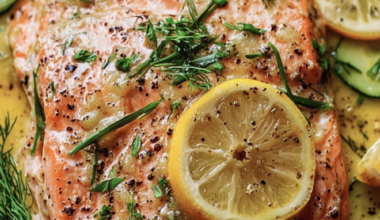
Baked Salmon With Lemon & Herbs — 34g protein, 20 minutes, one pan.
Cajun Honey Butter Salmon in 20 Minutes – 35g Protein
Miso-Glazed Salmon Bowl Meal Prep — 34g Protein, 4 Days Ready
Closing
I’ve made these honey glazed salmon bowls more times than I can count, and the two things that changed everything for me were glazing the salmon late instead of early and keeping the dressing in its own jar for meal prep.
The first batch I made had burnt honey on the fish and a soggy bowl by the next day — those two fixes turned it into something I actually look forward to eating on a Wednesday.
If you make it with shrimp or serve it over cauliflower rice, let me know how it turns out in the comments.