Hummus is one of the most underrated refrigerator snacks. It gets filed away as a spread for Mediterranean sandwiches or a dip that shows up at parties, and then it gets forgotten.
That is a mistake.
Packed into a small container with fresh vegetable sticks, a stack of pita bread, or a handful of crackers, it is one of the easiest on-the-go snacks you can make.
It is high in plant-based protein, genuinely healthy, and one of the cheapest things you can make at home — a full batch costs less than two tubs of the store-bought version.
The only thing that holds most people back is the hummus itself. A specific kind lives in your memory. Pale, almost white.
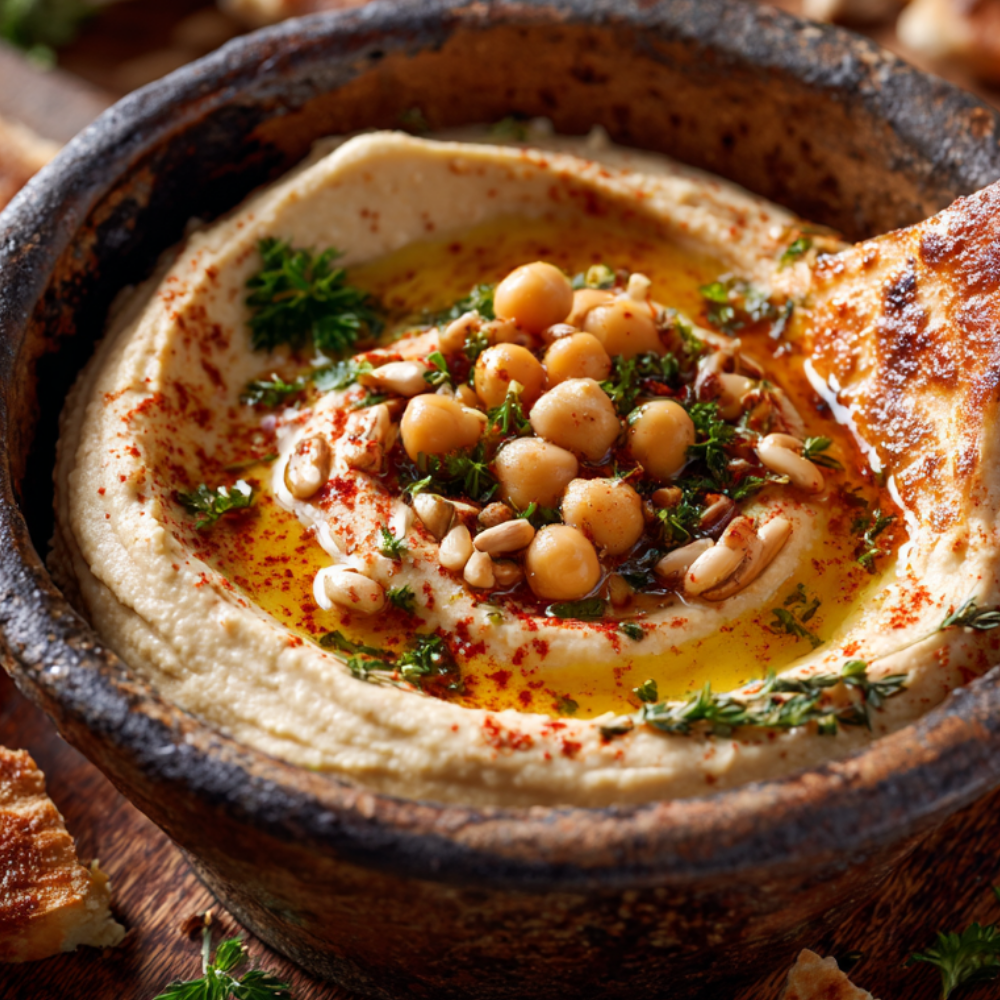
So smooth that it holds a swoosh when you drag a spoon through it. Creamy in a way that makes you wonder why the tub in the refrigerator tastes like cold bean paste.
The kind you get at a really good Middle Eastern restaurant and then spend years trying to recreate at home.
This is that hummus. And the ingredient that gets you there is not a secret — it is ice water.
Homemade hummus has a reputation for being a project. Soaking dried chickpeas overnight, simmering for two hours, dragging out the food processor.
It is a Sunday afternoon kind of recipe, not a Tuesday one. But the version that comes out of the blender when you do it right is so much better than anything you can buy that the work stops feeling like work.
Nine grams of plant protein per quarter-cup serving, from chickpeas and tahini. Stack it on a hummus board with vegetables and pita, and you have a snack plate that genuinely holds you.
It works as a dip, a spread, a dressing, a bowl base, and a party centerpiece.
And if you have never made hummus from scratch, this is the recipe that makes you stop buying it.
Six ingredients, one pot, one blender, and a technique that turns two cups of dried chickpeas into something restaurant-worthy.
Why This Recipe Works
- Simmering the chickpeas with baking soda is what makes them soft enough to blend smoothly. Baking soda raises the pH of the cooking water, which breaks down the chickpeas’ cell walls. They turn almost mushy, and mushy chickpeas are the entire foundation of creamy hummus.
- Overcooking is the goal, not the mistake. The chickpeas should be so soft that they fall apart when you press them against the side of the pot. If they still hold their shape, keep simmering.
- Blending the tahini and lemon juice first is the restaurant trick. Before the chickpeas go in, whip the tahini and lemon juice with ice water until they turn pale and fluffy. This step is what makes hummus ultra-creamy instead of grainy.
- Ice water, not room-temperature water, is what makes it fluffy. The cold temperature shocks the tahini and helps it emulsify into a lighter, airier texture. It sounds like a small detail, and it changes everything.
- Cumin is the quiet spice that makes hummus taste like hummus. Half a teaspoon blended into the base adds a warm, earthy note people notice without being able to name it.
- Save the chickpea cooking liquid. It is called aquafaba, and it is a better thinner than plain water because it carries the chickpea flavor. Keep it on hand in case the hummus tightens up.
- Fresh lemon juice, not bottled. Bottled lemon juice tastes flat and slightly metallic. Two lemons’ worth of fresh juice is the difference between hummus that pops and hummus that tastes heavy.
- Garlic is added raw, not cooked. Two cloves blended into the tahini base give hummus its bite. Roasted garlic is a good variation, but raw garlic is the classic.
- A finishing drizzle of olive oil is not decoration. Good olive oil adds flavor, richness, and the visual swoosh that makes hummus look finished. Use a peppery, grassy oil for the top.
- Paprika and parsley are the classic finish. A dusting of sweet or smoked paprika and a scatter of chopped parsley add color, aroma, and a small flavor lift.
- The protein math is honest. Chickpeas and tahini deliver about 9g per quarter-cup serving. That is roughly four to five times the protein of a typical dip, and it qualifies as a genuine plant-based protein snack.
Ultra-Creamy Hummus Recipe
A from-scratch hummus made with dried chickpeas, simmered with baking soda, blended with tahini, cumin, and ice water until pale and fluffy. Nine grams of plant protein per quarter-cup serving.
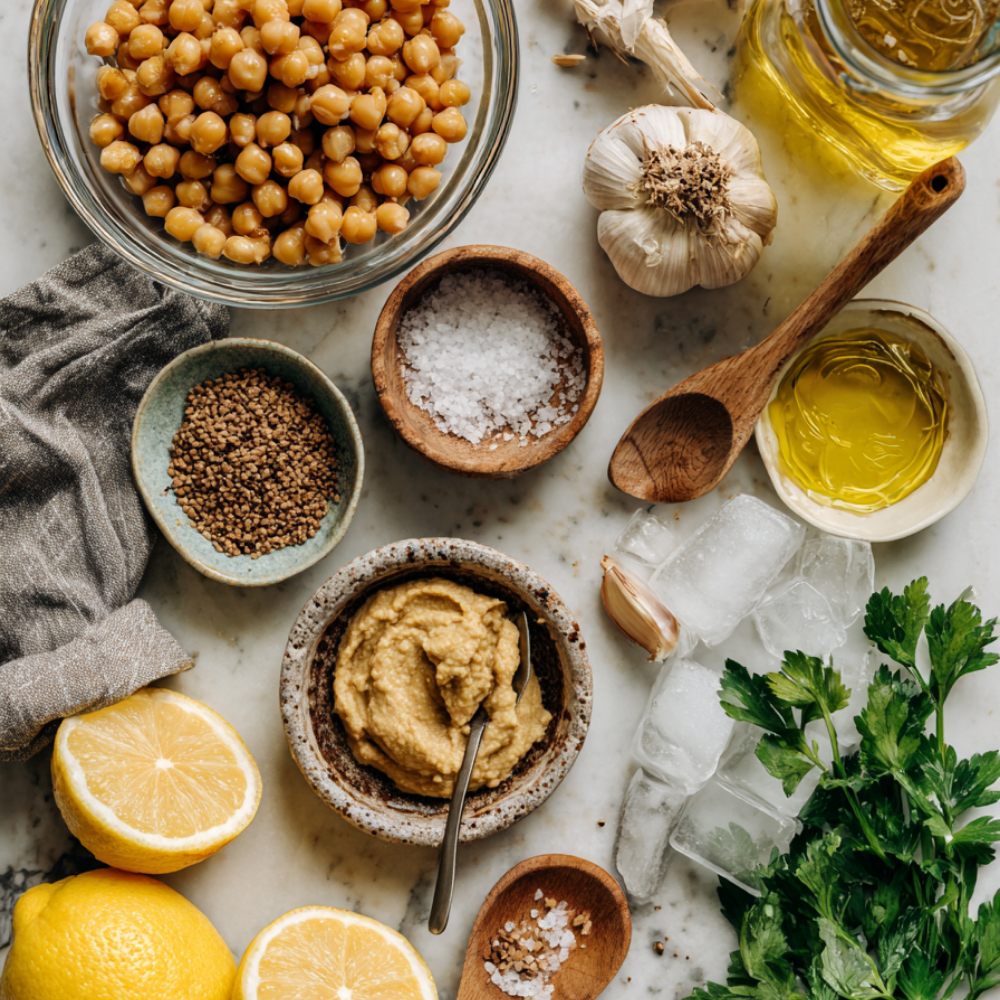
For the Chickpeas
- 1 cup dried chickpeas
- ½ tsp baking soda (for soaking)
- 1 tsp baking soda (for cooking)
- 1 tsp kosher salt
For the Hummus
- ½ cup tahini (well stirred)
- ¼ cup fresh lemon juice (about 2 lemons)
- ¼ cup ice water (plus more as needed)
- 2 cloves garlic (peeled)
- ½ tsp ground cumin
- ¾ tsp kosher salt (plus more to taste)
- ¼ cup reserved chickpea cooking liquid (aquafaba, plus more as needed)
For Serving
- 2 tbsp extra virgin olive oil (for drizzling)
- ½ tsp sweet or smoked paprika
- 2 tbsp fresh flat-leaf parsley (finely chopped)
- 2 tbsp finely diced red onion (optional)
- Warm pita (cut into wedges)
- Raw vegetables: cucumber rounds (carrot sticks, bell pepper strips, cherry tomatoes)
- Soak the chickpeas overnight. Place the dried chickpeas in a large bowl and cover with 2 inches of cold water. Stir in ½ tsp of baking soda. Let them soak 12 hours or overnight. They will roughly double in size.
- Drain and rinse. Pour the chickpeas into a colander and rinse them well under cold water. Discard any that look discolored or have not softened.
- Simmer with baking soda. Transfer the chickpeas to a large saucepan. Add 1 tsp of baking soda and 1 tsp of kosher salt. Cover with 2 inches of fresh water. Bring to a boil over high heat, then reduce to a low simmer, cover, and cook 1½ to 2 hours.
- Cook until they are genuinely soft. The chickpeas are ready when they crush easily between your fingers with no resistance — softer than you would ever cook them for a salad. If they still hold their shape, keep simmering in 15-minute increments. This step is what makes the hummus smooth.
- Drain and reserve the liquid. Pour the chickpeas into a colander set over a bowl to catch the cooking liquid. You will need about ¼ cup of aquafaba. Let the chickpeas cool for 10 minutes.
- Whip the tahini and lemon first. Add the tahini and fresh lemon juice to a food processor or high-speed blender. Blend for 30 seconds, until the mixture looks thick and pale. It will seize up and look curdled at first — that is expected.
- Add ice water and whip until fluffy. With the motor running, drizzle in the ice water 1 tbsp at a time. After 30 to 45 seconds, the mixture will loosen and turn pale, smooth, and fluffy. This step makes restaurant-quality hummus.
- Add the chickpeas, garlic, and cumin. Add the cooled chickpeas, 2 cloves of garlic, ½ tsp cumin, and ¾ tsp of kosher salt to the blender. Blend for 1 minute, scrape down the sides, and blend 1 more minute. The mixture should be very smooth.
- Thin with aquafaba. With the motor running, drizzle in the reserved chickpea cooking liquid 1 tbsp at a time until the hummus reaches a soft, scoopable consistency. It should hold a swoosh when you drag a spoon through it.
- Taste and adjust. Taste and add more lemon juice, salt, cumin, or garlic as needed. Hummus should taste bright, savory, and slightly nutty from the tahini. If it tastes flat, it needs salt. If it tastes heavy, it needs lemon.
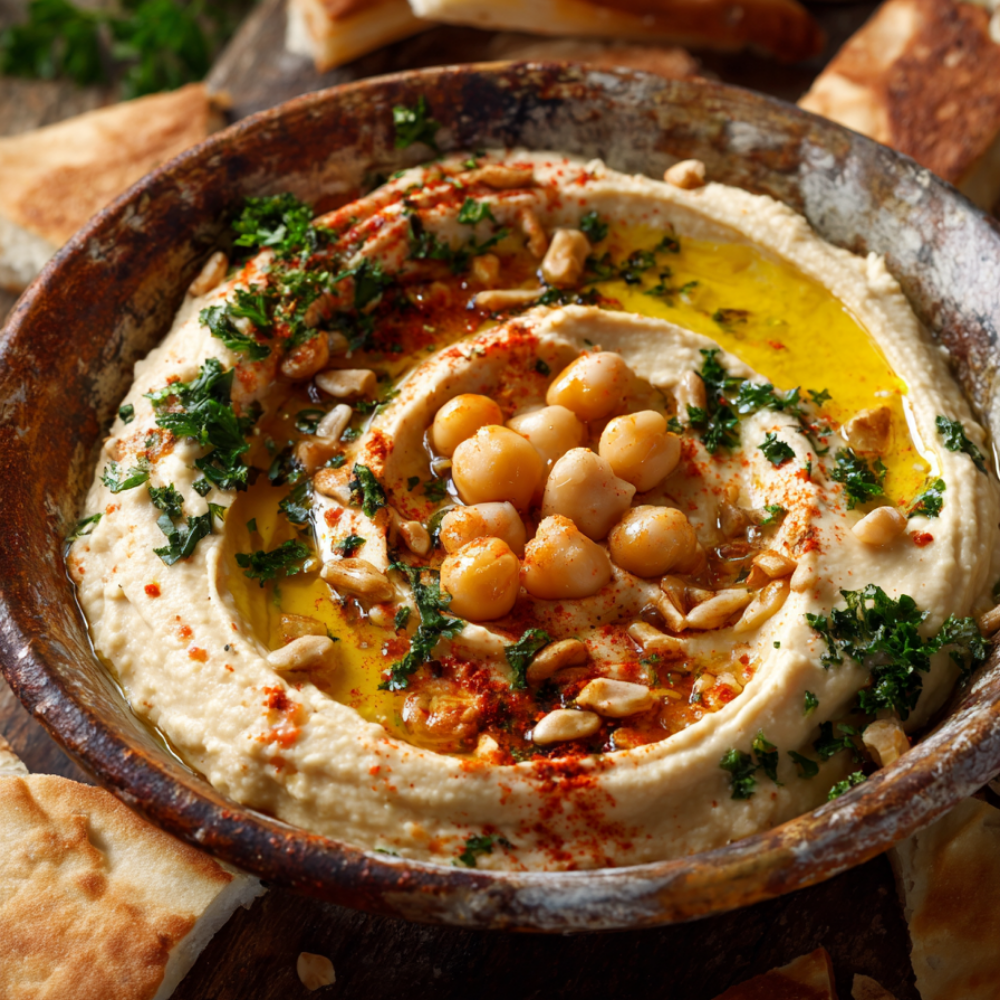
- Serve. Spread the hummus in a shallow bowl and use the back of a spoon to create a swoosh. Drizzle with olive oil, dust with paprika, and scatter with parsley and diced onion if using. Serve with warm pita and raw vegetables.
Protein per Serving: 9 g.
Nutrition Note: Protein calculated from 1 cup dried chickpeas yielding about 3 cups cooked (≈53g protein) and ½ cup tahini (≈32g protein), divided across 10 (¼-cup) servings — about 9g per serving. About 180 calories per serving, including the olive oil finish. Adding ½ cup Greek yogurt to the base raises it to about 12g per serving.
Tips for the Best Hummus Recipe
- Overcook the chickpeas. They should crush with no resistance when you press them between your fingers. Underdone chickpeas are the single most common reason hummus turns out grainy.
- Do not skip the tahini-and-lemon whip. Blending the tahini, lemon juice, and ice water before adding the chickpeas makes hummus pale, fluffy, and creamy instead of dense.
- Use ice water, not room temperature. The cold shock helps the tahini emulsify. It sounds small, and it changes the texture noticeably.
- Save the chickpea cooking liquid. Aquafaba is a better thinner than plain water because it carries the chickpea flavor. Use it to loosen the hummus, not water.
- Use fresh lemon juice. Bottled juice tastes flat and slightly metallic. Two lemons is all it takes.
- Blend longer than feels necessary. Two full minutes, scraping down the sides once. Hummus that tastes grainy almost always just needs more time in the blender.
- Finish with a real olive oil, not a cooking oil. A grassy, peppery extra virgin olive oil on top is a flavor, not a garnish.
Troubleshooting
- The hummus is grainy. The chickpeas weren’t cooked long enough, or you didn’t blend long enough. Simmer until they crush with no resistance and blend for a full 2 minutes.
- The hummus is too thick. Add aquafaba or ice water 1 tbsp at a time with the motor running until it loosens. Hummus thickens as it chills, so blend it a little looser than you want it to be.
- The hummus is too thin. You added too much liquid, or the chickpeas were overcooked into water. Let it sit in the refrigerator for an hour — it firms up considerably. Blend in 2 tbsp more tahini if it is still loose.
- The tahini seized and never loosened. The lemon juice was too cold, or the tahini was old and dry. Add ice water 1 tsp at a time with the motor running. It will come back together.
- The hummus tastes bitter. Old tahini, or too much raw garlic. Taste the tahini before you use it — it should taste nutty, not sharp. Reduce the garlic to 1 clove.
- The hummus tastes flat. It needs salt and lemon. Add ¼ tsp kosher salt and 1 tbsp fresh lemon juice and blend again.
- The hummus tastes too garlicky. The garlic was large, or it sat overnight and got stronger. Use smaller cloves, or blanch the garlic in boiling water for 60 seconds before blending.
- The olive oil pooled on top. You poured on too much olive oil, or you didn’t spread the hummus flat. Use 1 to 2 tbsp and swirl it into the swoosh with the back of a spoon.
Easy Variations
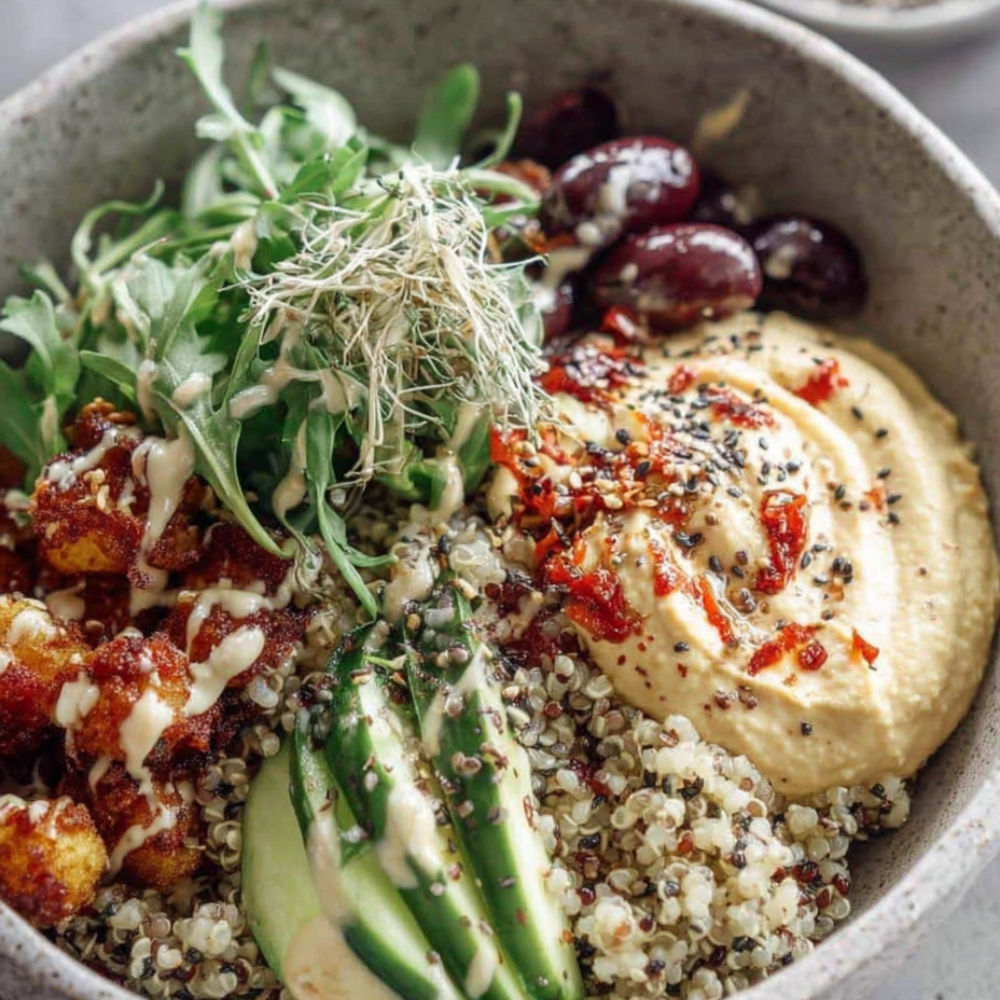
- Roasted Red Pepper Hummus. Blend ¾ cup of drained jarred roasted red peppers into the finished hummus. The color turns a warm orange-red, and the flavor gets smoky and sweet.
- Chocolate Hummus. Blend ¼ cup cocoa powder, 3 tbsp maple syrup, 1 tsp vanilla, and a pinch of salt into the finished hummus. Serve with strawberries, apple slices, and pretzels as a dessert dip.
- Fattet Hummus with Yogurt. Spread the hummus in a shallow bowl, top with 1 cup of Greek yogurt, toasted pine nuts, and a drizzle of browned butter, and serve with pita. The yogurt adds about 3g of protein per serving.
- Hummus Dressing. Whisk ½ cup of hummus with 3 tbsp olive oil, 2 tbsp lemon juice, and 2 tbsp water until pourable. Use it on grain bowls, roasted vegetables, or a kale salad.
- Canned Hummus Recipe (Quick Version). Use 2 (15-oz) cans of chickpeas, drained and rinsed, and skip the overnight soak. Simmer them with 1 tsp baking soda for 15 minutes, then proceed with the recipe. Ready in 30 minutes.
Storage and Food Safety
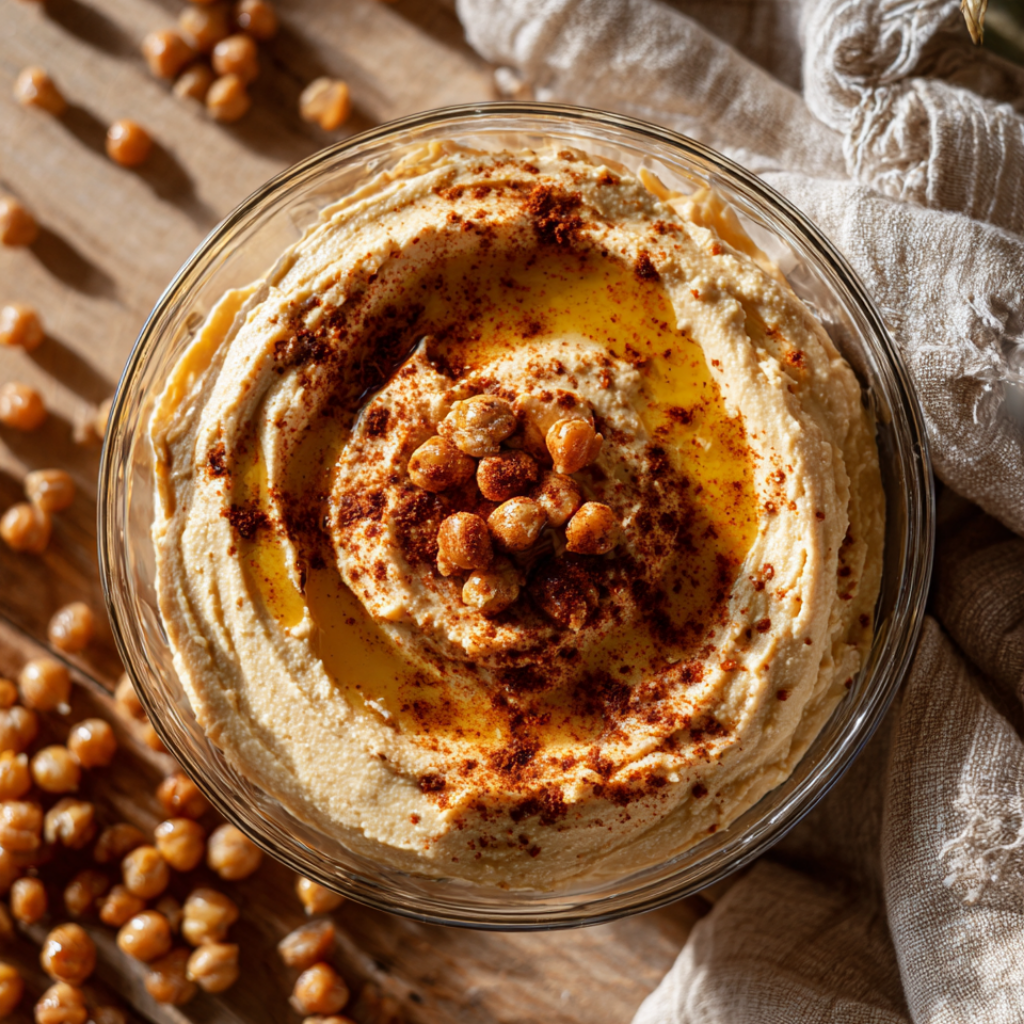
Refrigerator: Store in an airtight container with a thin layer of olive oil poured over the surface for up to 5 days. The oil layer keeps the hummus from drying out and forming a skin. Stir before serving.
Freezer: Freeze in an airtight container for up to 3 months. Thaw overnight in the refrigerator and stir well. The texture will be slightly less fluffy, but the flavor holds.
Make Ahead: Hummus tastes better on day two, once the garlic, cumin, and lemon have had time to settle. Make it up to 5 days ahead and store it in the refrigerator.
Food Safety: Refrigerate cooked chickpeas within 2 hours of cooking. Do not leave hummus at room temperature for more than 2 hours at a party. Discard any hummus that has been sitting out longer. Reheat chickpeas to 165°F if reheating from frozen before blending.
Frequently Asked Questions
How much protein is in this hummus? About 9g per ¼-cup serving from the chickpeas and tahini. Adding ½ cup of Greek yogurt to the base raises it to about 12g per serving.
Can I use canned chickpeas instead of dried? Yes. Use 2 (15-oz) cans, drained and rinsed, and simmer them with 1 tsp baking soda for 15 minutes before blending. The result is slightly less creamy but still very good.
What is aquafaba and why save it? It is the cooking liquid from the chickpeas, and it is a better thinner than plain water because it carries flavor. Use it to loosen the hummus instead of water.
Why do I cook chickpeas with baking soda? Baking soda raises the water’s pH, which breaks down the chickpeas’ cell walls. They turn soft enough to blend completely smooth.
Do I have to peel the chickpeas? No, but peeling them gives you the smoothest possible hummus. If you want to try, pinch each cooked chickpea between your fingers and the skin slides off. It takes about 15 minutes for a full batch.
Can I make this in a Vitamix? Yes. A high-speed blender produces the smoothest result, and you may need slightly less aquafaba because the blender breaks the chickpeas down more thoroughly.
How long does hummus last? Up to 5 days in the refrigerator with a thin layer of olive oil on top, or 3 months in the freezer.
Can I make hummus without tahini? Yes, but it will not taste the same. Substitute ¼ cup Greek yogurt plus 1 tbsp olive oil, or ¼ cup sunflower seed butter.
Is hummus gluten-free? Yes. Chickpeas, tahini, lemon, garlic, cumin, and olive oil are all naturally gluten-free. Serve with gluten-free pita or vegetables.
Can I make this ahead for a party? Yes. Hummus tastes better after a day in the refrigerator. Make it up to 5 days ahead and add the olive oil, paprika, and parsley right before serving.
More High-Protein Snacks You’ll Love
- Jalapeño Poppers — 18g protein, air fryer or oven.
- Kids’ Cheese Platter Board — easy party snack, no cooking.
- Homemade Mozzarella Sticks — 25g protein, air fryer.
Conclusion
Hummus has a reputation for being a project and a dip that only shows up at parties. Both are wrong. It is one of the best on-the-go snacks you can keep in the refrigerator — pack it with vegetable sticks, pita, or crackers and it carries you through an afternoon.
The version that comes out of the blender when you do it right is so much better than anything you can buy that the work stops feeling like work. Pale, fluffy, ultra-creamy hummus that holds a swoosh.
Nine grams of plant protein per serving. Six ingredients and one technique — whip the tahini and lemon with ice water first, then add the chickpeas, cumin, and garlic and blend for two full minutes.
Spread in a shallow bowl, drizzle with olive oil, and dust with paprika. Serve it with warm pita and a pile of vegetables, or build a hummus board and let guests top their own.
Either way, it is the snack you will make again, on repeat, all season.
Make it once, and you will stop buying it.