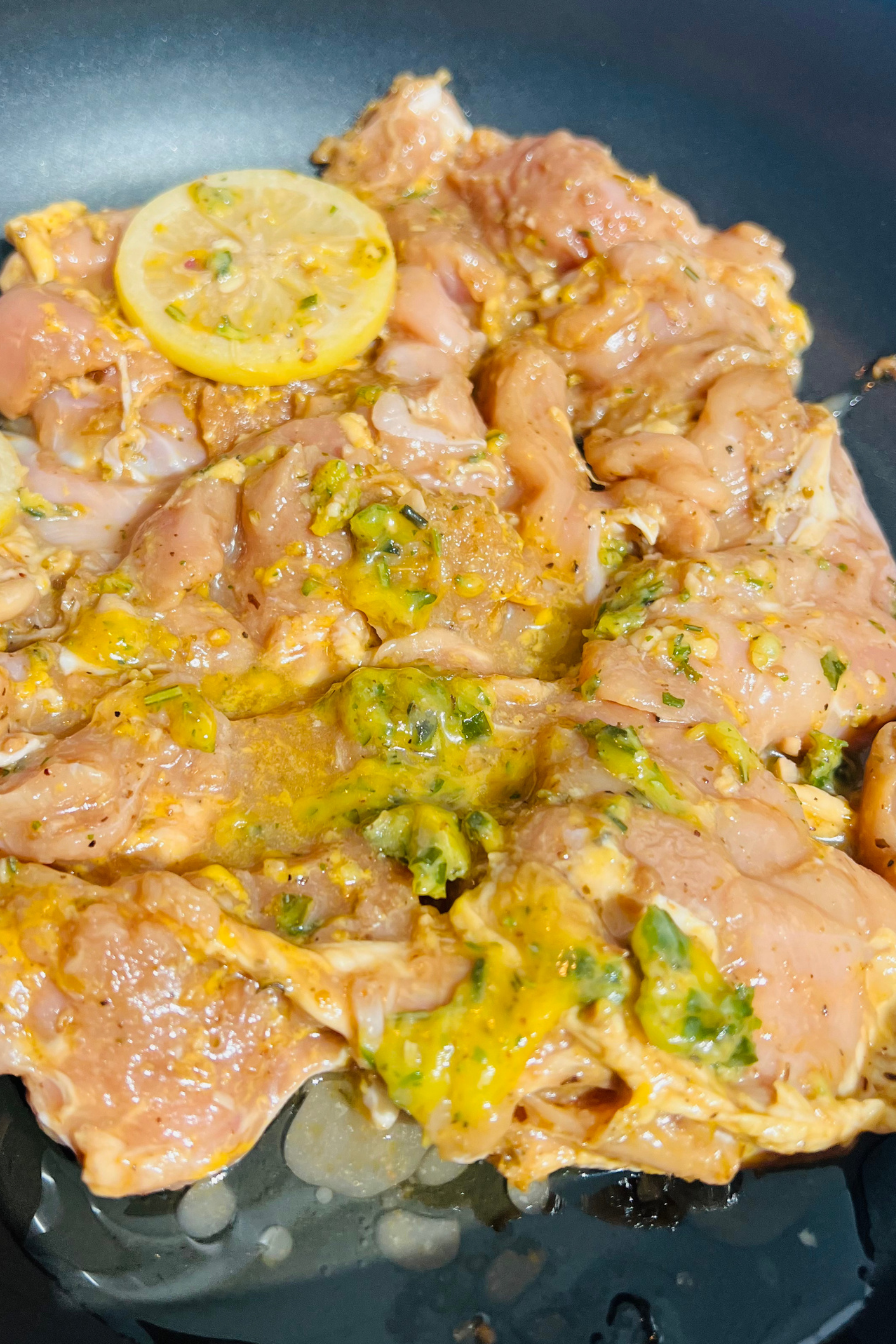

If you like lemon chicken that works as hard as you do — the kind you can pile into a dinner bowl, pack for meal prep, or slice cold over a salad the next day — this is the marinade to keep in your back pocket.
It’s a citrus-mojo brine with orange, lemon, garlic, oregano, and a touch of brown sugar, and it gives the chicken that bright, herby, Mediterranean flavor that makes it taste good on its own and even better with whatever you put it next to.
The marinade is the whole recipe.
Orange juice and lemon juice together are what make this taste like more than just lemon chicken — the orange adds sweetness and depth, the lemon adds brightness, and the vinegar and soy sauce give it a savory backbone that keeps the chicken from tasting flat.
Thirty minutes is the minimum; two hours is the maximum. Past that, the acid starts to break down the surface of the chicken and the texture gets mealy.
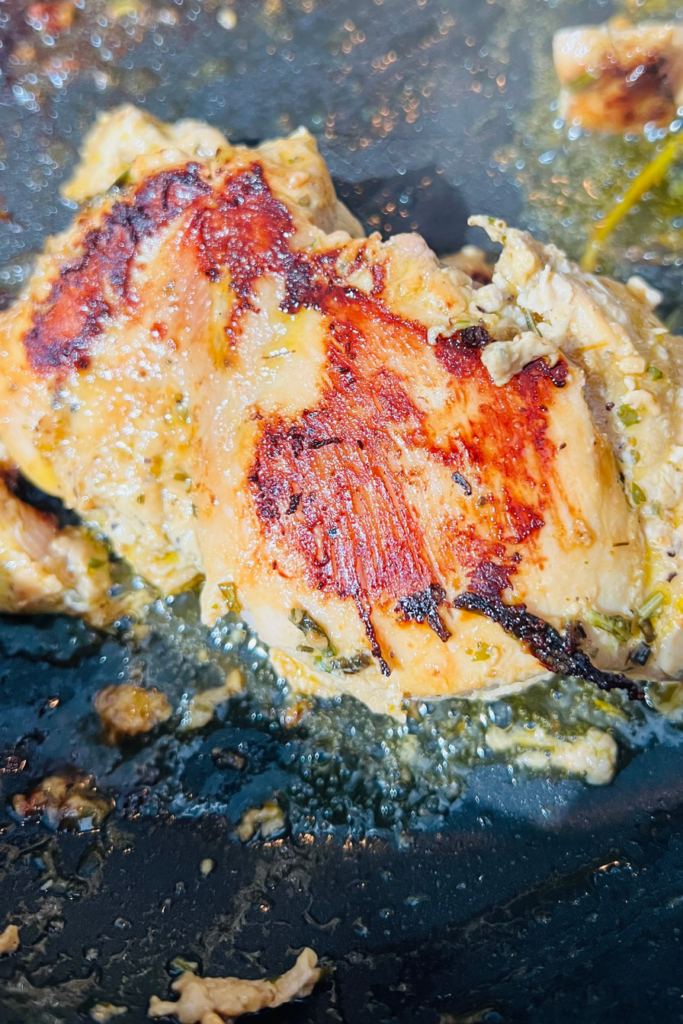
The technique is mostly about the sear.
Boneless, skinless chicken thighs come out of the marinade wet, and wet chicken steams instead of sears.
Patting them completely dry with paper towels before they hit the pan is the difference between a golden crust and pale, rubbery chicken.
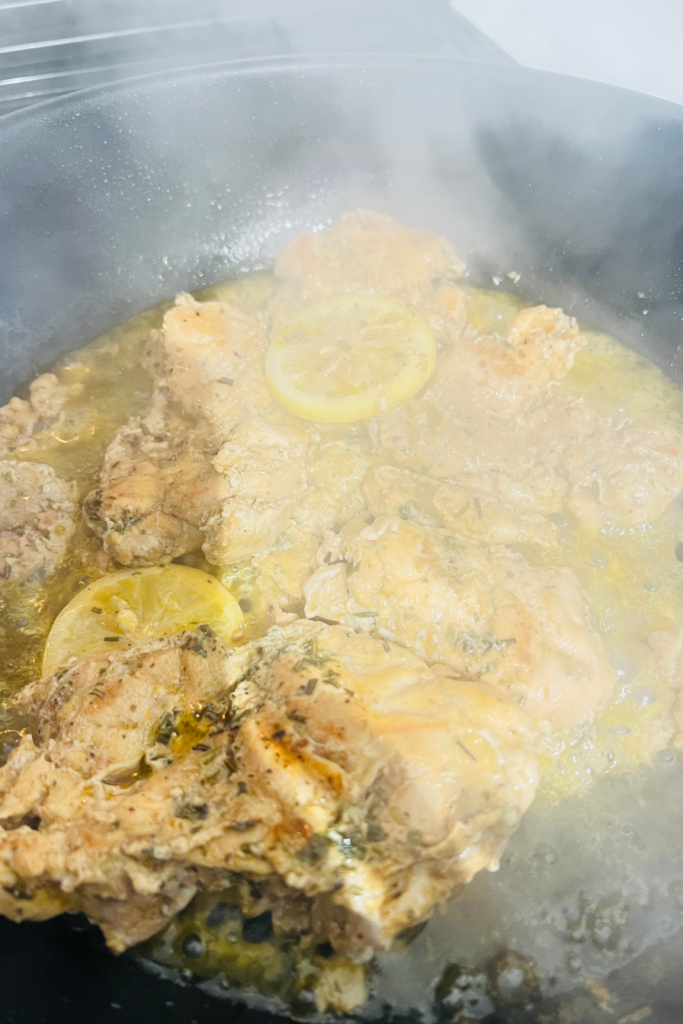
A cast-iron skillet and medium-high heat give you that deep brown crust, and the lemon slices and oregano sprigs that go in the pan with the chicken get caramelized and serve as both a garnish and a flavor hit.
The pan sauce is the last step.
After the chicken comes out, the skillet gets a knob of butter, some garlic, parsley, and rosemary, and 30 to 60 seconds of heat.
That scrapes up all the browned bits and turns them into a warm, herby sauce that goes over the chicken at the end.
The batch serves 4 with 34 grams of protein per serving, and the whole thing takes about 15 minutes of prep, 30 minutes to marinate, and 12 to 15 minutes in the skillet.
It’s a high-protein chicken recipe that works for dinner tonight, lunch tomorrow, and whatever you want to do with the leftovers.
Why This Recipe Works
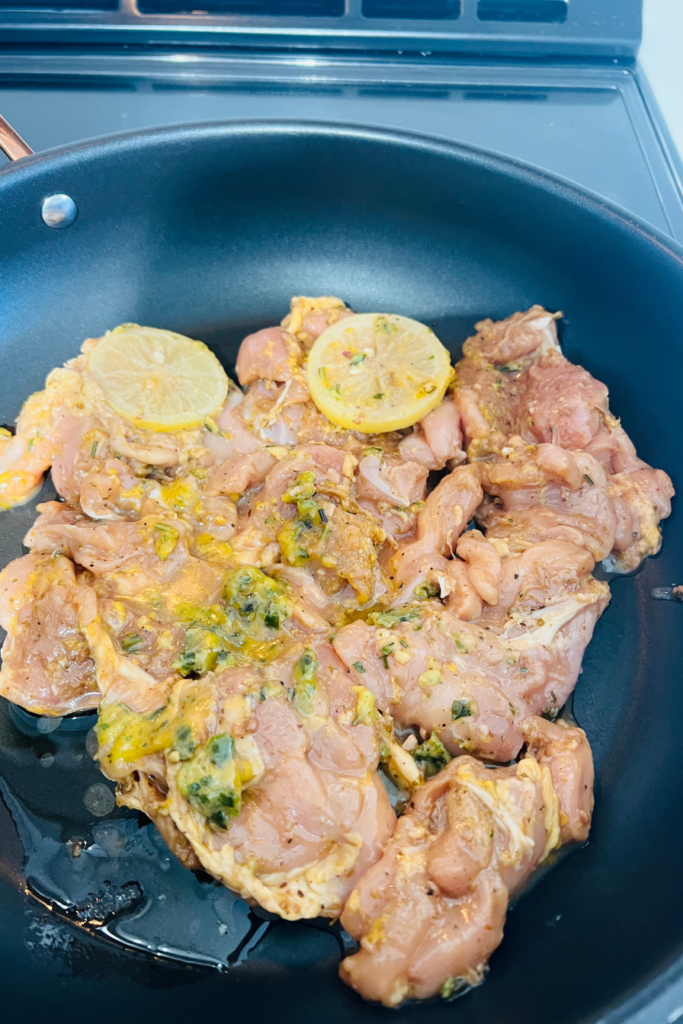
Lemon herb chicken goes wrong in three specific ways: chicken that’s bland and dry, chicken that’s mushy from marinating too long, and chicken that steams instead of sears. Here’s how this version solves each one.
1. Orange Juice and Lemon Juice Together
Lemon juice alone makes the chicken sour and one-note. Orange juice adds sweetness and depth, and the two together create the citrus brightness that defines a good Mediterranean marinade. The vinegar and soy sauce do the savory work — they give the marinade a backbone that keeps the chicken from tasting flat.
2. Thirty Minutes to Two Hours, No Longer
The acid in the marinade breaks down the surface of the chicken as it sits. At 30 minutes to 2 hours, the marinade has penetrated and flavored the meat without compromising the texture. Past 2 hours, the surface of the chicken gets mushy and the texture becomes mealy. Set a timer and pull it.
3. Pat the Chicken Completely Dry Before Searing
Wet chicken steams instead of sears, and steamed chicken has no crust. Patting the chicken thighs dry with paper towels after they come out of the marinade is the single most important step for getting that golden crust. It’s also the step most people skip.
Ingredients That Matter
Boneless, skinless chicken thighs. One and a half pounds, trimmed of excess fat. Thighs stay juicy and take a sear beautifully, and they’re more forgiving than breasts in the skillet. The surface area of a thigh gives you more crust per bite.
Fresh orange juice. A quarter cup. The sweetness and depth in the marinade. Fresh, not bottled — bottled orange juice tastes flat and candy-like.
Fresh lemon juice and lemon zest. Two tablespoons of juice and half a teaspoon of zest. The brightness in the marinade. The zest is where the lemon oil lives and it carries more flavor than the juice alone.
Brown sugar or honey. One tablespoon. The touch of sweetness that balances the acid and helps the chicken caramelize in the pan.
Low-sodium soy sauce or tamari. One tablespoon. The umami backbone. Tamari makes the recipe gluten-free.
Avocado oil or olive oil. One tablespoon for the marinade. The fat that carries the flavor into the chicken.
White distilled vinegar. One tablespoon. The acid that helps the marinade penetrate the chicken. White vinegar is neutral, so it doesn’t compete with the citrus.
Dried oregano, garlic powder, salt, and pepper. The seasoning. Dried oregano holds up better than fresh in a marinade, and garlic powder distributes more evenly than fresh garlic.
Lemon slices and fresh oregano sprigs. For the pan. They caramelize alongside the chicken and become both a garnish and an extra hit of flavor.
Butter, garlic, parsley, and rosemary. For the pan sauce. The butter and garlic scrape up the browned bits, and the parsley and rosemary add a fresh, herby finish.
How to Make Pan-Seared Lemon Herb Chicken Thighs
(See the recipe card below — the steps are identical and the card is the single source of truth.)
Tips and Troubleshooting
The chicken didn’t get a golden crust. It was wet when it went into the pan, or the pan wasn’t hot enough. Pat the thighs completely dry and get the pan shimmering before they go in.
The chicken tastes sour instead of bright. Too much lemon juice, or the orange juice was skipped. The orange balances the lemon — don’t leave it out.
The chicken texture is mushy. It marinated longer than 2 hours. The acid breaks down the surface — pull the chicken at the 2-hour mark at the latest.
The marinade tastes flat. The soy sauce or vinegar was skipped, or the salt was under-measured. Both add the savory backbone that keeps the chicken from tasting one-note.
The pan sauce tastes bitter. The garlic burned instead of turning fragrant. Keep the heat on LOW and stir constantly for 30 to 60 seconds.
The chicken is dry. It cooked too long, or the thighs were thin. Pull the chicken at 165°F to 170°F — thighs are forgiving, but past 175°F they start to dry out.
The lemon slices burned. The pan was too hot, or the slices were too thin. Use thin slices (about ⅛ inch) and place them in the empty spaces between the chicken, not on top of it.
The pan sauce is greasy. The butter separated. Lower the heat, add the butter, and whisk constantly until it’s incorporated into the drippings.
Substitutions and Swaps
Chicken thighs → chicken breasts. Same quantity. Reduce the marinating time to 30 minutes to 1 hour, and pull the breasts at 165°F — they dry out faster than thighs.
Chicken thighs → bone-in, skin-on thighs. Same quantity. Sear skin-side down first and add 5 to 7 minutes of cooking time.
Orange juice → tangerine or blood orange juice. Same quantity. Tangerine is sweeter; blood orange is slightly more tart and deeper in color.
Lemon juice → lime juice. Same quantity. Lime is sharper and more acidic, so reduce to 1½ tablespoons.
For a grilled version: marinate the chicken as directed, then grill over medium-high heat 5 to 6 minutes per side, until 165°F. Captures the “grilled lemon herb chicken” keyword.
For a lemon butter sauce version: finish the pan sauce with an extra tablespoon of butter whisked in at the end, off the heat. Captures the “lemon butter sauce for chicken” keyword.
For a lemon thyme version: swap the dried oregano for dried thyme, and add a fresh thyme sprig to the pan with the lemon slices. Captures the “lemon thyme chicken” keyword.
For a lemon basil version: swap the rosemary in the pan sauce for fresh basil, added off the heat. Captures the “lemon basil chicken” keyword.
For a cilantro lime version: swap the lemon for lime and the parsley for cilantro. Captures the “cilantro lime chicken marinade” keyword.
Storage and Reheat
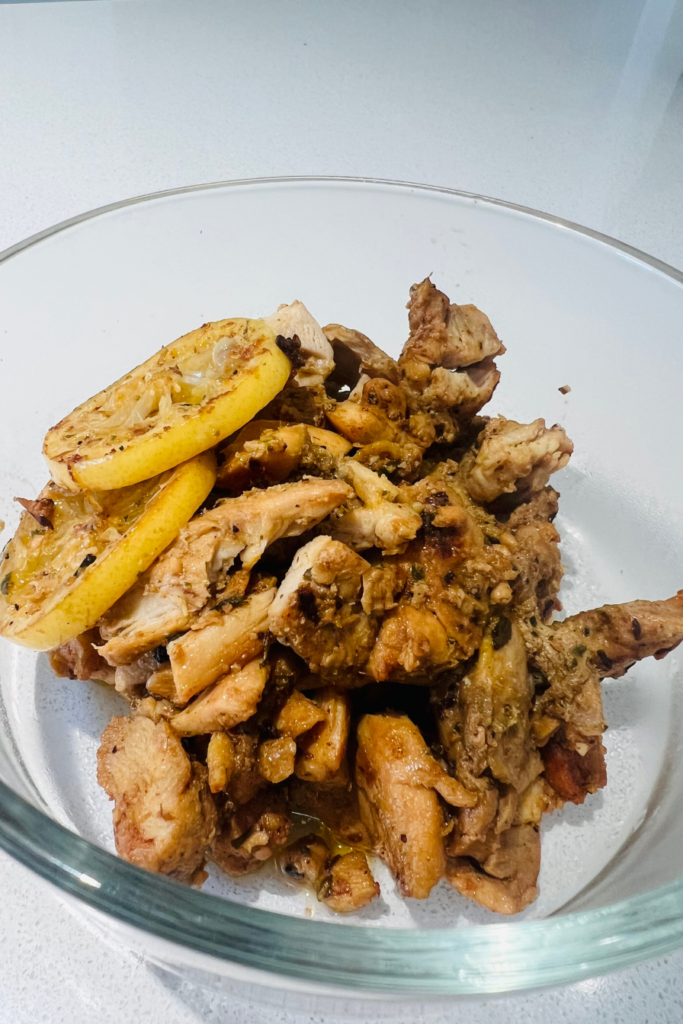
Refrigerate cooked chicken thighs in glass airtight containers with the pan juices for up to 4 days.
Reheat in a covered skillet over medium-low heat with 1 tablespoon of water or chicken broth for 3 to 4 minutes to restore moisture without drying out the protein.
Freeze the cooked chicken (without the pan sauce) for up to 3 months. Thaw overnight in the fridge and reheat gently.
Food safety: store leftovers within 2 hours of cooking. Reheat to 165°F before serving. Discard anything left at room temperature longer than 2 hours.
Pan-Seared Lemon Herb Chicken Thighs
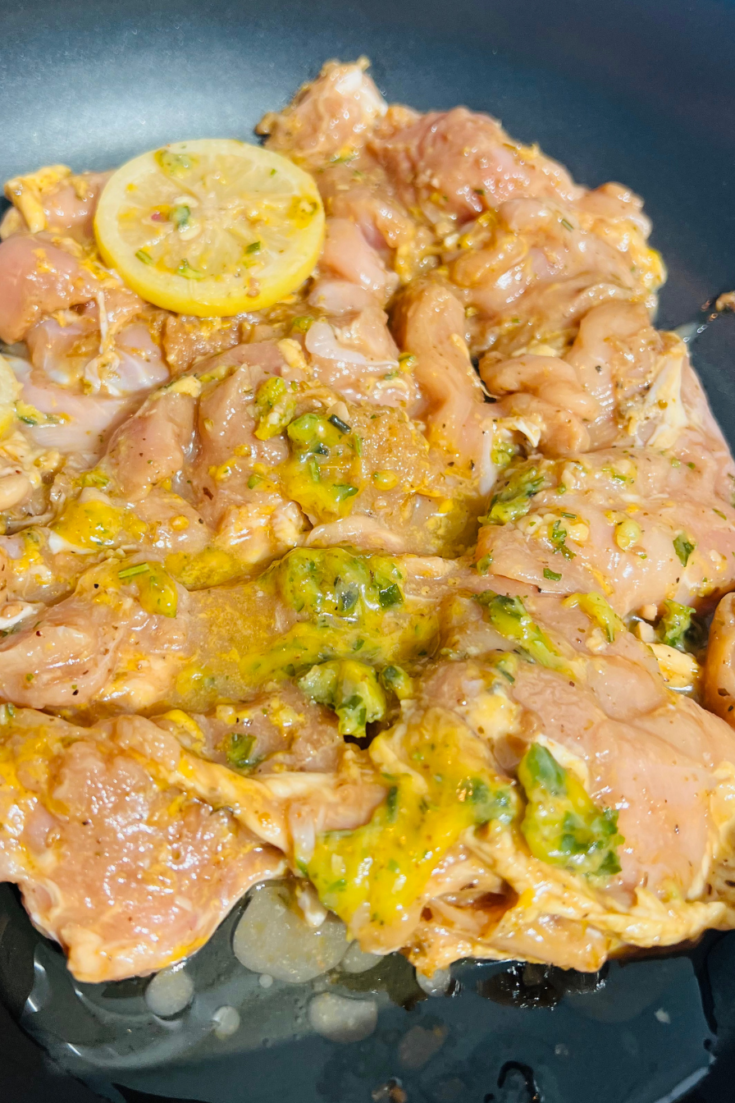
Juicy boneless, skinless chicken thighs marinated in a citrus-mojo brine, pan-seared to a golden crust, and finished with a fresh garlic-herb lemon glaze — 34g of protein per serving.
Ingredients
Mojo Citrus Marinade
- 1½ lbs boneless, skinless chicken thighs (trimmed of excess fat)
- ¼ cup fresh orange juice
- 2 tablespoons fresh lemon juice (plus ½ lemon, thinly sliced into rounds)
- 1 tablespoon brown sugar or honey
- 1 tablespoon low-sodium soy sauce or tamari
- 1 tablespoon avocado oil or olive oil
- 1 tablespoon white distilled vinegar
- 1 teaspoon dried oregano
- 1 teaspoon garlic powder (or 3 cloves fresh garlic, minced)
- ½ teaspoon lemon zest
- ½ teaspoon fine sea salt + ¼ teaspoon freshly cracked black pepper
Garlic-Herb Pan Finish
- 1 tablespoon extra-virgin olive oil
- 1 tablespoon unsalted butter
- 2 cloves garlic, finely minced or microplaned
- 1 tablespoon fresh flat-leaf parsley, finely chopped
- 1 teaspoon fresh rosemary, finely chopped
- 2 to 3 fresh oregano sprigs
Instructions
- Whisk the Marinade: In a large bowl or zip-top bag, combine the orange juice, lemon juice, brown sugar, soy sauce, avocado oil, vinegar, dried oregano, garlic powder, lemon zest, salt, and black pepper.
- Marinate the Chicken: Add the chicken thighs to the marinade and toss to coat evenly. Cover and refrigerate at least 30 minutes, up to 2 hours maximum.
- Pat Dry for Searing: Remove the chicken from the marinade and discard the remaining liquid. Pat the surface of the chicken dry with paper towels. Removing the excess surface moisture is essential for a deep golden crust instead of steaming the meat.
- Sear the Chicken: Heat 1 tablespoon of extra-virgin olive oil in a large heavy-bottom skillet (cast iron preferred) over medium-high heat. Once shimmering hot, lay the chicken thighs in a single layer, spacing them apart. Add the lemon slices and fresh oregano sprigs to the empty spaces in the skillet.
- Cook to Golden: Cook undisturbed 5 to 6 minutes, until a rich golden-brown crust forms. Flip the chicken, reduce the heat to medium, and cook another 5 to 6 minutes, until the internal temperature reaches 165°F to 170°F. Transfer the chicken and seared lemon slices to a platter to rest.
- Baste With the Garlic-Herb Finish: Lower the skillet heat to LOW. Melt 1 tablespoon of butter into the remaining pan drippings. Add the minced garlic, chopped parsley, and chopped rosemary. Sauté 30 to 60 seconds, until fragrant, scraping up any caramelized bits from the bottom of the pan.
- Plate and Serve: Spoon the warm garlic-herb pan sauce over the seared chicken thighs and top with the caramelized lemon slices. Serve hot.
Notes
Notes
The marinade is what makes this recipe — orange and lemon together, plus soy sauce and vinegar for the savory backbone.
Thirty minutes to 2 hours is the sweet spot; past 2 hours the acid breaks down the surface of the chicken and the texture gets mealy. Pat the thighs completely dry before searing — wet chicken steams instead of sears, and there's no crust.
The garlic-herb pan sauce comes together in 30 to 60 seconds at the end, so keep the heat low and stir constantly so the garlic doesn't burn. Leftovers keep 4 days in the fridge; reheat in a covered skillet with a splash of water or broth.
Nutrition is an estimate and varies by chicken size.
Estimated per serving: 340 calories · 34g protein · 4g carbs · 20g fat · 1g fiber · 620mg sodium
Frequently Asked Questions
How long should I marinate the chicken?
30 minutes to 2 hours. The minimum is 30 minutes for flavor, and the maximum is 2 hours — past that, the acid starts to break down the surface of the chicken and the texture becomes mealy.
Can I use chicken breasts instead of thighs?
Yes. Reduce the marinating time to 30 minutes to 1 hour, and pull the breasts at 165°F. Breasts dry out faster than thighs.
Why didn’t my chicken get a golden crust?
The chicken was wet when it went into the pan, or the pan wasn’t hot enough. Pat the thighs completely dry with paper towels and get the pan shimmering before they go in.
Can I grill this instead of pan-searing?
Yes. Marinate the chicken as directed, then grill over medium-high heat 5 to 6 minutes per side, until 165°F. The flavor is the same; the crust is different.
Can I use this marinade for other proteins?
Yes. It works well for pork chops, salmon, shrimp, and tofu. The marinating time should be reduced for fish and shrimp (15 to 30 minutes) because the acid breaks them down faster.
Can I make this ahead for meal prep?
Yes. Cook it fully, cool it, and store in an airtight container with the pan juices for up to 4 days. Reheat gently in a covered skillet with a splash of water or broth.
Is this gluten-free?
Only if you use tamari instead of soy sauce. Check the label — standard soy sauce contains wheat.
What do you serve with pan-seared lemon herb chicken?
Rice, quinoa, roasted vegetables, a Greek salad, pita bread, or a simple green salad. The pan sauce is also excellent spooned over rice or a grain bowl.
More High-Protein Chicken Recipes You’ll Love
15 Easy Chicken Breast Recipes for Weeknight Dinners
Cuban Mojo Chicken (Crispy Skin, 36g Protein, 425°F)
Spicy Thai Basil Chicken: 55g Protein, One Wok, Under 20 Minutes
Closing
I’ve made this lemon herb chicken more times than I can count, and the two things that changed everything for me were using orange juice alongside the lemon and patting the chicken completely dry before searing it.
The first batch I made was sour and steamed instead of seared — the orange and the dry pat fixed that completely.
If you make the grilled version or swap the herbs for thyme or basil, let me know how it turns out in the comments.