
Most protein cookies are a disappointment. They’re dry. They’re cakey.
They taste like a protein bar that got left in the sun.
And they have a texture somewhere between a muffin and a sponge—nothing like an actual chocolate chip cookie.
The problem is protein powder. It absorbs liquid aggressively, dries out baked goods as they cool, and gets rubbery when used in high quantities.
Most protein cookie recipes try to compensate by adding banana or applesauce, which makes them cakey instead of chewy.
Or they go flourless, which means nothing gives the cookie structure.
This version fixes all of it. Greek yogurt replaces some of the butter and adds moisture that doesn’t bake off.
A small amount of real flour gives the cookie structure and chew. Brown sugar and maple syrup keep it soft.
The protein powder is balanced with enough fat and liquid that it doesn’t dry out the crumb.
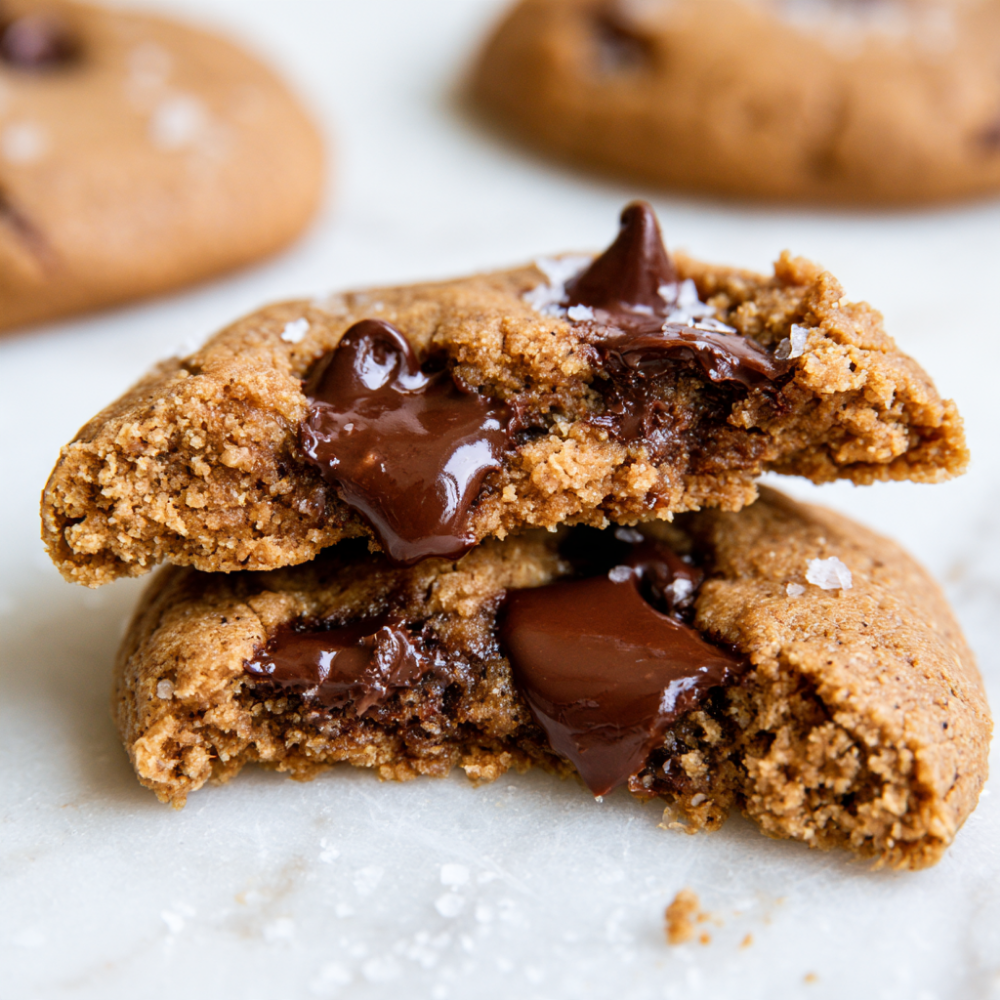
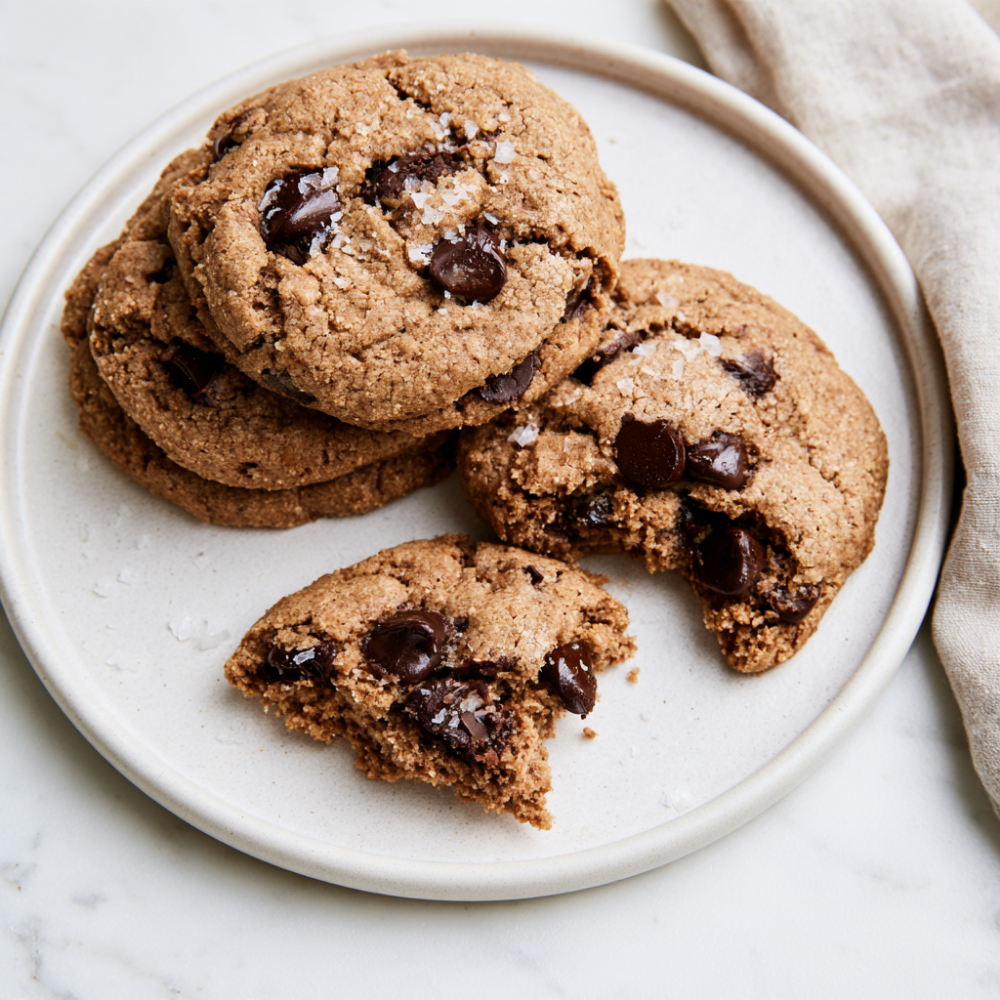
The result is a cookie that’s soft in the middle, slightly crisp at the edges, studded with melted chocolate, and delivers 9 grams of protein per cookie.
It tastes like a chocolate chip cookie. It just happens to have protein.
They’re also genuinely easy. One bowl, no mixer, 15 minutes of prep, and a 30-minute chill that you can skip if you’re in a hurry.
Let’s bake them.
Why This Recipe Works
Greek yogurt is the moisture secret. Protein powder absorbs liquid as it bakes and continues absorbing as the cookies cool. Greek yogurt adds moisture that doesn’t evaporate, which keeps the cookies soft for days instead of turning them into hockey pucks by hour two.
A small amount of real flour gives the cookie structure. Flourless protein cookies are either cakey or crumbly because nothing builds a chewy crumb. A cup of all-purpose flour provides gluten that develops chew and holds the cookie together without making it dense.
Brown sugar and maple syrup keep them soft. Brown sugar contains molasses, which holds moisture. Maple syrup is a liquid sweetener that adds moisture without adding crunch. Together, they keep the cookies tender during baking and after cooling.
Butter and nut butter provide the fat that protein powder needs. Protein powder without enough fat bakes into something rubbery. Three tablespoons of butter plus two tablespoons of almond or peanut butter give the cookies richness and a tender crumb.
Chilling the dough is not optional. Protein powder absorbs liquid slowly. A 30-minute chill gives the flour time to hydrate and the protein powder time to absorb the wet ingredients fully. Skip this step and the cookies spread too thin and bake up dry.
Underbake them slightly and let them finish on the pan. Protein cookies firm up fast as they cool. Pull them at 10 minutes, when the centers still look slightly underdone, for a soft, chewy cookie. Pulling them at 12 minutes gives you a crisp one.
Cool completely on the baking sheet. Protein cookies are fragile when warm. Transferring them to a rack too early breaks them apart. Let them cool on the pan for 15 minutes, then move them.
Chocolate chips do double duty. They add flavor and mask the slightly earthy taste protein powder can have. Don’t reduce the amount—half a cup across ten cookies is the right ratio.
A pinch of flaky salt on top makes them taste finished. It cuts through the sweetness and makes the chocolate taste more like chocolate.
Every protein powder behaves differently, so the dough is forgiving. If it’s too dry, add a splash of milk. If it’s too wet, add a tablespoon of flour. The recipe includes both adjustments.
Protein Chocolate Chip Cookies
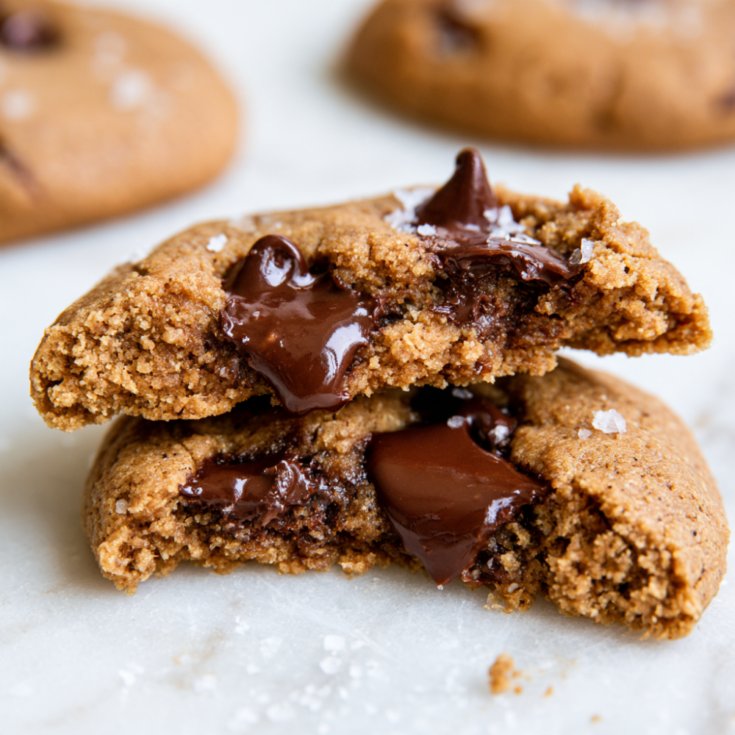
Soft, chewy protein chocolate chip cookies made with Greek yogurt, protein powder, and a little flour. One bowl, no mixer, and 9 grams of protein per cookie.
Ingredients
For the Cookies:
- 1 cup all-purpose flour
- ⅔ cup vanilla protein powder (about 2 scoops—whey, whey-casein blend, or plant-based all work)
- ½ tsp baking soda
- ½ tsp kosher salt
- 3 tbsp unsalted butter, softened to room temperature
- ¼ cup packed light brown sugar
- 2 tbsp maple syrup
- 1 large egg, room temperature
- ½ cup plain Greek yogurt (full-fat or 2%)
- 2 tbsp almond butter or peanut butter
- 1 tsp vanilla extract
- ½ cup semi-sweet chocolate chips
- Flaky sea salt, for topping
Instructions
- Whisk the dry ingredients. In a medium bowl, whisk together the flour, protein powder, baking soda, and kosher salt until evenly combined. Break up any lumps in the protein powder with the back of a spoon—they won't dissolve during baking.
- Cream the butter and sugar. In a large bowl, beat the softened butter and brown sugar together with a wooden spoon or a hand mixer until smooth and slightly fluffy, about 1 minute. The mixture should look like wet sand.
- Add the wet ingredients. Add the maple syrup, egg, Greek yogurt, almond butter, and vanilla extract. Whisk vigorously until the mixture is completely smooth and uniform. It should look like a loose, glossy batter.
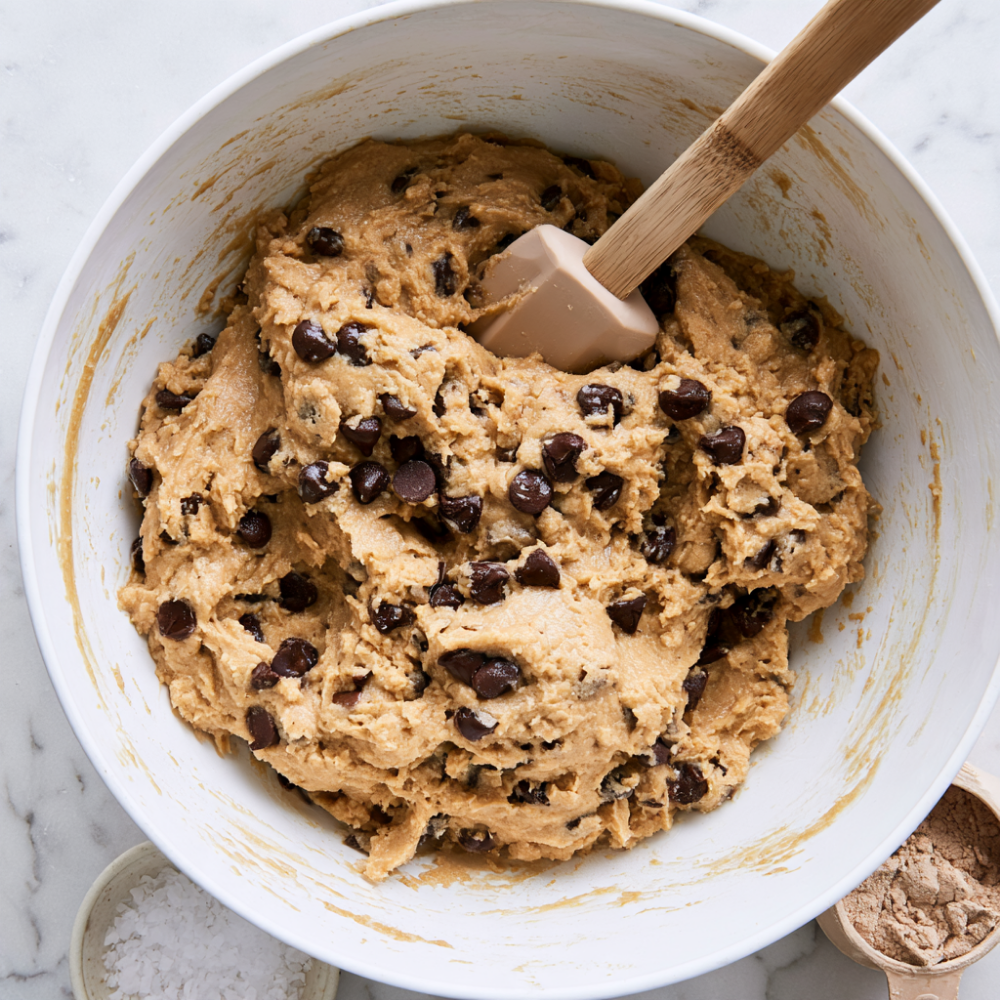
- Fold in the dry ingredients. Pour the dry mixture into the wet ingredients and fold with a rubber spatula until just combined. Stop the moment you no longer see streaks of flour. Overmixing develops gluten and makes the cookies tough.
- Check the consistency. The dough should be thick and scoopable, like a stiff brownie batter. If it's too dry or crumbly, add milk one tablespoon at a time until it comes together. If it's too wet and sticky, add flour one tablespoon at a time. Protein powder absorbency varies widely by brand, so expect this adjustment.
- Fold in the chocolate chips. Stir in the chocolate chips with 3-4 gentle strokes.
- Chill for 30 minutes. Cover the bowl and refrigerate for at least 30 minutes. This gives the flour time to hydrate and the protein powder time to absorb the wet ingredients. Don't skip this step—unchilled dough spreads too thin and bakes up dry.
- Preheat and prep. Preheat the oven to 350°F. Line a baking sheet with parchment paper.
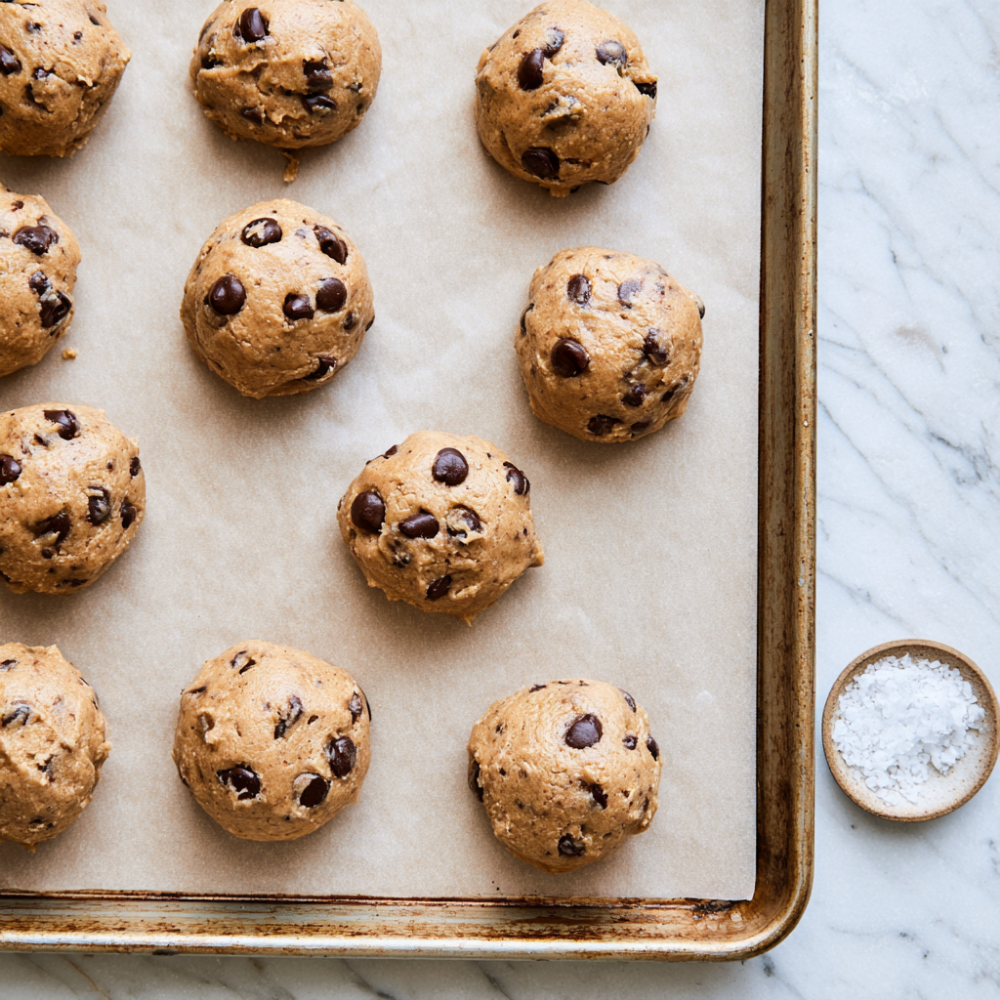
- Scoop the cookies. Use a cookie scoop or a large spoon to portion the dough into 10 equal balls, about 2 tablespoons each. Place them 2 inches apart on the prepared baking sheet. Press each ball down slightly with the palm of your hand or the back of a spoon so they're about ½ inch thick. They won't spread much on their own.
- Bake. Bake for 10–12 minutes, until the edges are set and lightly golden and the centers still look slightly underdone. Do not overbake—protein cookies firm up fast as they cool.
- Add the flaky salt. As soon as the cookies come out of the oven, sprinkle each one with a small pinch of flaky sea salt.
- Cool completely on the pan. Let the cookies cool on the baking sheet for 15 minutes before transferring them to a wire rack. They're fragile when warm and will fall apart if you move them too soon.
- Store in the refrigerator. These cookies stay soft for up to 5 days in an airtight container in the fridge. Bring to room temperature before eating, or microwave for 10 seconds.
Notes
Protein per Cookie: About 9g
Nutrition note: Estimated per cookie with all-purpose flour, a vanilla whey-casein blend protein powder, full-fat Greek yogurt, butter, almond butter, and semi-sweet chocolate chips: ~210 calories, 9g protein, 22g carbs, 11g fat. Using a plant-based protein powder may reduce protein by 1–2g per cookie and produce a slightly denser texture. Using non-fat Greek yogurt reduces fat by about 1g per cookie.
Tips for the Best Protein Chocolate Chip Cookies
Use a protein powder you actually like. Protein powder is the dominant flavor in these cookies. If your powder has a chalky or artificial aftertaste, the cookies will too. A vanilla whey-casein blend produces the most reliable texture and the mildest flavor.
Break up the lumps in the protein powder before mixing. Protein powder clumps easily. Whisk it with the flour and break up lumps with the back of a spoon to ensure it distributes evenly instead of hiding in pockets.
Greek yogurt is the moisture secret—don’t swap it for milk. Milk adds liquid that bakes off. Greek yogurt adds moisture that stays in the crumb. Full-fat or 2% Greek yogurt produces the softest cookies.
Chill the dough for a full 30 minutes. Protein powder absorbs liquid slowly. A 30-minute chill hydrates the flour, firms the dough, and prevents the cookies from spreading too thin. Skip this, and they’ll be flat and dry.
The dough is forgiving—adjust as needed. Protein powder absorbency varies wildly by brand. If the dough is too dry, add milk a tablespoon at a time. If it’s too wet, add flour a tablespoon at a time. Trust the texture, not the recipe.
Press the dough balls down before baking. Protein cookie dough doesn’t spread like traditional cookie dough. Flatten each ball to about ½ inch thick for a proper cookie shape, not a dome.
Underbake slightly and let them finish on the pan. Pull them when the edges are set, but the centers still look a touch underdone. They’ll firm up as they cool. Overbaking is the number one reason protein cookies turn out dry.
Cool completely on the baking sheet. The residual heat finishes setting the crumb. Transferring to a rack too early breaks them apart.
Flaky salt on top makes a real difference. It cuts through the sweetness and makes the chocolate taste more like chocolate. A small pinch per cookie is enough.
Store in the refrigerator, not on the counter. Protein and dairy cookies last longer and stay softer in the fridge. Bring them to room temperature or warm for 10 seconds before eating.
These freeze beautifully. Freeze baked cookies in a zip-top bag for up to 3 months. Reheat from frozen in the microwave for 20 seconds.
Double the recipe if you’re feeding a crowd. It scales cleanly. Just use a larger bowl and bake in two batches.
Troubleshooting
The cookies are dry. You overbaked them, or you used a protein powder that absorbs more liquid than expected. Pull them at 10 minutes and add an extra tablespoon of milk next time.
The cookies are rubbery. You used too much protein powder, or your protein powder is a pure whey isolate. Whey isolate produces the rubberiest texture. A whey-casein blend or a plant-based blend produces a softer cookie.
The cookies spread too thin. You skipped the chill, or your dough was too wet. Chill the dough for the full 30 minutes and add a tablespoon of flour if it looks loose.
The cookies didn’t spread at all. Protein cookie dough doesn’t spread much. Press the dough balls down to about ½ inch thick before baking. If you forgot, they’ll bake up as domes.
The cookies crumbled apart. You moved them off the pan too soon. Protein cookies are fragile when warm. Cool them for the full 15 minutes on the sheet before transferring.
The cookies taste chalky. Your protein powder has a chalky flavor, or you used too much. Stick to ⅔ cup, and use a brand you enjoy on its own.
The cookies taste eggy. You used a large egg instead of a medium, or you didn’t whisk the wet ingredients together thoroughly. Whisk until the mixture is completely smooth before adding the dry.
The dough is too sticky to scoop. Add flour one tablespoon at a time until it’s scoopable. Different protein powders absorb different amounts of liquid.
The dough is too dry and crumbly. Add milk one tablespoon at a time. This is the most common adjustment with protein powder.
The chocolate chips sank to the bottom. Your dough was too wet. Add a tablespoon of flour and chill for the full 30 minutes.
Easy Variations
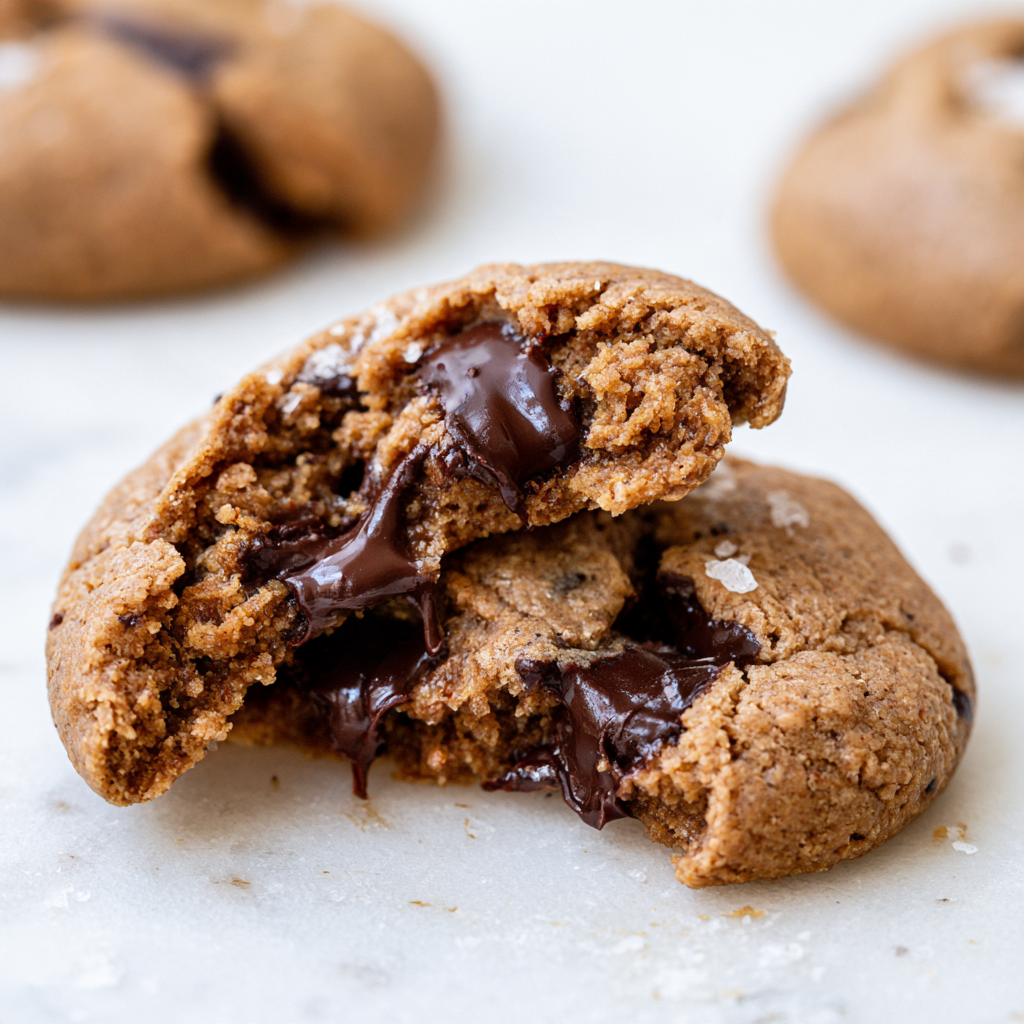
Double Chocolate Protein Cookies. Swap ¼ cup of the flour for ¼ cup of cocoa powder and use chocolate protein powder instead of vanilla. Add an extra tablespoon of milk since cocoa absorbs liquid.
Peanut Butter Protein Cookies. Swap the almond butter for peanut butter and add ¼ cup of mini peanut butter chips along with the chocolate chips.
Oatmeal Protein Cookies. Swap ½ cup of the flour for ½ cup of old-fashioned rolled oats. The cookies get a chewier texture and more fiber.
Gluten-Free Protein Cookies. Use a 1-to-1 gluten-free flour blend with xanthan gum. The texture will be slightly denser but still soft and chewy.
Protein Cookies With Greek Yogurt Frosting. Skip the chocolate chips and drizzle the cooled cookies with a simple frosting made from ½ cup Greek yogurt, 2 tablespoons powdered sugar, and ½ teaspoon vanilla.
Vegan Protein Cookies. Use a flax egg (1 tablespoon ground flax + 3 tablespoons water), coconut oil instead of butter, coconut yogurt instead of Greek yogurt, and a plant-based protein powder.
High Protein Breakfast Cookies. Add 2 tablespoons of chia seeds and 2 tablespoons of chopped walnuts. The cookies get more fiber and healthy fats and work as a grab-and-go breakfast.
Protein Sugar Cookies. Skip the chocolate chips and add ½ teaspoon of almond extract instead of vanilla. Top with a simple Greek yogurt glaze. Roll and cut like traditional sugar cookies.
Small Batch Protein Cookies. Halve all ingredients and bake 5 cookies. Reduce the bake time to 9–10 minutes.
Protein Cookie Sandwiches. Bake the cookies as directed, then sandwich two together with a scoop of Greek yogurt mixed with a teaspoon of peanut butter and a drizzle of honey.
Storage and Food Safety
Refrigerator: Store cooled cookies in an airtight container for up to 5 days. They stay softest in the fridge because the Greek yogurt keeps them moist.
Freezer: Freeze baked cookies in a zip-top bag for up to 3 months. Reheat from frozen in the microwave for 20 seconds or let them thaw at room temperature for 30 minutes.
Make Ahead: You can make the dough and refrigerate it for up to 3 days. Scoop and bake fresh whenever you want cookies. The dough also freezes well—roll it into balls, freeze on a sheet pan, then transfer to a bag and bake from frozen, adding 2 minutes to the bake time.
Food Safety: These cookies contain egg and dairy. Refrigerate leftovers within 2 hours. Do not eat raw dough.
Frequently Asked Questions
How much protein is in each cookie?
About 9 grams per cookie, as written. The protein comes from the protein powder, Greek yogurt, egg, and almond butter.
What protein powder works best?
A vanilla whey-casein blend produces the softest, most cookie-like texture. Plant-based blends work but produce a slightly denser cookie. Pure whey isolate makes the rubberiest cookies—avoid it if you can.
Can I make these without protein powder?
You can, but the protein count drops to about 3g per cookie. Swap the protein powder for an extra ⅔ cup of flour and add 2 extra tablespoons of Greek yogurt.
Do I have to chill the dough?
Yes. Protein powder absorbs liquid slowly. A 30-minute chill hydrates the flour, firms the dough, and prevents the cookies from spreading too thin.
Why are my protein cookies rubbery?
You used too much protein powder, or you used a pure whey isolate. Stick to ⅔ cup and use a blend.
Why didn’t my cookies spread?
Protein cookie dough doesn’t spread much. Press each dough ball down to about ½ inch thickness before baking.
Can I use Greek yogurt instead of butter?
You can replace the butter with an extra ¼ cup of Greek yogurt, but the cookies will be cakey instead of chewy. Butter gives them their texture.
Can I make these gluten-free?
Yes. Use a 1-to-1 gluten-free flour blend with xanthan gum. The texture will be slightly denser but still soft.
Can I make these vegan?
Yes. Use a flax egg, coconut oil instead of butter, coconut yogurt instead of Greek yogurt, and a plant-based protein powder.
How long do these cookies last?
Up to 5 days in the refrigerator, or 3 months in the freezer.
Can I freeze the dough?
Yes. Roll the dough into balls, freeze on a sheet pan for 1 hour, then transfer to a freezer bag. Bake from frozen, adding 2 minutes to the bake time.
Can I make these in a small batch?
Yes. Halve all ingredients and bake 5 cookies. Reduce the bake time to 9–10 minutes.
More High-Protein Snack Recipes You’ll Love
- Cinnamon Roll Protein Mug Cake (Single-Serve, 32g Protein)
- High-Protein Mini Pancakes (32g Protein, Blender Recipe!)
- Mason Jar Breakfast (5-Minute Greek Yogurt Parfait, 30g Protein!)
- Protein Cinnamon Rolls (No Yeast, 15g Protein, 37 Minutes!)
Conclusion
These protein chocolate chip cookies taste like a cookie.
Greek yogurt keeps them soft. A small amount of real flour gives them structure and chew. Brown sugar and maple syrup hold in the moisture.
A balanced ratio of protein powder to fat and liquid keeps them from drying out or turning rubbery.
Nine grams of protein per cookie. One bowl. No mixer. Fifteen minutes of prep, 30 minutes of chilling, and 10 minutes in the oven.
They’re soft in the middle, slightly crisp at the edges, studded with melted chocolate, and finished with flaky salt.
The keys are simple: use a protein powder you like the taste of, whisk the lumps out of the dry ingredients, don’t skip the chill, press the dough balls down before baking, underbake slightly, and cool completely on the pan. Do that, and you’ll never buy a protein cookie again.
Make a batch this weekend. Store them in the fridge. Grab one after your next workout.