Quiche has a reputation problem. It’s the brunch dish people think of as rich, creamy, and heavy — heavy cream, a butter pastry crust, and a modest amount of protein per slice.
Delicious, but not something you’d want to eat on a random Tuesday morning.
These four recipes fix that. Each one swaps heavy cream for cottage cheese, uses a higher egg-to-dairy ratio, and skips the pastry crust entirely.
Each one lands between 18 and 24 grams of protein per slice — nearly double a traditional quiche — and holds up beautifully in the refrigerator for 3 to 4 days.
One honest thing worth knowing: crustless quiche is the right format for meal prep.
A pastry crust gets soggy after a day in the refrigerator, and it also adds significant calories without contributing much protein. If you want a crust, blind-bake it first so it stays crisp.
And a second honest note: pull the quiche at 160°F in the center, not 165°F. Eggs continue cooking as they cool, and pulling them a few degrees early is the difference between a silky, custardy quiche and a rubbery one.
If the center jiggles slightly when you nudge the pan, that’s correct.
Why These High-Protein Quiche Recipes Work
Cottage cheese replaces heavy cream. A cup of cottage cheese blended until smooth gives you the same creamy, custard-like texture as heavy cream — with roughly 24 grams of protein instead of almost none.
The egg-to-dairy ratio is higher than traditional quiche. Traditional quiche uses 4 eggs to 1½ cups of heavy cream. These recipes use 8 to 10 eggs with 1 to 1½ cups of dairy, which increases the protein and makes the custard set firmer and slice more cleanly.
Crustless means meal prep friendly. A pastry crust gets soggy after a day or two in the refrigerator. Crustless quiche stays firm and slices cleanly for 3–4 days.
Cook and drain vegetables before adding them. Watery vegetables like spinach, mushrooms, and zucchini release liquid as they bake, which can make the custard separate. Cooking them first and squeezing them dry is the single most important step for a firm, clean-slicing quiche.
A 9-inch deep-dish pan cut into 6 wedges makes the protein number meaningful. Traditional quiche recipes cut into 8 thin slices, which makes the protein look lower than it is. Cutting into 6 generous wedges gives you a real serving.
Fall and winter ingredients do the heavy lifting. Sweet potato, caramelized onion, roasted broccoli, and mushrooms are all cold-weather staples that make quiche feel seasonal rather than generic.
It reheats beautifully. A crustless quiche is just as good on day four as day one. Reheat to 165°F in the microwave or a 325°F oven.
It freezes well. Slice and wrap individual wedges — they freeze for up to 3 months and thaw overnight in the refrigerator.
A Quick Note on Dairy and Temperature
All four recipes use cottage cheese. Two things to know:
- Blend the cottage cheese until completely smooth. Blend for a full 1–2 minutes in a food processor or high-speed blender. Visible curds make a grainy quiche.
- Bring the dairy to room temperature before mixing. Cold cottage cheese can cause the custard to separate slightly during baking. Leave it on the counter for 20 minutes before you start.
1. High-Protein Crustless Sweet Potato & Turkey Bacon Quiche
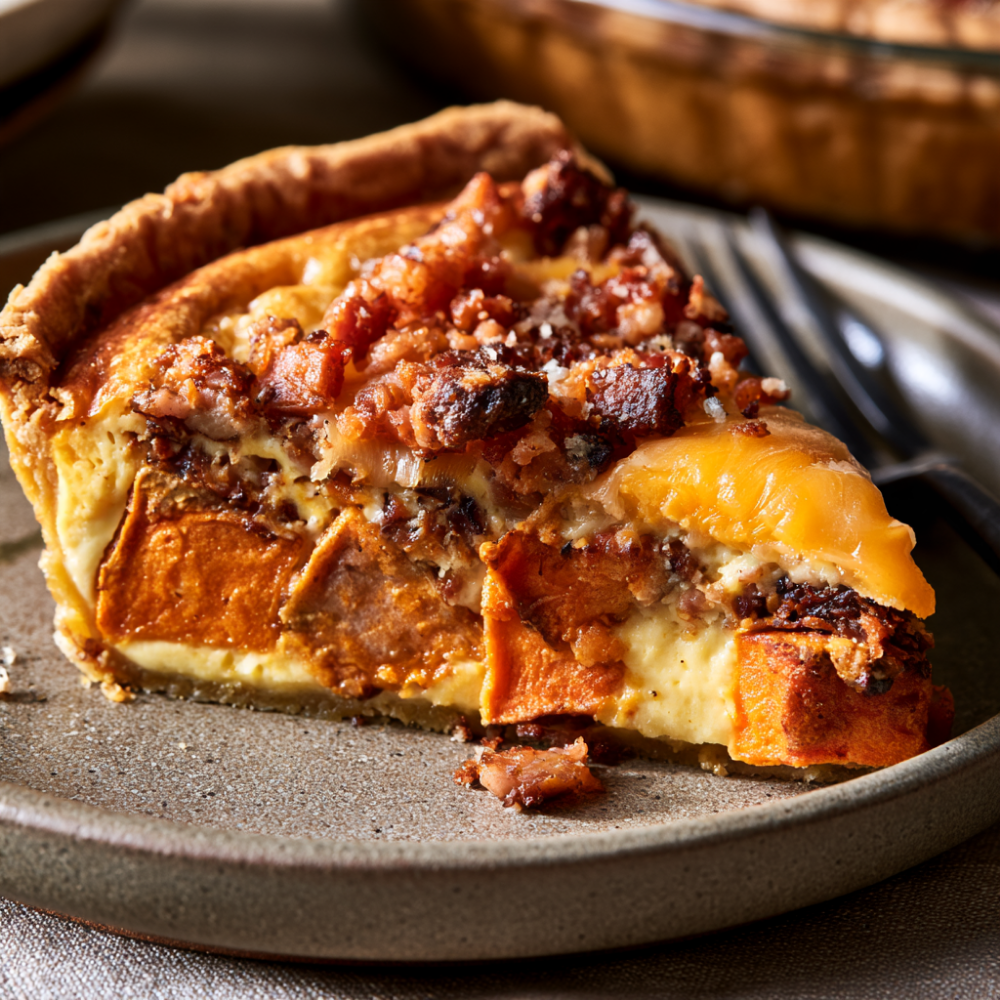
A savory, slightly sweet crustless quiche packed with roasted sweet potato, crispy turkey bacon, sharp cheddar, and a creamy cottage cheese custard.
Roasting the sweet potato first concentrates its flavor and keeps excess moisture from making the quiche watery.
Servings: 6
Prep Time: 20 minutes
Cook Time: About 40 minutes, plus roasting
Total Time: About 1 hour 10 minutes
Protein per Serving: About 20–22g
Nutrition note: Protein varies depending on the turkey bacon, cottage cheese, and cheddar brands you use. Use your specific products to calculate accurate numbers.
Ingredients
- 1½ cups peeled sweet potato, cut into ½-inch cubes
- 1 tbsp olive oil, divided
- 6 oz turkey bacon
- ½ small yellow onion, finely diced
- 2 cloves garlic, minced
- 10 large eggs
- 1 cup full-fat cottage cheese, blended completely smooth
- ½ cup whole milk
- ½ cup shredded sharp cheddar cheese
- 1 tsp dried thyme
- ½ tsp smoked paprika
- ¾ tsp kosher salt, divided
- ½ tsp black pepper
Instructions
1. Roast the sweet potato.
Preheat the oven to 425°F. Toss the sweet potato cubes with 2 teaspoons olive oil, ¼ teaspoon salt, and black pepper. Spread the sweet potato in a single layer on a parchment-lined baking sheet.
Avoid crowding the pieces so they roast rather than steam. Roast for 20–25 minutes, turning once halfway through, until the cubes are tender and browned around the edges.
Set aside while you prepare the remaining ingredients. The sweet potato can be warm, but it should not be steaming heavily when added to the quiche.
2. Cook the turkey bacon and onion.
Cook the turkey bacon according to the package directions until crisp. Drain and crumble. Heat the remaining olive oil in a skillet over medium heat. Add the onion and cook for 4–5 minutes, until softened. Add the garlic and cook for about 30 seconds, just until fragrant. Remove from the heat.
3. Make the custard.
Reduce the oven temperature to 350°F. Grease a 9-inch deep-dish pie dish. In a large bowl, whisk together the eggs, blended cottage cheese, milk, thyme, smoked paprika, remaining salt, and black pepper until smooth and evenly combined.
4. Assemble.
Spread the roasted sweet potato evenly across the bottom of the prepared dish. Scatter the turkey bacon and onion mixture evenly over the sweet potato. Sprinkle the cheddar over the filling. Slowly pour the custard over everything, moving around the dish so the egg mixture fills the spaces between the ingredients.
5. Bake.
Bake for 38–45 minutes, until the center reaches 160°F on an instant-read thermometer. The edges should be set, and the center should have only a slight wobble when you gently nudge the dish. If the top begins browning too quickly, loosely cover the quiche with foil for the remaining baking time.
6. Cool and serve.
Let the quiche rest for 15–20 minutes before slicing. The center will finish setting as it rests, making cleaner slices. Cut into 6 wedges and serve warm.
Make-ahead: Refrigerate leftovers within 2 hours and use within 3–4 days. Reheat individual slices until they reach 165°F throughout. You can freeze wrapped individual slices for up to 3 months.
2. Creamy Spinach, Mushroom & Cottage Cheese Quiche
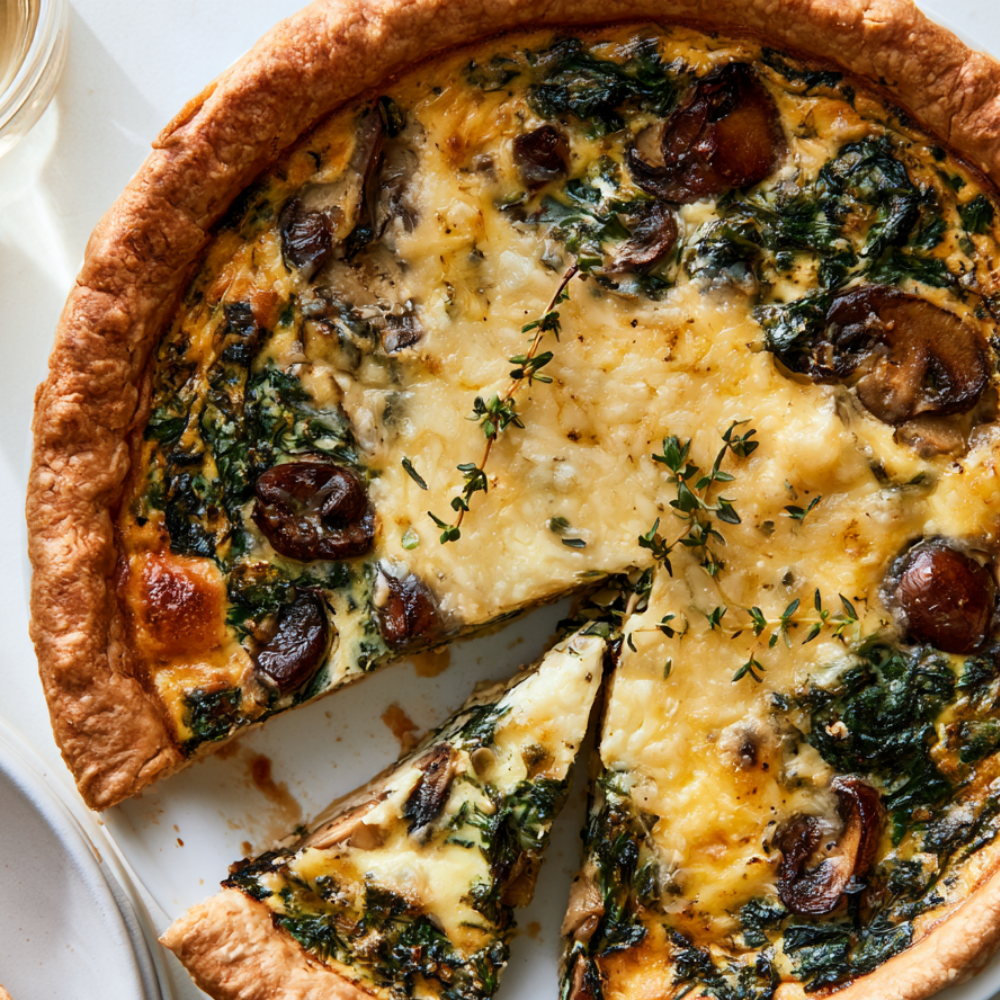
A silky, savory crustless quiche filled with deeply sautéed mushrooms, wilted spinach, creamy cottage cheese, and nutty Gruyère.
The vegetables are cooked until their excess moisture is removed, giving the quiche a rich texture without heavy cream.
Servings: 6
Prep Time: 20 minutes
Cook Time: About 40 minutes
Total Time: About 1 hour
Protein per Serving: About 18g
Nutrition note: Protein varies by cottage cheese and Gruyère brands. Use your specific products to calculate accurate numbers.
Ingredients
- 10 oz cremini mushrooms, thinly sliced
- 5 cups baby spinach
- ½ small yellow onion, finely diced
- 2 cloves garlic, minced
- 1 tbsp olive oil or unsalted butter
- 8 large eggs
- 1½ cups full-fat cottage cheese, blended completely smooth
- ¼ cup whole milk
- ¾ cup shredded Gruyère or Swiss cheese
- 1 tsp dried thyme
- ¼ tsp ground nutmeg
- ¾ tsp kosher salt
- ½ tsp black pepper
Instructions
1. Cook the mushrooms and onion.
Preheat the oven to 350°F. Grease a 9-inch deep-dish pie dish. Heat the olive oil or butter in a large skillet over medium heat.
Add the onion and mushrooms. Cook for 10–12 minutes, stirring occasionally, until the mushrooms have released their liquid and the skillet is nearly dry.
Continue cooking for another 1–2 minutes if liquid remains in the bottom of the skillet — this is important for preventing a watery quiche. Add the garlic and cook for 30 seconds.
2. Wilt and drain the spinach.
Add the spinach by the handful, stirring until wilted, about 1–2 minutes. Transfer the entire vegetable mixture to a fine-mesh strainer or colander. Press firmly with the back of a spoon to remove as much excess moisture as possible. Let the vegetables cool for several minutes.
3. Make the custard.
In a large bowl, whisk together the eggs, blended cottage cheese, milk, thyme, nutmeg, salt, and black pepper until completely smooth.
4. Assemble.
Spread the drained mushroom-and-spinach mixture evenly across the bottom of the prepared dish. Sprinkle the Gruyère evenly over the vegetables. Slowly pour the custard over the filling, moving around the dish to distribute it evenly.
5. Bake.
Bake for 38–45 minutes, until the center reaches 160°F. The edges should be set while the center still has a slight wobble. Do not wait for the entire surface to become completely firm, because overbaking can make the custard rubbery. If the top is browning too quickly, loosely cover the quiche with foil.
6. Cool and serve.
Let the quiche rest for 15–20 minutes before slicing. Cut into 6 wedges and serve warm.
Make-ahead: Refrigerate leftovers within 2 hours and use within 3–4 days. Reheat individual slices until they reach 165°F throughout. You can freeze wrapped slices for up to 3 months.
3. Caramelized Onion & Sharp Cheddar Quiche
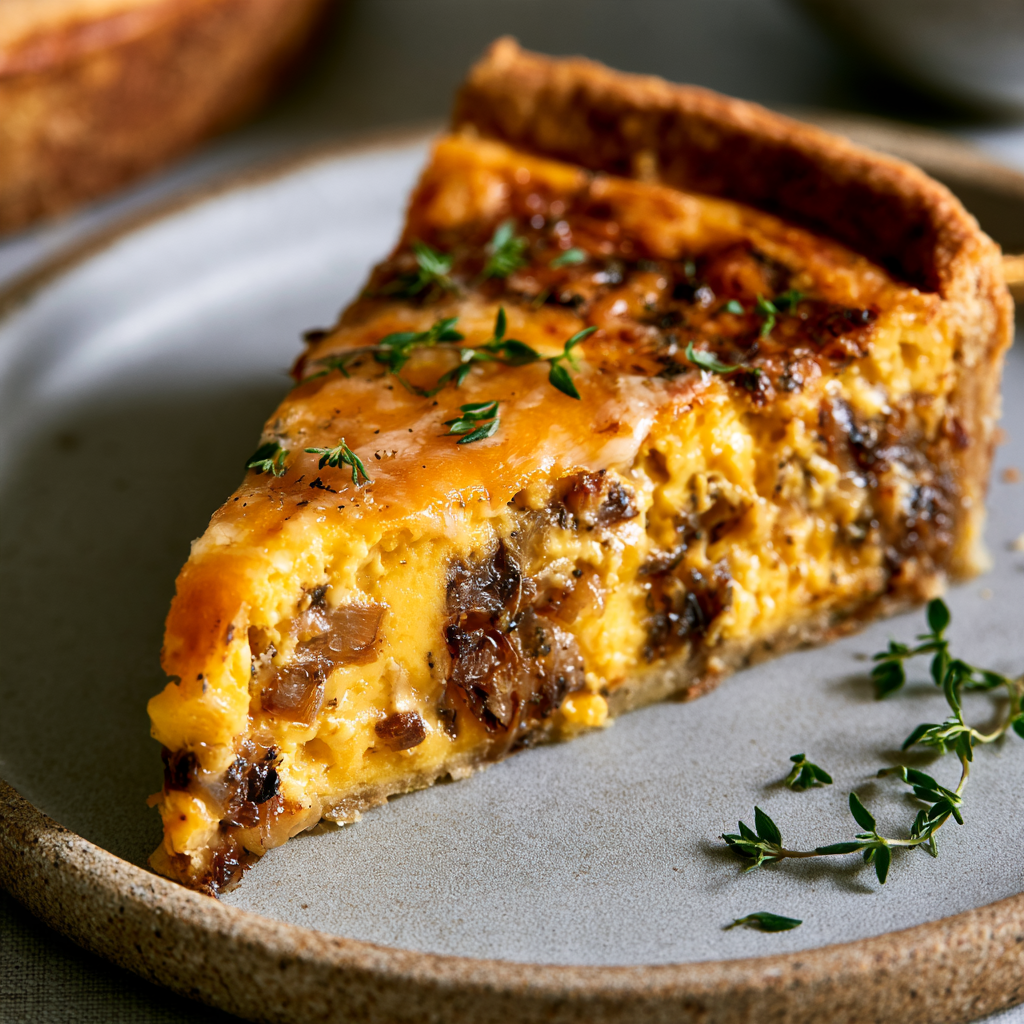
A deeply savory crustless quiche with jammy caramelized onions, sharp cheddar, and a creamy cottage cheese custard.
Long, slow-cooking the onions creates a rich, sweet-savory flavor that makes this simple quiche taste more indulgent than its ingredient list suggests.
Servings: 6
Prep Time: 10 minutes
Cook Time: About 50 minutes
Total Time: About 1 hour 15 minutes
Protein per Serving: About 18g
Nutrition note: Protein varies by cottage cheese and cheddar brands. Use your specific products to calculate accurate numbers.
Ingredients
- 2 large yellow onions, thinly sliced
- 1 tbsp unsalted butter
- 1 tbsp olive oil
- 8 large eggs
- 1 cup full-fat cottage cheese, blended completely smooth
- ½ cup whole milk
- 1 cup shredded sharp cheddar cheese, divided
- 1 tsp dried thyme
- ¾ tsp kosher salt, divided
- ½ tsp black pepper
Instructions
1. Caramelize the onions.
Heat the butter and olive oil in a large skillet over medium-low heat. Add the sliced onions and ¼ teaspoon of the salt.
Cook for 30–40 minutes, stirring every few minutes, until the onions are very soft, deeply golden brown, and jammy.
If the onions begin sticking before they are fully caramelized, add 1 tablespoon of water and scrape the browned bits from the bottom of the skillet.
Continue cooking and repeat with another small splash of water if necessary. Remove the onions from the heat when they are deeply golden and reduced. They should look concentrated and jammy rather than softened.
2. Make the custard.
Preheat the oven to 350°F. Grease a 9-inch deep-dish pie dish. In a large bowl, whisk together the eggs, blended cottage cheese, milk, thyme, remaining salt, and black pepper until smooth.
3. Assemble.
Spread the caramelized onions evenly across the bottom of the prepared dish. Sprinkle ¾ cup of the cheddar evenly over the onions. Slowly pour the custard over the filling. Sprinkle the remaining ¼ cup cheddar over the top.
4. Bake.
Bake for 38–45 minutes, until the center reaches 160°F. The edges should be set, and the center should wobble slightly when gently nudged. If the cheese begins browning too quickly, loosely cover the quiche with foil for the remaining baking time.
5. Cool and serve.
Let the quiche rest for 15–20 minutes before slicing. Cut into 6 wedges and serve warm.
Make-ahead: Refrigerate leftovers within 2 hours and use within 3–4 days. Reheat individual slices until they reach 165°F throughout. You can freeze wrapped slices for up to 3 months.
4. Roasted Broccoli & Ham High-Protein Breakfast Quiche
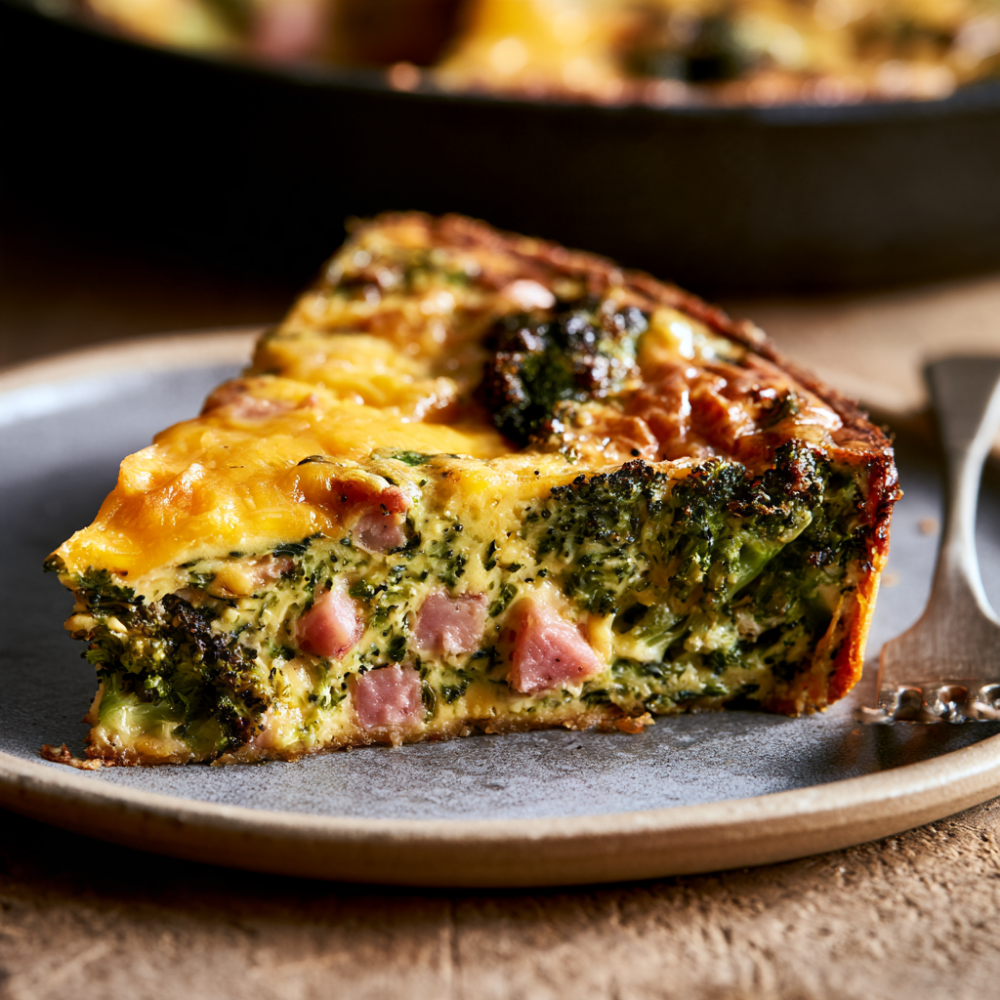
A hearty crustless breakfast quiche packed with roasted broccoli, savory diced ham, sharp cheddar, and a creamy cottage cheese custard. Roasting the broccoli concentrates its flavor and gives it browned edges while helping prevent excess moisture from watering down the quiche.
Servings: 6
Prep Time: 20 minutes
Cook Time: About 40 minutes, plus roasting
Total Time: About 1 hour 10 minutes
Protein per Serving: About 22–24g
Nutrition note: Protein varies depending on the ham, cottage cheese, and cheddar brands you use. Use your specific products to calculate accurate numbers.
Ingredients
- 4 cups broccoli florets, cut into small bite-size pieces
- 1 tbsp olive oil, divided
- ½ small yellow onion, finely diced
- 2 cloves garlic, minced
- 6 oz cooked ham, diced
- 10 large eggs
- 1 cup full-fat cottage cheese, blended completely smooth
- ½ cup whole milk
- ½ cup shredded sharp cheddar cheese
- 1 tsp dried thyme
- ½ tsp smoked paprika
- ¾ tsp kosher salt, divided
- ½ tsp black pepper
Instructions
1. Roast the broccoli.
Preheat the oven to 425°F. Toss the broccoli with 2 teaspoons olive oil, ¼ teaspoon salt, and black pepper.
Spread the broccoli in a single layer on a parchment-lined baking sheet.
Avoid crowding the florets. Roast for 18–22 minutes, turning once halfway through, until the broccoli is tender and the edges are deeply browned. Set aside to cool slightly.
Cut any larger pieces into smaller bite-size pieces.
2. Cook the onion.
Heat the remaining olive oil in a skillet over medium heat. Add the onion and cook for 4–5 minutes, until softened. Add the garlic and cook for about 30 seconds. Remove from the heat.
3. Make the custard.
Reduce the oven temperature to 350°F. Grease a 9-inch deep-dish pie dish. In a large bowl, whisk together the eggs, blended cottage cheese, milk, thyme, smoked paprika, remaining salt, and black pepper until smooth.
4. Assemble.
Spread the roasted broccoli evenly across the bottom of the prepared dish. Scatter the ham and onion mixture evenly over the broccoli. Sprinkle the cheddar over the filling. Slowly pour the custard over everything, moving around the dish so the egg mixture fills the spaces between the ingredients.
5. Bake.
Bake for 38–45 minutes, until the center reaches 160°F. The edges should be set, the top lightly puffed, and the center should wobble only slightly when gently nudged. If the top begins browning too quickly, loosely cover the quiche with foil for the rest of the bake.
6. Cool and serve.
Let the quiche rest for 15–20 minutes before slicing. Cut into 6 wedges and serve warm.
Make-ahead: Refrigerate leftovers within 2 hours and use within 3–4 days. Reheat individual slices until they reach 165°F throughout. You can freeze wrapped slices for up to 3 months.
Tips for the Best High-Protein Quiche
Blend the cottage cheese until completely smooth. Blend for a full 1–2 minutes in a food processor or high-speed blender. Visible curds make a grainy quiche. If you can still see or feel grit, keep blending.
Bring the dairy to room temperature. Cold cottage cheese can cause the custard to separate slightly during baking. Leave it on the counter for 20 minutes before you start.
Cook your vegetables until they’re dry. Mushrooms, spinach, and onions all release liquid as they cook. Cook them down until the skillet is nearly dry, then drain any remaining moisture in a colander. This is the single most important step for a firm, clean-slicing quiche.
Salt the custard, not just the vegetables. Eggs need salt to taste seasoned. The recipe amounts are there for a reason.
Use a 9-inch deep-dish pie dish. Standard 9-inch pie pans are too shallow for 8–10 eggs and will overflow. Deep-dish pans hold the full custard without spilling.
Grease the pan generously. Crustless quiche sticks more than crusted quiche. Use cooking spray, butter, or line the pan with parchment.
Pour the custard slowly and evenly. Moving the bowl around the dish as you pour prevents the fillings from settling into one dense layer at the bottom.
Pull the quiche when the center reaches 160°F. Use both cues — the center reaching 160°F and a slight wobble when you nudge the pan. The temperature is the food-safety minimum for egg dishes (per USDA and FDA guidance); the wobble tells you the texture will be silky rather than rubbery.
Don’t wait for the center to look completely firm. If it looks set when you pull it from the oven, it’s already overbaked. The custard finishes setting as it rests.
Cool for 15–20 minutes before slicing. The custard continues to set as it cools. Slicing too soon means a runny slice.
Cut into 6 slices for the highest protein per serving. 6 generous wedges are a real breakfast portion. 8 thinner slices work if you’re serving it as a lighter side.
Reheat to 165°F. Reheat individual slices in the microwave or a 325°F oven until they reach 165°F throughout. Avoid full-power microwave reheating, which turns eggs rubbery.
Eat it cold if you want. Crustless quiche is genuinely excellent cold, straight from the refrigerator. It’s closer to a savory custard than a hot egg dish.
Easy Variations
Crustless Quiche Meal Prep Bowls
Skip the pie dish and divide the custard and fillings among greased ramekins or a muffin tin. Bake at 350°F for 18–22 minutes, until the centers reach 160°F. They reheat in 45 seconds and portion cleanly.
Quiche With Premade Crust
If you want a crust, use a refrigerated pie crust and blind-bake it first. Press the crust into the pan, line with parchment, fill with pie weights or dried beans, and bake at 375°F for 15 minutes. Remove the weights, add the filling, and bake as directed. Blind baking keeps the crust crisp.
Vegetarian Quiche
Skip the turkey bacon and ham in recipes 1 and 4 and double the vegetables. Add an extra ½ cup of cheese for richness. About 15–16g of protein per slice.
Italian Quiche
Use recipe 2 as a base but swap the mushrooms for roasted red peppers and add ½ cup of chopped sun-dried tomatoes. Use mozzarella and Parmesan instead of Gruyère, and add 1 tsp of Italian seasoning—about 17g of protein per slice.
Storage and Food Safety
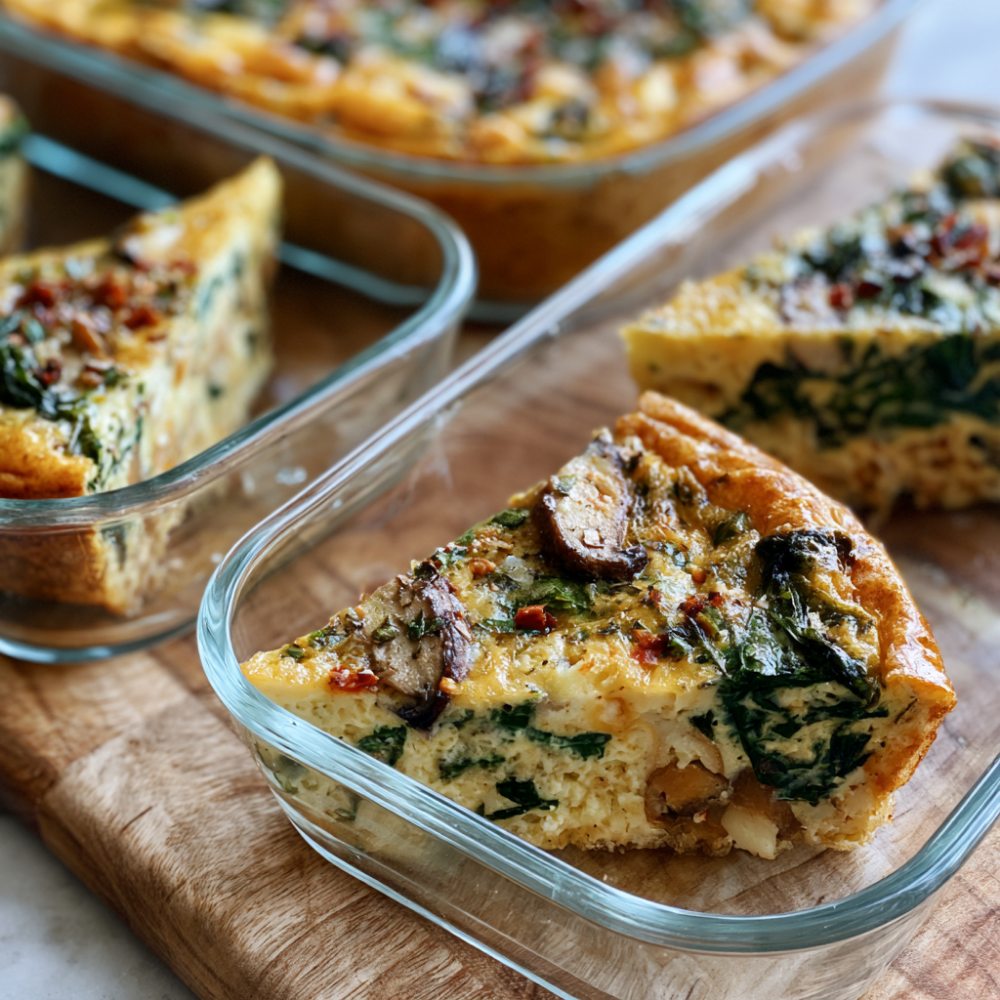
Refrigerator: Refrigerate quiche within 2 hours of baking. Store in an airtight container for up to 3–4 days. Place a paper towel under the lid to absorb excess moisture.
Freezer: Cool completely, slice, and wrap each wedge tightly in plastic wrap and then foil. Freeze for up to 3 months. Thaw overnight in the refrigerator and reheat until 165°F.
Reheating: Reheat individual slices until they reach 165°F throughout. Use a 325°F oven for 8–10 minutes, loosely covered with foil, or microwave at 70% power in short intervals, checking the temperature as you go. Avoid reheating at full power, which turns eggs rubbery.
Food safety: Quiche is fully cooked when the center reaches 160°F. Refrigerate leftovers within 2 hours. Reheat egg-containing leftovers to 165°F throughout.
Frequently Asked Questions
How much protein is in each quiche?
About 18- 24 g per serving when cut into 6 slices. The roasted broccoli and ham version is the highest at 22–24g; the spinach mushroom and caramelized onion versions are about 18g.
Can I make quiche without a crust?
Yes — and for meal prep, crustless is actually better. Pastry crusts get soggy after a day in the refrigerator, and they add calories without contributing protein. Grease a 9-inch deep-dish pie dish generously, and the quiche releases cleanly.
Why did my quiche turn out watery?
Almost always because the vegetables weren’t cooked down or squeezed dry before adding them. Mushrooms, spinach, and zucchini release liquid as they bake. Sauté them until the skillet is nearly dry, then press out any remaining moisture in a colander.
Why did my quiche turn out rubbery?
It was overbaked. Pull the quiche at 160°F in the center — it will continue cooking as it cools. If the center looks completely set and firm when you pull it from the oven, it’s already past the ideal point.
Can I use heavy cream instead of cottage cheese?
You can, but you’ll lose about 5g of protein per serving and add a lot of fat. Cottage cheese blended smooth gives you the same custardy texture with better macros.
Can I use Greek yogurt instead of cottage cheese?
Yes. Full-fat or 2% Greek yogurt works. It’s slightly tangier and a little less rich than blended cottage cheese, but it works well in any of these recipes.
Can I make quiche ahead of time?
Yes. Quiche is best made a day ahead and reheated. It also tastes excellent cold, straight from the refrigerator.
Can I freeze quiche?
Yes. Let it cool completely, slice, wrap individual wedges tightly, and freeze for up to 3 months. Thaw overnight in the refrigerator and reheat to 165°F.
Can I make quiche in a muffin tin?
Yes. Divide the custard and fillings among a greased 12-cup muffin tin and bake at 350°F for 18–22 minutes, until the centers reach 160°F. They’re portable, portion cleanly, and reheat in 45 seconds.
What’s the best pan for quiche?
A 9-inch deep-dish pie dish. Standard 9-inch pie pans are too shallow for 8–10 eggs and will overflow. Deep-dish pans hold the full custard without spilling.
Can I use a premade pie crust?
Yes. Blind-bake it first — press the crust into the pan, line with parchment, fill with pie weights, and bake at 375°F for 15 minutes. Then add the filling and bake as directed. Blind baking keeps the crust crisp.
Are these quiches gluten-free?
Yes, as written, since all four are crustless. If you use a crust, use a gluten-free crust and confirm your other packaged ingredients are gluten-free.
More High-Protein Breakfast Recipes You’ll Love
- Make Ahead Breakfast Casserole (High-Protein & Meal Prep Friendly)
- Bacon Breakfast Casserole (Smoky Bacon & Melted Cheddar)
- Egg Meal Prep: 5 High-Protein Make-Ahead Recipes
- Cottage Cheese Breakfast Recipes: 4 High-Protein Ways to Start the Day
Conclusion
These four high-protein quiche recipes are the cozy, make-ahead winter breakfast you want on a cold morning. They include a sweet potato and turkey bacon quiche, a creamy spinach and mushroom quiche, a caramelized onion and sharp cheddar quiche, and a roasted broccoli and ham quiche. Each lands between 18 and 24 grams of protein per slice—nearly double a traditional quiche—and holds up beautifully in the refrigerator for 3–4 days.
The keys are simple: blend the cottage cheese until completely smooth, bring the dairy to room temperature, cook your vegetables until their moisture is gone, use a 9-inch deep-dish pie dish, pour the custard slowly so the fillings don’t settle, pull the quiche at 160°F in the center with only a slight wobble, and let it cool for 15–20 minutes before slicing. Do that, and you’ll have a quiche that slices cleanly, tastes rich and custardy, and delivers real protein.
Make one on Sunday, slice it into 6 wedges, and you’ve got breakfast or brunch handled for the week.