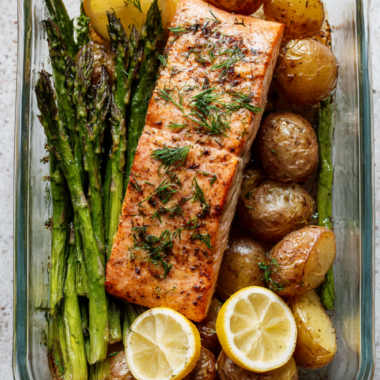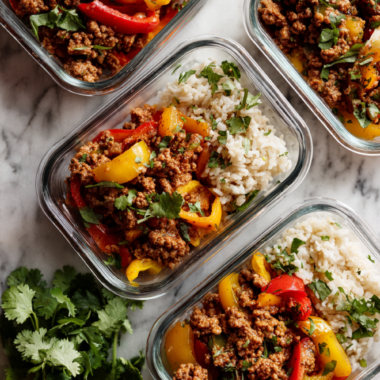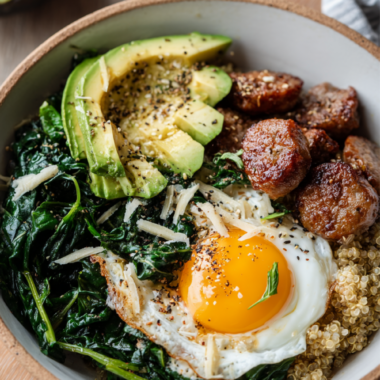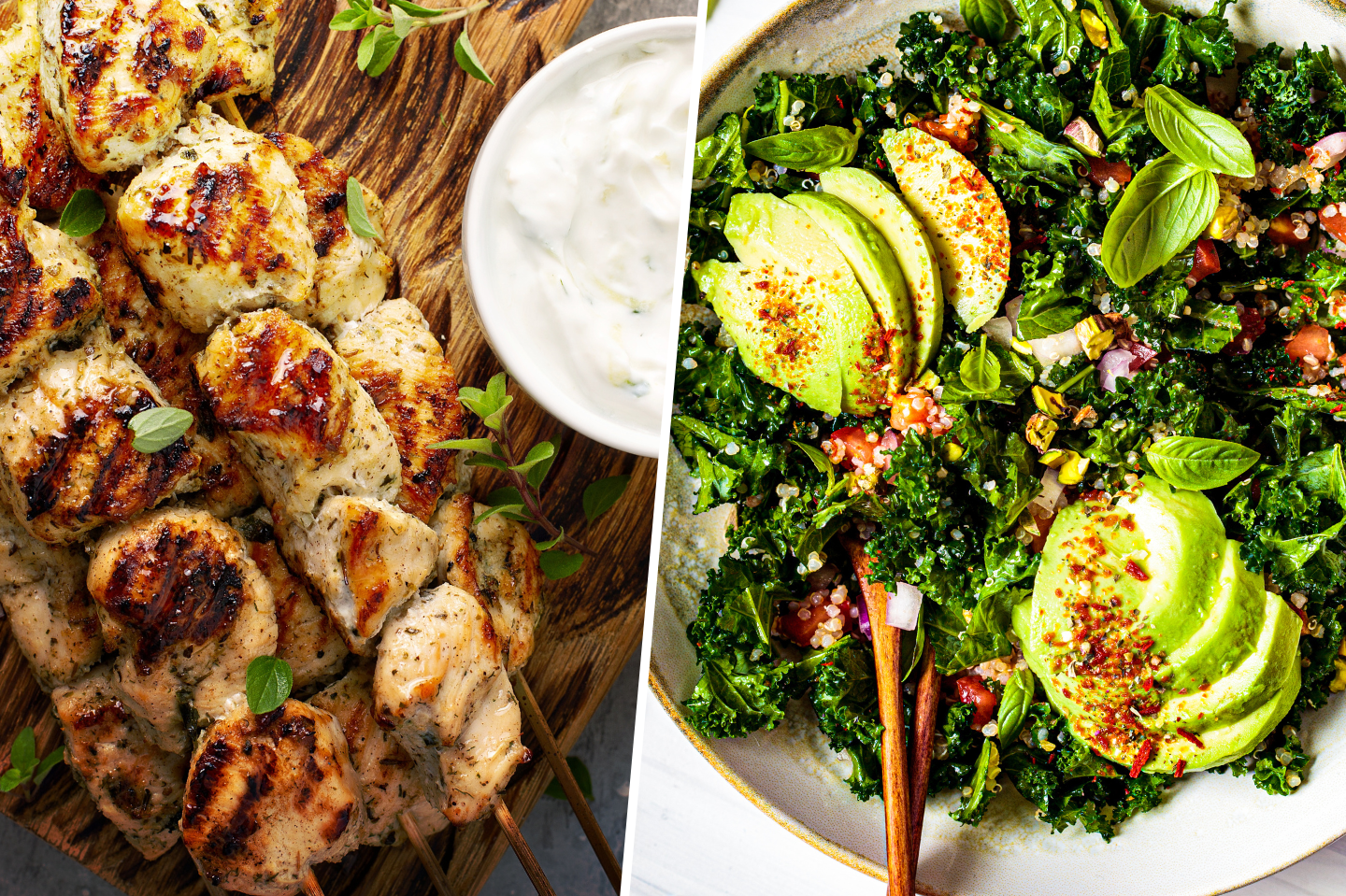
Salad bowls have a reputation problem. They’re the lunch people think of as light, cold, and vaguely punishing — a pile of raw greens with a sad drizzle of dressing that leaves you hungry by 2 PM and raiding the office candy bowl.
These seven recipes fix that. Every one is built for cold weather: roasted root vegetables, warm seared proteins, toasted nuts, and creamy dressings that actually coat the greens instead of pooling at the bottom.
Every one delivers real protein, landing between 19 and 44 grams per bowl. And every one holds up in the refrigerator for meal prep.
One honest thing worth knowing: winter salads work because of contrast, not because of volume.
A bowl of kale alone is not dinner. A bowl of kale with warm roasted sweet potato, seared chicken, toasted pepitas, and a maple-Dijon vinaigrette is.
Every recipe below follows that principle: something warm, something crisp, something creamy, something salty, and enough acid to keep every bite interesting.
And a second honest note: dressings go on at the end, or on the side. If you’re meal prepping, store the dressing separately and add it the morning you plan to eat. A dressed salad is good for about six hours. An undressed salad with the components stored separately is good for three to four days.
Why These Winter Salad Bowls Work
Roasted vegetables add sweetness and body. Sweet potatoes, Brussels sprouts, and beets caramelize in the oven, concentrating their sugars and giving them a deep, savory-sweet flavor that raw vegetables can’t match. They also add substance, which is what separates a dinner salad from a side salad.
Warm proteins make the bowl feel like a meal. Seared steak, grilled chicken, and crispy bacon all add heat and richness that cold cuts can’t replicate. Warm protein on cool greens is one of the most satisfying contrasts in food.
Creamy dressings coat instead of pool. Greek yogurt ranch, tahini-lemon, and sesame-ginger dressings cling to the leaves instead of sliding to the bottom of the bowl. That’s what makes every bite taste dressed rather than just the top layer.
Toasted nuts and seeds add crunch that survives. Toasting walnuts, pecans, almonds, and pepitas in a dry skillet transforms them from flat and slightly bitter to nutty and warm. They also stay crisp longer than croutons, which turn soggy the moment they touch dressing.
Acid keeps everything bright. Lemon juice, apple cider vinegar, rice vinegar, and balsamic all cut through the richness of steak, bacon, feta, and creamy dressings. Without acid, a winter salad tastes heavy.
Protein is layered from multiple sources. Chicken plus chickpeas. Steak plus Greek yogurt dressing. Bacon plus eggs plus feta. Layering protein sources adds up fast and gives you more interesting texture than a single protein alone.
A Quick Note on Building a Winter Salad Bowl
Every recipe in this list follows the same structure:
- A sturdy green base. Arugula, kale, romaine, cabbage, or a mix. Soft greens like butter lettuce get lost under roasted vegetables and warm protein.
- A roasted vegetable or two. Sweet potato, Brussels sprouts, beets, or chickpeas.
- A warm protein. Steak, chicken, bacon, or eggs.
- Something creamy or salty. Feta, Parmesan, goat cheese, or a creamy dressing.
- Something crunchy. Toasted nuts, seeds, or crispy chickpeas.
- An acid-forward dressing. Lemon, vinegar, or balsamic. Applied at the end.
Get those six elements on the plate, and you have a salad bowl that eats like a meal. Skip one and the bowl feels flat.
1. High-Protein Steak and Arugula Salad
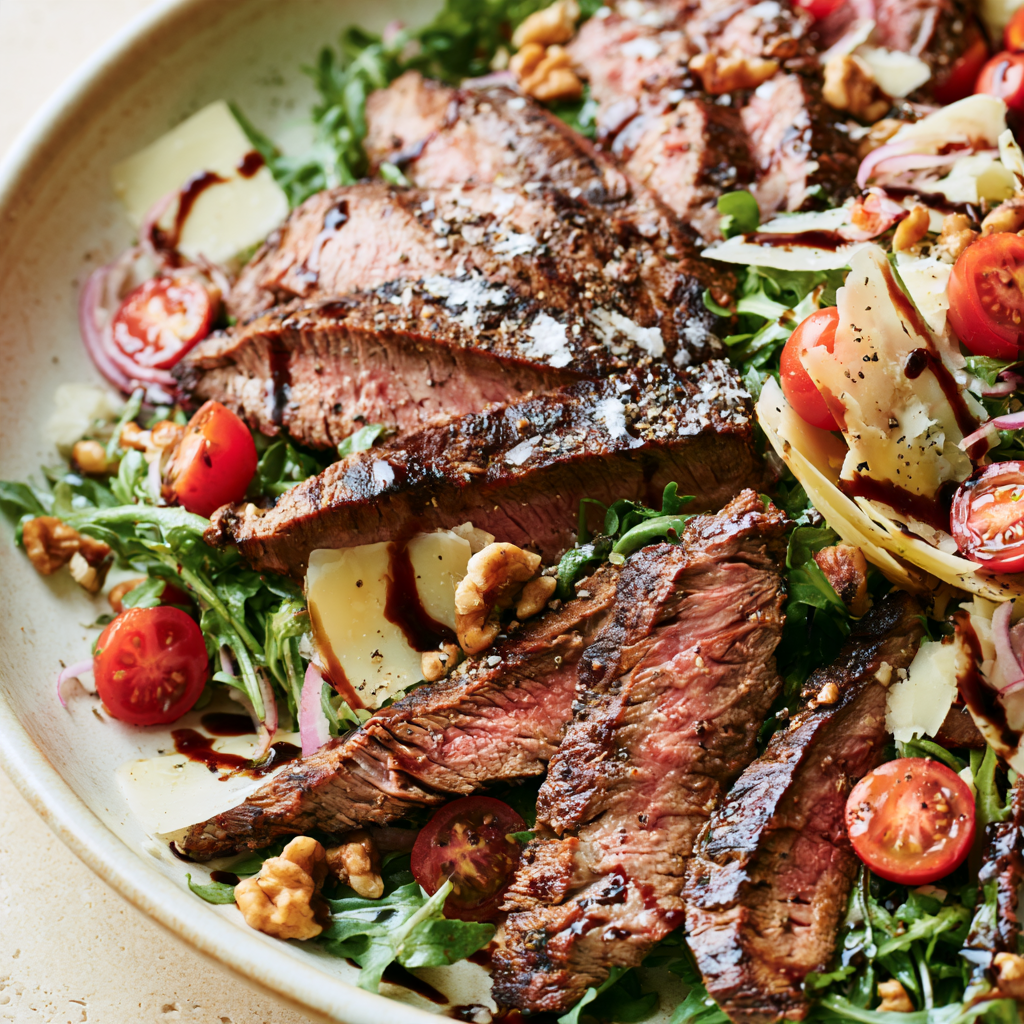
About 40g protein per serving | 35 minutes | Serves 4
The appeal: This salad converts people who think they don’t like salads. Thinly sliced seared flank steak over peppery arugula with shaved Parmesan, cherry tomatoes, red onion, and toasted walnuts, finished with a glossy balsamic glaze.
The arugula’s sharp bite cuts through the beef’s richness, and the balsamic glaze adds a sweet-tangy note that ties everything together. It’s restaurant-quality on a Tuesday.
Why it works: Flank steak is the right cut here — thin, fast-cooking, deeply beefy, and tender when sliced against the grain. The dressing is deliberately light (lemon-Dijon vinaigrette) so the steak stays the star, and the balsamic glaze goes on top for a second layer of flavor.
Protein note: About 40g per serving with 1½ lbs flank steak divided among four servings. Actual protein depends on the steak and portion size.
Get the full recipe here: High-Protein Steak and Arugula Salad
2. High-Protein Chinese Chicken Salad

About 40g protein per serving | 20 minutes | Serves 4
The appeal: All the crunch and flavor of the restaurant version without the fried wontons or the sugar-loaded dressing. Shredded chicken, crisp Napa cabbage, shredded carrot, green onions, and cilantro, topped with toasted almonds and sesame seeds, all tossed in a tangy sesame-ginger dressing. It comes together in 20 minutes using leftover or rotisserie chicken, and the cabbage stays crunchy for days—making it one of the best meal prep salads on this list.
Why it works: The dressing is the star. Rice vinegar, soy sauce, toasted sesame oil, honey, peanut butter, garlic, and fresh ginger whisk into a savory, tangy, slightly sweet sauce that clings to the cabbage instead of pooling. Replacing fried wonton strips with toasted almonds and sesame seeds keeps the crunch without the heaviness. And cabbage holds its texture far longer than lettuce, so this salad is genuinely good on day three.
Protein note: About 40g per serving from 1 lb of cooked shredded chicken plus the peanut butter and sesame seeds. Actual protein depends on the chicken and portion size.
Get the full recipe here: High-Protein Chinese Chicken Salad
3. Warm Sweet Potato Salad with Crispy Chickpeas, Bacon & Feta
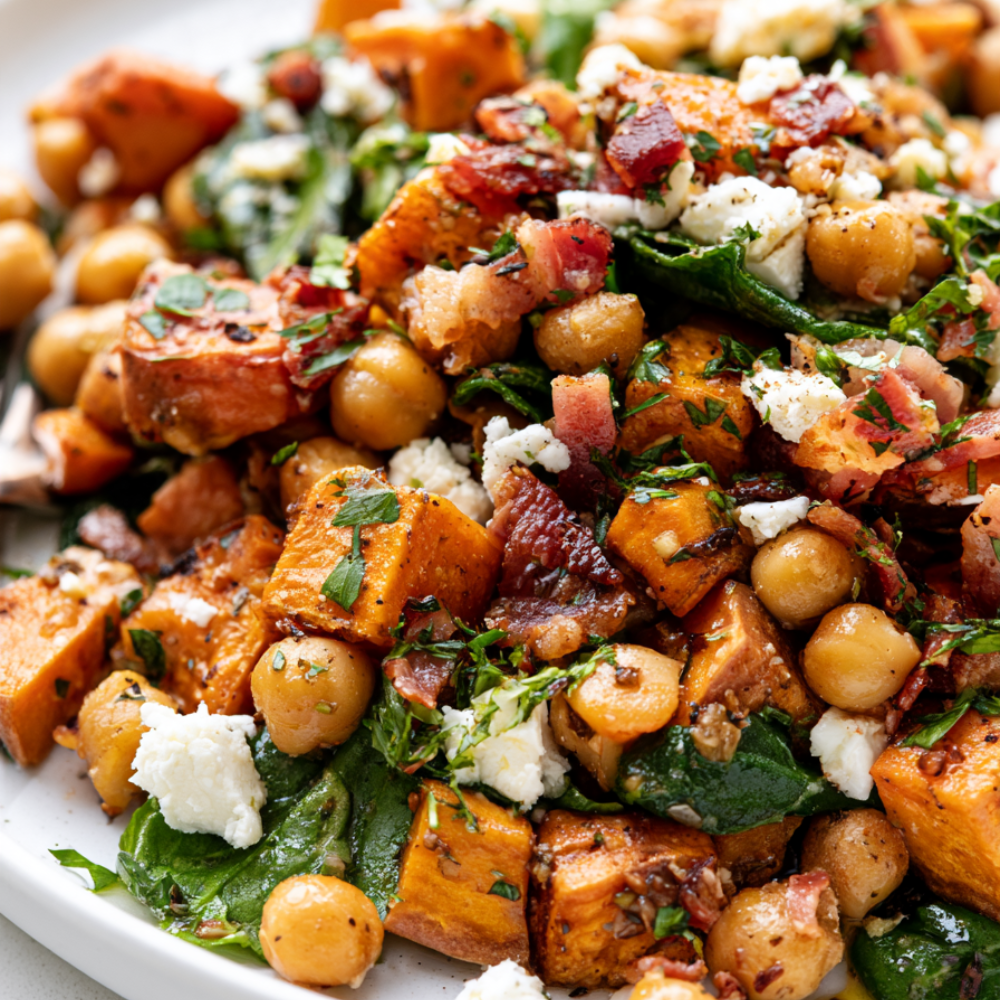
About 25g protein per serving | 40 minutes | Serves 4
The appeal: This is the anti-potato-salad. No mayo, no heaviness, no sluggish afternoon. Roasted sweet potato cubes and crispy roasted chickpeas with smoky bacon, crumbled feta, red onion, and toasted pecans over baby spinach or arugula, all tossed in a tangy honey-mustard vinaigrette. It hits sweet, smoky, salty, and tangy in every bite.
Why it works: Pat the chickpeas completely dry before roasting; that is what makes them crispy instead of chewy. The sweet potatoes caramelize at 425°F. And the honey-mustard vinaigrette brings everything together without weighing it down. Serve it warm, at room temperature, or cold — it works all three ways.
Protein note: About 25g per serving from the chickpeas, bacon, and feta. This is a genuinely satisfying amount for a salad with zero protein powder and no chicken.
Get the full recipe here: Warm Sweet Potato Salad with Crispy Chickpeas, Bacon & Feta
4. Warm Roasted Sweet Potato & Chicken Protein Bowl
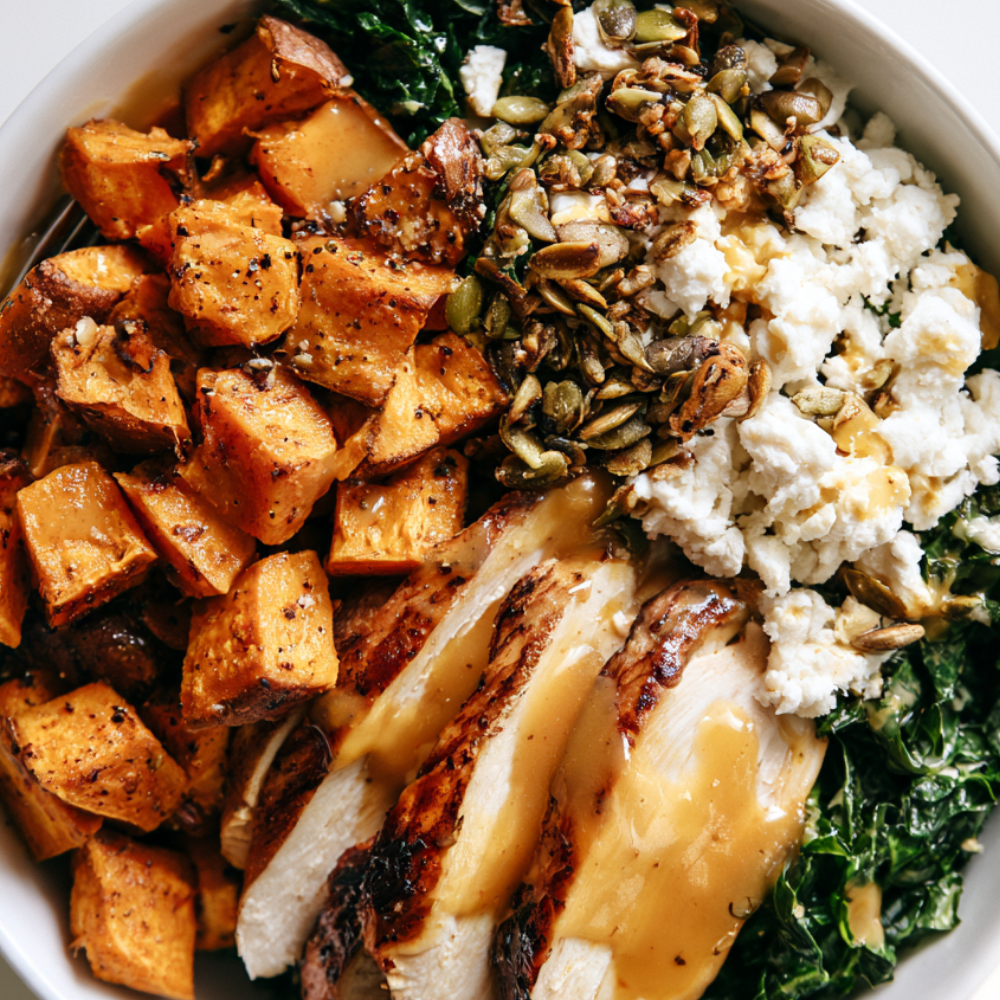
About 40–44g protein per serving | 40 minutes | Serves 4
A warm dinner bowl with caramelized sweet potatoes, juicy seasoned chicken, tender massaged kale, crunchy pepitas, and tangy goat cheese, finished with a maple-Dijon vinaigrette.
The warm chicken and roasted sweet potatoes make this feel like a satisfying dinner, not a cold salad.
Servings: 4
Prep Time: 15 minutes
Cook Time: 25 minutes
Total Time: About 40 minutes
Protein per Serving: About 40–44g
Nutrition note: Protein varies depending on the chicken, pepitas, cheese, and other brands you use. Calculate with your specific products for the most accurate numbers.
Ingredients
For the Bowl:
- 1½ lbs boneless, skinless chicken breasts
- 2 large sweet potatoes, about 1½ lbs total, peeled and cut into ½-inch cubes
- 2 tbsp olive oil, divided
- 1 tsp smoked paprika
- ½ tsp garlic powder
- ¾ tsp kosher salt, divided
- ½ tsp black pepper
- 1 large bunch lacinato kale, stems removed and leaves torn into bite-size pieces
- ⅓ cup pepitas
- ⅓ cup crumbled goat cheese or feta
- ¼ red onion, very thinly sliced
For the Maple-Dijon Vinaigrette:
- ¼ cup extra-virgin olive oil
- 2 tbsp apple cider vinegar
- 1 tbsp Dijon mustard
- 1 tbsp maple syrup
- 1 small garlic clove, finely minced
- ¼ tsp kosher salt
- ⅛ tsp black pepper
Instructions
1. Roast the sweet potatoes.
Preheat the oven to 425°F. Line a large rimmed baking sheet with parchment paper. Add the sweet potatoes to the baking sheet and toss with 1 tbsp olive oil, smoked paprika, garlic powder, ½ tsp salt, and the black pepper.
Spread into a single layer, leaving space between pieces. Roast for 22–25 minutes, tossing once halfway through, until the potatoes are fork-tender and browned around the edges.
Important: Don’t overcrowd the pan. If the sweet potatoes are packed tightly together, they will steam instead of caramelizing.
2. Make the vinaigrette.
While the potatoes roast, whisk together the olive oil, apple cider vinegar, Dijon, maple syrup, garlic, salt, and pepper until emulsified. Set aside.
3. Cook the chicken.
Pat the chicken breasts dry. If any breast is unusually thick, gently pound the thickest part so the chicken is more evenly thick. This helps it cook evenly without drying out the thinner portions. Rub the chicken with the remaining 1 tbsp olive oil and season both sides with the remaining ¼ tsp salt.
Heat a large skillet over medium-high heat. Add the chicken and cook for about 5–7 minutes per side, depending on thickness, until deeply golden on the outside and cooked through. Transfer the chicken to a cutting board and let it rest for at least 5 minutes before slicing.
4. Toast the pepitas.
While the chicken rests, place the pepitas in a dry skillet over medium heat. Toast for 3–4 minutes, stirring frequently, until fragrant and lightly golden. Immediately transfer them to a plate so they don’t continue cooking in the hot pan.
5. Massage the kale.
Place the kale in a large bowl and add about 1 tbsp of the vinaigrette. Using clean hands, gently massage the kale for 2–3 minutes, until the leaves soften, darken, and become easier to eat.
6. Slice the chicken.
Slice the rested chicken against the grain into thin strips.
7. Assemble the bowls.
Divide the massaged kale among four bowls. Add the roasted sweet potatoes, sliced chicken, red onion, toasted pepitas, and goat cheese. Drizzle with the remaining vinaigrette and serve while the chicken and sweet potatoes are still warm.
Make-ahead: Store the chicken, sweet potatoes, kale, toppings, and dressing separately for up to 4 days. For the best texture, keep the pepitas and cheese separate and add them just before serving. Massage the kale up to 2 days ahead.
5. Crispy Bacon & Greek Yogurt Ranch Chopped Salad Bowl
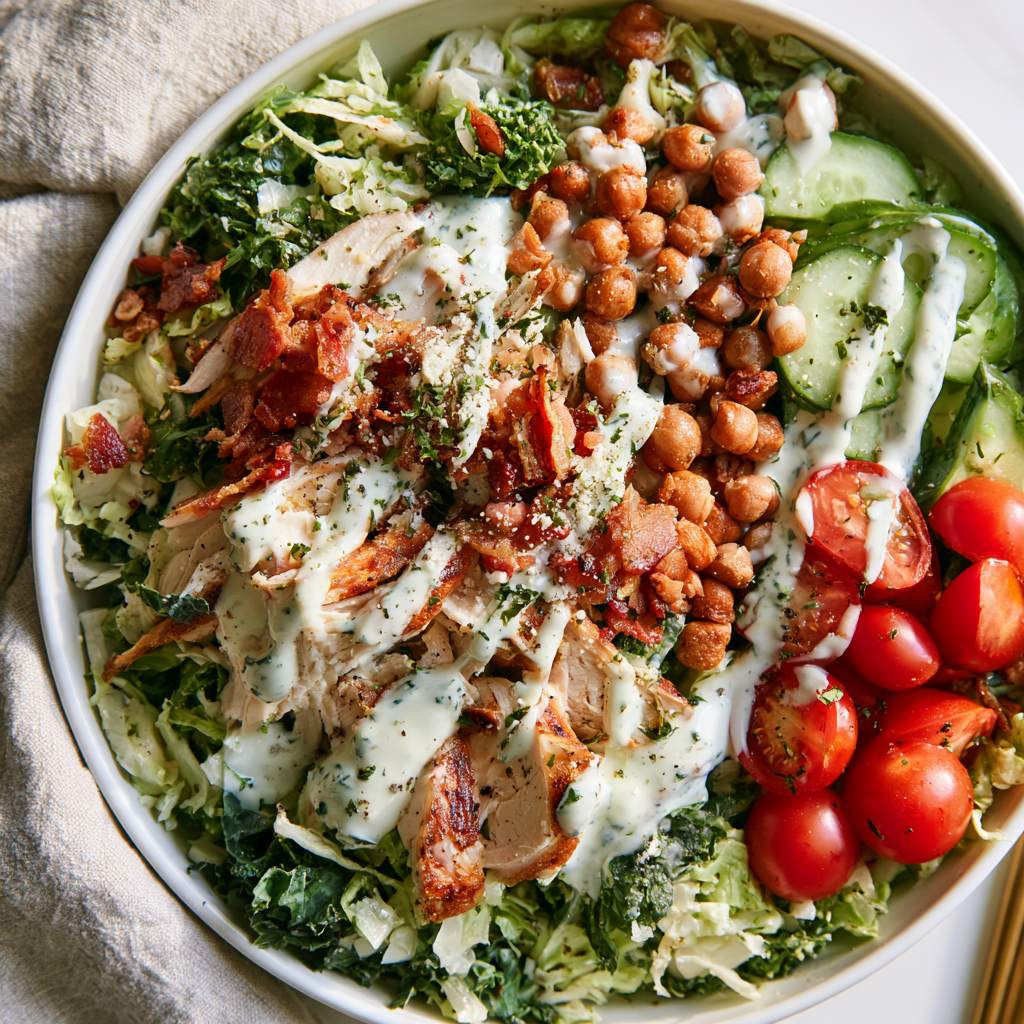
About 40–44g protein per serving | 30 minutes | Serves 4
A hearty chopped salad packed with shredded chicken, crispy bacon, chickpeas, romaine, kale, cabbage, vegetables, and sharp cheese, all tossed with a creamy Greek yogurt ranch dressing. Every bite has a mix of crunchy vegetables, savory protein, creamy dressing, and salty bacon.
Servings: 4
Prep Time: 20 minutes
Cook Time: 10 minutes
Total Time: About 30 minutes
Protein per Serving: About 40–44g
Nutrition note: Protein varies depending on the chicken, Greek yogurt, chickpeas, bacon, and cheese brands you use. Calculate with your specific products for the most accurate numbers.
Ingredients
For the Salad:
- 1 lb cooked shredded chicken breast, about 4 cups
- 6 slices thick-cut bacon
- 1 (15-oz) can chickpeas, drained, rinsed, and thoroughly patted dry
- 4 cups chopped romaine
- 2 cups finely chopped lacinato kale
- 1½ cups thinly sliced green cabbage
- 1 cup cherry tomatoes, halved
- 1 medium cucumber, diced
- ¼ red onion, very thinly sliced
- ½ cup crumbled sharp cheddar or cotija
For the Greek Yogurt Ranch Dressing:
- ¾ cup plain Greek yogurt, full-fat or 2%
- ¼ cup buttermilk
- 1 tbsp fresh lemon juice
- 1 tbsp fresh dill, finely chopped, or 1 tsp dried dill
- 1 tbsp fresh chives, finely chopped
- ½ tsp garlic powder
- ½ tsp onion powder
- ½ tsp kosher salt
- ¼ tsp black pepper
Instructions
1. Cook the bacon.
Place the bacon in a large skillet over medium heat. Cook for 6–8 minutes, turning occasionally, until browned and crisp. Transfer to a paper towel-lined plate and let it cool for several minutes. Crumble or chop into small pieces.
2. Make the ranch dressing.
Whisk together the Greek yogurt, buttermilk, lemon juice, dill, chives, garlic powder, onion powder, salt, and pepper until smooth. Taste and adjust the seasoning if needed. The dressing should be creamy, tangy, and well-seasoned. If it seems too thick for tossing, whisk in another 1–2 tbsp buttermilk. Refrigerate until ready to use.
3. Prepare the vegetables.
Chop the romaine, kale, and cabbage into small, uniform pieces. Dice the cucumber and halve the tomatoes. Keep the pieces relatively small; this is meant to be a true chopped salad where several ingredients fit on the fork at once.
4. Build the salad.
In a large bowl, combine the romaine, kale, cabbage, chickpeas, tomatoes, cucumber, and red onion. Add the shredded chicken, bacon, and cheese.
5. Dress the salad.
Add about ¾ of the ranch dressing and toss thoroughly. Add more dressing as needed. The salad should be evenly coated without becoming soggy. Serve immediately.
Make-ahead: Store the vegetables, chicken, chickpeas, and cheese together for up to 4 days, but keep the bacon and dressing separate. Add the bacon just before serving to keep it crisp. For meal prep, portion the dressing separately and toss immediately before eating.
6. Maple-Dijon Brussels Sprout & Grilled Steak Bowl
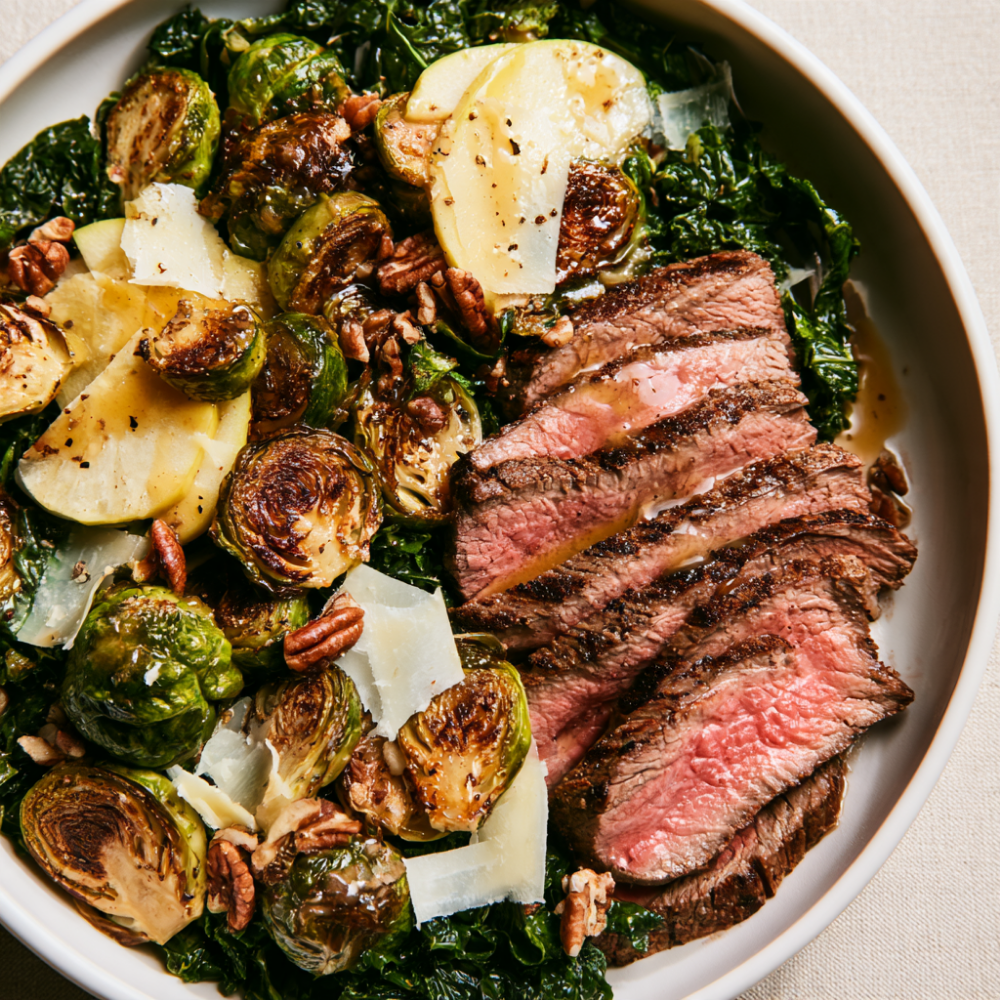
About 36–40g protein per serving | 35 minutes | Serves 4
A hearty steak bowl with deeply caramelized Brussels sprouts, tender sliced steak, crisp apple, toasted pecans, shaved Parmesan, and massaged kale, all finished with a sweet-tangy maple-Dijon vinaigrette.
Servings: 4
Prep Time: 15 minutes
Cook Time: 20 minutes
Total Time: About 35 minutes
Protein per Serving: About 36–40g
Nutrition note: Protein varies by cut of steak, Parmesan, pecans, and the brands you use. Calculate with your specific products for the most accurate numbers.
Ingredients
For the Bowl:
- 1½ lbs flank steak, skirt steak, or sirloin steak
- 1½ lbs Brussels sprouts, trimmed and halved
- 2 tbsp olive oil, divided
- ¾ tsp kosher salt, divided
- ½ tsp black pepper
- 1 tsp garlic powder
- ½ tsp smoked paprika
- 1 large bunch lacinato kale, stems removed and leaves torn into bite-size pieces
- 1 medium Honeycrisp or Fuji apple, thinly sliced
- ⅓ cup pecan halves
- ⅓ cup shaved Parmesan
For the Maple-Dijon Vinaigrette:
- ¼ cup extra-virgin olive oil
- 2 tbsp apple cider vinegar
- 1 tbsp Dijon mustard
- 1 tbsp maple syrup
- 1 small garlic clove, finely minced
- ¼ tsp kosher salt
- ⅛ tsp black pepper
Instructions
1. Roast the Brussels sprouts.
Preheat the oven to 425°F. Line a large rimmed baking sheet with parchment paper. Toss the Brussels sprouts with 1 tbsp olive oil, ½ tsp salt, and the black pepper. Arrange them cut-side down in a single layer. Roast for 18–22 minutes without flipping, until the cut sides are deeply browned and the centers are tender.
For better browning: Give the Brussels sprouts plenty of room. If they are crowded, use two baking sheets rather than piling them together.
2. Make the vinaigrette.
While the Brussels sprouts roast, whisk together the olive oil, apple cider vinegar, Dijon, maple syrup, garlic, salt, and pepper until smooth. Set aside.
3. Season the steak.
Pat the steak very dry with paper towels. Rub with the remaining 1 tbsp olive oil and season both sides with the remaining ¼ tsp salt, garlic powder, and smoked paprika.
4. Cook the steak.
Heat a large heavy skillet over medium-high heat until very hot. Add the steak and sear for about 3–5 minutes per side, depending on thickness and desired doneness, until a deeply browned crust forms. Transfer the steak to a cutting board and let it rest for 8–10 minutes. Resting is important because it lets the juices redistribute before slicing.
5. Toast the pecans.
While the steak rests, place the pecans in a dry skillet over medium heat. Toast for 3–4 minutes, stirring frequently, until fragrant. Transfer them to a plate and roughly chop once cool enough to handle.
6. Massage the kale.
Place the kale in a large bowl and drizzle with about 1 tbsp of the vinaigrette. Massage with clean hands for 2–3 minutes until softened and darker green.
7. Slice the steak.
Slice the rested steak thinly against the grain. For flank or skirt steak, identifying the grain before cooking makes this step much easier. If the fiber direction changes, rotate the steak as needed so each slice cuts across it.
8. Assemble.
Divide the massaged kale among four bowls. Top with the roasted Brussels sprouts, sliced steak, apple, toasted pecans, and Parmesan. Drizzle with the remaining vinaigrette and serve immediately.
Make-ahead: Store the steak, Brussels sprouts, kale, apple, pecans, Parmesan, and dressing separately for up to 4 days. Slice the apple just before serving, or toss it with a little lemon juice to slow browning. Keep the pecans separate to keep them crunchy.
7. Creamy Tahini Quinoa & Roasted Chickpea Power Bowl
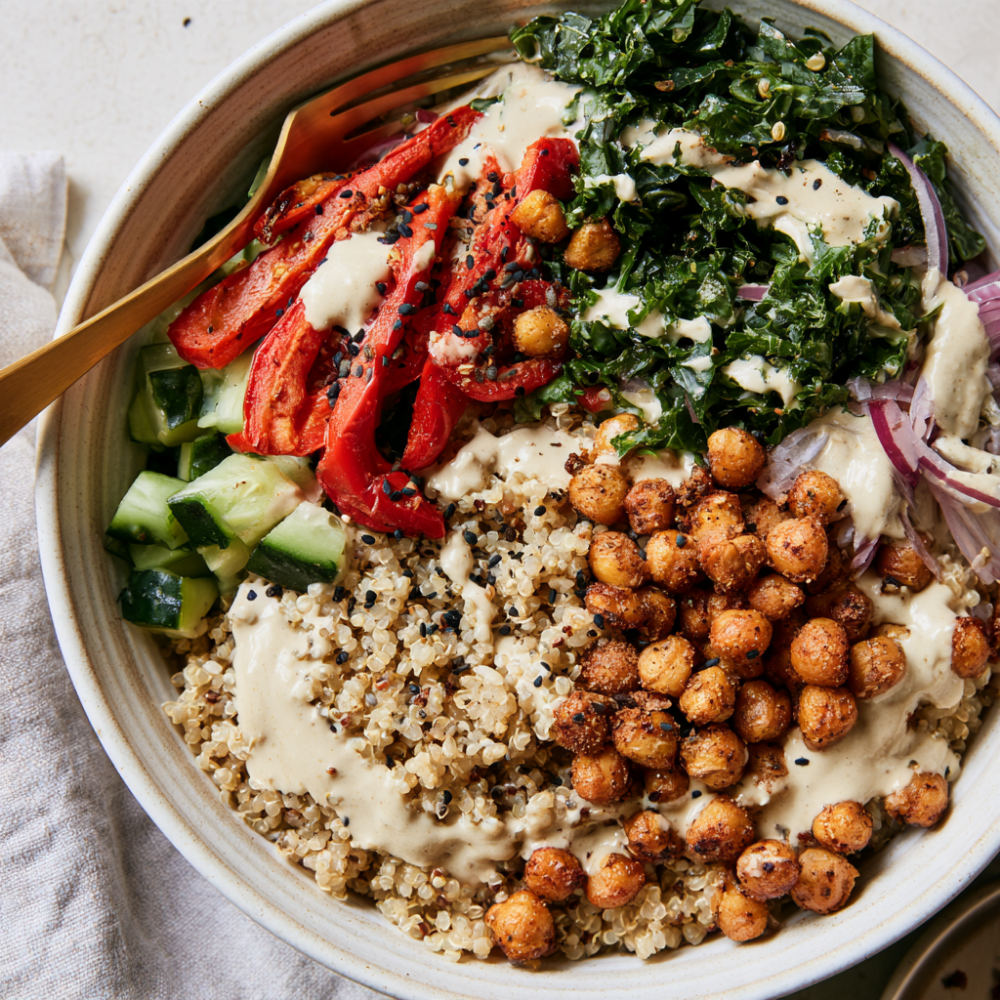
About 19–22g protein per serving | 40 minutes | Serves 4
A satisfying plant-based bowl with fluffy quinoa, crispy roasted chickpeas, roasted red pepper, tender kale, crunchy cucumber, and fresh herbs, finished with a creamy lemon-tahini dressing. The combination of quinoa, chickpeas, tahini, and vegetables makes this bowl hearty enough for a complete meal.
Servings: 4
Prep Time: 15 minutes
Cook Time: 25 minutes
Total Time: About 40 minutes
Protein per Serving: About 19–22g
Nutrition note: Protein varies depending on the quinoa, chickpeas, tahini, and other brands you use. Calculate with your specific products for the most accurate numbers.
Ingredients
For the Bowl:
- 2 cups cooked quinoa, cooled
- 2 (15-oz) cans chickpeas, drained, rinsed, and thoroughly dried
- 2 tbsp olive oil, divided
- 1 tsp smoked paprika
- 1 tsp ground cumin
- ½ tsp garlic powder
- ¾ tsp kosher salt, divided
- ½ tsp black pepper
- 1 red bell pepper, cut into 1-inch strips
- 1 large bunch lacinato kale, stems removed and finely chopped
- 1 medium cucumber, diced
- ¼ red onion, very thinly sliced
- ¼ cup fresh parsley, chopped
- ¼ cup crumbled feta, optional
For the Lemon-Tahini Dressing:
- ⅓ cup tahini
- 3 tbsp fresh lemon juice
- 2 tbsp warm water, plus more as needed
- 1 small garlic clove, finely minced
- 1 tsp maple syrup
- ½ tsp kosher salt
- ¼ tsp black pepper
Instructions
1. Dry the chickpeas thoroughly.
Preheat the oven to 425°F. Drain and rinse the chickpeas, then spread them on a clean kitchen towel or several layers of paper towels. Pat them thoroughly dry. If a few loose chickpea skins come off, discard them, but don’t worry about removing every skin. This step matters. Wet chickpeas will steam in the oven instead of becoming crisp.
2. Roast the chickpeas.
Place the dried chickpeas on a large rimmed baking sheet. Toss with 1 tbsp olive oil, smoked paprika, cumin, garlic powder, ½ tsp salt, and black pepper. Spread the chickpeas into a single layer with plenty of space between them. Roast for 20–25 minutes, shaking the pan once halfway through, until browned and crisp on the outside. For the crispiest chickpeas, leave them in the turned-off oven for another 5 minutes after roasting, with the oven door slightly open.
3. Roast the red pepper.
While the chickpeas roast, toss the red pepper strips with the remaining 1 tbsp olive oil and remaining ¼ tsp salt. Add them to a separate small baking sheet and roast for about 15–20 minutes, turning once, until tender with browned edges. Using a separate pan keeps the peppers’ moisture from softening the chickpeas.
4. Make the tahini dressing.
Whisk together the tahini, lemon juice, warm water, garlic, maple syrup, salt, and pepper. The mixture may become very thick or appear slightly grainy when the lemon juice first hits the tahini. Keep whisking and gradually add warm water, 1 tbsp at a time, until the dressing becomes smooth and pourable. Taste and adjust the lemon, salt, or water as needed.
5. Prepare the kale.
Place the chopped kale in a large bowl. Add about 1 tbsp of the tahini dressing and massage the kale with clean hands for 2–3 minutes until softened.
6. Assemble the bowls.
Divide the cooked quinoa among four bowls. Add the massaged kale, roasted chickpeas, roasted red pepper, cucumber, red onion, and parsley. Add feta if using.
7. Dress and serve.
Drizzle with the remaining tahini dressing. Serve warm, at room temperature, or chilled. For the best texture, add the roasted chickpeas immediately before serving so they remain crisp.
Make-ahead: Store the quinoa, vegetables, roasted chickpeas, and dressing separately for up to 4 days. Keep the chickpeas in a loosely covered container rather than a sealed container if you want to preserve more of their crispness. Refrigerated tahini dressing will thicken, so whisk in a little warm water before serving.
Tips for the Best Winter Salad Bowls
Use sturdy greens. Arugula, kale, romaine, and cabbage all hold up under warm proteins and heavy dressings. Soft greens like butter lettuce and spring mix wilt immediately.
Massage your kale. Two to three minutes of squeezing and rubbing with a little dressing transforms raw kale from tough and bitter to tender and almost sweet. This is not optional if you’re using kale as a base.
Toast your nuts and seeds. Three minutes in a dry skillet is the difference between flat and forgettable and deeply nutty and satisfying.
Dry your chickpeas completely before roasting. Moisture is the enemy of crispiness. Pat them dry, then let them sit on a towel for a few minutes while the oven preheats. Roast chickpeas and moist vegetables on separate pans.
Slice steak against the grain. Look for the lines running through the meat and cut perpendicular to them. This shortens the muscle fibers and makes even a medium steak eat tender.
Rest your protein before slicing. Five to ten minutes allows the juices to redistribute. Slice too soon, and they run out onto the board.
Dress at the end, or keep dressing separate. A dressed salad is good for about six hours. Components stored separately are good for three to four days.
Let the cabbage sit with the dressing for five minutes. Unlike lettuce, cabbage actually improves when it sits with the dressing briefly — it softens slightly while staying crunchy, and absorbs more flavor.
Keep bacon separate in meal prep. Crispy bacon stored in a salad for four days turns soft and chewy. Add it just before serving.
Finish with flaky salt. A pinch of Maldon or fleur de sel on top of a finished salad adds a crunch and a burst of salinity that regular salt can’t match.
Balance the six elements. Greens, roasted vegetable, warm protein, something creamy, something crunchy, acid-forward dressing. Every bowl needs all six.
Easy Variations
Make any bowl vegetarian. Swap the protein for 1½ cups of cooked lentils, 2 cups of crispy roasted chickpeas, or 8 oz of halloumi seared until golden. Protein drops by about 15–25g per serving.
Make any bowl dairy-free. Skip the feta, goat cheese, and Parmesan. Use a dairy-free creamy element like mashed avocado, tahini, or a cashew-based dressing.
Make any bowl lower-carb. Swap the sweet potato, quinoa, or chickpeas for roasted cauliflower, roasted Brussels sprouts, or extra greens. Protein stays roughly the same.
Make the Chinese chicken salad nut-free. Swap the peanut butter for tahini and skip the almonds. Use extra sesame seeds for crunch.
Add a grain. Quinoa, farro, wild rice, and barley all work as a base or an addition. They add substance and make the bowl more filling.
Add a soft-boiled egg. One egg adds about 6 g of protein and makes almost any salad feel more like a meal.
Swap the dressing. The maple-Dijon vinaigrette in recipes 4 and 6 works on almost everything. The lemon-tahini dressing in recipe 7 does, too.
Storage and Food Safety
Refrigerator: Store the components separately in airtight containers for up to 4 days. Keep dressings in small jars and add just before eating. Massaged kale keeps for 2–3 days. The Chinese chicken salad is the exception — it holds up well fully assembled for up to 3 days because cabbage doesn’t wilt. For the bacon ranch salad, keep the bacon separate to keep it crisp.
Freezer: Roasted vegetables and cooked proteins freeze well for up to 3 months. Fresh greens, dressings, and assembled salads do not freeze well — the texture suffers badly.
Reheating: Reheat proteins and roasted vegetables gently in a skillet or microwave. Serve them warm over cool greens for the contrast that makes these bowls work.
Food safety: Cook chicken to 165°F, steak to 130–145°F depending on preference, and bacon until crispy. Refrigerate leftovers within 2 hours.
Frequently Asked Questions
Are these salads filling enough for dinner?
Yes, when you build them with all six elements and a real protein source. The bowls with 36–44g of protein per serving are genuinely filling. The tahini quinoa bowl at 19–22g is better for lunch or with added protein.
Can I meal prep these?
Yes, but store the components separately. Dressed salads don’t hold up — with one exception. The Chinese chicken salad holds up fully assembled for up to 3 days because cabbage stays crunchy even when dressed. For the bacon ranch salad, keep the bacon and dressing separate.
What’s the best green for winter salads?
Arugula, kale, romaine, and cabbage. Arugula is peppery and stands up to steak. Kale is sturdy and benefits from massaging. Romaine and cabbage add crunch.
How do I keep chickpeas crispy?
Pat them completely dry, spread them in a single layer with room between them, and roast at high heat (425°F). Shake the pan once halfway through, and don’t crowd them. Roast moist vegetables like bell peppers on a separate pan so their steam doesn’t soften the chickpeas.
Can I use bottled dressing?
You can, but homemade dressings take 3 minutes and taste significantly better. They also let you control the sugar and sodium.
Can I make these vegan?
Recipe 7 is vegan as written (skip the optional feta). Recipe 3 can be made vegan by skipping the bacon and feta, though protein drops to about 12–15g. Recipes 1, 2, 4, 5, and 6 all contain animal protein but can be adapted — see the variations section.
Is this list gluten-free?
Most of these are naturally gluten-free, but check your soy sauce, bacon, Dijon mustard, and any packaged ingredients to confirm. Use tamari or gluten-free soy sauce for the Chinese chicken salad.
What’s the highest-protein bowl on this list?
Recipes 4 and 5 (Warm Roasted Sweet Potato & Chicken Protein Bowl and Crispy Bacon & Greek Yogurt Ranch Chopped Salad) both land at about 40–44g per serving. Recipes 1, 2, and 6 are close behind at about 36–40g each.
Can I use rotisserie chicken for the Chinese chicken salad or the bacon ranch salad?
Yes — it’s the fastest option. Remove the skin and bones and shred about 4 cups of meat. That’s exactly what both recipes call for.
Conclusion
These seven salad bowls answer the question of what to eat for lunch in January. Warm Roasted Sweet Potato & Chicken, Crispy Bacon & Greek Yogurt Ranch, Maple-Dijon Brussels Sprout and Grilled Steak, Creamy Tahini Quinoa & Roasted Chickpea — plus a steak and arugula salad, a high-protein Chinese chicken salad, and a warm sweet potato salad with crispy chickpeas. Each one follows the same six-element structure, delivers 19-44 grams of protein per bowl, and holds up well for meal prep.
The keys are simple: use sturdy greens, massage your kale, toast your nuts, dry your chickpeas before roasting, rest and slice your protein properly, and dress at the end. Do that, and you’ll have a salad bowl that actually fills you up in the middle of winter.
Make two or three on Sunday, store the components separately, and you’ve got lunch handled for most of the week.