Lasagna is one of those dinners that always sounds like a good idea and rarely feels like one on a Tuesday night—boiling a dozen noodles, layering three components in a 9×13, waiting an hour for it to bake, then trying to serve a clean square without it sliding apart on the plate.
Lasagna roll-ups solve almost all of that. Same flavors, same components, but each portion is self-contained. You roll, you arrange, you bake. The noodles don’t stick together in the pan. The filling distributes evenly through every bite. And they reheat better than traditional lasagna because each roll holds its shape.
This version takes it a step further with three upgrades over a standard recipe. A soak method that eliminates boiling entirely. A ricotta-cream cheese filling that’s smoother and richer than ricotta alone. And fennel seed in the meat sauce that gives it that Italian sausage flavor without actually using sausage.
Make a batch on Sunday. Bake half and freeze half. Each roll delivers 32 grams of protein and reheats in the oven or microwave without falling apart.
Let’s make them.
Why This Recipe Works
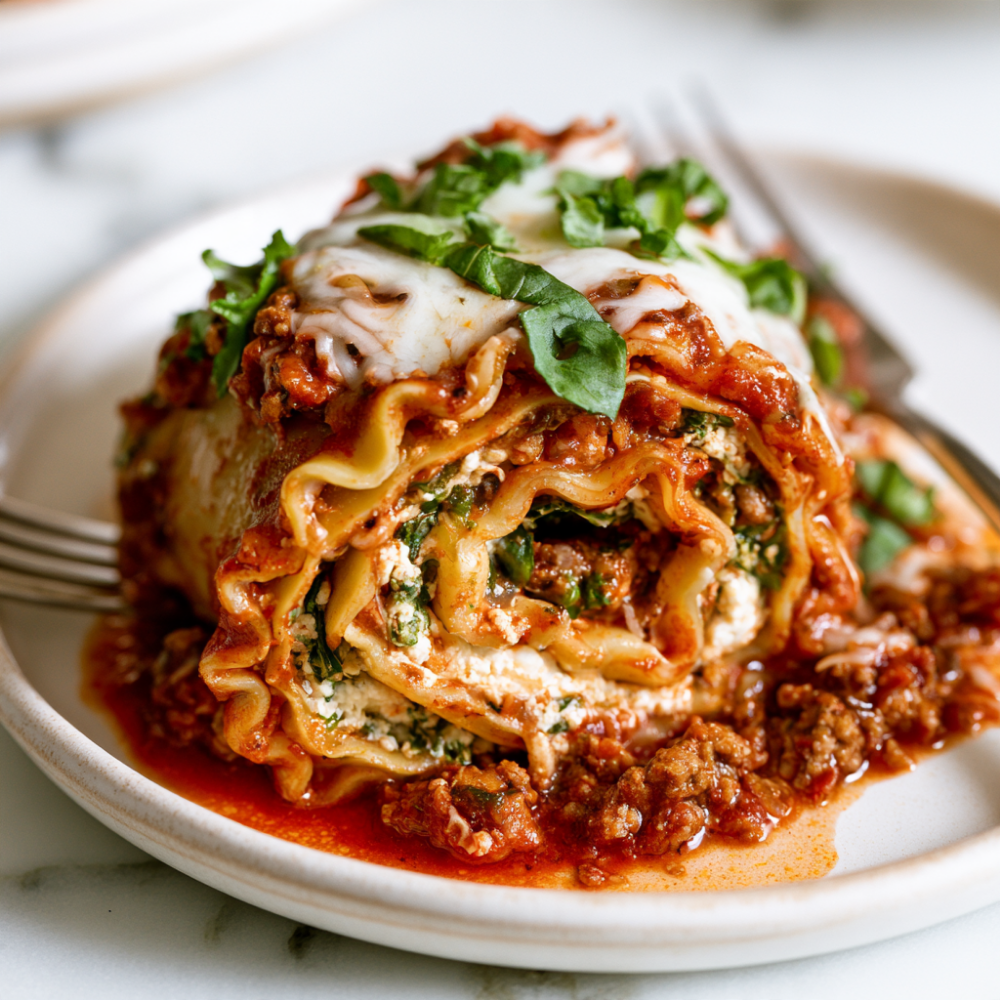
The soak method replaces boiling entirely. Instead of watching a pot of boiling water and pulling noodles at exactly the right second, you soak them in hot tap water for 20 minutes while you make the filling. They soften enough to roll without tearing, and they finish cooking in the oven: no sticky noodles, no timing anxiety, no burnt fingers.
Cream cheese in the ricotta filling solves the graininess problem. Ricotta alone can taste grainy and dry after baking. Cream cheese adds richness and a smoother texture, and it binds the filling so it doesn’t leak out during the bake.
Fennel seed gives the meat sauce Italian sausage flavor without sausage. Crush a teaspoon of fennel seed between your fingers and add it with the beef to make the sauce taste as if it came from a better recipe. It’s the same trick that makes Italian sausage taste like Italian sausage.
Spinach gets folded into the ricotta. A cup of chopped spinach disappears into the filling. Kids don’t notice. Adults get a serving of vegetables. It’s the easiest nutrition upgrade you can make to a lasagna.
A thin layer of meat sauce on the bottom prevents sticking. Rolls that sit directly on the bare baking dish stick and scorch. A layer of sauce creates a barrier and gives the rolls something to nestle into.
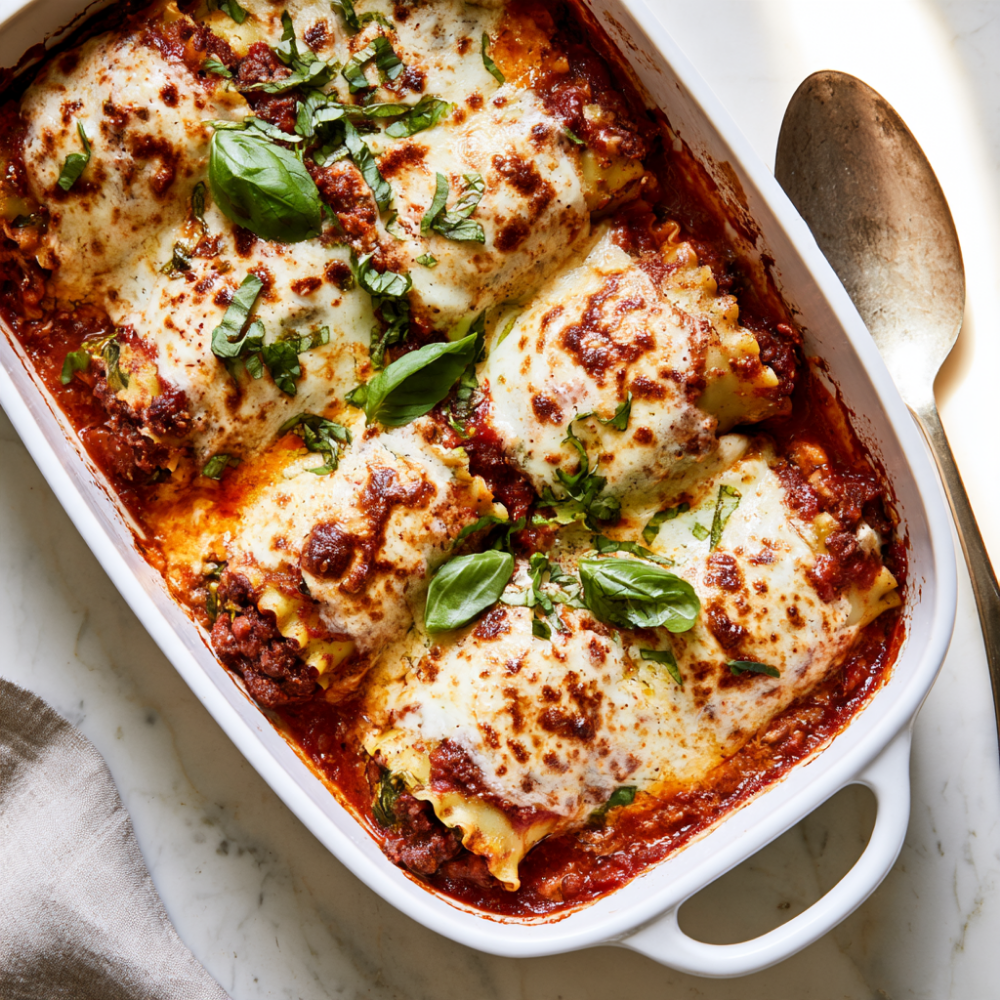
Broiling for the last two minutes gives you the golden top. The cheese browns in spots and the sauce bubbles at the edges. That visual finish makes the whole dish look like it came from a restaurant.
They freeze beautifully. Unlike traditional lasagna, which can get watery when frozen and thawed, roll-ups hold their shape. Assemble a double batch, bake one, freeze the other.
Each roll is a self-contained portion. No awkward slicing. No sliding layers. Every person gets a roll with all the components evenly distributed.
Lasagna Roll Ups Recipe
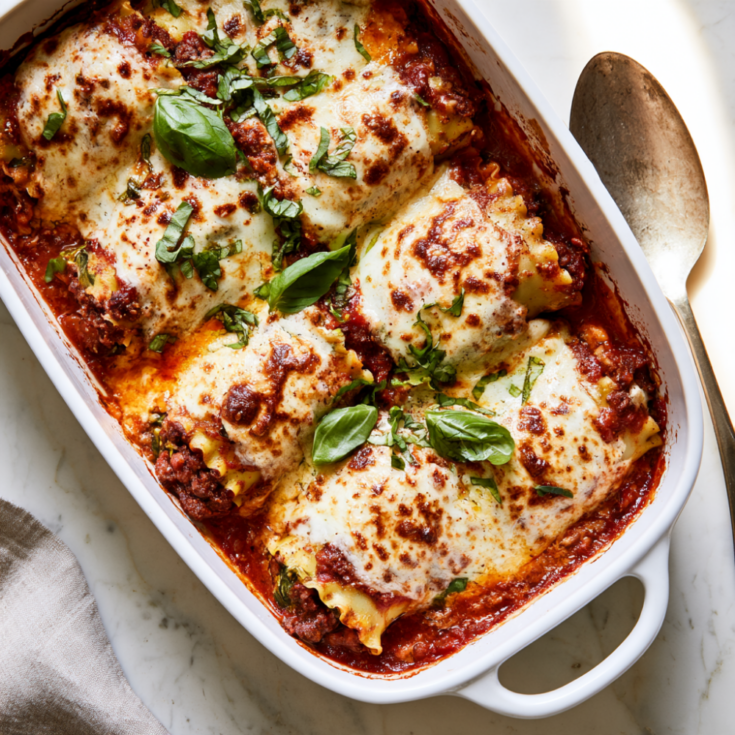
Classic lasagna roll-ups with a ricotta-cream cheese filling, fennel-spiced meat sauce, and a broiled golden top. Each roll delivers 32 grams of protein.
Ingredients
For the Noodles:
- 12 dried lasagna noodles (not no-boil, about 2/3 of a 1-lb box)
- Hot tap water, for soaking
- 1 tbsp olive oil, for the soaking water
For the Meat Sauce:
- 1 tbsp olive oil
- 1 medium yellow onion, diced (about 1½ cups)
- 1 tsp kosher salt
- 1 tsp dried Italian seasoning
- ½ tsp freshly ground black pepper
- 1 tsp fennel seed, crushed between your fingers
- 3 cloves garlic, minced
- 12 oz lean ground beef (90/10)
- 1 (24–32 oz) jar marinara sauce (Rao's or similar quality)
- ½ tsp crushed red pepper flakes (optional)
For the Ricotta Filling:
- 1 (15 oz) container whole-milk ricotta cheese
- 4 oz cream cheese, softened to room temperature
- 1 large egg
- ½ tsp kosher salt
- 1 cup fresh baby spinach, finely chopped
- ½ cup shredded low-moisture mozzarella
- ½ cup grated Parmesan cheese
For Assembly:
- 1½ cups shredded low-moisture mozzarella, divided
- ½ cup grated Parmesan, divided
- Fresh basil or parsley, for garnish
Instructions
- Soak the noodles. Place the 12 lasagna noodles in a 9x13 baking dish in a single layer. Pour hot tap water over them until they're fully submerged, add the tablespoon of olive oil, and let them soak for 20 minutes. After the first 3–4 minutes, gently separate any noodles that have started to fuse—run a butter knife or your fingers between them to keep them from sticking as they soften. Stir once more halfway through. They should be pliable but still firm after 20 minutes. Drain and lay them flat on a clean kitchen towel.
- Preheat the oven. Preheat to 375°F. Coat a separate 9x13 baking dish with cooking spray.
- Make the meat sauce. Heat the olive oil in a large skillet over medium heat. Add the diced onion, kosher salt, Italian seasoning, black pepper, and crushed fennel seed. Cook for 4–5 minutes, until the onion is tender and starting to brown. Add the minced garlic and cook for 30 seconds, until fragrant. Add the ground beef and cook for 5–7 minutes, breaking it apart with a wooden spoon, until browned and cooked through. Pour in the marinara sauce and the crushed red pepper flakes if using. Stir to combine, then remove from the heat.
- Make the ricotta filling. In a large bowl, stir together the ricotta, cream cheese, egg, and kosher salt until smooth and fully combined. Fold in the chopped spinach, ½ cup of mozzarella, and ½ cup of Parmesan.
- Spread the base. Spread 1½ cups of the meat sauce evenly across the bottom of the prepared baking dish.
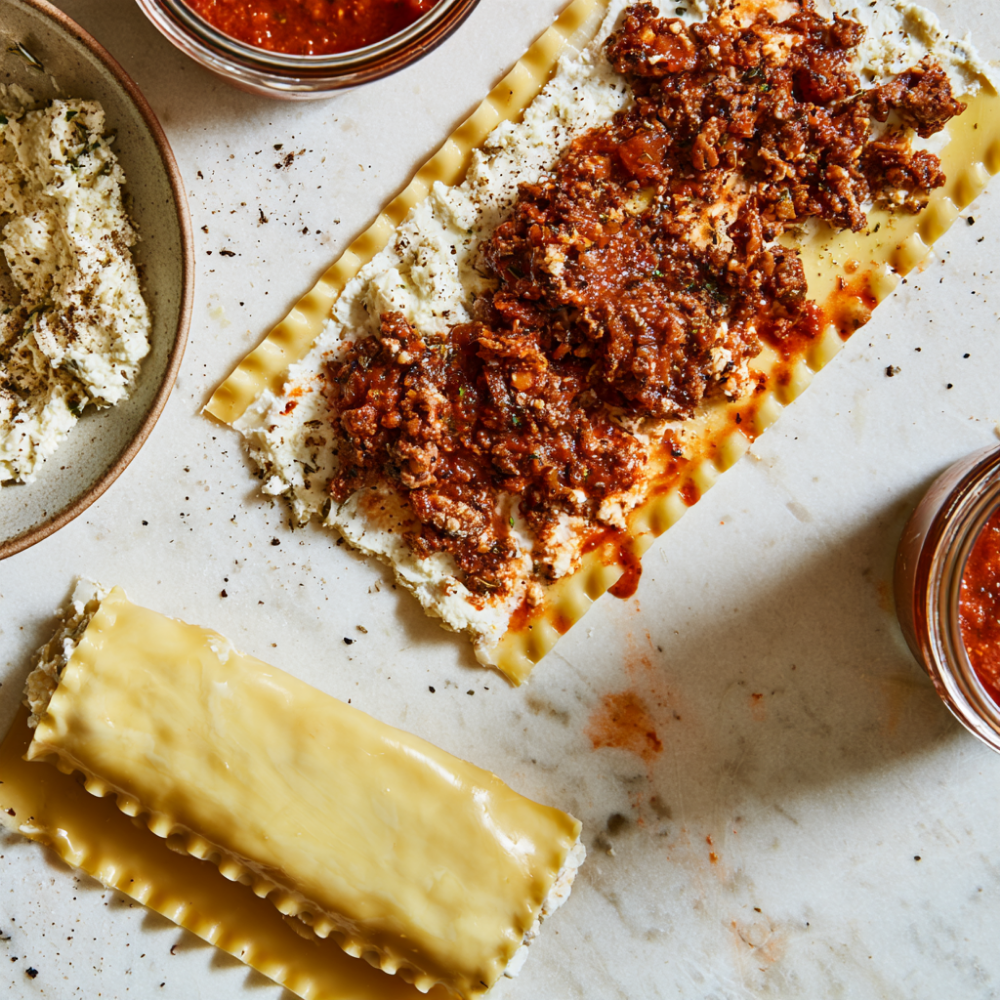
- Assemble the rolls. Lay one soaked noodle flat on a clean work surface. Spread about 3 tablespoons of the ricotta mixture along the noodle. Spoon 1 tablespoon of the meat sauce over the ricotta. Starting at one short end, roll the noodle up tightly. Place it seam-side down in the baking dish. Repeat with the remaining noodles.
- Top the rolls. Spoon the remaining meat sauce evenly over the rolls. Sprinkle with the remaining 1 cup of mozzarella and ½ cup of Parmesan.
- Bake. Cover the dish tightly with foil and bake for 15 minutes. Uncover and bake for another 10–15 minutes, until the sauce bubbles around the edges and the cheese begins to brown.
- Broil for the finish. If your baking dish is broiler-safe, turn the oven to broil and broil for 1–2 minutes, until the cheese is browned in spots. Watch it the entire time—it goes from golden to burnt fast.
- Rest and serve. Let the dish rest for 5 minutes before serving. Garnish with fresh basil or parsley.
Notes
Protein per Serving: About 32g (2 rolls)
Nutrition note: Estimated per serving with lean ground beef, whole-milk ricotta, cream cheese, mozzarella, Parmesan, and marinara: ~520 calories, 32g protein, 42g carbs, 24g fat. Using part-skim ricotta and low-fat mozzarella reduces fat by about 8g per serving.
Tips for the Best Lasagna Roll Ups
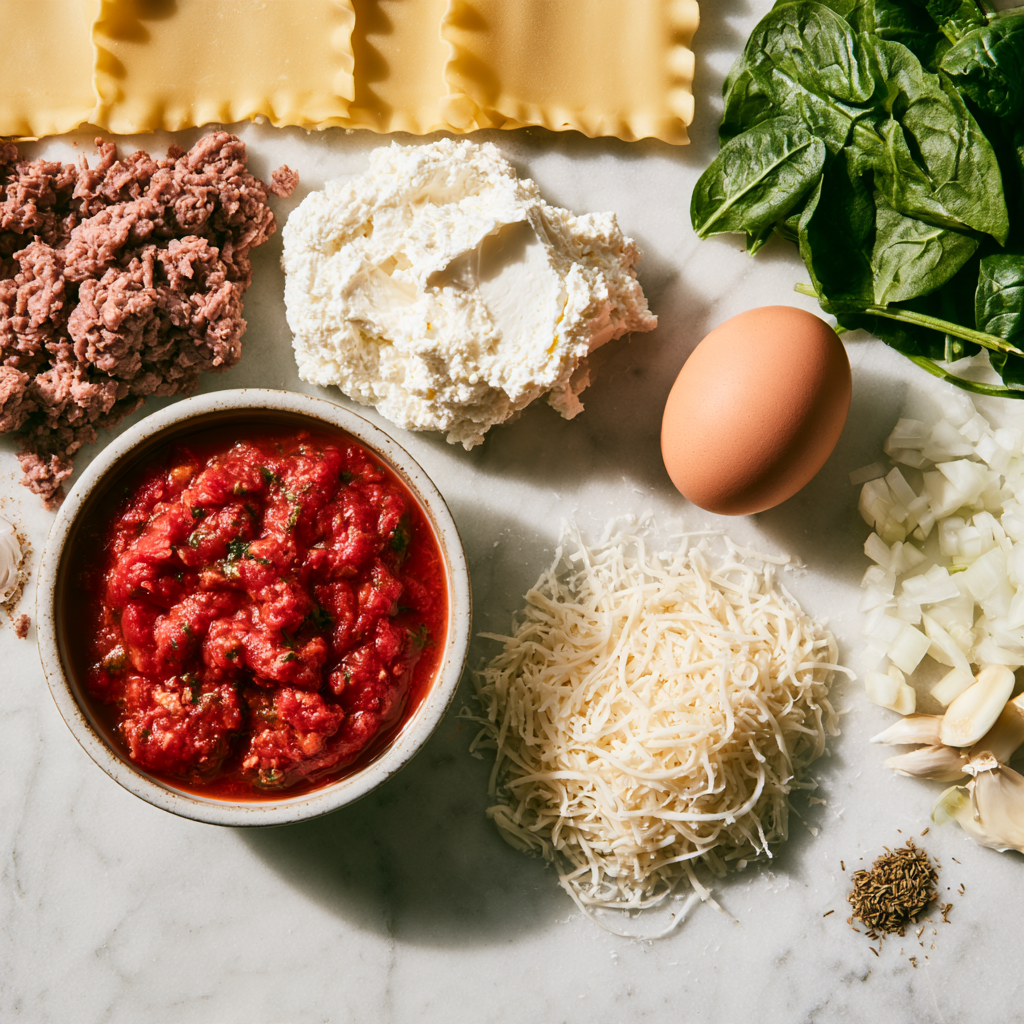
Soak the noodles; don’t boil them. Twenty minutes in hot tap water softens the noodles enough to roll without tearing. They finish cooking in the oven, so they never get mushy. This also saves you a pot, a colander, and a lot of standing over the stove.
Separate the soaking noodles after 3–4 minutes. As the noodles soften, the starch on their surface makes them stick together. Run a butter knife or your fingers between them early to keep them from fusing. If they’ve already stuck, soak them for an extra minute and gently work them apart.
Add a tablespoon of oil to the soaking water. It helps prevent sticking, but it isn’t a substitute for physically separating the noodles.
Use cream cheese in the ricotta filling. It solves the grainy texture problem and helps the filling hold together during baking. Don’t skip it.
Crush the fennel seed between your fingers. Whole fennel seed stays crunchy and doesn’t distribute flavor evenly. Crushing it releases the oils and gives you that Italian sausage flavor in every bite.
Spread 1½ cups of sauce on the bottom before arranging the rolls. Rolls that sit on a bare dish stick and scorch. A layer of sauce prevents sticking and gives the rolls something to nestle into.
Don’t overfill the rolls. About 3 tablespoons of ricotta and 1 tablespoon of meat sauce per noodle is the right ratio. Overfilled rolls burst open in the oven.
Roll tightly, seam-side down. A loose roll falls apart when you serve it. A tight roll holds its shape.
Cover with foil for the first 15 minutes. This traps steam and cooks the rolls through without drying out the top. Then uncover for the last 10–15 minutes to let the cheese brown.
Broil for 1–2 minutes maximum. You want browned spots, not charcoal. Stay at the oven and watch.
Rest for 5 minutes before serving. This lets the cheese set so the rolls hold their shape when you lift them out of the dish.
Make a double batch. The active time is nearly identical. Bake one dish and freeze the other for a future dinner.
Troubleshooting
The noodles tore when I rolled them. You didn’t soak them long enough, or the water wasn’t hot enough. Soak for a full 20 minutes in hot tap water, not lukewarm water.
The noodles fused in the soaking dish. You didn’t separate them early enough. Run a butter knife between the noodles after 3–4 minutes of soaking and again at the halfway mark.
The rolls are dry. You didn’t add enough sauce on top, or you baked them uncovered for too long. Cover with foil for the first 15 minutes to trap steam.
The ricotta filling leaked out. You overfilled the rolls, or your filling was too thin. Use 3 tablespoons of filling per noodle, and make sure the egg is fully incorporated.
The rolls stuck to the pan. You didn’t spread sauce on the bottom first. Always add a layer of sauce before arranging the rolls.
The cheese burnt under the broiler. You walked away. Broil for 1–2 minutes maximum and stay at the oven the entire time.
The rolls taste bland. You used a cheap marinara or didn’t season the meat sauce enough. Taste the meat sauce before assembling and adjust the salt.
The filling tastes grainy. You skipped the cream cheese, or you didn’t mix the ricotta long enough. Stir until the mixture is completely smooth.
The rolls fell apart when I served them. You didn’t let them rest. Five minutes off the heat lets the cheese set so the rolls hold together.
The fennel seed tastes too strong. You used whole seed instead of crushing it. Crushed fennel distributes more evenly and tastes milder per bite.
Easy Variations
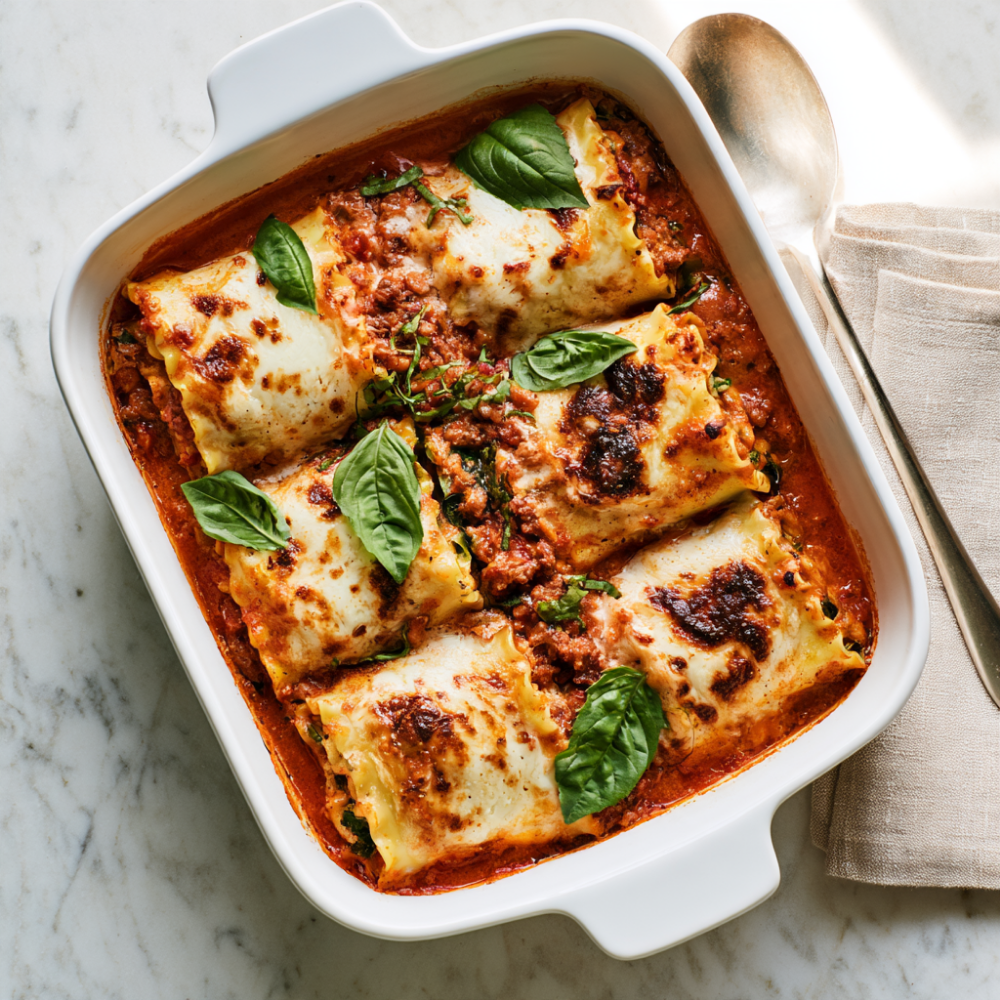
Spinach Roll Ups. Double the spinach to 2 cups and squeeze it dry before chopping. Add ¼ cup of chopped sun-dried tomatoes to the ricotta filling. Skip the meat sauce and use a simple marinara instead.
Chicken Alfredo Roll Ups. Swap the meat sauce for 3 cups of Alfredo sauce. Replace the ground beef with 2 cups of shredded rotisserie chicken. Use ½ cup of ricotta mixed with ½ cup of cream cheese as the filling base. Bake as directed.
Mac and Cheese Lasagna Rolls. Skip the marinara entirely. Make a simple cheese sauce with 2 tablespoons butter, 2 tablespoons flour, 1½ cups milk, and 2 cups shredded cheddar. Mix the ricotta filling with 1 cup of cooked elbow macaroni. Roll, top with cheese sauce, and bake as directed.
Vegetarian Lasagna Roll Ups. Skip the meat and double the vegetables. Add sautéed mushrooms, zucchini, and bell peppers to the marinara.
Turkey Lasagna Roll Ups. Swap the ground beef for 93/7 ground turkey. Add an extra teaspoon of olive oil to the skillet since turkey is leaner.
Low Carb Lasagna Roll Ups. Swap the lasagna noodles for thin-sliced zucchini planks. Salt and drain them for 15 minutes first, then pat dry before rolling.
Make Ahead Lasagna Roll Ups. Assemble the rolls in the baking dish, cover tightly with foil, and refrigerate for up to 2 days before baking. Add 5–10 minutes to the covered bake time since the dish will go into the oven cold.
Freezer Lasagna Roll Ups. Assemble the rolls in a freezer-safe baking dish, cover tightly with foil, and freeze for up to 1 month. Thaw overnight in the refrigerator, then bake as directed.
Storage and Food Safety
Refrigerator: Store leftover rolls in an airtight container for up to 4 days. Reheat individual portions in the microwave for 90 seconds or in a 350°F oven for 15 minutes.
Freezer: Assemble the rolls unbaked in a freezer-safe dish, cover tightly with foil, and freeze for up to 1 month. Thaw overnight in the refrigerator, then bake as directed, adding 5–10 minutes to the covered bake time. Baked rolls also freeze well—wrap individually and reheat from frozen at 375°F for 20 minutes.
Make Ahead: Assemble up to 2 days in advance and refrigerate. Add 5–10 minutes to the covered bake time when baking from cold.
Food Safety: Ground beef must reach an internal temperature of 160°F. Refrigerate leftovers within 2 hours of baking. Never leave the dish at room temperature for more than 2 hours.
Frequently Asked Questions
Can I use no-boil lasagna noodles?
You can, but the texture will be different. No-boil noodles are thinner and drier, and they need extra sauce to soften properly. This recipe is designed for regular dried noodles with the soak method.
Why soak the noodles instead of boiling them?
Soaking eliminates a pot, a colander, and the timing anxiety of pulling noodles at exactly the right moment. The noodles soften enough to roll without tearing and finish cooking in the oven.
Do the noodles stick together while soaking?
They can, especially in the first few minutes as the surface starch activates. Separate them gently with a butter knife or your fingers after 3–4 minutes, then again halfway through.
Can I make lasagna roll-ups ahead of time?
Yes. Assemble the rolls in the baking dish up to 2 days in advance, cover tightly, and refrigerate. Add 5–10 minutes to the covered bake time.
Can I freeze lasagna roll-ups?
Yes. Freeze unbaked rolls for up to 1 month in a freezer-safe dish. Thaw overnight in the refrigerator, then bake as directed. Baked rolls also freeze well individually.
How much protein is in each serving?
About 32 grams per serving (2 rolls) with the recipe as written.
Can I use cottage cheese instead of ricotta?
Yes, but blend it smooth first. Cottage cheese has a curdy texture compared to ricotta and can be grainy in lasagna if you don’t blend it.
Can I skip the cream cheese?
Yes, but the filling will be less smooth and slightly grainy. Add an extra egg to help bind it.
What’s the best marinara for lasagna roll-ups?
A high-quality jarred marinara like Rao’s or a homemade sauce. Cheap marinara tastes thin and sweet after baking.
Can I make these in a smaller dish?
Yes. Use an 8×8 dish and make 8 rolls instead of 12. Reduce the bake time to 12–15 minutes covered and 8–10 minutes uncovered.
Can I make these gluten-free?
Yes. Use gluten-free lasagna noodles and confirm your marinara, ricotta, and mozzarella are gluten-free.
Can I make these dairy-free?
It’s difficult because the recipe relies on ricotta, cream cheese, mozzarella, and Parmesan. Dairy-free versions exist, but the texture will be noticeably different.
What do I serve with lasagna roll-ups?
Serve with a simple green salad with Italian dressing, garlic bread, or roasted vegetables like broccoli or asparagus.
More Lasagna Recipes You’ll Love
- Crockpot Ravioli Lasagna (Lazy 4-Hour Dinner, 32g Protein!)
- The Crockpot Lasagna with Ricotta That Tastes Like It Simmered All Day
- High-Protein Sheet Pan Lasagna with Ground Beef & Spicy Sausage (No Layering, No Fuss)
- High-Protein Lasagna with Cottage Cheese (Tastes Like Ricotta)
Conclusion
Lasagna roll-ups are the version of lasagna that actually works on a weeknight. No boiling noodles. No awkward slicing. Each roll is a self-contained portion with all the components evenly distributed.
The soak method saves you a pot and the timing anxiety. The ricotta-cream cheese filling is smoother and richer than ricotta alone. The fennel seed gives the meat sauce that Italian sausage depth. And the broil finish gives you the golden top.
Make a batch this Sunday. Bake half and freeze half—thirty-two grams of protein per serving, ready in about an hour.
Make them this week. Freeze the leftovers. Thank yourself on a busy Tuesday.