I love sushi. I love the ritual, the colors, the way every piece is a tiny, perfect bite.
But making sushi at home is a project—seasoning rice, slicing fish, rolling rolls, and needing a lot of counter space I don’t have on a Tuesday night.
That’s what this sushi bowl is for. It’s all the flavors and textures of a salmon roll, deconstructed into a bowl you can build in 30 minutes with a sheet pan and a rice cooker.
Baked salmon instead of raw, so there’s no risk and no sushi-grade sourcing required. Sushi rice seasoned with vinegar and sugar.
Cucumber, avocado, pickled ginger, and scallions. And a spicy mayo that ties the whole bowl together.
With about 38 grams of protein per serving from the salmon, it’s a real dinner, not just a snack. And it’s one of the most beautiful things you can put on a plate with almost no effort.
This sushi bowl earns a permanent spot in your weekly rotation.
Why This Recipe Works
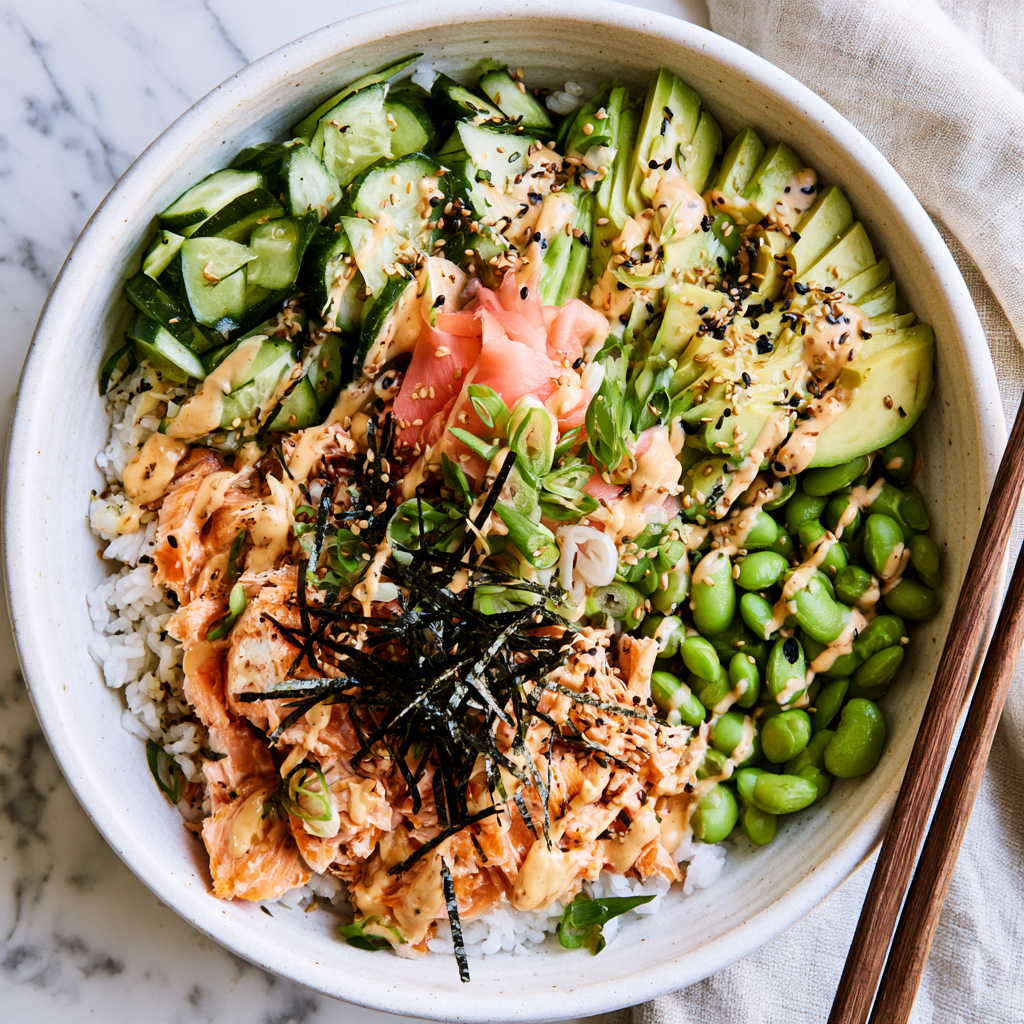
This isn’t a complicated dish, but a few small decisions make it work better than most sushi bowl recipes. Here’s what actually matters:
Baked Salmon, Not Raw. Raw salmon for sushi requires sushi-grade sourcing, proper handling, and a level of trust in your fishmonger that most of us don’t have on a weeknight. Baked salmon is safe, easy, and honestly delicious. A quick glaze of soy sauce, honey, and rice vinegar caramelizes in the oven, giving you that glossy, savory finish that makes salmon taste like restaurant-quality salmon.
Season the Rice Like Sushi Rice. This step makes a sushi bowl taste like a sushi bowl. Plain white rice is fine, but rice seasoned with rice vinegar, sugar, and salt gives it a faint sweetness and tang that pairs beautifully with fish and soy sauce. It takes 2 minutes, and it makes all the difference.
Spicy Mayo Is Non-Negotiable. The spicy mayo is what makes this bowl. Kewpie mayo is the best choice if you can find it—it’s richer and slightly sweeter than American mayo. If you can’t, mix regular mayo with Sriracha and a squeeze of lime. The mayo brings creaminess, the Sriracha brings heat, and the lime brightens the whole thing.
Cool the Salmon Briefly Before It Goes in the Bowl. Hot salmon will wilt the cucumber and melt the avocado. Let it rest for 5 minutes off the heat, then flake it into the bowl while it’s still warm but not piping hot.
Build the Bowl in Layers. Rice at the bottom. Arrange salmon and vegetables around it in sections. Sauce drizzled over the top. This isn’t just for looks—it’s so every bite can be customized with a little bit of everything.
Avocado and Cucumber for Contrast. The avocado is creamy and rich. The cucumber is crisp and cool. Together, they balance the salmon’s richness and the spicy mayo’s heat. Without them, the bowl tastes one-note.
Pickled Ginger and Toasted Sesame Seeds for Finishing. Pickled ginger adds a bright, slightly sweet bite that cuts through the creaminess. Toasted sesame seeds add nuttiness and crunch. Both are worth seeking out—they’re what make this taste like takeout instead of just a bowl of rice and fish.
Nori and Furikake, if you have them. A sprinkle of crushed nori or furikake on top adds umami and texture and makes the bowl feel more authentically sushi-inspired. If you don’t have them, it’s still delicious without.
Make It Cold for Meal Prep or Warm for Dinner. This bowl works beautifully cold for the next day’s lunch. Cook the salmon, cool it, and store the components separately so the avocado doesn’t brown and the cucumber doesn’t water down the rice.
It’s Flexible. Don’t like cucumber? Swap in shredded carrot or edamame. Don’t have pickled ginger? Thinly sliced red onion with a quick rice vinegar pickle works. This is a template, not a rule.
This meal earns its spot in the weekly rotation. It’s beautiful, it’s healthy, and it’s undeniably delicious.
Baked Salmon Sushi Bowl with Spicy Mayo
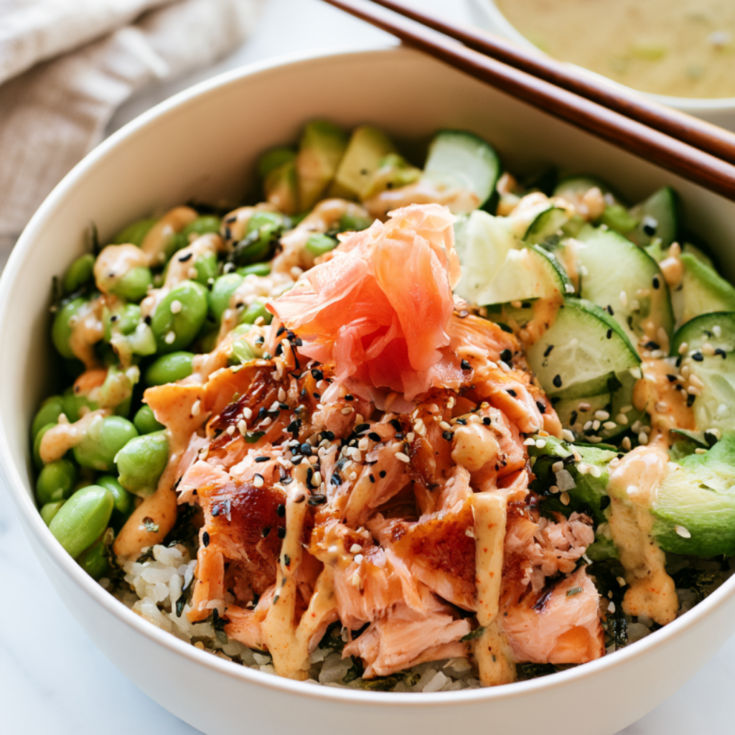
An easy baked salmon sushi bowl with spicy mayo, sushi rice, cucumber, avocado, and pickled ginger. Ready in 30 minutes, with 38 g of protein per serving.
Ingredients
For the Baked Salmon
- 1½ lbs salmon fillets (4 fillets, about 6 oz each), skin on or off
- 2 tbsp low-sodium soy sauce or tamari
- 1 tbsp honey or maple syrup
- 1 tbsp rice vinegar
- 1 tsp toasted sesame oil
- 2 cloves garlic, minced
- 1 tsp freshly grated ginger
- ½ tsp kosher salt
- ¼ tsp freshly ground black pepper
For the Sushi Rice
- 2 cups cooked short-grain sushi rice (from about ¾ cup dry)
- 2 tbsp rice vinegar
- 1 tbsp sugar
- ½ tsp kosher salt
For the Spicy Mayo
- ¼ cup Kewpie mayo or regular mayonnaise
- 1 to 2 tbsp Sriracha, to taste
- 1 tsp fresh lime juice
- 1 tsp toasted sesame oil
For the Bowl
- 1 English cucumber, thinly sliced
- 1 avocado, sliced
- 1 cup shelled edamame, steamed
- ¼ cup pickled ginger
- 2 green onions, thinly sliced
- 1 tbsp toasted sesame seeds
- 1 sheet nori, cut into thin strips (optional)
- Furikake, for serving (optional)
- Soy sauce or tamari, for serving
Instructions
- Cook the rice. Cook the sushi rice according to the package directions. While it's still warm, stir in the rice vinegar, sugar, and kosher salt. Fluff gently with a fork and set aside to cool slightly.
- Preheat and prep the salmon. Preheat the oven to 425°F. Line a rimmed sheet pan with parchment paper or foil. Pat the salmon fillets dry with paper towels and place them on the sheet pan.
- Make the glaze. In a small bowl, whisk together the soy sauce, honey, rice vinegar, sesame oil, minced garlic, grated ginger, salt, and pepper. Pour the glaze over the salmon fillets and let them sit for 5 minutes.
- Bake the salmon. Bake for 12 to 15 minutes, depending on fillet thickness, until the salmon flakes easily with a fork and the internal temperature reaches 125°F to 130°F for medium. Do not overcook—salmon dries out quickly.
- Make the spicy mayo. While the salmon bakes, whisk together the mayo, Sriracha, lime juice, and sesame oil in a small bowl. Taste and adjust the heat. Set aside.
- Prep the vegetables. Slice the cucumber, avocado, and green onions. Steam the edamame if it's frozen.
- Build the bowls. Divide the seasoned sushi rice among 4 deep bowls. Flake the salmon into large pieces and arrange it over the rice. Add the cucumber, avocado, edamame, and pickled ginger in sections around the salmon.
- Finish and serve. Drizzle the spicy mayo over the top. Sprinkle with sliced green onions, toasted sesame seeds, and nori strips if using. Finish with a pinch of furikake if you have it. Serve immediately with extra soy sauce and Sriracha on the side.
Notes
Protein per Serving: About 38gNutrition Note: Protein calculated from 1½ lbs raw salmon fillets (≈90g protein), 2 cups cooked sushi rice (≈8g), 1 avocado (≈3g), 1 cup shelled edamame (≈18g), and spicy mayo (≈2g) — about 121g total across 4 servings — about 38g per serving (with about 3g more from the cucumber and sesame seeds). About 580 calories per serving. Using cauliflower rice instead of sushi rice drops the calories to about 460 per serving, and the protein stays at about 35g.
Make-Ahead and Meal Prep Instructions
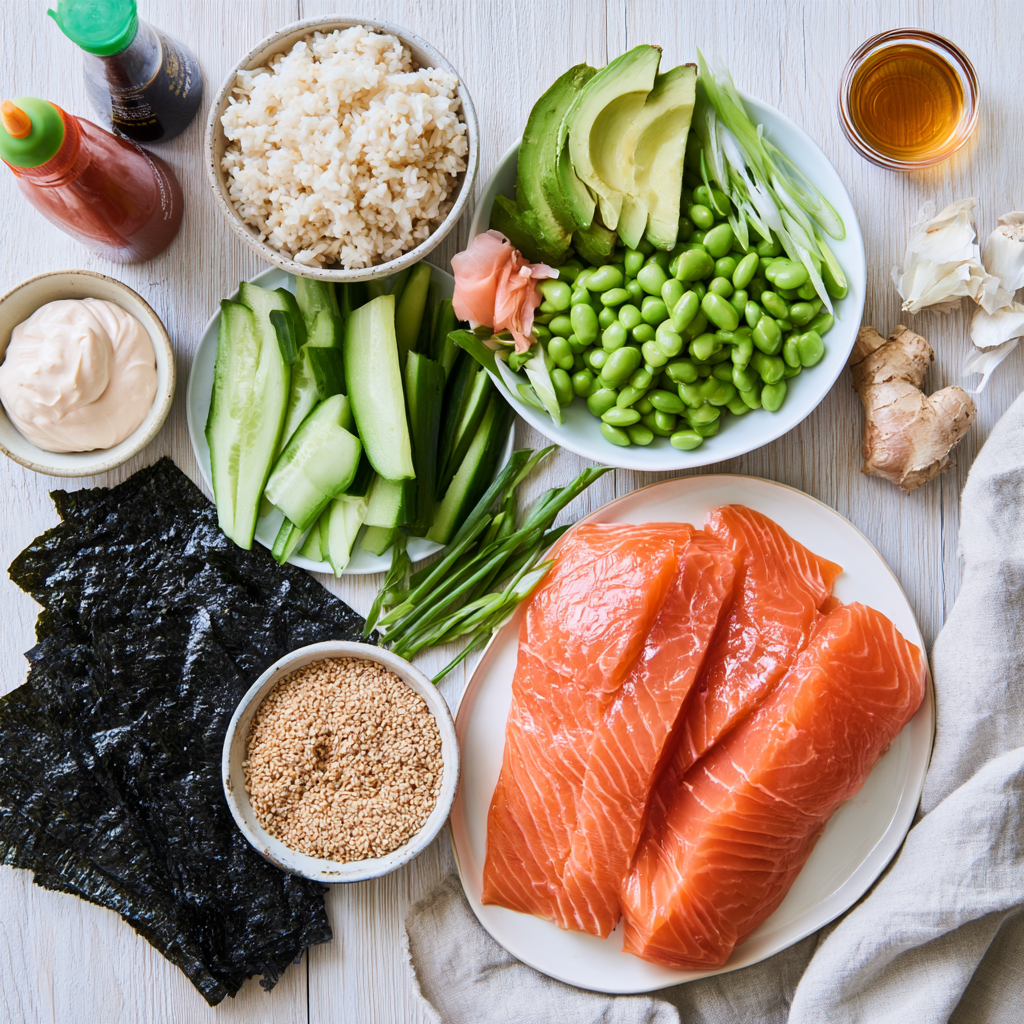
Make Ahead: Cook the salmon, season the rice, and prep the vegetables up to 2 days ahead. Store each component separately in the refrigerator. Assemble the bowls fresh when you’re ready to eat.
Meal Prep Poke Bowl: For meal prep, divide the cooled rice among 4 containers. Top with flaked salmon, cucumber, and edamame. Store the avocado, pickled ginger, and spicy mayo separately. Add them right before eating so the avocado doesn’t brown and the sauce doesn’t thin out.
Refrigerator: Store leftovers covered in an airtight container for up to 2 days. The rice will firm up in the fridge; add a splash of water and gently reheat in the microwave, or eat it cold like a sushi bowl.
Freezer: The salmon freezes well for up to 3 months, but the rice, cucumber, and avocado don’t. Freeze only the cooked salmon and edamame.
Tips for the Best Sushi Bowl
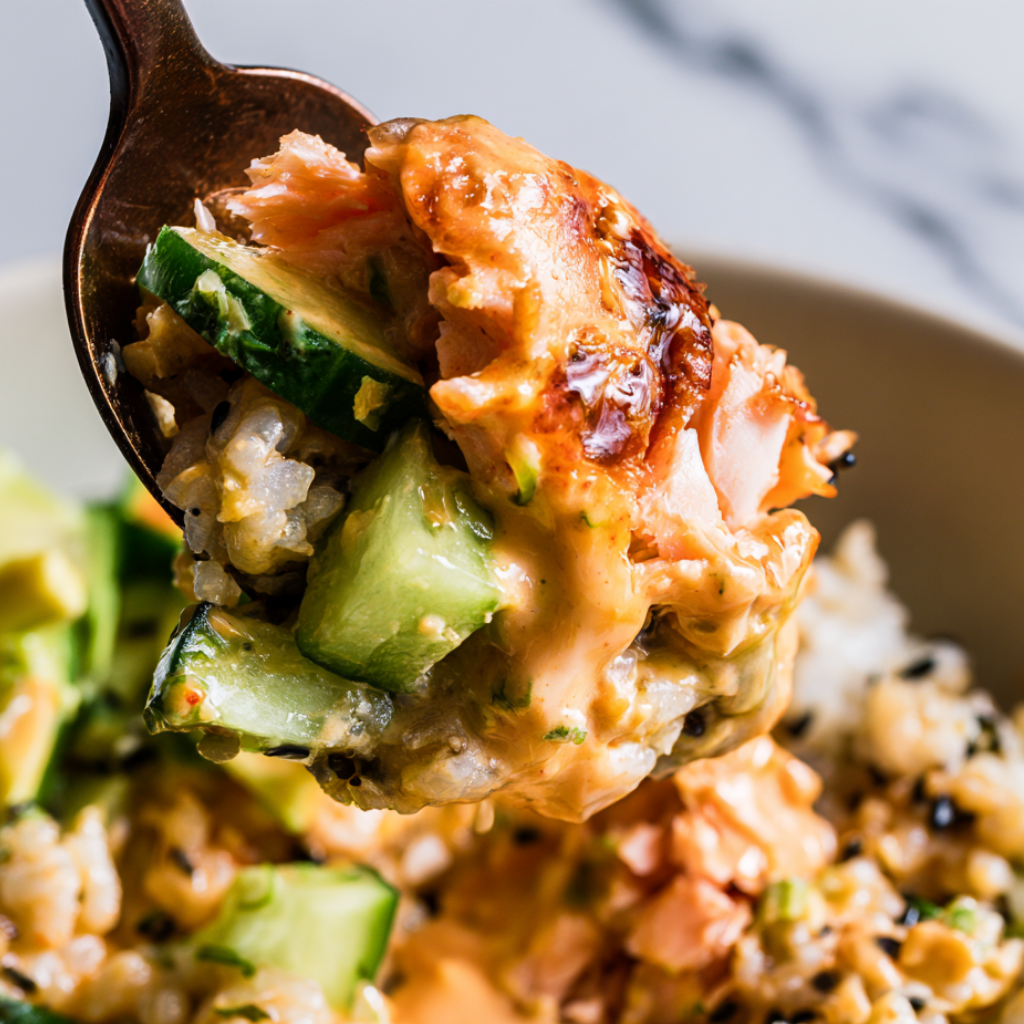
Season the rice like sushi rice. Rice vinegar, sugar, and salt turn plain rice into the lightly sweet, tangy rice that makes this bowl taste like real sushi. Don’t skip this step.
Use Kewpie mayo for the spicy mayo if you can. Kewpie is richer, slightly sweeter, and has more umami than regular American mayo. Look for it in the international aisle or order it online. Regular mayo works fine as a substitute.
Don’t overcook the salmon. Salmon flakes easily and looks opaque on the outside at 125°F to 130°F for medium. Anything beyond 145°F is dry salmon.
Let the salmon rest for 5 minutes before flaking it. Hot salmon wilts the cucumber and melts the avocado. Five minutes off the heat is enough to cool it without fully chilling it.
English cucumber, not regular cucumber. English cucumbers have thin skins, fewer seeds, and less water. They’re crunchier and don’t water down the rice.
Slice the avocado fresh. Avocado browns quickly after you cut it. If you’re prepping ahead, squeeze a little lime juice on the slices and store them in a container with plastic wrap pressed against the surface.
Toasted sesame seeds, not raw. Toasted sesame seeds have a nuttier, deeper flavor. Toast them in a dry skillet for 1 to 2 minutes if you can’t find pre-toasted ones.
Furikake and nori add authentic flavor. If you have them, use them. A sprinkle of furikake or crushed nori takes this from “salmon and rice bowl” to “sushi bowl.”
Build the bowl in sections. Instead of mixing everything together, arrange the components side by side over the rice. It looks beautiful, and it lets you customize every bite.
Serve with extra soy sauce and Sriracha. Everyone’s spice tolerance is different. Let people add their own heat at the table.
Easy Variations
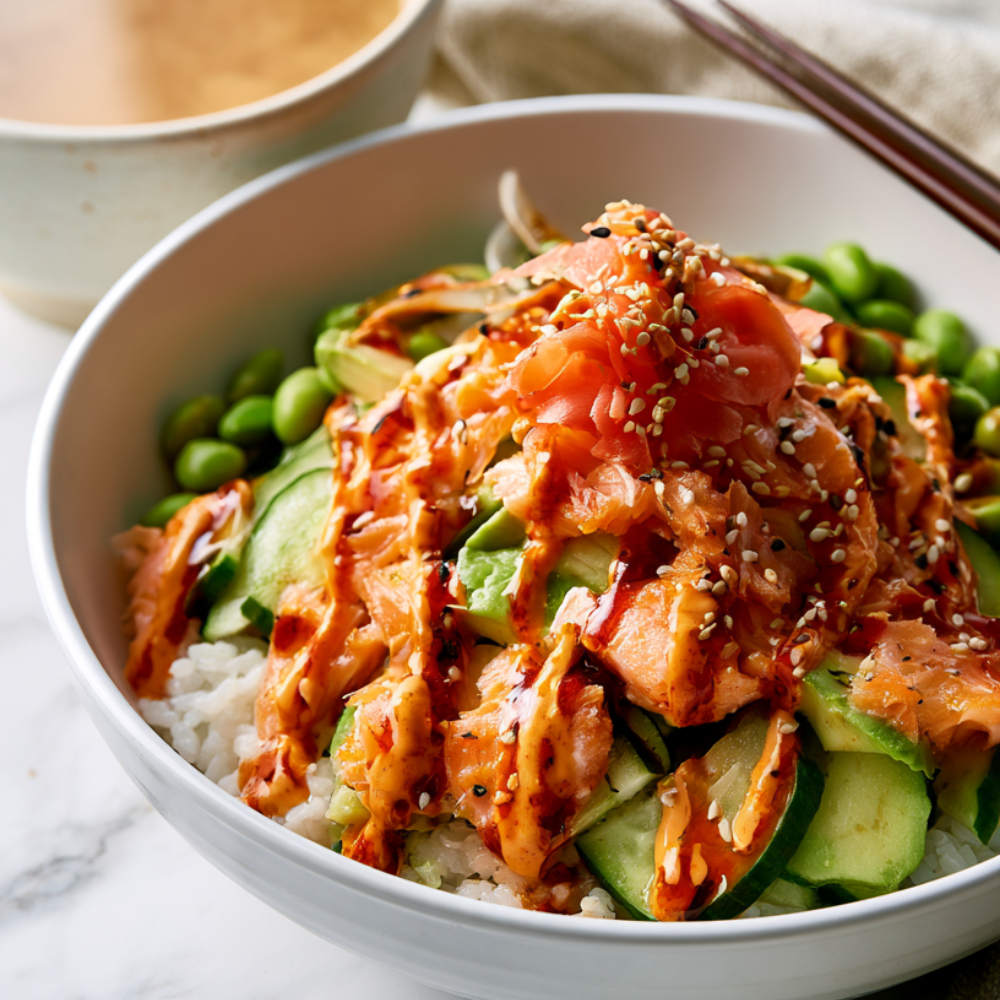
Tuna and Salmon Poke. Swap the baked salmon for 1 lb of sushi-grade tuna and ½ lb of sushi-grade salmon, diced into ½-inch cubes. Marinate in 3 tablespoons soy sauce, 1 tablespoon sesame oil, 1 tablespoon rice vinegar, and 1 teaspoon Sriracha for 15 minutes. Skip the baking step.
Spicy Tuna Sushi Bowl. Swap the baked salmon for 1 lb of canned tuna packed in water, drained well, and mixed with the spicy mayo. Add 1 chopped green onion and 1 teaspoon of toasted sesame oil.
Sushi Bowl with Tuna and Vegetables. Swap half the salmon for canned tuna and double the vegetables. Add shredded carrot, thinly sliced red bell pepper, and shelled edamame.
Healthy Sushi Salad Recipe. Skip the rice entirely and use a bed of mixed greens or shredded cabbage. Top with flaked salmon, cucumber, avocado, and spicy mayo for a lighter, low-carb version.
Sushi Bowl with Crispy Salmon Skin. If your salmon has skin, bake it skin-side down until crispy, then peel off the skin, chop it, and use it as a topping. It adds crunch and looks beautiful.
Storage and Food Safety
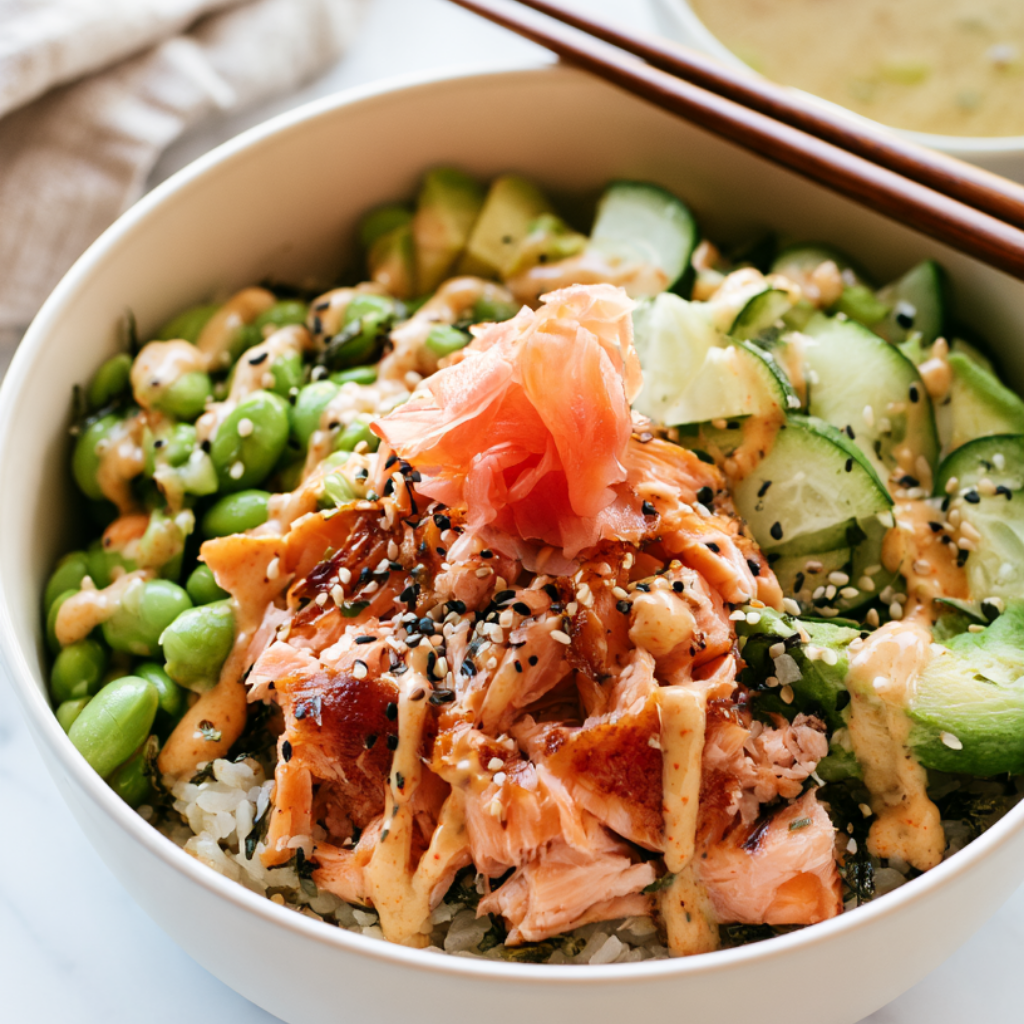
Refrigerator: Store leftovers covered in an airtight container for up to 2 days. If possible, store the salmon, rice, cucumber, avocado, and spicy mayo separately.
Freezer: The cooked salmon freezes well for up to 3 months. Cool completely, then wrap tightly in plastic wrap and foil. Thaw overnight in the refrigerator. The rice, cucumber, avocado, and spicy mayo are best fresh.
Make Ahead: Cook the salmon, season the rice, and prep the vegetables up to 2 days ahead. Store each component separately and assemble fresh.
Food Safety: Cook salmon to 145°F for well-done, or 125°F to 130°F for medium. Cool leftovers within 2 hours and refrigerate promptly. Reheat leftovers to 145°F. Do not leave raw or cooked salmon at room temperature for more than 2 hours.
Frequently Asked Questions
How much protein is in a sushi bowl? About 38g per serving from the salmon, edamame, rice, and avocado across 4 servings.
Can I use raw salmon instead of baked? Yes, but use sushi-grade salmon from a trusted source, and keep it refrigerated until serving. Dice it into cubes, marinate it in soy sauce and sesame oil for 15 minutes, and use it in place of the baked salmon.
Can I use tuna instead of salmon? Yes. Use 1½ lbs of sushi-grade tuna, diced into cubes, or canned tuna packed in water, drained well. For canned tuna, mix it with the spicy mayo.
Can I use cauliflower rice instead of sushi rice? Yes. Sauté 4 cups riced cauliflower with 1 tablespoon rice vinegar, 1 teaspoon sugar, and ½ teaspoon salt. The result is a lower-carb version that still tastes like the bowl.
What’s the best mayo for spicy mayo? Kewpie mayo is the best choice because it’s richer and slightly sweeter than American mayo. Regular mayo works as a substitute. Add Sriracha, lime juice, and a touch of sesame oil.
How do I keep avocado from browning? Squeeze lime or lemon juice over the sliced avocado and store it with plastic wrap pressed directly against the surface. It will keep for about a day.
Can I make this ahead of time for meal prep? Yes. Cook the salmon, season the rice, and prep the vegetables up to 2 days ahead. Store each component separately. Assemble fresh each day so the avocado doesn’t brown and the cucumber doesn’t water down the rice.
What do I serve with a sushi bowl? It’s a complete meal on its own. If you want a side, a simple cucumber salad with rice vinegar, a bowl of miso soup, or a small seaweed salad all work well.
More Easy Healthy Salmon Recipes You’ll Love
Air Fryer Salmon with Teriyaki Glaze
High-Protein California Sushi Bowl — Easy, Healthy, 20-Minute Dinner
Creamy Crab and Avocado Sushi Bake Recipe (Baked to Perfection)
Japanese Crab Salad Recipe: Creamy, High-Protein & Perfect for Sushi Rolls
Conclusion
A Sushi Bowl is the kind of dinner that earns its spot in the weekly rotation. It’s beautiful, it’s healthy, and it’s undeniably delicious.
And with about 38 grams of protein per serving, it’s a real meal that keeps you full.
The takeout version is delicious, but it’s also expensive and takes time to assemble. This one keeps all the salmon, sushi rice, cucumber, avocado, and spicy mayo you love, and you can rebuild it at home in 30 minutes with a sheet pan and a rice cooker.
Baked salmon instead of raw. Sushi rice seasoned with vinegar and sugar. Make spicy mayo with Kewpie, Sriracha, and lime. And a bowl built in sections so every bite is exactly what you want.
The three things that make it work are these. Season the rice like sushi rice. Don’t overcook the salmon. And build the bowl in sections.
About 38 grams of protein per serving. Four generous portions. Ready in 30 minutes, endlessly adaptable, and beautiful enough for guests.
Make it tonight and add it to your weekly rotation. This sushi bowl earns a permanent spot on the table.