I used to treat cod as the fish I ordered at a restaurant and never cooked at home. It seemed fussy—delicate, easy to overcook, and the kind of thing that turns to rubber the second you look away from the pan.
Then I figured out that cod is one of the most forgiving fish to cook, as long as you do two things right: dry it completely and don’t move it until it releases on its own.
This lemon butter cod has been on repeat in our house ever since.
The recipe solves the two problems that make home-cooked cod disappointing.
The first is a gray, steamed surface instead of a golden crust—which happens when the fish hits the pan wet.
The second is a dry, flaky-in-a-bad-way texture — which happens when it’s cooked past 145°F or flipped too early.
This version pats the fillets completely dry, sears them undisturbed for three to four minutes, and pulls them at 145°F, then builds a silky lemon-garlic butter sauce in the same pan while the cod rests.
I tested this in my kitchen with thick center-cut cod fillets and a non-stick skillet, and the most important technique is the beurre monté at the end—taking the pan completely off the heat before whisking in cold, cubed butter.
That’s what turns the pan juices and lemon into a glossy, opaque sauce instead of a broken, greasy one. Get that step right, and the whole dish tastes as it came out of a restaurant kitchen.
Why This Recipe Works
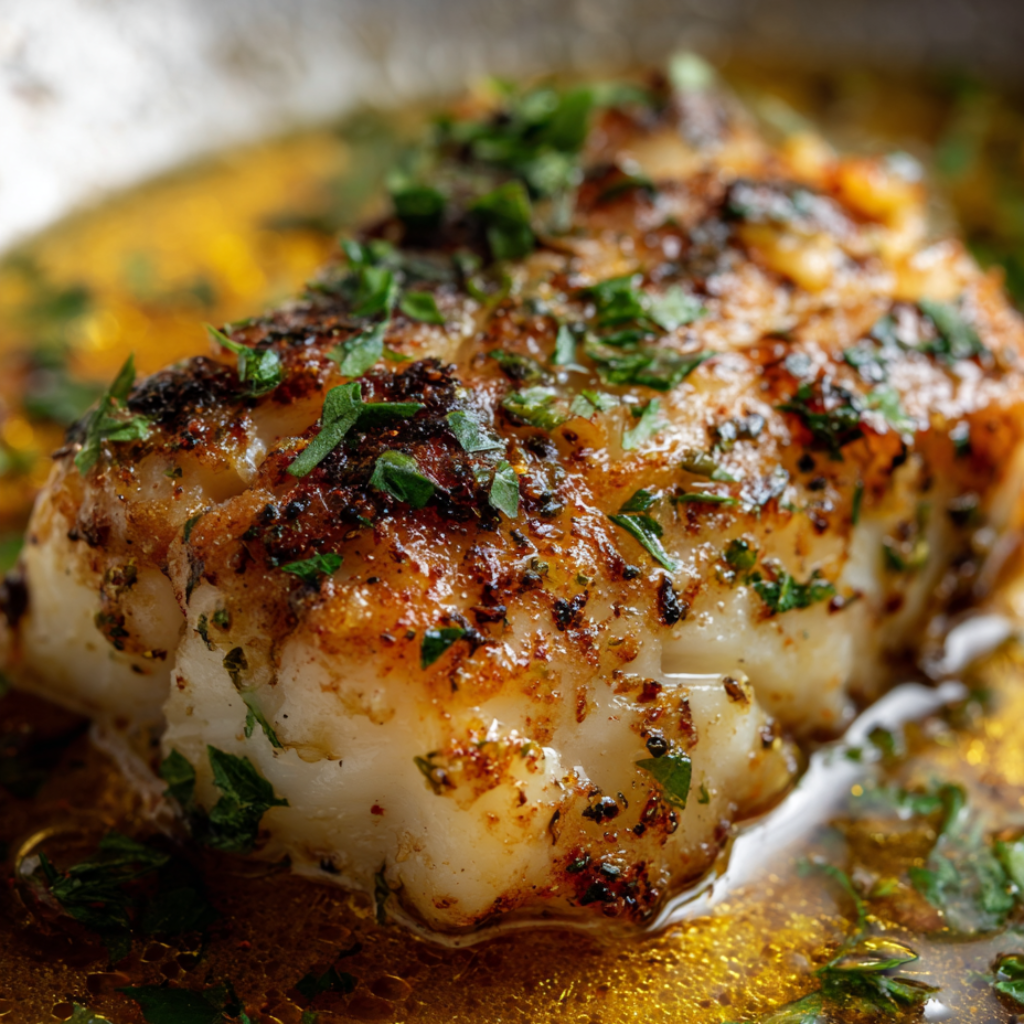
Patting the cod completely dry is what makes it brown instead of steam. Cod is a wet fish, and surface moisture has to evaporate before browning can start. Drying all sides with paper towels takes thirty seconds and is the difference between a golden crust and a gray, steamed fillet. If the fillets are still shiny when they go in the pan, they’ll release water and poach in it.
A light dusting of flour or cornstarch gives the crust something to grab onto. It’s optional, but shaking a tablespoon of flour or cornstarch over the fillets and tapping off the excess creates a thin barrier that browns faster and helps the sauce cling at the end. Too much and it tastes chalky — you want a whisper of coating, not a breading.
Searing undisturbed for three to four minutes is what lets the fish release naturally. Cod will stick to the pan until it’s ready to flip. If you try to move it too early, it tears. Leave it alone until the bottom is golden and the fillet slides when you nudge it with a spatula — that’s the pan telling you it’s ready.
Basting with foaming butter keeps the fillet’s top moist while the bottom sears. Once you flip, spoon hot butter and oil over the fillets for two to three minutes to gently cook the top and keep the flesh from drying out. It’s the same technique used for steak, and it works because the butter carries heat evenly across the surface.
Pull the cod at 145°F for food safety and texture. Cod goes from flaky to rubbery fast, and at 145°F the flesh turns opaque and just begins to flake. Use an instant-read thermometer in the thickest part of the fillet and pull it the moment it hits — it will carry over a few degrees as it rests under foil.
The beurre monté at the end is what makes the sauce silky instead of broken. Whisking cold cubed butter into the reduced pan juices off the heat creates an emulsion — the butterfat disperses into the liquid instead of pooling on top. On the heat, the emulsion breaks and you get grease. Off the heat, vigorous whisking creates a glossy, opaque sauce that coats the back of a spoon.
Ingredients That Matter
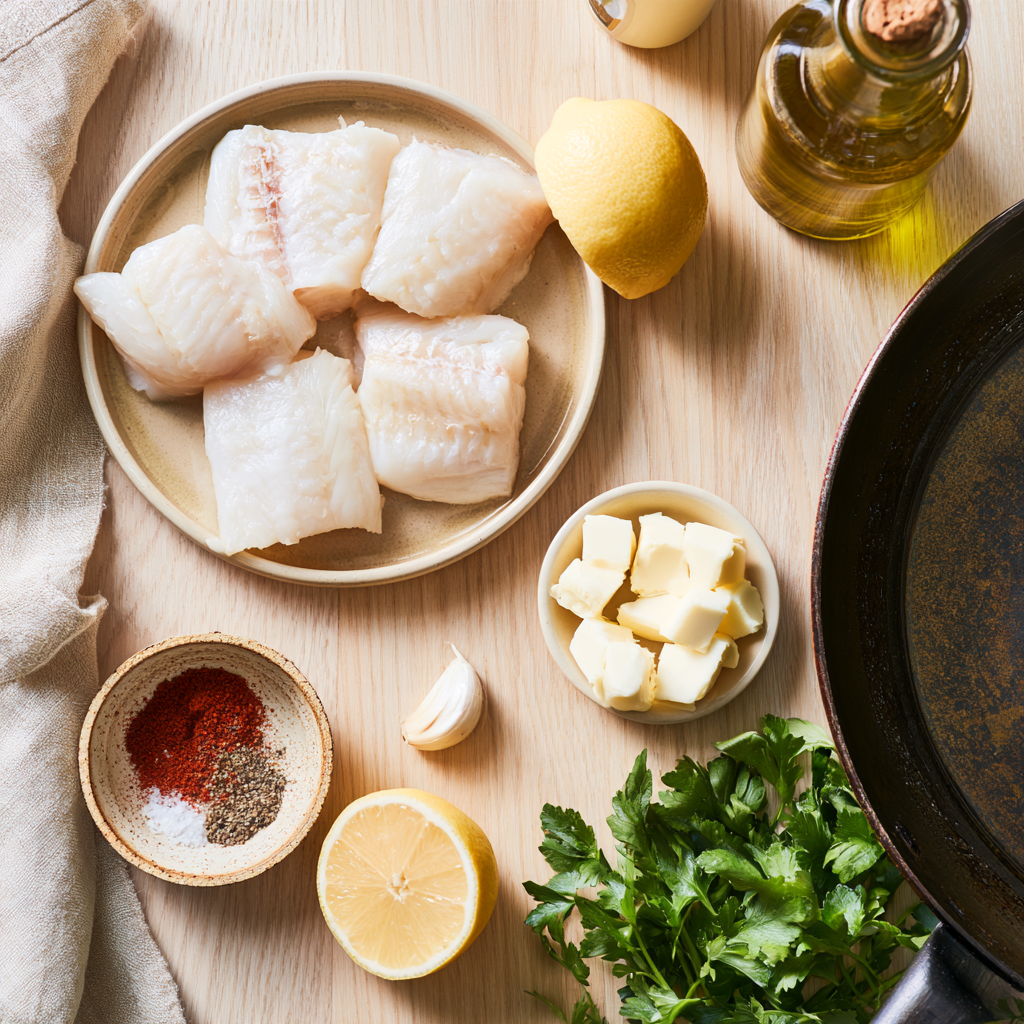
Most of this list is straightforward. Three ingredients are easy to get wrong, so those are the ones worth explaining.
Thick center-cut cod fillets. Look for fillets about an inch thick and uniform so they cook evenly. Thin tail pieces will overcook before the center is done. If your fillets are uneven, fold the thin end under itself before searing so the thickness is consistent.
Fresh lemon juice and zest. Add the zest to the fish before searing; add the juice to the pan sauce at the end. Bottled lemon juice tastes flat and slightly metallic in a butter sauce, and the zest holds most of the lemon aroma. One lemon gives you both.
Cold cubed butter, added off the heat. This is the finishing butter, and it has to be cold and cubed so it melts gradually into the sauce instead of breaking. Room-temperature butter or a whole stick dropped in will separate into grease. Take the pan completely off the burner before it goes in, and whisk hard.
How to Make It
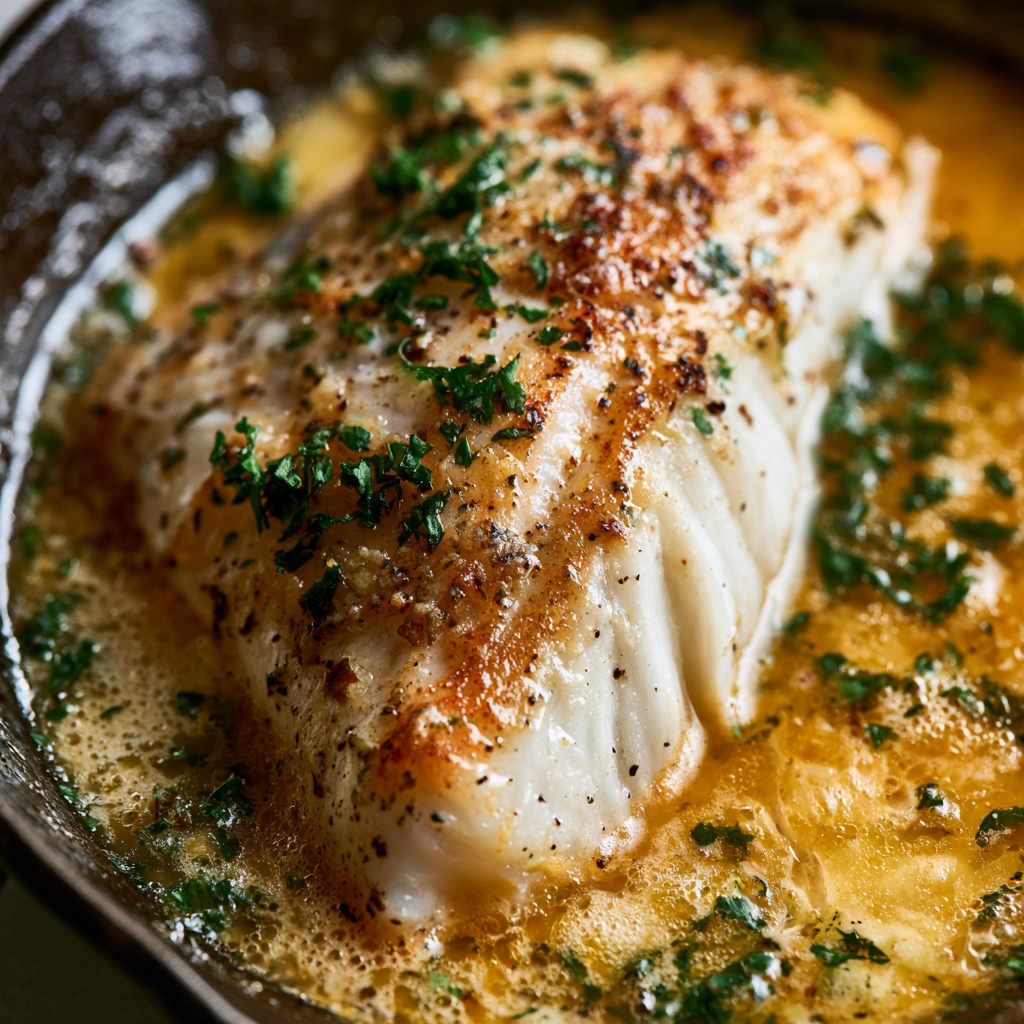
Step 1: Dry and season the cod.
Thoroughly pat 4 cod fillets (about 6 oz each) completely dry on all sides with paper towels. The surface should look matte, not shiny. Season both sides evenly with 1 teaspoon paprika, ½ teaspoon salt, ¼ teaspoon black pepper, and the zest of 1 lemon. For a crust, lightly dust with 1 tablespoon flour or cornstarch, then shake off any excess.
Step 2: Sear the cod.
Heat 1 tablespoon olive oil and 1 tablespoon butter in a large nonstick or well-seasoned cast-iron skillet over medium-high heat. Once the butter foams and the bubbling subsides, add the cod in a single layer. Sear undisturbed for 3 to 4 minutes, until the bottom is golden and the fillet releases naturally when you nudge it with a spatula. If it sticks, it’s not ready — give it another 30 seconds.
Step 3: Flip, baste, and pull at 145°F.
Carefully flip the fillets with a fish spatula. Cook for another 2 to 3 minutes, spooning the hot butter and oil over the fillets continuously, until the flesh is opaque and an instant-read thermometer in the thickest part reads 145°F. Transfer the cod to a warm plate and cover loosely with foil.
Step 4: Deglaze the pan.
Reduce the heat to medium-low. Add 3 cloves of minced garlic to the remaining butter and oil and sauté for 30 seconds, until fragrant and pale gold — do not let it brown. Pour in ½ cup broth or dry white wine and 2 tablespoons fresh lemon juice, scraping up the browned bits stuck to the bottom of the pan. Simmer for 1 to 2 minutes, until the liquid reduces by about half.
Step 5: Mount the sauce off the heat.
Remove the skillet completely off the heat. Add 1 tablespoon cold cubed butter and whisk vigorously until it melts and emulsifies into a silky, opaque, glossy sauce. It should coat the back of a spoon. If it looks greasy, the pan was too hot — let it cool for 30 seconds and whisk again.
Step 6: Serve immediately.
Spoon the lemon-garlic butter sauce generously over the seared cod and garnish with chopped fresh parsley. Serve alongside warm rice, roasted asparagus, or crusty bread. The sauce is best the moment it’s made, so plate right away.
Tips and Troubleshooting
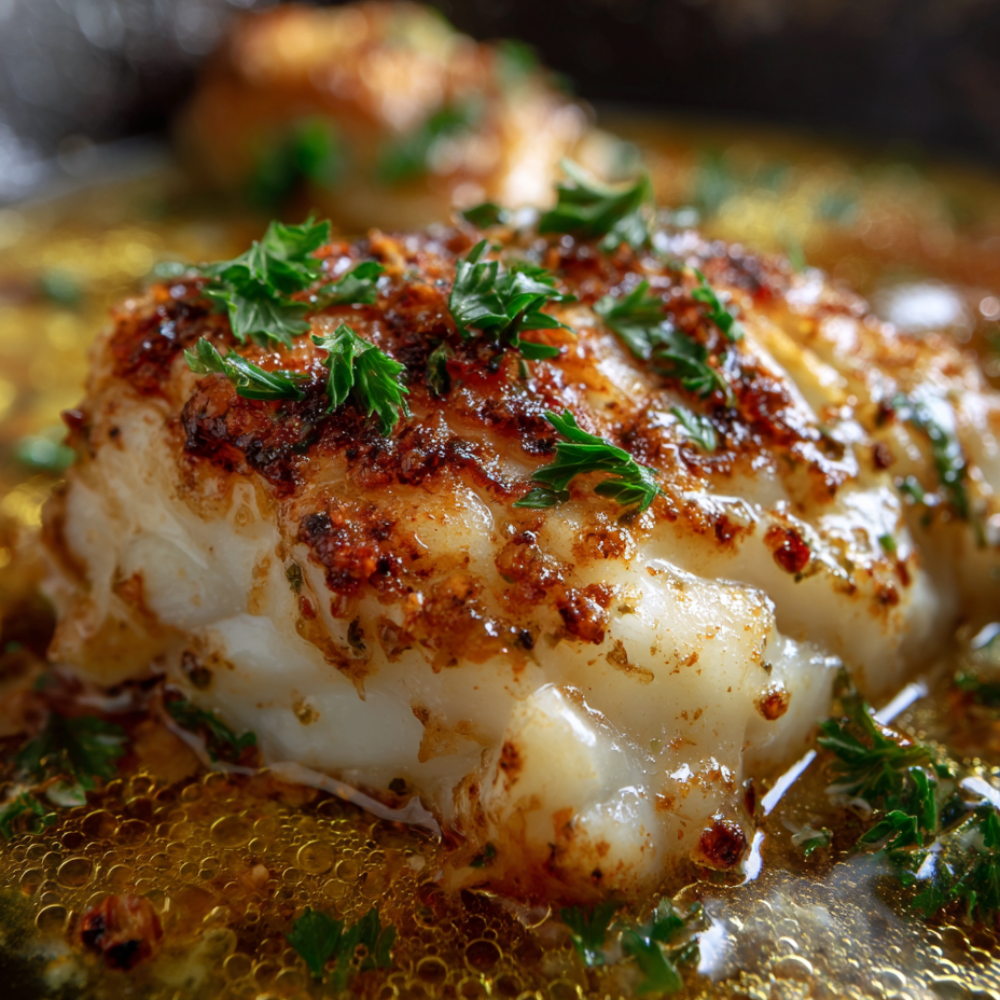
The cod stuck to the pan and tore when I flipped it. The pan wasn’t hot enough, the fish was wet, or you flipped too early. Pat the fillets dry, wait for the butter foam to subside before adding them, and don’t move them until they release on their own.
The crust is pale, and the fish looks steamed. There was moisture on the surface, or the pan wasn’t hot enough. Dry the fillets completely and use a pan that’s large enough to hold them in a single layer without crowding.
The cod is dry and rubbery. You overcooked it past 145°F, or the fillets were too thin. Use an instant-read thermometer, pull at 145°F, and choose thick center-cut fillets so there’s a margin for error.
The sauce is greasy and separated. The pan was too hot when you added the cold butter, or the butter wasn’t cold. Take the pan completely off the heat before adding the cubed butter, and whisk hard until the sauce is glossy and opaque.
The garlic tastes bitter. It browned instead of turning fragrant. Sauté it for 30 seconds over medium-low heat, just until it smells sweet — pull the pan off the heat if it starts to darken.
If the sauce tastes too sour or too flat, Lemon varieties and broth brands vary. Taste the sauce after mounting and add a pinch of salt or a small piece of butter if it’s sharp, or a squeeze more lemon if it’s flat.
The flour coating tastes chalky. Too much flour. Dust lightly and shake off the excess — you want a thin film, not a coating.
A Few Honest Notes
I haven’t tested this with thawed frozen cod, and the results depend a lot on how you thaw it—a slow refrigerator thaw will behave like fresh, but a quick microwave thaw tends to leave the flesh watery, and it won’t sear the same way. If you try it, I’d love to hear how it turns out.
I also haven’t tested the air fryer version of this recipe.
The sear-and-baste method is what produces the crust and the pan sauce, so an air fryer version would be a different recipe entirely — I’d rather point you to a tested air fryer cod recipe than guess at the timing.
Storage and Make-Ahead
This dish is best the day it’s made — the crust softens, and the sauce separates on reheating. If you’re planning ahead, dry and season the cod up to a few hours in advance, then refrigerate it uncovered to keep the surface dry.
Leftovers keep in a sealed container in the refrigerator for up to 2 days. Reheat gently in a skillet over low heat with a splash of water, or in a 300°F oven for 8 to 10 minutes, until just warmed through — the microwave works but can make the fish rubbery. Reheat to 145°F before serving.
I don’t recommend freezing the finished dish. The sauce breaks and the fish texture suffers. If you freeze it anyway, thaw overnight in the refrigerator and reheat very gently.
Store leftovers in the refrigerator within 2 hours of cooking, and discard anything left at room temperature for more than 2 hours. Fish is a higher-risk food for spoilage, so the two-hour rule matters here.
Lemon Butter Cod
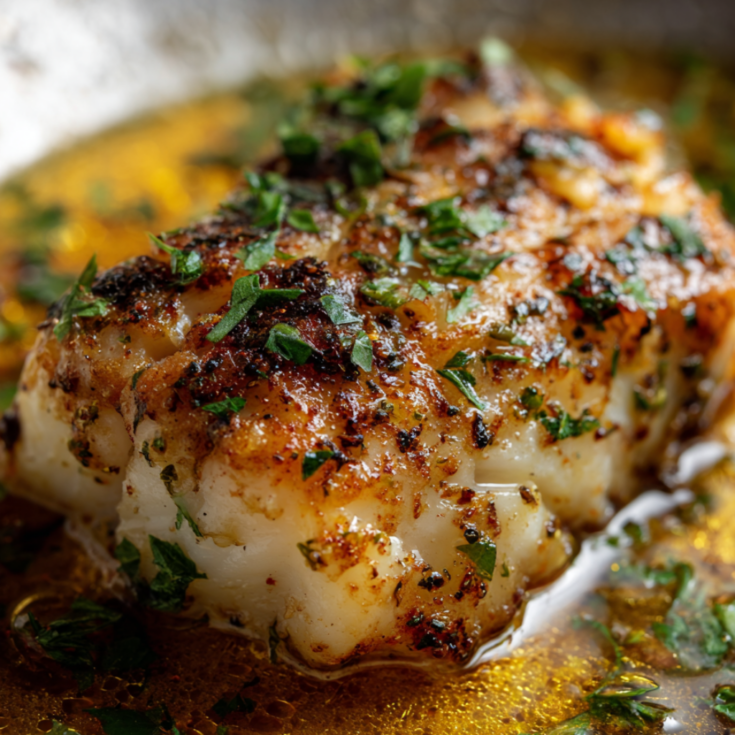
Delicate, flaky cod fillets pan-seared until golden and finished in a silky garlic-lemon butter sauce made with a beurre monté — one skillet, 20 minutes, about 34g protein.
Ingredients
- 4 cod fillets (about 6 oz each), patted completely dry
- 1 tsp paprika
- ½ tsp salt
- ¼ tsp black pepper
- Zest of 1 lemon
- 1 tbsp flour or cornstarch (optional, for crust)
- 1 tbsp olive oil
- 1 tbsp butter, for searing
- 3 cloves garlic, minced
- ½ cup broth or dry white wine
- 2 tbsp fresh lemon juice
- 1 tbsp cold butter, cubed, for the sauce
- Chopped fresh parsley, for garnish
Instructions
- Pat the cod completely dry on all sides. Season with paprika, salt, pepper, and lemon zest. Lightly dust with flour or cornstarch, shaking off the excess.
- Heat the olive oil and 1 tablespoon butter in a large skillet over medium-high heat. When the butter foams and the bubbling subsides, add the cod in a single layer. Sear undisturbed 3 to 4 minutes until golden and the fish releases naturally.
- Flip with a fish spatula and cook 2 to 3 minutes more, spooning the hot butter over the fillets, until opaque and 145°F. Transfer to a warm plate and cover loosely with foil.
- Reduce heat to medium-low. Add the garlic and sauté for 30 seconds, until fragrant, not brown. Pour in the broth and lemon juice, scraping up the browned bits, and simmer 1 to 2 minutes until reduced by half.
- Remove the skillet completely off the heat. Add the cold cubed butter and whisk vigorously until melted and emulsified into a silky, glossy sauce.
- Spoon the sauce over the cod, garnish with parsley, and serve immediately.
Notes
Notes: Best the day it's made. Leftovers keep refrigerated up to 2 days; reheat gently at 300°F or in a skillet with a splash of water. Not recommended for freezing. Nutrition information is an estimate.
Nutrition (per serving, estimated): About 280 calories, 34g protein, 2g carbs, 15g fat, 0g fiber, 480mg sodium.
FAQ
What kind of cod should I buy?
Look for thick center-cut fillets, about an inch thick, so they cook evenly and don’t dry out. Fresh or frozen both work, but thaw frozen cod overnight in the refrigerator — a quick thaw leaves the flesh watery, and it won’t sear the same way.
Can I use a different white fish?
Yes. Halibut, haddock, pollock, and sea bass all work with the same method, though cooking times vary with thickness. Halibut and sea bass are denser and may need an extra minute per side.
Why did my butter sauce break?
The pan was too hot when you added the cold butter, or the butter wasn’t cold enough. Take the pan completely off the heat before adding the cubed butter and whisk vigorously until the sauce is glossy. If it breaks, let the pan cool for 30 seconds and whisk in another small piece of cold butter.
Can I make this without wine?
Yes. Use broth instead — chicken or vegetable broth both work. The wine adds acidity and depth, so if you skip it, add an extra teaspoon of lemon juice to balance the sauce.
How do I know when the cod is done?
Use an instant-read thermometer in the thickest part of the fillet — it should read 145°F. The flesh will be opaque and just starting to flake. If you don’t have a thermometer, insert a knife into the center and check that it’s hot and the fish separates easily.
Can I make this dairy-free?
You can sear the cod in olive oil instead of butter, but the sauce depends on butter for its silky texture — a dairy-free butter substitute won’t emulsify the same way. I haven’t tested a dairy-free version, so I can’t vouch for the result.
More Easy Healthy Dinner Recipes You’ll Love
- Easy Healthy Baked Cod with Garlic Lemon Panko, Potatoes & Asparagus
- Crispy Air Fryer Salmon Bites — Ready in 10 Minutes, 30g Protein
- Pescatarian Meal Prep for the Week — 5 Recipes, 32-38g Protein Each
Closing
Make this lemon butter cod on a night when you want something that feels like a restaurant dinner but takes less time than ordering one.
The technique in the recipe card — drying the fillets completely, leaving them alone until they release, pulling at 145°F, and mounting the sauce off the heat — is what makes it come out golden and silky instead of gray and greasy.
I’ve made this more times than I can count, and it’s the version I reach for when I want fish that tastes like a treat without the fuss.
If you try it with halibut or skip the wine, let me know how it turns out.