The regular version of garlic parmesan chicken pasta — the one with a full cup of heavy cream and a mountain of Parmesan — is one of my favorite things to eat. It’s also the version I stopped making on a Tuesday.
Half my household is chasing protein numbers for training and the gym, and I got tired of cooking two dinners: the one I wanted and the one that fit everyone’s goals.
So I started reworking our dinner favorites into higher-protein versions that nobody at the table would complain about.
I tried the usual swaps first. Greek yogurt adds protein but turns tangy, and it’s unforgiving if the pan gets too hot.
Cottage cheese gets you there on paper, but it needs a blender and still tastes like cottage cheese to anyone who’s paying attention.
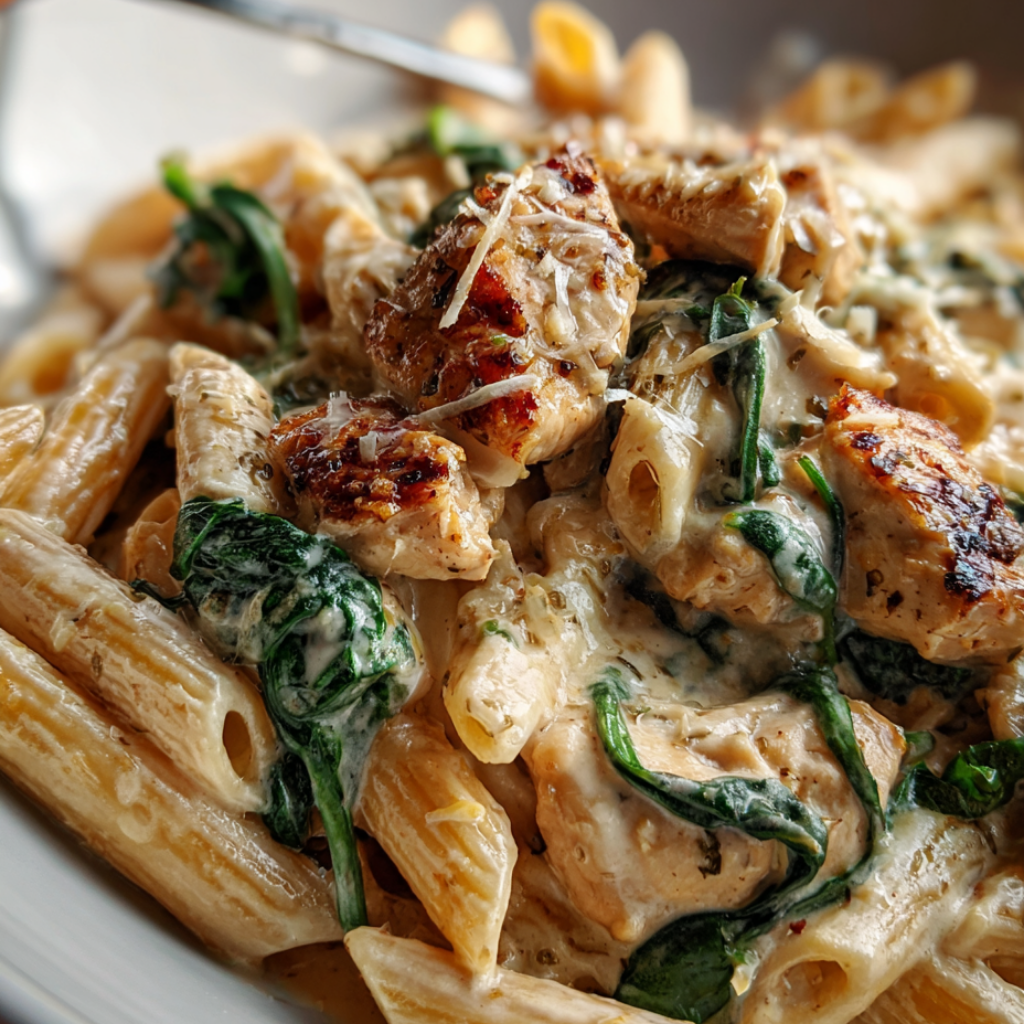
The version that actually stuck in our house is this: ultra-filtered milk, a little light cream cheese, and enough Parmesan to taste like the original. It’s creamy in the way that coats the back of a spoon; it doesn’t taste like a compromise, and it lands at 38g of protein per serving.
I tested this in my kitchen with Fairlife 2% and Neufchâtel, and the step that makes it work isn’t the swap itself — it’s pulling the pan off the heat before the Parmesan goes in.
That’s the move I borrowed from the yogurt version, and it’s what keeps the sauce smooth instead of grainy. Get that right, and the rest of this recipe is forgiving.
Why This Recipe Works
Ultra-filtered milk gives the sauce body without the sugar. Fairlife 2% or whole has more protein and roughly half the sugar of regular milk, and it doesn’t thin out the way skim does when it’s heated. Regular milk works, but the sauce will be slightly thinner and less rich — you’d want an extra ounce of cream cheese to compensate.
Light cream cheese is what makes it velvety without a roux or heavy cream. Cream cheese adds fat and stabilizers that help the sauce hold together and stay creamy, and it melts into the milk more reliably than Greek yogurt. Cut it into small cubes and let it soften for 10 to 15 minutes first — cold cream cheese in one piece takes much longer to melt and can leave lumps.
The Parmesan goes in off the heat. I borrowed this technique from the yogurt version, and it’s the most important step in the recipe. Parmesan is prone to seizing and turning stringy when it hits a hard boil. Once the cream cheese is fully incorporated and the sauce is steaming heavily, slide the pan off the burner, turn the heat to low, and whisk the Parmesan in gradually. You want it melted and glossy, not boiled.
Starchy pasta water is the emulsifier, not the cream cheese alone. Parmesan alone melts into grease and strings. The starch in the reserved pasta water binds the fat and liquid together, giving you a sauce that coats the back of a spoon. Add it a splash at a time after the Parmesan, and don’t boil the sauce once the cheese is in.
Searing whole chicken cutlets instead of diced pieces keeps the chicken juicy. Diced chicken breast has a lot of surface area and dries out fast. Sear cutlets 4 to 5 minutes per side, then slice after a 3-minute rest for golden edges and a juicy interior; the browned bits left in the pan become the flavor base for the garlic and sauce.
Add the lemon juice near the end, off the heat. A tablespoon of fresh lemon cuts the richness of the cream cheese and Parmesan and brightens the garlic. Added early, it can tighten the milk proteins; added at the end, it just tastes more balanced.
The spinach goes in with the pasta, not before it. Spinach releases a lot of water when it cooks. Tossing it in at the end with the penne, chicken, and lemon lets it wilt in the sauce’s residual heat without watering it down—which is what would happen if you added it first.
Ingredients That Matter
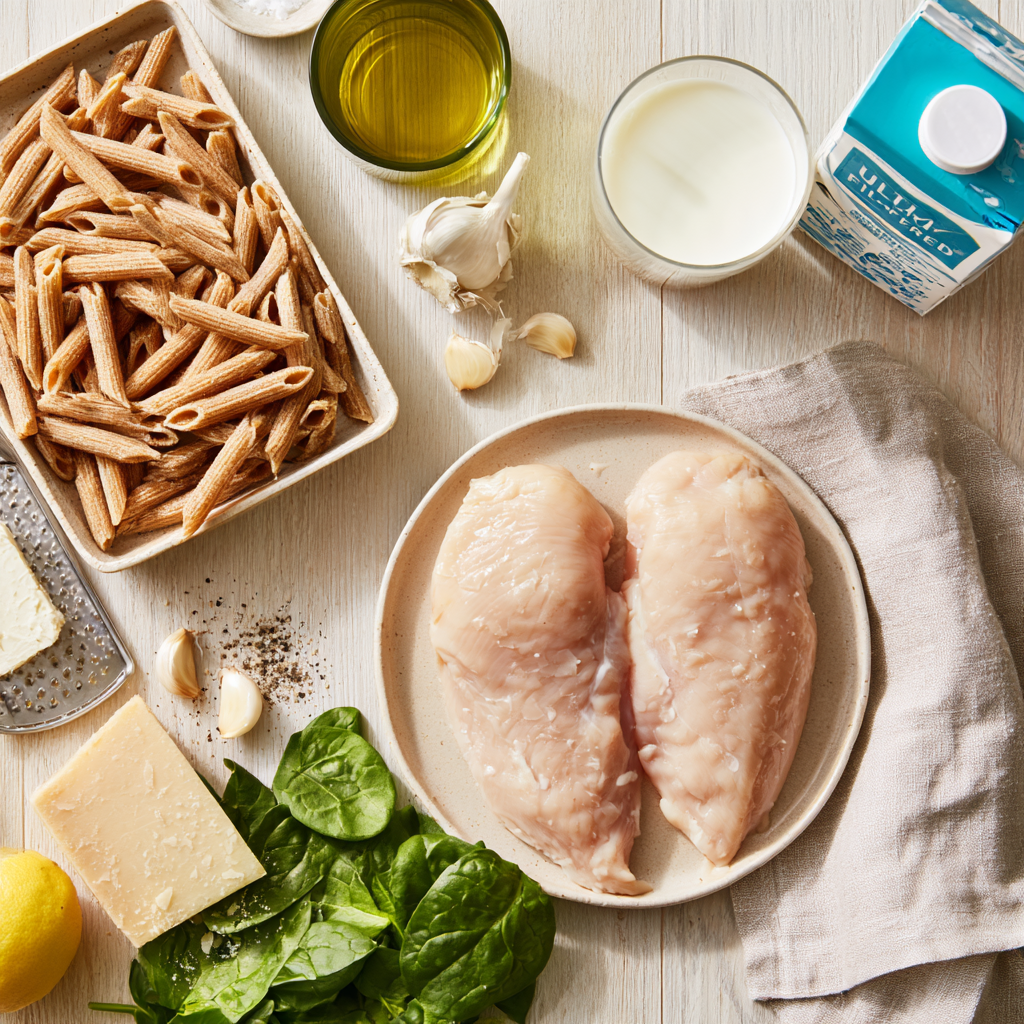
Most of this list is straightforward. Three ingredients are easy to get wrong, so those are the ones worth explaining.
Ultra-filtered milk (Fairlife 2% or whole). This is the backbone of the sauce. Regular 2% milk works, but it has more sugar and less protein, so the sauce tastes slightly thinner and less rich. Don’t use skim — it won’t give you the body the sauce needs. If you can only find regular whole milk, use it and add an extra ounce of cream cheese.
Light cream cheese (or Neufchâtel), softened and cubed. Cold cream cheese straight from the fridge takes much longer to melt and can leave lumps. Let it sit out for 10 to 15 minutes and cut it into small cubes so it melts evenly into the milk. Full-fat cream cheese works but pushes the fat number up; Neufchâtel is slightly tangier and a little lighter.
Freshly grated Parmesan. Pre-grated Parmesan from a shaker is coated in cellulose and doesn’t melt into a smooth sauce — it stays gritty. Grate it from a block on the fine side of a box grater. This is the ingredient where getting it wrong shows up most clearly in the finished texture, and it matters more than usual because you add the Parmesan off the heat.
How to Make It
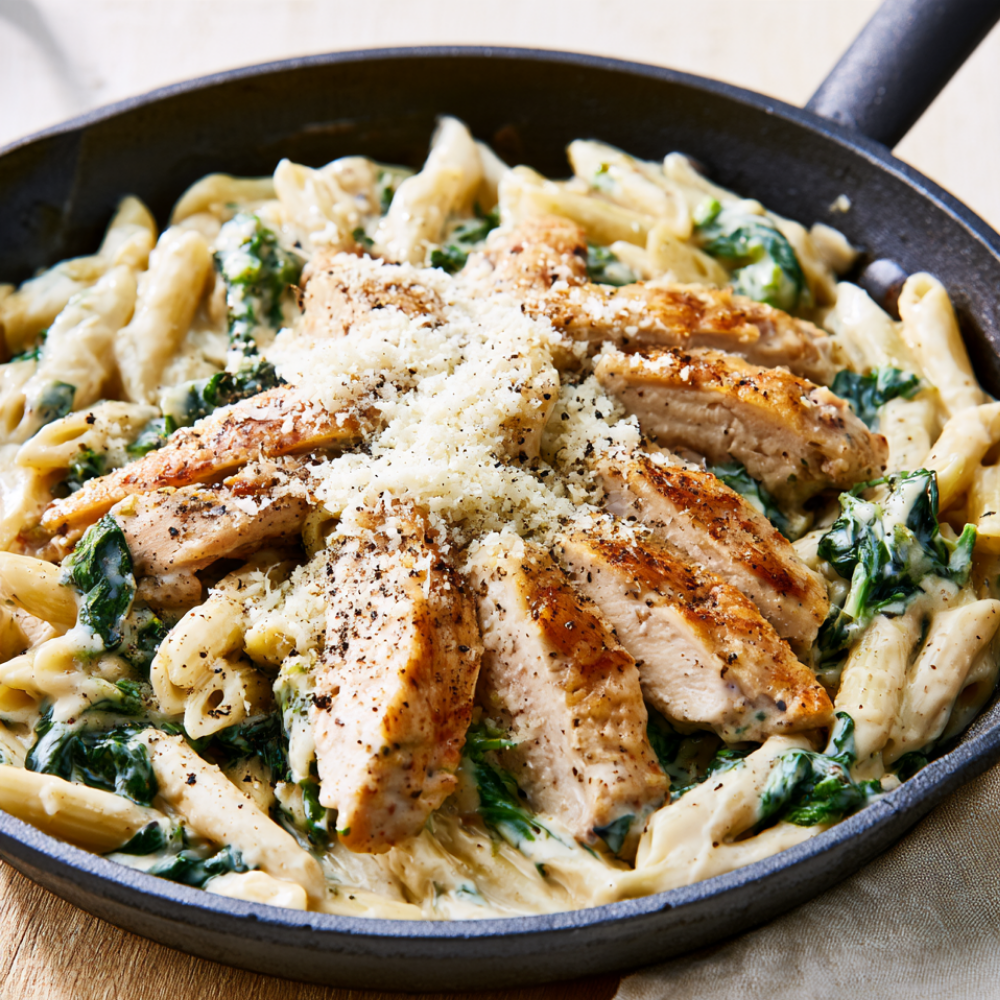
Step 1: Boil the pasta and reserve the water.
Bring a large pot of well-salted water to a boil. Cook 8 oz of whole wheat penne until one minute shy of al dente. Before you drain, scoop out at least ½ cup of the pasta water and set it aside — you’ll use it to emulsify the sauce. Drain the penne and set it aside.
Step 2: Sear the chicken cutlets.
Pat 1 lb chicken breast cutlets dry with paper towels, then season both sides with ½ teaspoon kosher salt, ¼ teaspoon black pepper, and 1 teaspoon Italian seasoning. Heat ½ tablespoon olive oil in a large skillet over medium-high heat until it shimmers. Sear the cutlets for 4 to 5 minutes per side, until deeply golden and the center registers 165°F. Transfer to a cutting board promptly — leaving them in the pan is how they overcook — and rest for 3 minutes, then slice into bite-sized pieces.
Step 3: Sauté the garlic.
Reduce the heat to medium-low. Add the remaining ½ tablespoon olive oil, 4 cloves of minced garlic, and a pinch of red pepper flakes if you’re using them. Stir constantly for 30 to 45 seconds — the garlic should smell fragrant and turn pale gold, not brown. If it starts to darken, pull the pan off the heat; burnt garlic will make the sauce bitter.
Step 4: Build the base.
Pour in ¾ cup of ultra-filtered milk and add 2 oz of softened, cubed light cream cheese. Whisk continuously for 1 to 2 minutes over medium-low heat until the cream cheese melts completely into a smooth, steaming liquid with no visible lumps. This is your chance to fix the texture — if there are lumps now, keep whisking before the Parmesan goes anywhere near the pan.
Step 5: Melt the Parmesan off the heat.
Once the cream cheese is fully incorporated, turn the heat to low, and if the sauce is steaming heavily, slide the pan off the burner entirely. Whisk in ½ cup of freshly grated Parmesan gradually, a handful at a time, letting each addition melt before the next. Do not boil the sauce after the Parmesan goes in — that’s what makes it stringy. You’re looking for a glossy sauce that lightly coats the back of a spoon.
Step 6: Loosen with pasta water.
Whisk in the reserved pasta water a tablespoon at a time until the sauce is smooth and lightly thickened. Start with two tablespoons and add more if it looks tight. If the sauce tightens up later, more pasta water brings it back.
Step 7: Toss everything together.
Add the cooked penne, sliced chicken, 2 cups of chopped baby spinach, and 1 tablespoon of fresh lemon juice to the skillet. Toss continuously for 1 to 2 minutes over low heat, until the spinach wilts and the sauce clings to every piece of penne. Taste and adjust the salt — Parmesan varies in saltiness, so this is the moment to correct it. Add more pasta water a tablespoon at a time if you want a looser sauce.
Step 8: Serve immediately.
Divide among 4 shallow bowls and top with extra grated Parmesan and cracked black pepper. The sauce tightens as it cools, so serve it right away — a splash of hot pasta water brings it back if it thickens in the bowl.
Tips and Troubleshooting
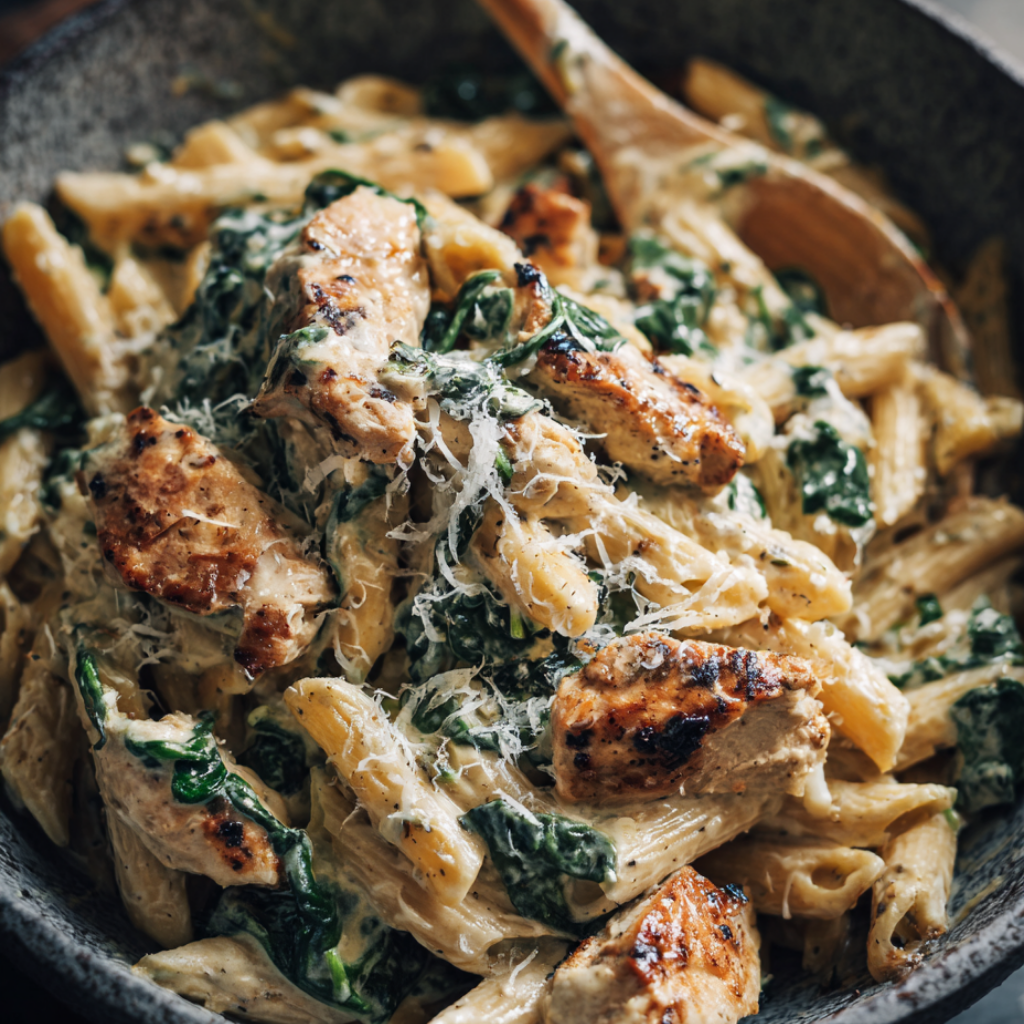
The sauce looks grainy or separated. The pan was too hot when you added the Parmesan, or you added it all at once instead of gradually. Take the pan off the heat, let it stop steaming, and whisk the Parmesan in a handful at a time. If it’s already grainy, a tablespoon of pasta water and steady whisking can pull it back somewhat, but the fix is prevention.
The sauce is too thick and clumpy. You didn’t use enough pasta water, or you added the Parmesan too fast. Whisk in reserved pasta water a tablespoon at a time until the sauce loosens. Grate the Parmesan finely so it melts instead of clumping.
The sauce is thin and won’t cling. The pasta water wasn’t starchy enough, or the penne was overcooked, and its starch went down the drain. Reserve the water from the pot before draining, and cook the penne just shy of al dente so it finishes in the sauce.
The garlic tastes bitter. It browned instead of turning fragrant. Thirty to forty-five seconds over medium-low heat is the window — pull the pan off the heat as soon as it smells strongly of garlic and looks pale gold.
The chicken is dry. The cutlets were too thick or sat in the hot pan too long. Pound them to an even ½-inch thickness if they’re uneven, pull them at 165°F, and move them to a cutting board right away instead of leaving them in the skillet.
The spinach watered down the sauce. It went in over direct heat and released its water. Add it at the end with the pasta and toss off the heat for a minute — the residual warmth wilts it without thinning the sauce.
The sauce tastes flat. It needs the lemon, and it probably needs salt. The tablespoon of fresh lemon at the end balances the richness of the cream cheese and Parmesan, and Parmesan varies in saltiness, so taste before you serve. Don’t add the lemon early — it can tighten the milk proteins.
A Few Honest Notes
I haven’t tested this with a dairy-free cream cheese, and I can’t vouch for the texture — most dairy-free cream cheeses don’t melt the same way, and the sauce may stay slightly grainy. If you try it, I’d love to hear how it turns out.
I have made this with regular whole milk instead of ultra-filtered. It works, but it’s slightly lighter. You can add an extra ounce of cream cheese to keep it rich. All in all, it’s a fine substitution; if you don’t have extra cream cheese to add, just simmer the sauce a tad longer to make it richer.
Storage and Make-Ahead
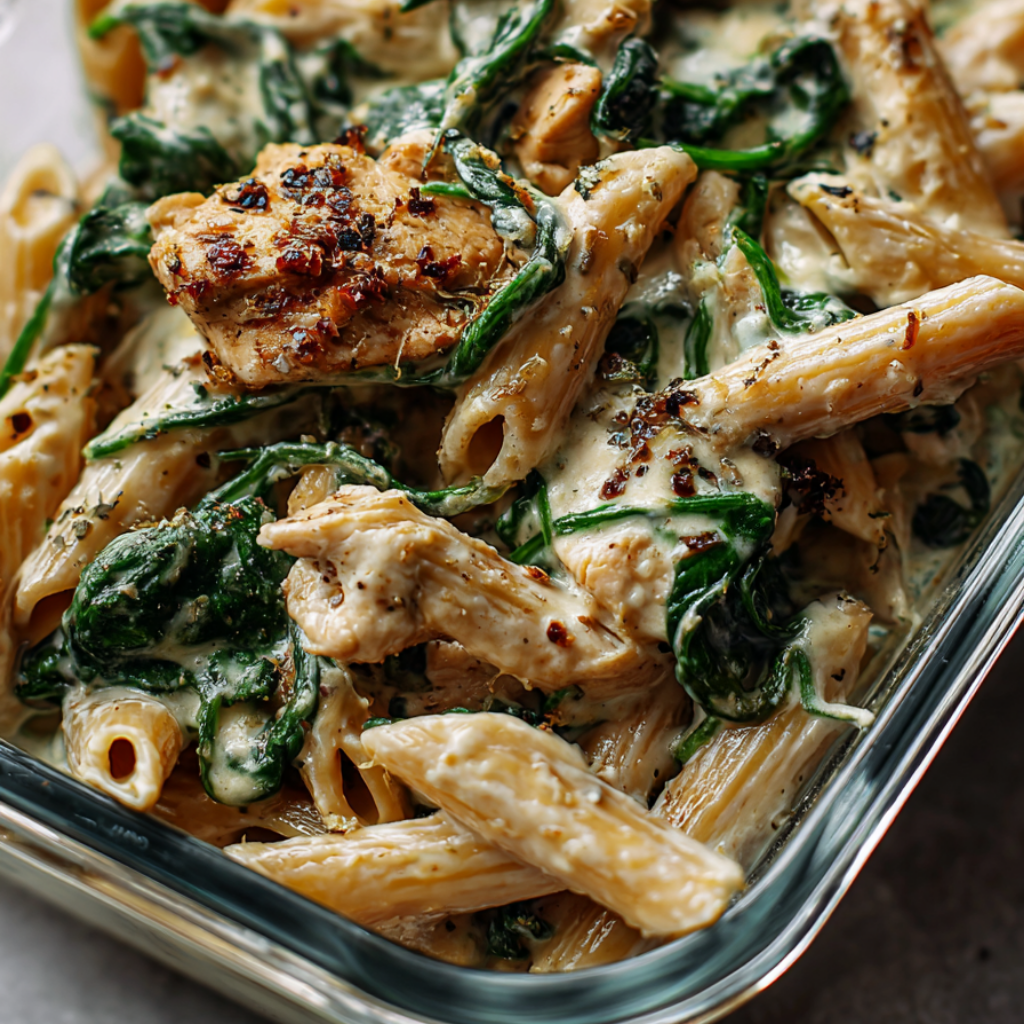
This pasta is best the day it’s made. The sauce thickens in the refrigerator, and cream cheese sauces can separate slightly on reheating. If you’re planning ahead, sear the chicken and boil the pasta up to a day in advance and store them separately, then build the sauce fresh.
Leftovers keep in a sealed container in the refrigerator for up to 3 days. Reheat gently in a skillet over low heat with a splash of water or broth, stirring until the sauce loosens — avoid the microwave on high, which is the fastest way to make the sauce split. Reheat to 165°F before serving.
I don’t recommend freezing this one. Cream cheese sauces separate and turn grainy when frozen and thawed. If you freeze it anyway, thaw overnight in the refrigerator and reheat gently, accepting a softer texture.
Store leftovers in the refrigerator within 2 hours of cooking, and discard anything left at room temperature for more than 2 hours.
Creamy Garlic Parmesan Chicken Pasta
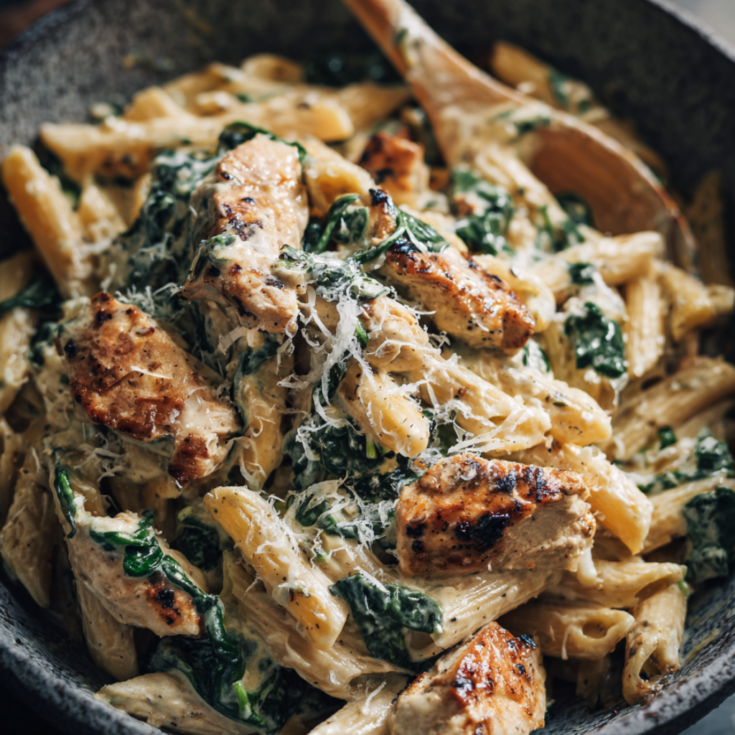
Tender seared chicken breast and whole wheat penne tossed with spinach in a creamy garlic Parmesan sauce made from ultra-filtered milk and light cream cheese — no heavy cream, 38g protein per serving.
Ingredients
For the chicken and pasta:
- 1 lb boneless, skinless chicken breasts, sliced horizontally into thin cutlets
- 8 oz whole wheat penne
- 2 cups fresh baby spinach, roughly chopped
- 1 tbsp olive oil, divided
- ½ tsp kosher salt
- ¼ tsp freshly ground black pepper
- 1 tsp Italian seasoning
For the sauce:
- 4 cloves garlic, minced
- ¾ cup ultra-filtered milk (Fairlife 2% or whole)
- 2 oz light cream cheese (or Neufchâtel), softened and cubed
- ½ cup freshly grated Parmesan, plus more for serving
- ½ cup reserved pasta water, plus more as needed
- 1 tbsp fresh lemon juice
- Pinch of red pepper flakes (optional)
Instructions
- Cook the penne in well-salted water until one minute shy of al dente. Reserve at least ½ cup of pasta water, then drain and set aside.
- Pat the chicken cutlets dry and season both sides with salt, pepper, and Italian seasoning. Heat ½ tablespoon olive oil in a large skillet over medium-high heat. Sear the cutlets 4 to 5 minutes per side until golden and 165°F. Move them to a cutting board promptly, rest 3 minutes, then slice into bite-sized pieces.
- Reduce heat to medium-low. Add the remaining ½ tablespoon olive oil, garlic, and red pepper flakes if using. Stir constantly for 30 to 45 seconds until fragrant and pale gold, not brown.
- Pour in the milk and add the softened cream cheese. Whisk continuously for 1 to 2 minutes until the cream cheese melts into a smooth, steaming liquid with no lumps.
- Turn the heat to low, and if the sauce is steaming heavily, slide the pan off the burner. Whisk in the Parmesan gradually, a handful at a time, letting each addition melt before the next. Do not boil once the Parmesan is in.
- Whisk in the reserved pasta water a tablespoon at a time until the sauce is smooth and lightly thickened, starting with two tablespoons.
- Add the penne, chicken, spinach, and lemon juice. Toss over low heat for 1 to 2 minutes until the spinach wilts and the sauce clings to the pasta. Taste and adjust the salt. Loosen with more pasta water if needed.
- Serve immediately with extra Parmesan and black pepper.
Notes
Notes: Best the day it's made. Leftovers keep refrigerated up to 3 days; reheat gently on the stovetop with a splash of water, not on high in the microwave. Not recommended for freezing — cream cheese sauces separate. Nutrition information is an estimate.
Nutrition (per serving, estimated): About 430 calories, 38g protein, 45g carbs, 12g fat, 5g fiber, 590mg sodium.
FAQ
Can I use regular milk instead of ultra-filtered?
Yes. Regular 2% or whole milk works, but it has more sugar and less protein, so the sauce will be slightly thinner and less rich. Add an extra ounce of cream cheese to compensate. I haven’t tested the regular-milk version myself, so I can’t give you exact numbers.
Can I use chicken thighs instead of chicken breast?
Yes. Boneless, skinless thighs work well and stay juicy, but they render more fat, so pour off the excess before adding the garlic. Cook them to 175°F, then slice them the same way.
Why did my sauce turn stringy or grainy?
The sauce boiled after you added the Parmesan, or you added it all at once over high heat. Turn the heat to low or slide the pan off the burner before adding the Parmesan, then whisk it in gradually. A splash of pasta water and steady whisking can pull a slightly grainy sauce back, but the real fix is keeping the heat low once the cheese is in.
Is this recipe spicy?
No. The garlic and Parmesan are savory, not spicy. The red pepper flakes are optional and only add a faint background warmth if you use them.
Can I make this without the lemon juice?
You can, but the sauce will taste flatter and heavier. The lemon balances the richness of the cream cheese and Parmesan. If you don’t have a lemon, a teaspoon of white wine vinegar works in a pinch, though it’s slightly sharper.
How do I keep leftovers from drying out?
Store them in the fridge with a splash of water or broth in the container, and reheat gently on the stovetop rather than in the microwave. The sauce thickens in the fridge; the water loosens it back to a creamy consistency.
More High-Protein Recipes You’ll Love
- High-Protein Zucchini Lasagna with Garlicky Breadcrumb Crust
- Short Rib Ragu Recipe — Fall-Off-The-Bone Tender, 44g Protein
- Creamy Beef and Bow Tie Pasta Recipe — One Pan, 35 Minutes, 38g Protein
Closing
Make this garlic parmesan chicken pasta on a night when you want the creamy version, but the table has other priorities.
The technique in the recipe card — cutlets instead of diced chicken, the cream cheese melted fully before the Parmesan, and the Parmesan whisked in off the heat — is what makes the sauce glossy instead of grainy.
I’ve made this more times than I can count, and it’s the version I reach for when I want the restaurant bowl without cooking a second dinner. If you try it with regular milk or add the red pepper flakes, let me know how it turns out.