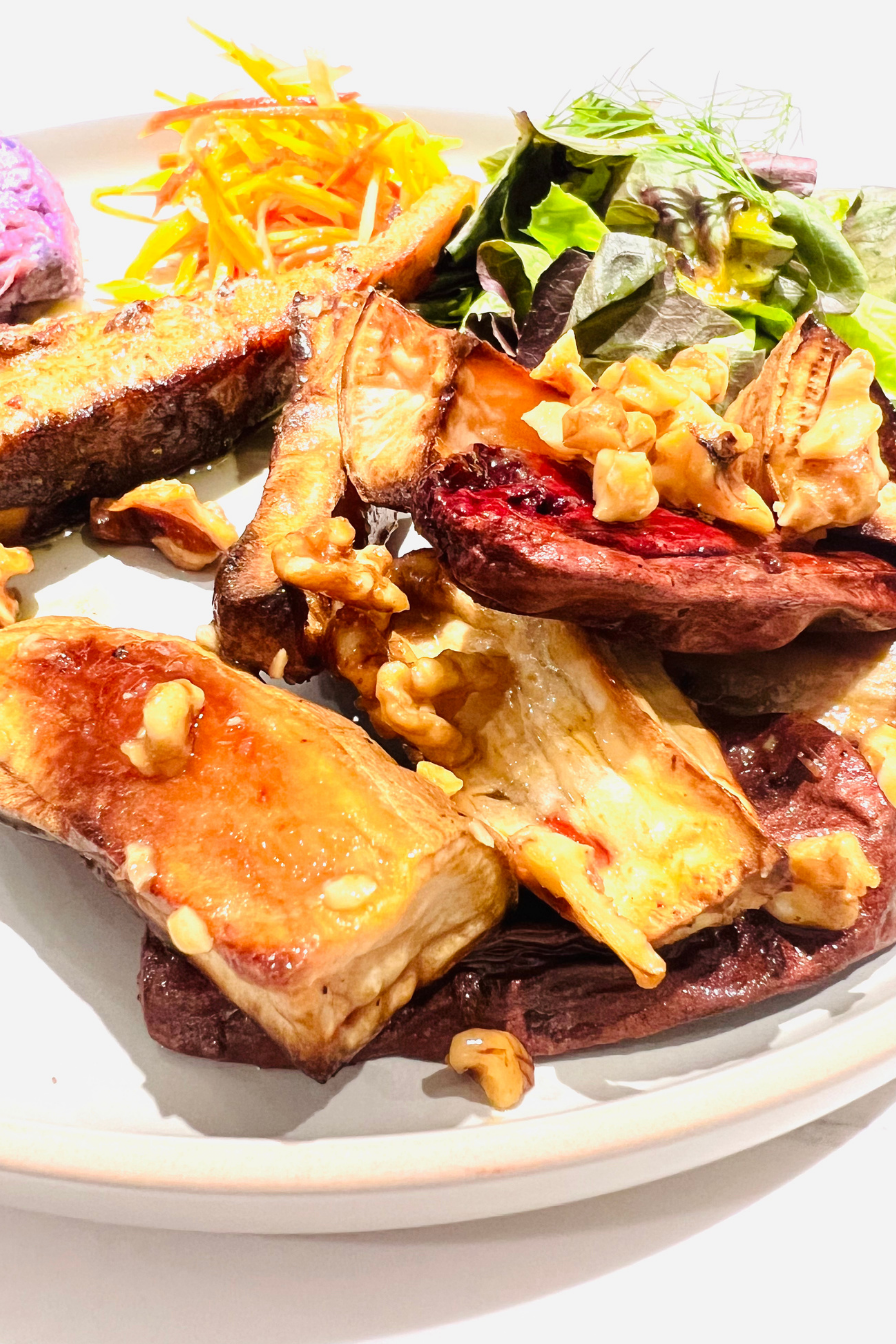

There’s a reason sweet potatoes show up on every holiday table — they’re naturally sweet, they caramelize beautifully in a hot oven, and they pair with almost anything on the plate. But there’s a version of the baked sweet potato that doesn’t just show up — it becomes the dish people ask about. That’s the purple and white one, with honey-glazed walnuts scattered over the top, and it’s the version I make when I want something that looks as good as it tastes.
The purple sweet potato is the star here. Stokes Purple is a purple-fleshed variety that’s denser and slightly sweeter than the orange kind, and it keeps its color beautifully when roasted — the wedges come out of the oven a deep jewel-toned violet with caramelized edges. Paired with a white-fleshed variety like Hannah or Japanese Satsumaimo, the plate becomes a study in contrast: purple and cream, golden walnuts, and a glossy honey glaze.
The walnuts are the other half. Toasted first to wake up their flavor, then briefly glazed in butter and honey until they’re glossy and lightly caramelized, they add a buttery crunch that plays against the tender sweet potatoes and a savory-sweet note that ties the whole plate together. A pinch of flaky sea salt at the end is the finishing touch that makes everything taste like more than the sum of its parts.
This is a holiday side dish, but it’s also a weeknight one. The basic method — wedges, olive oil, salt, 425°F, 25 to 35 minutes — is the same whether you’re making a simple side for a Tuesday dinner or the showstopper version for Thanksgiving. Once you know the method, the purple-and-white honey-walnut variation is just a matter of adding two ingredients and five minutes of walnut work at the end.
How to Bake Sweet Potatoes in the Oven (The Basic Method)
Before we get to the showstopper version, here’s the basic method. This works with any sweet potato — orange, white, or purple — and it’s the foundation for everything below.
Preheat the oven to 425°F. Line a large rimmed baking sheet with parchment paper. High heat is what caramelizes the edges of the sweet potato wedges and gives them that deep golden color; lower heat steams them instead.
Cut the potatoes into wedges about ¾ inch thick at the widest point. You can also cut them into 1-inch cubes if you prefer. The key is uniformity — pieces of the same thickness cook at the same rate, and you don’t end up with some wedges that are falling apart while others are still firm.
Toss with oil and salt. For two medium sweet potatoes (about 1½ pounds total), use 1 tablespoon of avocado oil plus 1 teaspoon of extra-virgin olive oil, and ½ teaspoon of kosher salt. Toss until every piece is lightly coated.
Arrange in a single layer with space between the pieces. Crowded potatoes steam instead of roasting, and you lose the caramelized edges that make baked sweet potatoes worth eating.
Roast 25 to 35 minutes, flipping halfway through. The potatoes are ready when the edges are golden and lightly caramelized and a fork slides easily into the thickest part. The time depends on the variety — denser purple sweet potatoes sometimes need the full 35 minutes, while softer orange varieties might be done at 25.
Finish with a pinch of flaky sea salt. The salt at the end is what makes the sweetness of the potato pop.
That’s the basic recipe. For the purple and white honey walnut version, keep reading.
How to Make the Purple and White Honey Walnut Version
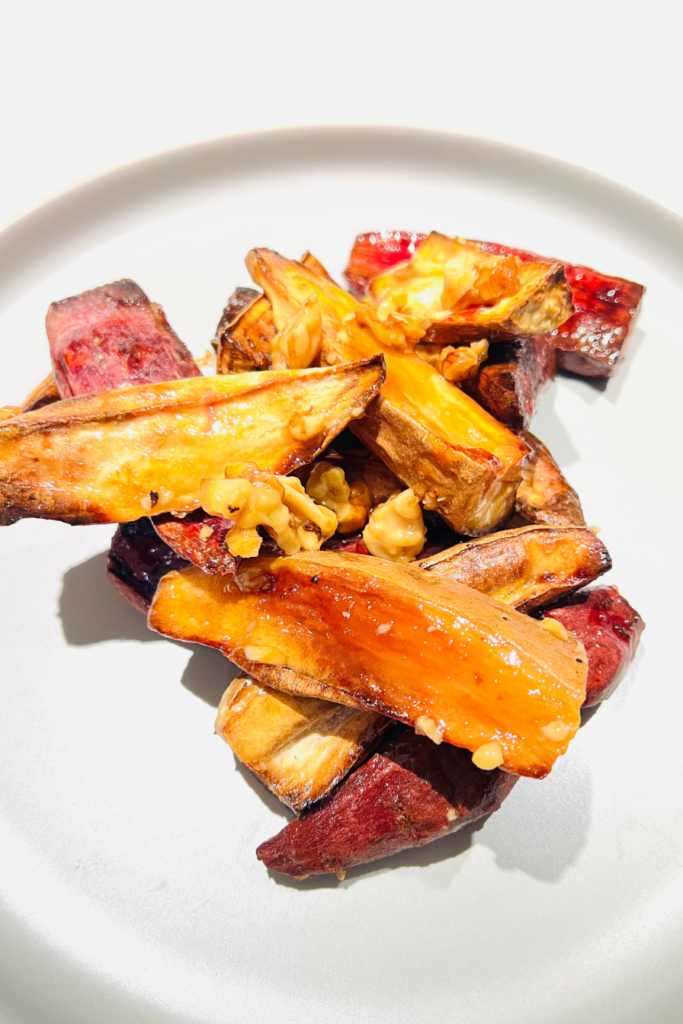
The full recipe is in the card below, but here’s the technique that makes it work.
Choose the potatoes. Stokes Purple for the purple flesh and Hannah or Japanese Satsumaimo for the white flesh. The Stokes Purple is denser and sweeter than orange sweet potatoes, and it holds its color when roasted. Hannah and Satsumaimo are cream-fleshed and slightly milder. If you can’t find these varieties, use any sweet potato you can find — the recipe still works, but the visual contrast is what makes it special.
Roast the wedges as above. The purple and white potatoes roast the same way, on the same sheet pan, at the same temperature. The purple ones may take a few minutes longer because they’re denser.
Toast the walnuts. While the potatoes roast, toast ½ cup of raw walnut halves in a dry skillet over medium-low heat for 2 to 3 minutes, until they’re fragrant and lightly golden. Transfer them to a small bowl.
Glaze the walnuts. Return the skillet to low heat and add 1½ tablespoons of honey and 1 teaspoon of unsalted butter. Stir until the butter melts and the mixture bubbles, then return the walnuts to the pan and stir for 30 to 45 seconds, until they’re evenly coated. Remove them from the heat immediately and spread them on a piece of parchment paper to cool. The glaze will be glossy and lightly caramelized, not a hard candy shell — honey doesn’t set hard, and that’s fine. What you get is a sticky, savory-sweet coating that clings to the walnuts and melts slightly when it hits the warm sweet potatoes.
Assemble. Transfer the roasted wedges to a serving platter, scatter the glazed walnuts over the top, and finish with a small pinch of flaky sea salt.
Why This Recipe Works
Baked sweet potatoes go wrong in three specific ways: soft, steamed wedges instead of caramelized ones; walnuts that turn sticky and cloying instead of glossy and balanced; and a plate that looks fine but doesn’t taste like anything special. Here’s how this version solves each one.
1. Roast at High Heat on a Parchment-Lined Sheet Pan
425°F is the temperature that caramelizes the natural sugars in the sweet potatoes without drying out the interior. A parchment-lined sheet pan keeps the wedges from sticking and makes cleanup easy. Arranging them in a single layer with space between them is what lets the hot air circulate and the edges brown.
2. Toast the Walnuts First, Then Glaze Them Briefly
Raw walnuts are bitter and soft. Toasting them for 2 to 3 minutes wakes up their oils and gives them a deeper, nuttier flavor. Glazing them for 30 to 45 seconds in butter and honey coats them without turning them sticky — the goal is a glossy, lightly caramelized shell, not a hard candy coating. Honey doesn’t set hard, and that’s fine — the walnuts should taste like candied nuts, not like candy.
3. Finish With Flaky Sea Salt
The salt at the end is what makes the sweet potatoes taste sweet instead of just sweet. It cuts through the honey glaze and balances the natural sugars in the potatoes, and it makes the whole plate taste more finished.
Ingredients That Matter
Stokes Purple sweet potato. One medium, scrubbed and unpeeled. Stokes Purple is the variety with genuinely purple flesh — dense, slightly sweet, and gorgeous when roasted. If you can’t find it, any purple-fleshed sweet potato works.
Hannah or Japanese Satsumaimo sweet potato. One medium, scrubbed and unpeeled. These are cream-fleshed varieties that provide the visual contrast. Japanese Satsumaimo are slightly sweeter and starchier than Hannah. If you can’t find either, a regular orange sweet potato works but the contrast is lost.
Avocado oil and extra-virgin olive oil. One tablespoon avocado oil plus one teaspoon olive oil. The avocado oil is the high-heat oil that handles 425°F without smoking; the olive oil adds flavor. Together they coat the wedges without greasing them.
Kosher salt and black pepper. Half a teaspoon of salt and a quarter teaspoon of pepper for the potatoes. Season generously — sweet potatoes need more salt than you’d think.
Raw walnut halves. Half a cup, roughly chopped. Toasted first, then glazed.
Honey. One and a half tablespoons. The glaze for the walnuts. The honey shouldn’t dominate — it’s a coating, not a sauce.
Unsalted butter. One teaspoon. The fat that helps the honey cling to the walnuts and gives the glaze its glossy finish.
Flaky sea salt. A small pinch, for finishing. This is the finishing salt — don’t substitute table salt or kosher salt here. The flaky texture and the way it dissolves on contact is part of the effect.
Tips and Troubleshooting
The potatoes turned out soft and steamed. They were crowded on the pan, or the oven wasn’t hot enough. Use two sheet pans if needed, and preheat the oven fully to 425°F.
The potatoes are undercooked in the center. The wedges were too thick, or the variety was denser than expected. Cut them into ¾-inch wedges, and give purple varieties the full 35 minutes.
The walnuts turned sticky. Honey doesn’t set hard, so a slightly sticky glaze is normal. If you want a firmer coating, cook the honey and butter a minute longer before adding the walnuts — but don’t go past 2 minutes or the honey will burn.
The walnuts are soft instead of crunchy. They weren’t toasted long enough, or they were stored with the potatoes. Toast them for the full 2 to 3 minutes, and keep them separate until serving.
The potatoes don’t taste sweet. They needed more salt, or the flaky sea salt finish was skipped. Sweet potatoes need more salt than you’d expect.
The purple potatoes bled into the white ones. They were tossed together too vigorously. Toss them separately, or arrange them on different sides of the pan.
The glaze is too sweet. Too much honey, or the butter was skipped. Use the full teaspoon of butter and the exact amount of honey.
The potatoes stuck to the pan. The pan wasn’t lined, or the oil was too sparse. Line with parchment paper and use the full amount of oil.
Substitutions and Swaps
Stokes Purple → any purple-fleshed sweet potato. Okinawan purple sweet potatoes are a good substitute and slightly sweeter. Any purple variety works.
Hannah or Satsumaimo → any white or cream-fleshed sweet potato. If you can’t find either, a regular orange sweet potato works but you lose the visual contrast. Murasaki has purple skin but white flesh — it works if you can find it.
Avocado oil → any high-heat neutral oil. Canola or vegetable oil both work.
Walnuts → pecans or almonds. Same quantity. Pecans are slightly sweeter and toast in the same time; almonds are crunchier and more neutral.
Honey → maple syrup. Same quantity. The glaze will be slightly thinner, but it works.
For a simpler weeknight version: skip the walnuts entirely and serve the roasted purple and white potatoes with just flaky sea salt. It’s a stunning side dish on its own.
For a loaded sweet potato version: serve the roasted wedges with a dollop of Greek yogurt, a sprinkle of chili flakes, and a squeeze of lime — this captures the “loaded sweet potato” keyword.
For a sweet potato bowl version: serve the roasted wedges over a bed of greens with black beans, avocado, and a drizzle of tahini — this captures the “sweet potato bowl” keyword.
Storage and Reheat
Sweet potatoes: refrigerate in an airtight container for up to 4 days.
Walnuts: cool completely and store separately in an airtight container. They’re best within 2 to 3 days for optimal texture.
Reheating: reheat the sweet potatoes in a 375°F oven for 5 to 8 minutes, or in a skillet over medium heat for 3 to 4 minutes, until heated through. Add the walnuts after reheating — don’t reheat them with the potatoes.
Meal prep: roast the potatoes ahead of time and prepare the walnut topping separately. Assemble just before serving.
Food safety: store leftovers within 2 hours of cooking. Discard anything left at room temperature longer than 2 hours.
Roasted Purple and White Sweet Potatoes With Honey Walnuts
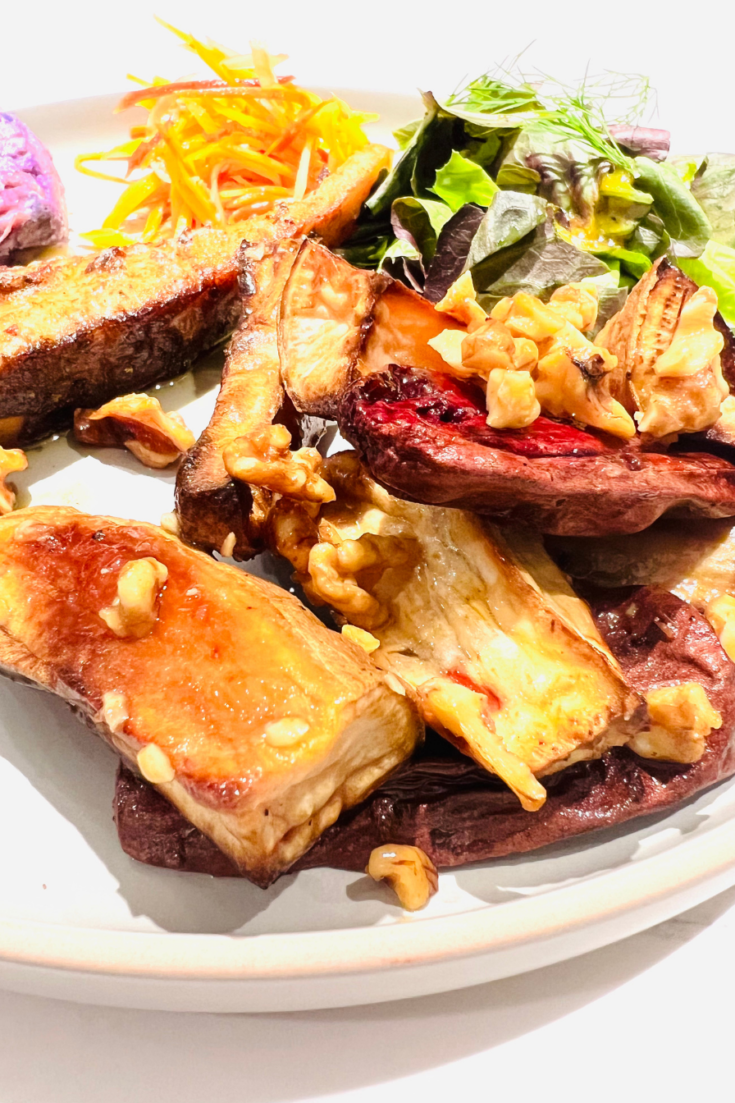
Tender roasted purple and white sweet potatoes with golden caramelized edges, finished with buttery honey-glazed walnuts and a touch of flaky sea salt — a colorful side dish that's perfect for fall dinners, holiday meals, and everyday entertaining.
Ingredients
Roasted Sweet Potatoes
- 1 medium Stokes Purple sweet potato, scrubbed and unpeeled
- 1 medium Hannah or Japanese Satsumaimo sweet potato, scrubbed and unpeeled
- 1 tablespoon avocado oil
- 1 teaspoon extra-virgin olive oil
- ½ teaspoon kosher salt
- ¼ teaspoon freshly ground black pepper
Honey-Glazed Walnuts
- ½ cup raw walnut halves, roughly chopped
- 1½ tablespoons honey
- 1 teaspoon unsalted butter
- Small pinch of flaky sea salt
Instructions
- Prepare the Oven and Potatoes: Preheat the oven to 425°F. Line a large rimmed baking sheet with parchment paper. Scrub the sweet potatoes thoroughly and pat dry. Cut them lengthwise into wedges about ¾ inch thick at their widest point, keeping the pieces relatively uniform so they roast evenly.
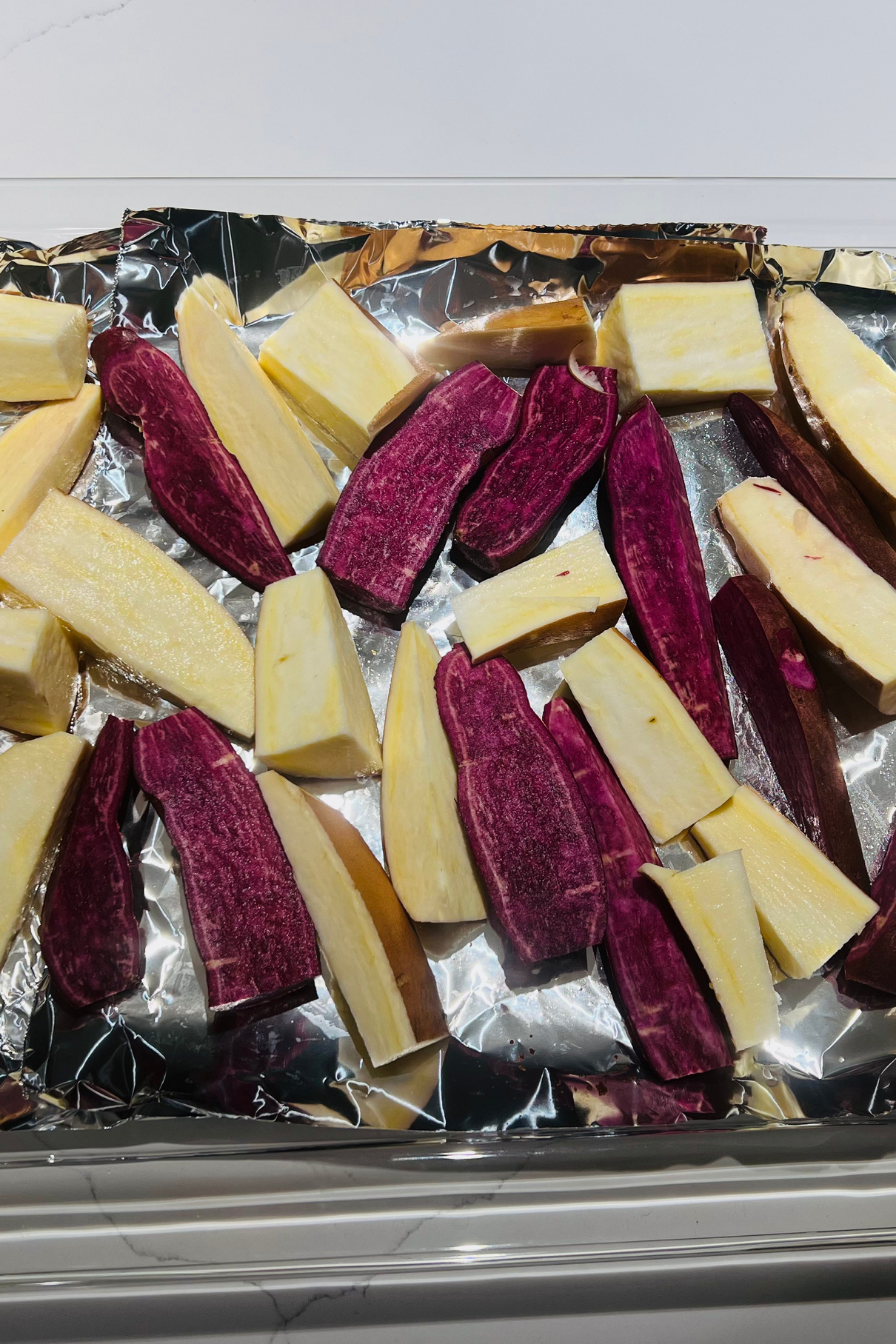
- Season the Sweet Potatoes: Place the wedges in a large mixing bowl. Add the avocado oil, olive oil, kosher salt, and black pepper. Toss until all the pieces are lightly coated.
- Roast Until Tender: Arrange the wedges in a single layer on the prepared baking sheet, leaving space between the pieces. Roast 25 to 35 minutes, flipping halfway through. The potatoes are ready when the edges are golden and lightly caramelized and a fork slides easily into the thickest part.
- Toast the Walnuts: While the potatoes roast, place a small skillet over medium-low heat. Add the chopped walnuts and toast 2 to 3 minutes, stirring frequently, until fragrant. Transfer them to a small bowl temporarily.
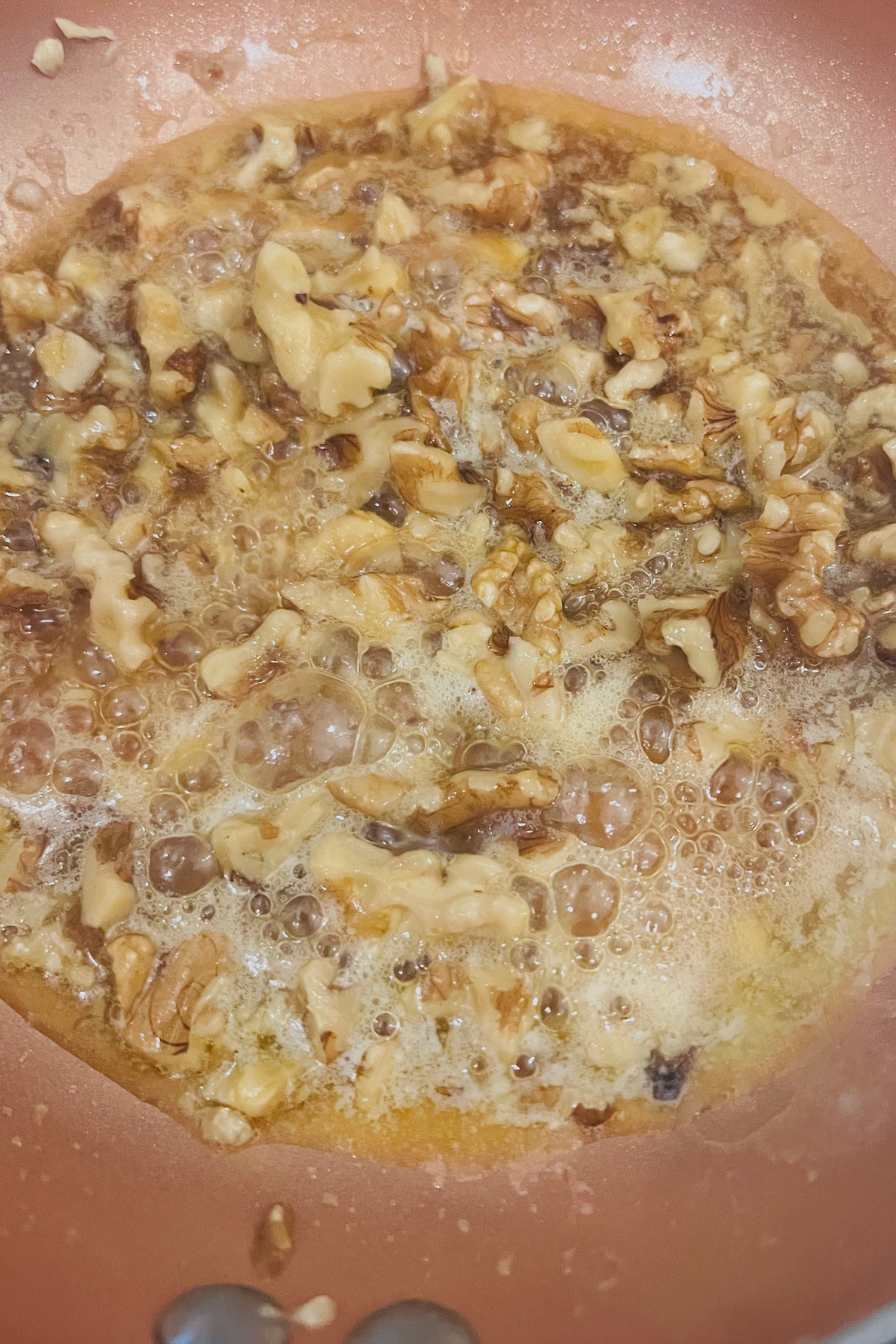
- Make the Honey Glaze: Return the skillet to low heat. Add the butter and honey, stirring until the butter melts and the mixture becomes bubbly. Return the toasted walnuts to the skillet and stir about 30 to 45 seconds, until evenly coated. Remove from the heat immediately. Spread the walnuts in a single layer on a piece of parchment paper and let them cool slightly so the glaze can set.
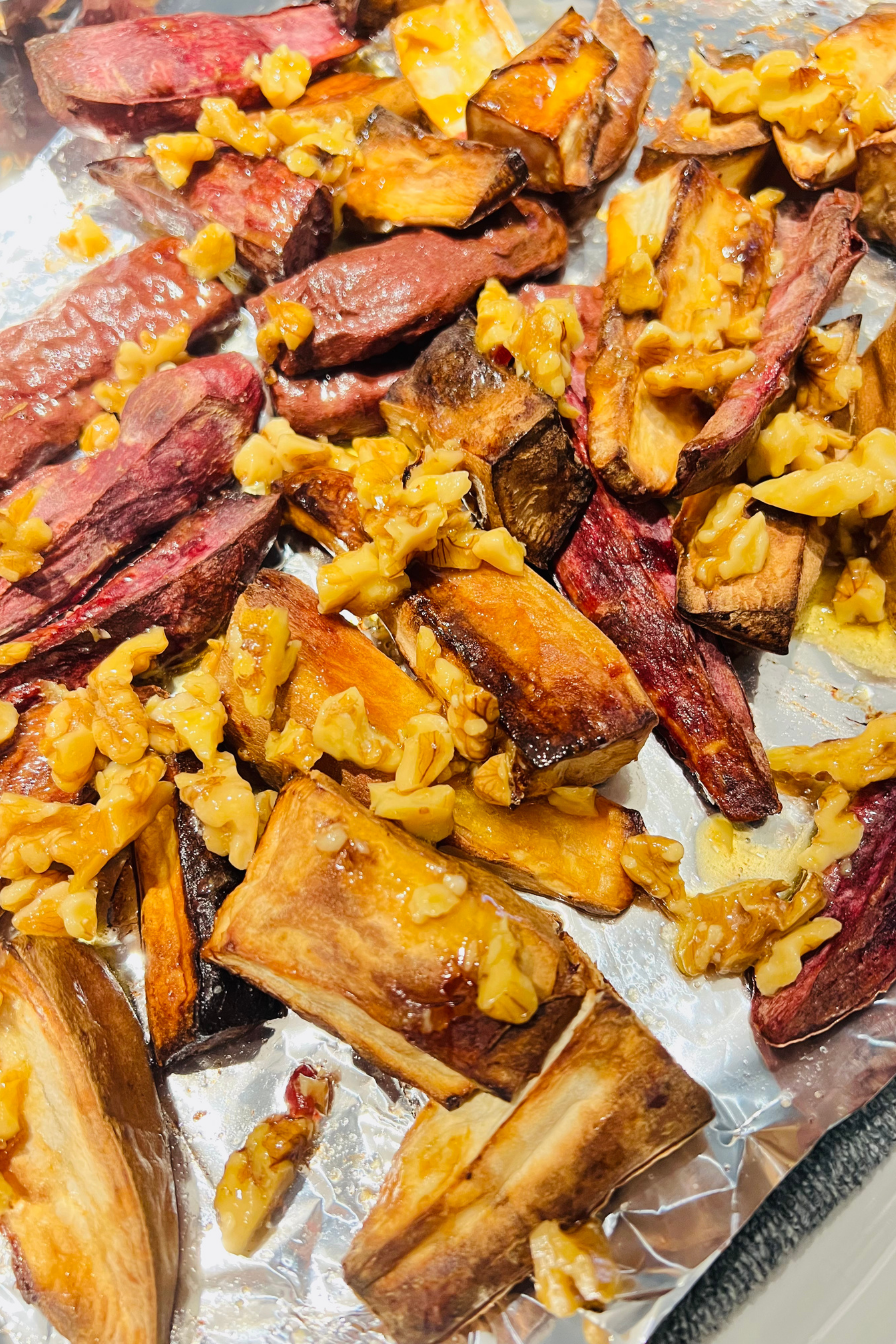
- Assemble and Serve: Transfer the roasted sweet potato wedges to a serving platter. Scatter the honey-glazed walnuts over the top and finish with a small pinch of flaky sea salt. Serve warm.
Notes
Estimated per serving: 230 calories · 3g protein · 35g carbs · 11g fat · 5g fiber · 165mg sodium
Nutrition varies by potato size and ingredient brands. Verify against your labels.
Notes
Use Stokes Purple for genuinely purple flesh and Hannah or Japanese Satsumaimo for cream-colored flesh. Murasaki has purple skin but typically white flesh.
If you can’t find these varieties, any sweet potatoes work — the visual contrast is what makes this special, but the flavor is good either way. Don’t overcrowd the pan — use two baking sheets if needed, because crowded potatoes steam instead of caramelizing.
The honey creates a glossy, lightly set coating rather than a hard candy shell, so let the walnuts cool separately before topping. Store the potatoes and walnuts separately — the walnuts soften if stored with the potatoes.
Best served the day it’s made, but leftovers keep 4 days in the fridge.
Nutrition is an estimate and varies by potato size and brands.
Frequently Asked Questions
Can I use regular orange sweet potatoes instead of purple and white?
Yes. The recipe works with any sweet potato. The purple and white varieties are what make it visually stunning, but the flavor is good with regular orange sweet potatoes too — you just lose the contrast.
Where can I find Stokes Purple sweet potatoes?
Stokes Purple is a specialty variety available at some farmers markets and specialty grocers. If you can’t find it, any purple-fleshed sweet potato works — Okinawan purple sweet potatoes are a good substitute. Hannah and Japanese Satsumaimo are more widely available at Asian grocers.
Why are the walnuts sticky instead of crunchy?
Honey doesn’t set hard — it produces a glossy, lightly caramelized coating rather than a hard candy shell. That’s the texture you want here. If you want a firmer coating, cook the honey and butter a minute longer before adding the walnuts, but don’t let it burn.
How do I store the leftovers?
Store the roasted sweet potatoes and the glazed walnuts separately in airtight containers. The potatoes keep up to 4 days; the walnuts are best within 2 to 3 days. Reheat the potatoes and add the walnuts just before serving.
How do I reheat the sweet potatoes?
Reheat in a 375°F oven for 5 to 8 minutes, or in a skillet over medium heat for 3 to 4 minutes, until heated through.
Can I make this ahead for a holiday dinner?
Yes. Roast the sweet potatoes the day before and refrigerate them. Make the walnuts the morning of, or up to 2 days ahead, and store them separately. Assemble just before serving — the potatoes can be served warm or at room temperature.
What do you serve with this?
Roasted chicken, pork tenderloin, turkey, or grilled salmon. It’s also good alongside a green salad or a bowl of soup.
Is this gluten-free?
Yes. None of the ingredients in this recipe contain gluten.
More Sweet Potato and Side Dish Recipes You’ll Love
Warm String Bean Salad — seared green beans with a ground sesame dressing.
Carrot Pickle — quick pickled carrots with a sweet-sour rice vinegar dressing.
Heart Roasted Butternut Squash Soup — cozy fall soup with blended cottage cheese.
Italian Chopped Salad With Salami — deli-style, 20 minutes.
15 Easy Chicken Crockpot Recipes for Busy Families — the full collection, organized by night-type.
High-Protein Slow Cooker Dinners — ten weeknight dinners organized by cook time.
Closing
This is the sweet potato dish I make when I want something that looks as good as it tastes — the purple and white contrast, the golden walnuts, the glossy honey glaze. It’s a holiday side, but it’s also the kind of thing I make on a random Tuesday because it’s just that good. The walnuts are the detail that makes it memorable, and the flaky sea salt at the end is what ties the whole plate together.
If you make it with regular orange sweet potatoes or skip the walnuts for a simpler version, let me know how it turns out in the comments.