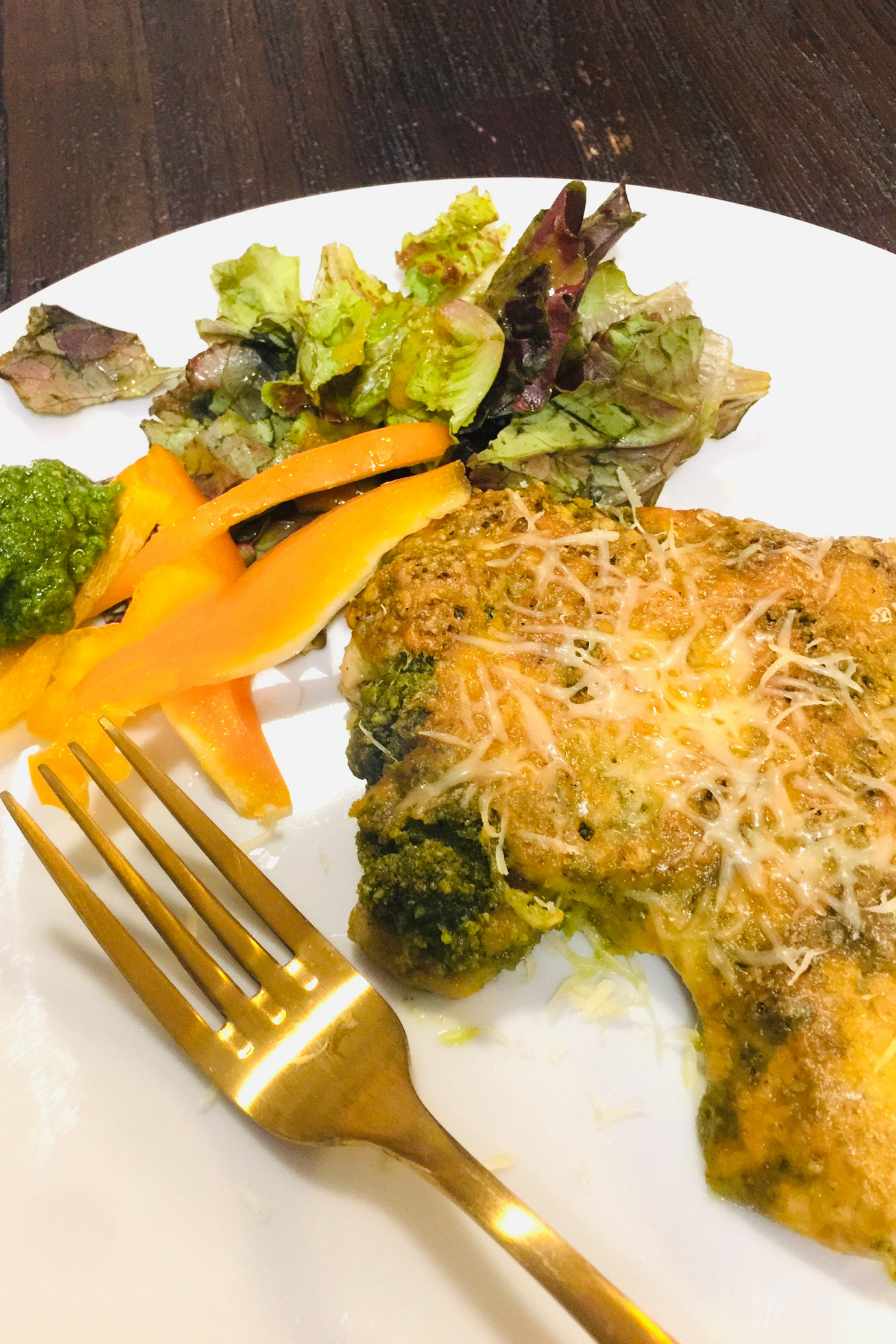

Pesto chicken is the dinner I make when I want something that tastes like a restaurant plate but comes out of my own oven in under 40 minutes.
The first version I made was good but not quite right — I’d baked the chicken raw with the pesto and cheese on top, and by the time the cheese was golden, the chicken was dry.
The fix was to sear the thighs first. A hard sear on both sides gives the chicken a golden crust and starts the cooking, and then the pesto and mozzarella go on and the whole thing finishes in the oven. The chicken stays juicy, the cheese melts into the pesto, and the whole dish tastes like something you’d order.
The pesto is the star. A good basil pesto — jarred or homemade — is what carries the flavor of the dish.
The sear gives the chicken a savory base, the pesto adds the herby, garlicky, cheesy note, and the mozzarella melts over the top and turns golden under the broiler.
It’s three ingredients doing four jobs, and it works because each one is doing its own thing.
The baking dish matters more than you’d think. A glass or ceramic dish that’s just big enough to hold the thighs in a single layer is what you want — too big and the pesto and cheese slide off into the empty space, too small and the chicken steams instead of bakes.
The thighs go in skin-side up (or smooth-side up if you’re using boneless skinless), the pesto goes on top, the mozzarella goes on top of that, and the whole thing bakes until the cheese is bubbling and the chicken reaches 165°F.
The recipe serves 4 with 40 grams of protein per serving, and the whole thing takes about 10 minutes of prep, 6 to 8 minutes to sear, and 15 to 20 minutes in the oven.
It’s a pesto chicken that tastes like a restaurant plate, made on a Tuesday.
Why This Recipe Works
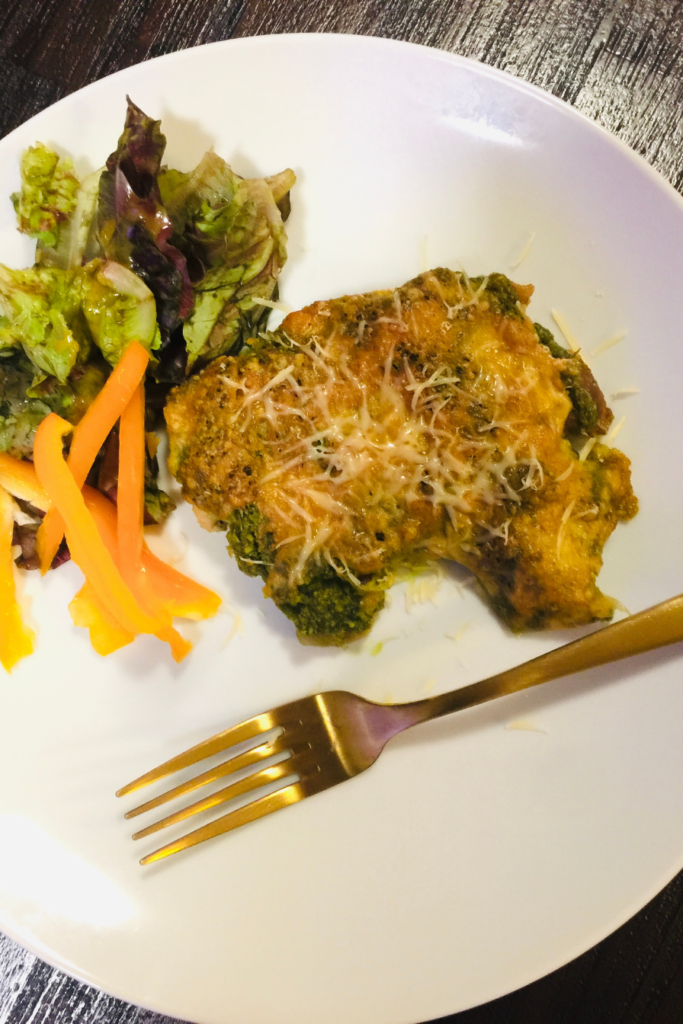
Pesto chicken goes wrong in three specific ways: dry chicken, pesto that burns, and cheese that slides off. Here’s how this version solves each one.
1. Sear the Chicken Before It Goes in the Oven
Searing the thighs on the stovetop first gives them a golden crust and starts the cooking, so by the time they go in the oven with the pesto and cheese, they only need 15 to 20 minutes to finish. If you bake the chicken raw with the toppings on, it takes longer and the cheese burns before the chicken is done.
2. Put the Pesto Under the Cheese, Not on Top
The pesto goes directly on the chicken, and the mozzarella goes on top of the pesto. If you put the pesto on top of the cheese, it burns under the broiler and turns bitter. The cheese protects the pesto and melts into it, and the whole thing turns into a golden, herby, cheesy topping.
3. Use a Baking Dish That Fits the Chicken in a Single Layer
A dish that’s too big lets the pesto and cheese slide off into the empty space. A dish that’s too small steams the chicken instead of baking it. You want a glass or ceramic dish that holds the thighs in a single layer with a little room between them.
Ingredients That Matter
Boneless, skinless chicken thighs. Four thighs, about 1½ to 2 pounds total. Thighs stay juicy through the sear and the bake, and they take the pesto and cheese beautifully. Chicken breasts work too — see Substitutions — but they need a shorter bake time.
Basil pesto. Half a cup, jarred or homemade. The pesto is the flavor of the dish, so use one you like on its own. A good jarred pesto works fine; homemade is even better if you have basil on hand.
Fresh mozzarella or low-moisture mozzarella. Eight ounces, sliced or shredded. Fresh mozzarella melts beautifully but releases water; low-moisture shredded mozzarella is easier and stays put. Either works — fresh is more indulgent, low-moisture is more reliable.
Olive oil. One tablespoon, for the sear. A neutral oil like avocado also works.
Salt and black pepper. For seasoning the chicken before it sears.
Optional: cherry tomatoes or lemon wedges. Scattered around the chicken in the baking dish, they add brightness and a little acidity to balance the richness of the pesto and cheese.
How to Make Pesto Chicken
(See the recipe card below — the steps are identical and the card is the single source of truth.)
Tips and Troubleshooting
The chicken is dry. It baked too long, or the thighs were thin. Pull the chicken at 165°F — thighs are forgiving, but past 175°F they start to dry out.
The cheese didn’t turn golden. The broiler wasn’t hot enough, or the dish was too far from the element. Preheat the broiler for 5 minutes and place the dish 6 inches from the heat source.
The pesto burned. It was on top of the cheese instead of under it, or the broiler ran too long. Pesto goes on the chicken, cheese goes on the pesto, and the broiler runs 2 to 3 minutes.
The cheese slid off the chicken. The dish was too big, or the chicken was too wet. Use a dish that fits the thighs in a single layer, and pat the chicken dry before searing.
The chicken stuck to the pan. The pan wasn’t hot enough, or the chicken was wet. Get the pan shimmering before the thighs go in, and pat them dry first.
The pesto tastes bitter. It burned under the broiler. Keep the cheese on top of the pesto, and don’t broil longer than 3 minutes.
The dish is greasy. Too much oil in the pan, or the pesto has a lot of oil. Drain the excess oil from the pan before transferring the chicken to the baking dish.
The chicken is undercooked in the center. The thighs were thick, or the oven ran cool. Use an instant-read thermometer and pull at 165°F.
Substitutions and Swaps
Chicken thighs → chicken breasts. Same quantity. Sear 4 to 5 minutes per side, then bake 12 to 15 minutes, until 165°F. Breasts dry out faster than thighs, so check early.
Boneless skinless thighs → bone-in skin-on thighs. Sear skin-side down first, then bake 25 to 30 minutes. The skin gets crispy under the broiler.
Basil pesto → red pesto, sun-dried tomato pesto, or kale pesto. Same quantity. Red pesto is richer and slightly sweeter; sun-dried tomato pesto is tangier; kale pesto is more bitter and earthy.
Fresh mozzarella → low-moisture shredded mozzarella, burrata, or provolone. Same quantity. Burrata is creamier; provolone is sharper.
For a baked pesto chicken breast version: swap the thighs for 4 boneless skinless breasts, sear 4 to 5 minutes per side, and bake 12 to 15 minutes. The method is the same; only the timing changes.
For a pesto chicken pasta version: slice the cooked chicken and toss it with 12 ounces of cooked pasta, an extra ¼ cup of pesto, and a splash of pasta water. Captures the “pesto chicken pasta” keyword.
For a red pesto chicken version: swap the basil pesto for red pesto and add a handful of cherry tomatoes to the baking dish. Captures the “red pesto chicken” keyword.
Storage and Reheat
Refrigerate leftover pesto chicken in an airtight container for up to 3 to 4 days.
Reheat gently in a covered skillet over medium-low heat with a splash of water, or in a 350°F oven for 8 to 10 minutes. Reheat to 165°F.
Freeze the cooked chicken (without the cheese) for up to 3 months. Thaw overnight in the fridge and reheat gently.
Food safety: store leftovers within 2 hours of cooking. Discard anything left at room temperature longer than 2 hours.
Cheesy Pesto Chicken
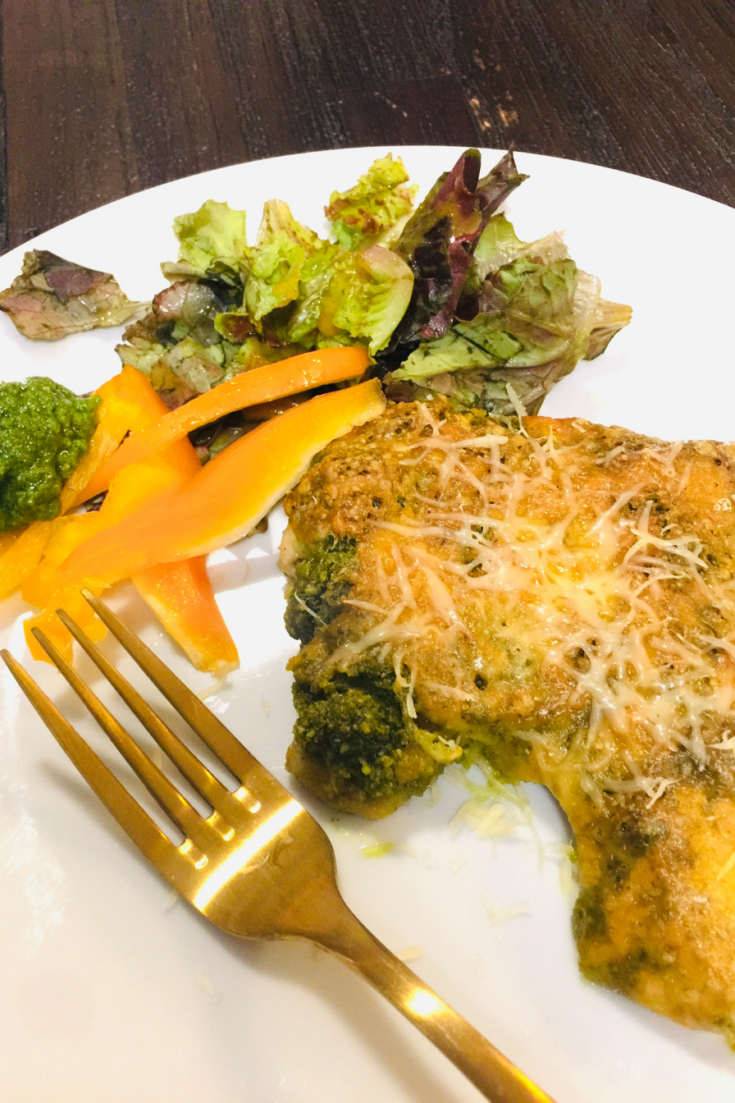
Pan-seared boneless chicken thighs layered with vibrant basil pesto and melted low-moisture mozzarella, baked until bubbling—delivering 44g of protein per serving.
Ingredients
Chicken Base:
- 1.75 lbs (approx. 4 large) boneless, skinless chicken thighs, trimmed of excess fat
- ½ tsp kosher salt
- ¼ tsp freshly cracked black pepper
- 1 tsp extra-virgin olive oil (for searing)
Toppings:
- ½ cup basil pesto (store-bought or homemade)
- 6 oz low-moisture part-skim mozzarella, shredded or sliced (avoids water pooling)
- Optional finish: Fresh basil leaves and lemon wedges
Instructions
- Prep & Season: Preheat oven to 400°F (204°C). Pat chicken thighs completely dry with paper towels and season both sides evenly with salt and black pepper.
- Sear in Oven-Safe Skillet: Heat 1 teaspoon olive oil in a large oven-safe skillet (cast-iron or stainless steel) over medium-high heat until shimmering. Add chicken thighs and sear undisturbed for 3 to 4 minutes per side until a golden-brown crust forms. (The chicken will finish cooking in the oven).
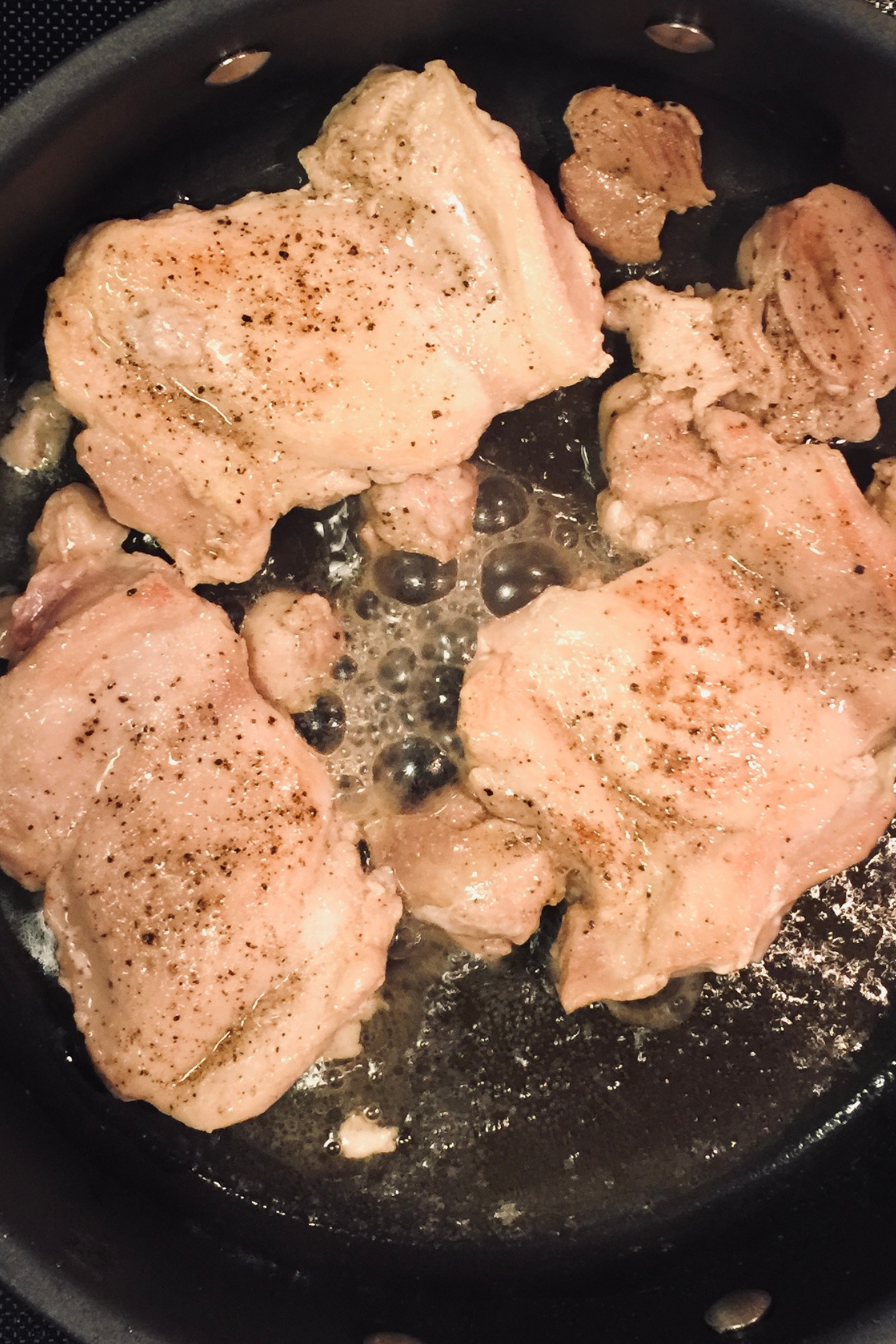
- Layer Pesto & Cheese: Turn off stovetop heat. Spread 2 tablespoons of pesto directly over the top of each seared thigh. Layer 1.5 ounces of low-moisture mozzarella over the pesto on each thigh (the cheese seals the pesto to prevent burning).
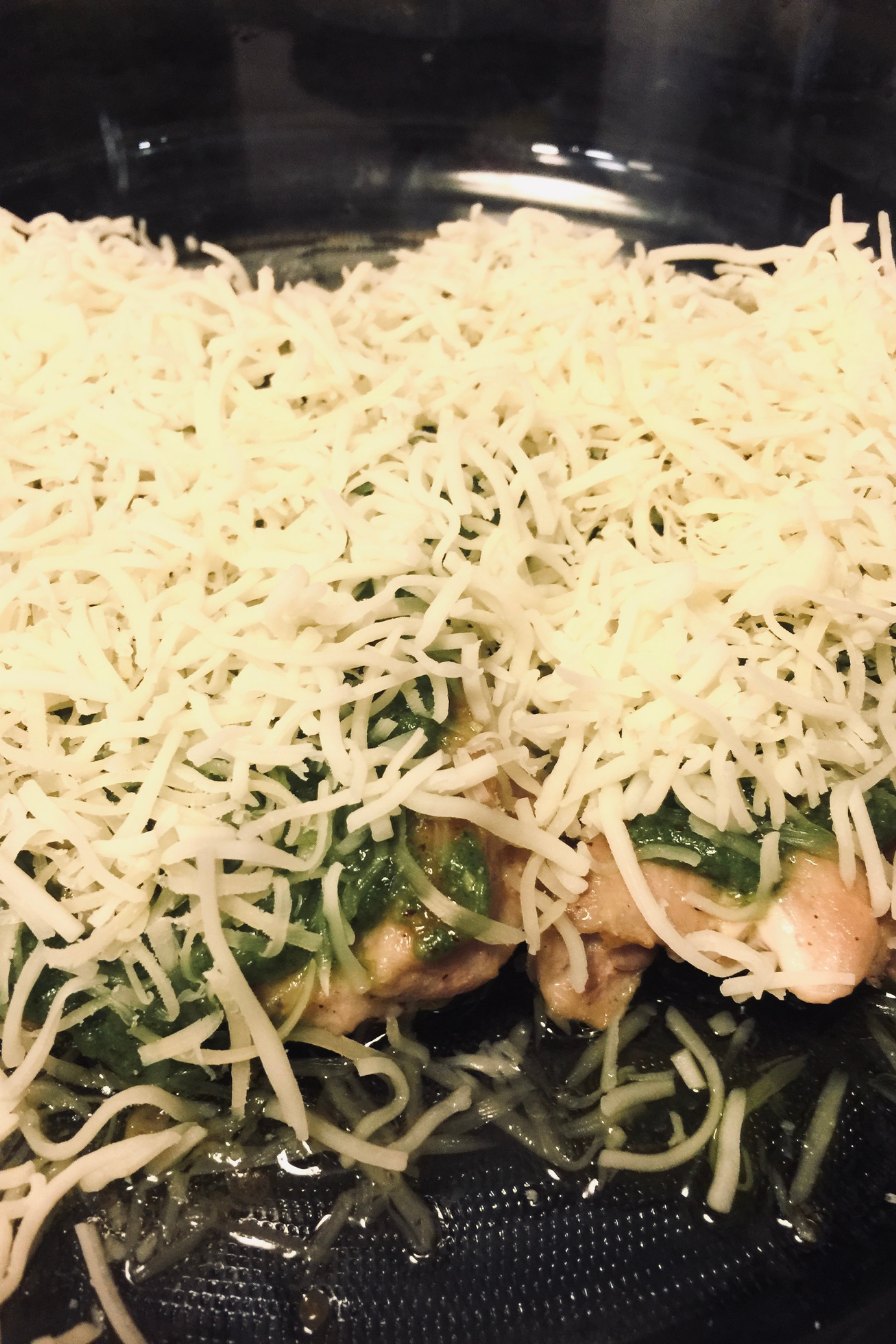
- Bake (12–15 Minutes): Transfer the skillet directly into the oven. Bake for 12 to 15 minutes until the internal temperature of the thickest thigh reaches 165°F (74°C) and the cheese is melted and bubbling.
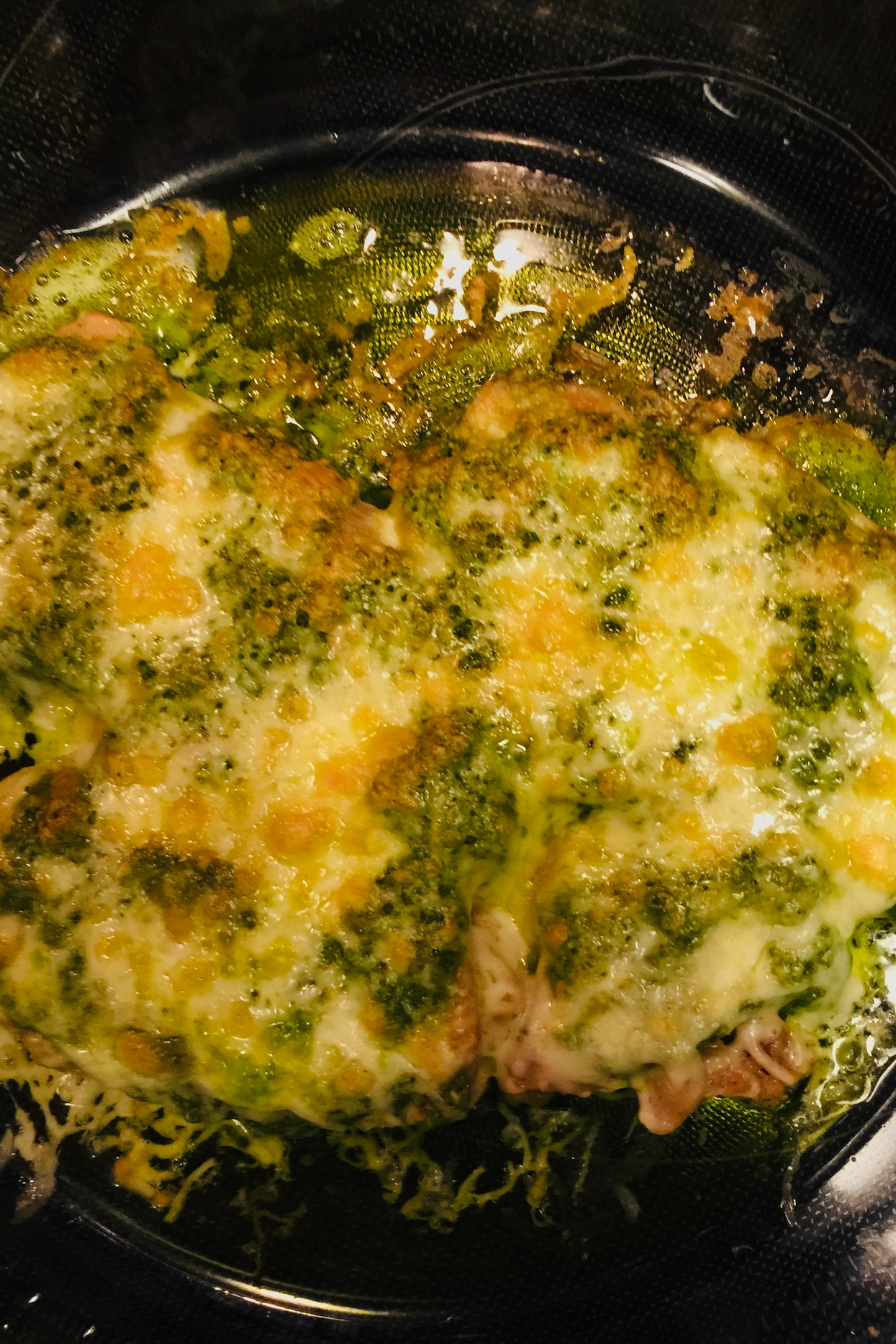
- Broil for Color (Optional): Switch oven to BROIL (High) for 1 to 2 minutes to brown the top of the cheese into a golden crust.
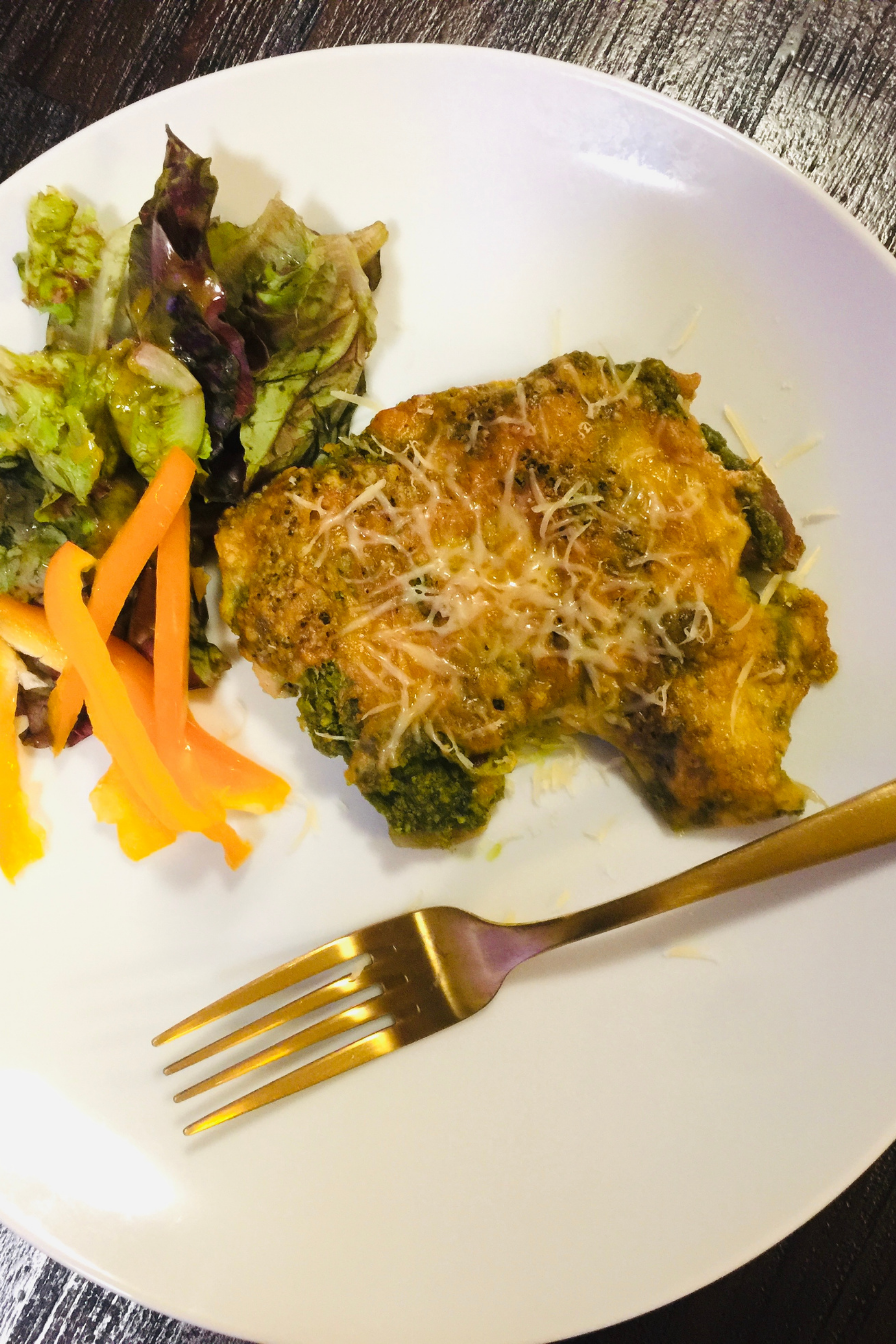
- Rest & Serve: Remove from the oven, let rest for 3 to 4 minutes, and top with fresh basil leaves or a squeeze of fresh lemon juice before serving!
Notes
Macros per Serving (estimated using part-skim mozzarella & 1.75 lbs chicken thighs): ~390 Calories | 44g Protein | 2g Carbs | 21g Fat | 1g Fiber | 680mg Sodium
Frequently Asked Questions
Can I use chicken breasts instead of thighs?
Yes. Sear 4 to 5 minutes per side, then bake 12 to 15 minutes, until 165°F. Breasts dry out faster than thighs, so check early.
Can I use bone-in, skin-on thighs?
Yes. Sear skin-side down first, then bake 25 to 30 minutes. The skin gets crispy under the broiler.
What kind of pesto should I use?
A good basil pesto, jarred or homemade. Use one you like on its own — the pesto is the flavor of the dish. Red pesto, sun-dried tomato pesto, and kale pesto all work as variations.
Can I make this ahead for meal prep?
Yes. Cook it fully, cool it, and store in an airtight container for up to 3 to 4 days. Reheat gently in a covered skillet or a 350°F oven.
Why did my cheese slide off?
The baking dish was too big, or the chicken was too wet. Use a dish that fits the thighs in a single layer, and pat the chicken dry before searing.
Why did my pesto burn?
It was on top of the cheese instead of under it, or the broiler ran too long. Pesto goes on the chicken, cheese goes on the pesto, and the broiler runs 1 to 2 minutes.
Can I freeze this?
Yes, the cooked chicken without the cheese freezes for up to 3 months. Thaw overnight in the fridge and reheat gently.
What do you serve with pesto chicken?
Pasta, rice, roasted vegetables, crusty bread, or a simple green salad. The pan juices are excellent spooned over pasta or rice.
More High-Protein Chicken Dinner Recipes You’ll Love
Chicken Karaage — crispy Japanese fried chicken, weeknight-friendly.
Pan-Seared Lemon Herb Chicken Thighs — Mediterranean flavor, one skillet.
Closing
I’ve made this pesto chicken more times than I can count, and the two things that changed everything for me were searing the thighs before they went in the oven and putting the pesto under the cheese instead of on top.
The first batch I made had dry chicken and burnt pesto — the sear and the layering fixed that completely.
If you make the red pesto version or toss the sliced chicken with pasta, let me know how it turns out in the comments.