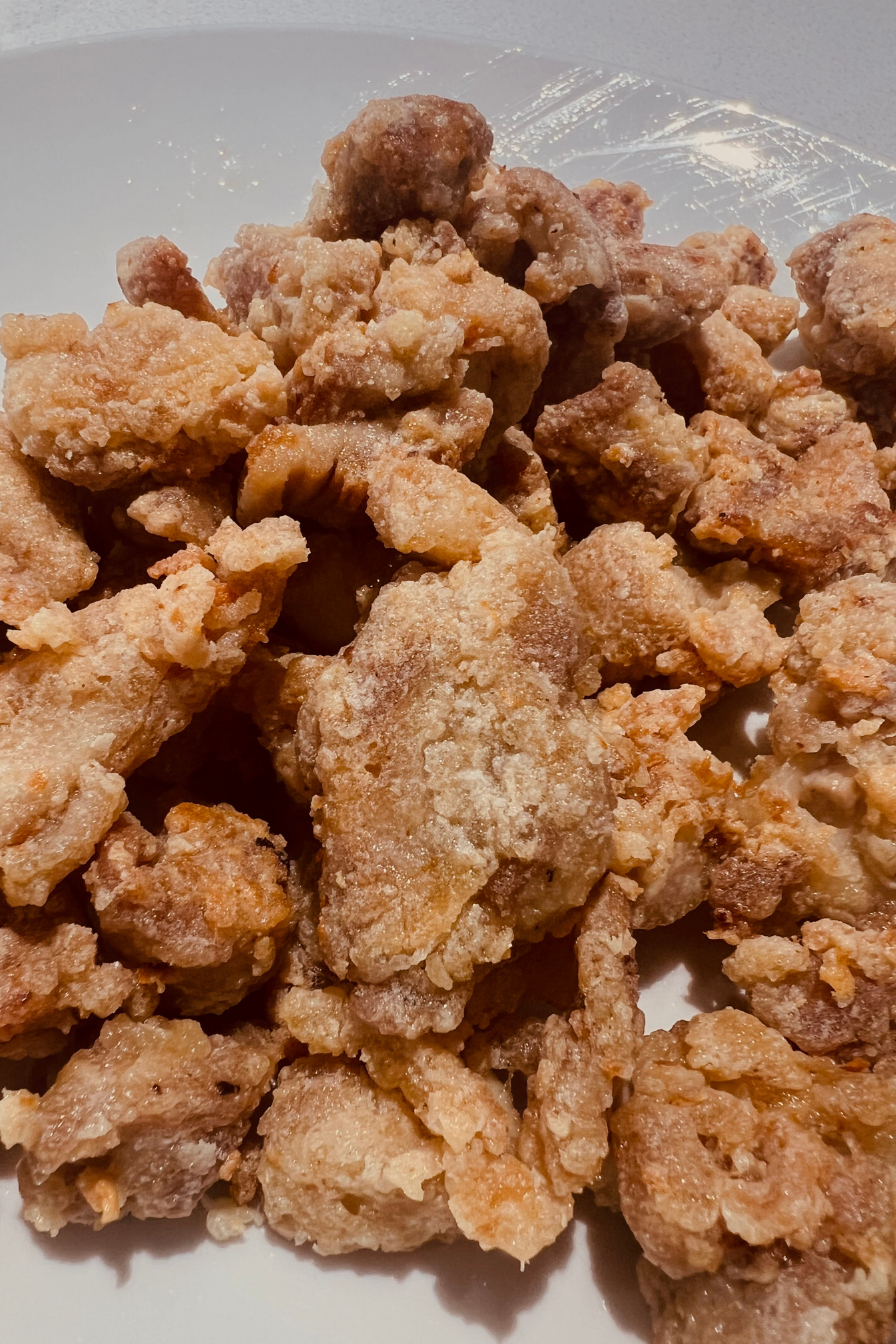

One of the things I miss most about eating in Japan is karaage — the crunchy, juicy, deeply seasoned fried chicken that shows up at every izakaya, every bento box, every convenience store.
The meat is marinated in soy, ginger, and garlic, coated in a light starch, and fried until the crust shatters when you bite into it.
It’s so good that I started making it at home often enough that it’s become a staple in my house. It’s not a special occasion dish anymore — it’s the thing I make on a Tuesday when I want something that tastes like a treat.
The first version I made was good but not crispy enough.
I’d used all-purpose flour, fried in a shallow pan, and the crust came out soft instead of shatteringly crisp.
The fix was two things: switch to rice flour, which forms a hydrophobic barrier when it hits the hot oil, and marinate the chicken for at least 20 minutes so the soy, ginger, garlic, and sake actually penetrate the meat.
That combination is what gives you the crispy, juicy karaage I remember from Japan.
The technique is simpler than it sounds. The chicken marinates for 20 minutes (up to 2 hours), gets coated in rice flour right before it goes in the pan, and shallow-fries in 3 to 4 tablespoons of oil — enough to coat the bottom of the skillet, not enough to deep fry.
The chicken comes out with a golden crust on both sides and a juicy interior, and it takes about 8 to 10 minutes total. It’s the easiest way to make karaage at home without a deep fryer or a pot of oil.
The batch serves 4 with 32 grams of protein per serving, and the whole thing takes about 15 minutes of prep, 20 minutes to marinate, and 8 to 10 minutes to cook.
It’s the base for a dozen different meals — pile it on rice for a karaage bowl, toss it in teriyaki or bang bang sauce, or hit it with a gochujang glaze for a Korean-style bowl.
It’s a staple for a reason.
Why This Recipe Works
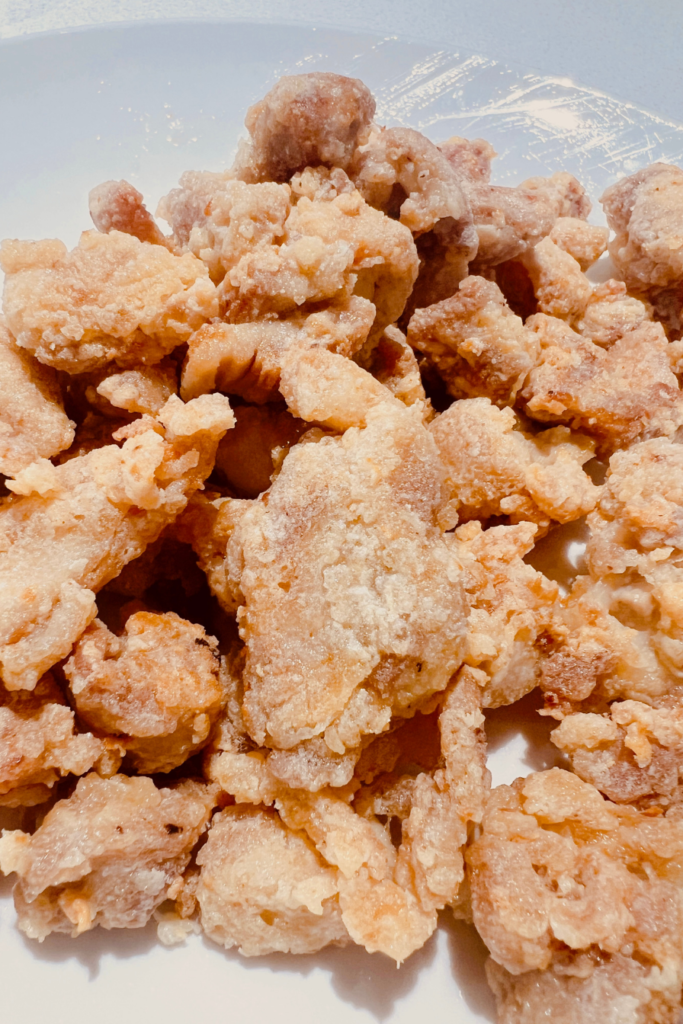
Chicken karaage goes wrong in three specific ways: a crust that goes soft, chicken that’s dry, and chicken that’s bland. Here’s how this version solves each one.
1. Use Rice Flour and Coat Right Before Frying
Rice flour forms a hydrophobic barrier when it hits hot oil — it repels water and keeps the crust crispy instead of absorbing grease. It also produces a lighter, airier crust than all-purpose flour. The key is to coat the chicken immediately before it goes in the pan — if the rice flour sits on the wet marinade for too long, it turns into a paste instead of a light shell.
2. Marinate for at Least 20 Minutes
The marinade is where the flavor lives. Soy sauce, fresh ginger, fresh garlic, and sake penetrate the meat during the 20-minute marination, and the alcohol in the sake breaks down surface proteins so the thighs stay juicy during the sear. Skip the marination and you get fried chicken that tastes like fried chicken — not karaage.
3. Shallow-Fry Instead of Deep-Fry, and Don’t Crowd the Pan
You don’t need a pot of oil to make karaage. Three to four tablespoons of oil in a wide skillet is enough to shallow-fry the chicken — it cooks the crust on the bottom, then you flip and cook the other side. The key is to leave at least a half-inch of space between the pieces so steam can escape freely. Crowding the pan steams the chicken in its own juices instead of crisping it.
Ingredients That Matter
Boneless, skin-on chicken thighs. Four thighs, about 1¼ pounds total, cut into 1½-inch pieces. Skin-on thighs give you more crunch — the skin renders and crisps in the hot oil, and it keeps the meat juicy. Boneless skinless thighs work but the crust is slightly less rich.
Low-sodium soy sauce. Two tablespoons. The salt and umami in the marinade. Low-sodium lets you control the final salt level.
Fresh garlic and fresh ginger. One tablespoon each, finely minced or microplaned. Fresh, not powdered — the aromatics are what make karaage taste like karaage.
Sake. One tablespoon. The alcohol breaks down surface proteins and adds a subtle rice wine depth. Mirin works as a substitute but is sweeter.
Sesame oil. Half a teaspoon, optional. Adds a toasted aroma that fits the Japanese flavor profile.
Rice flour. Four tablespoons, about 1 tablespoon per thigh. The coating that makes the crust crispy. Rice flour forms a hydrophobic barrier when it hits the oil, which is why it stays crunchy instead of absorbing grease. Cornstarch or potato starch (katakuriko) are the traditional choices and also work well — see Substitutions.
Neutral cooking oil. Three to four tablespoons of avocado, canola, or vegetable oil. Enough to coat the bottom of the skillet, not enough to deep-fry.
Lemon wedges and sliced green onions. For serving. The lemon cuts the richness of the fried chicken; the green onions add a fresh, bright note.
How to Make Chicken Karaage
(See the recipe card below — the steps are identical and the card is the single source of truth.)
Tips and Troubleshooting
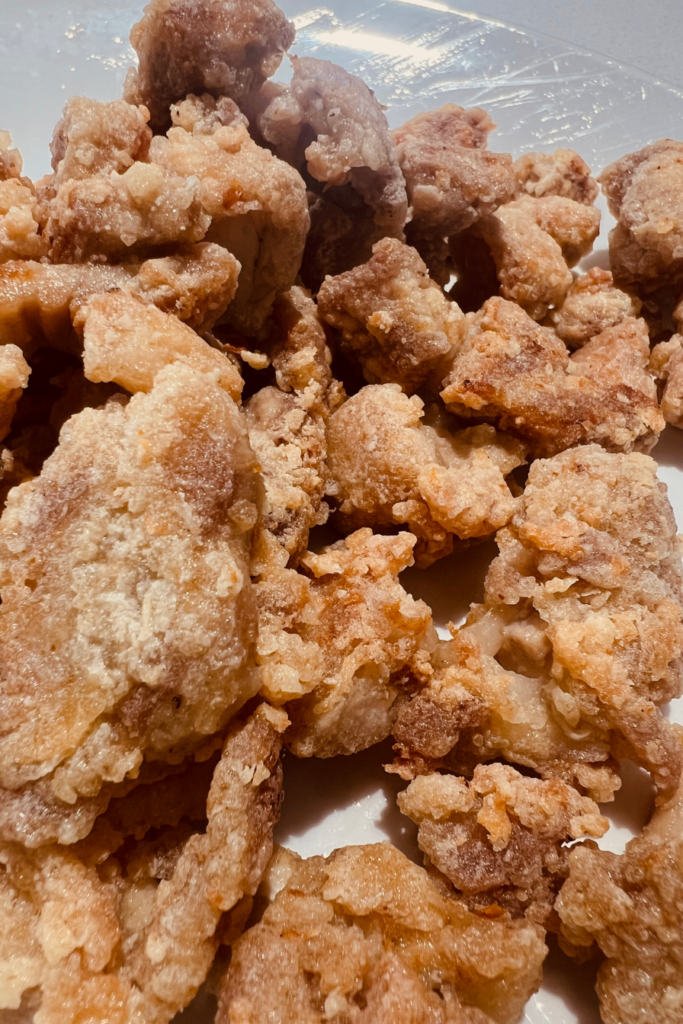
The crust went soft. The rice flour was coated too early, or the oil wasn’t hot enough. Coat the chicken immediately before frying, and heat the oil until a piece of chicken sizzles immediately on contact.
The chicken is dry. It cooked too long, or the thighs were thin. Pull the chicken at 165°F — thighs are forgiving, but past 175°F they start to dry out.
The crust is pale. The oil wasn’t hot enough, or the chicken was crowded. Heat the oil until it shimmers, and leave at least a half-inch between pieces.
The chicken tastes bland. The marinating time was too short, or the garlic and ginger were skipped. Marinate at least 20 minutes, and use fresh garlic and ginger, not powdered.
The rice flour coating is gummy. The chicken sat in the flour too long before frying, or too much flour was used. Coat right before frying, and use about 1 tablespoon of flour per thigh.
The chicken stuck to the pan. The pan wasn’t nonstick, or the oil wasn’t hot enough. Use a nonstick or well-seasoned cast-iron skillet, and heat the oil until it shimmers.
The oil splattered everywhere. The chicken was wet when it went into the pan. Pat the marinated chicken dry with a paper towel before coating with rice flour.
The chicken is greasy. The oil wasn’t hot enough, or the chicken wasn’t drained well. Heat the oil to shimmering, and drain the chicken on a paper towel-lined plate or wire rack for 2 minutes.
Substitutions and Swaps
Rice flour → cornstarch or potato starch (katakuriko). Same quantity. These are the traditional karaage coatings — cornstarch and potato starch both produce a very crispy crust. Rice flour produces a slightly lighter, airier crust.
Rice flour → all-purpose flour. Same quantity. All-purpose flour produces a softer crust — it’s the least crispy of the options, but it works in a pinch.
Chicken thighs → chicken breasts. Same quantity. Breasts are leaner and dry out faster — pull them at 165°F and reduce the cook time by 1 to 2 minutes per side.
Boneless skin-on thighs → boneless skinless thighs. Same quantity. The crust is slightly less rich without the skin, but the method is the same.
For a baked chicken karaage version: coat the chicken in rice flour, arrange on a wire rack over a baking sheet, and bake at 425°F for 20 to 25 minutes, flipping halfway through. The crust is less crispy than the fried version but the chicken is still juicy. Captures the “baked chicken karaage” keyword.
For a karaage chicken bowl: serve the chicken over steamed rice with shredded cabbage, sliced cucumber, and a drizzle of kewpie mayonnaise or teriyaki sauce. Captures the “karaage chicken bowl” keyword.
For a bang bang chicken bowl: toss the fried karaage in a bang bang sauce (mayonnaise, sweet chili sauce, sriracha, honey, and rice vinegar) and serve over rice. Captures the “bang bang chicken bowl” keyword.
For a Korean-style gochujang bowl: toss the fried karaage in a gochujang sauce (gochujang, honey, soy sauce, rice vinegar, garlic, and sesame oil) and serve over rice with kimchi. Captures the “Korean spicy gochujang sauce” and “weeknight Korean bowl” keywords.
For a teriyaki chicken bowl: toss the fried karaage in teriyaki sauce and serve over rice with steamed broccoli and sliced green onions. Captures the “teriyaki chicken bowl” keyword.
Storage and Reheat
Refrigerate cooked karaage in an airtight glass container for up to 3 to 4 days.
Reheat in an air fryer at 375°F for 3 to 4 minutes — this is the recommended method because it restores the original crispy crunch. A dry skillet over medium heat for 3 to 5 minutes, flipping once, also works.
Avoid microwaving — the rice flour crust softens and the chicken turns rubbery.
Food safety: store leftovers within 2 hours of cooking. Reheat to 165°F before serving. Discard anything left at room temperature longer than 2 hours.
Chicken Karaage
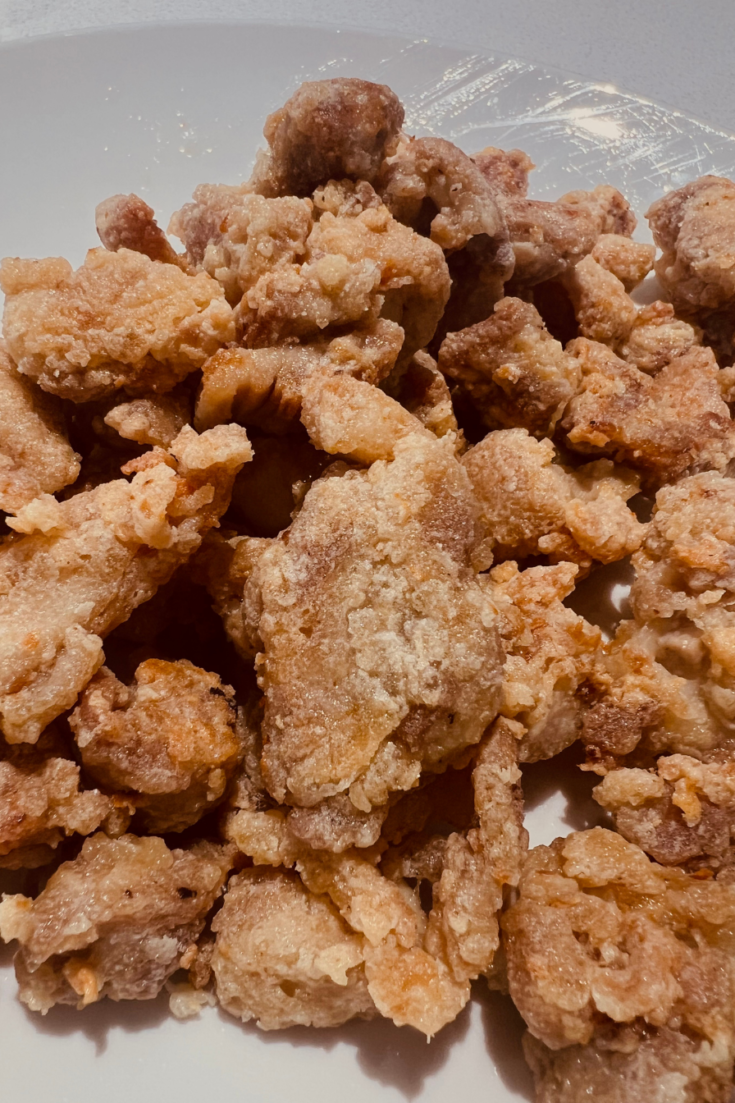
Crispy, golden Japanese fried chicken thighs marinated in soy sauce, fresh ginger, garlic, and sake, coated in a light rice flour crust and shallow-fried — 32g of protein per serving.
Ingredients
Chicken and Marinade Base
- 4 boneless, skin-on chicken thighs (about 1¼ lbs total), cut into 1½-inch pieces
- 2 tablespoons low-sodium soy sauce
- 1 tablespoon fresh garlic, finely minced or microplaned
- 1 tablespoon fresh ginger, finely minced or microplaned
- 1 tablespoon sake (or mirin)
- ½ teaspoon sesame oil (optional, for aroma)
Crispy Dredge and Pan Cooking
- 4 tablespoons rice flour (1 tablespoon per thigh)
- 3 to 4 tablespoons neutral cooking oil (avocado, canola, or vegetable oil for shallow frying)
- Optional for serving: fresh lemon wedges and sliced green onions
Instructions
- Marinate the Chicken: In a mixing bowl, combine the cut chicken thigh pieces with the soy sauce, minced garlic, minced ginger, sake, and optional sesame oil. Toss thoroughly to coat. Cover and marinate at room temperature 20 minutes (or up to 2 hours in the fridge).
- Coat With Rice Flour: Right before cooking, sprinkle the 4 tablespoons of rice flour directly over the marinated chicken pieces. Stir and toss until a light, sticky starch coating covers every piece evenly.
- Heat the Skillet: Add 3 to 4 tablespoons of oil to a large nonstick or cast-iron skillet — enough to coat the bottom completely. Heat over medium-high heat until the oil shimmers and a piece of chicken sizzles immediately upon contact.
- Shallow-Fry and Flip: Place the chicken pieces in the skillet in a single layer, ensuring the pan isn't overcrowded (cook in 2 batches if needed). Fry undisturbed 4 to 5 minutes, until the bottom crust is deep golden brown and crispy.
- Finish Cooking: Flip each piece over and cook another 4 to 5 minutes, until the second side is golden brown and the internal temperature reaches 165°F.
- Drain and Rest: Transfer the cooked karaage to a paper towel-lined plate or wire cooling rack for 2 minutes to drain any excess surface oil.
- Serve: Serve hot with fresh lemon wedges for squeezing over top.
Notes
Notes
Rice flour forms a hydrophobic barrier when it hits hot oil — it repels water and keeps the crust crispy instead of absorbing grease.
Coat the chicken immediately before frying; if the flour sits on the wet marinade too long, it turns into a paste instead of a light shell. Don't crowd the pan — leave at least a half-inch between pieces so steam can escape and the chicken crisps instead of steaming.
Skin-on thighs give the most crunch. Cornstarch or potato starch (katakuriko) are the traditional coatings and work equally well.
Leftovers keep 3 to 4 days in the fridge; reheat in an air fryer at 375°F for 3 to 4 minutes to restore the crunch. Nutrition is an estimate and varies by chicken size and oil absorption.
Estimated per serving (4 thighs + 3 tablespoons oil absorbed): 310 calories · 32g protein · 8g carbs · 16g fat · 0g fiber · 420mg sodium
Frequently Asked Questions
What is chicken karaage?
Karaage is Japanese fried chicken — chicken pieces marinated in soy sauce, ginger, and garlic, coated in a light starch, and fried until crispy. It’s a staple of Japanese izakaya, bento boxes, and home cooking.
Can I use cornstarch instead of rice flour?
Yes. Cornstarch or potato starch (katakuriko) are the traditional karaage coatings and produce a very crispy crust. Rice flour produces a slightly lighter, airier crust.
Can I use chicken breasts instead of thighs?
Yes. Breasts are leaner and dry out faster — pull them at 165°F and reduce the cook time by 1 to 2 minutes per side.
Can I bake this instead of frying?
Yes. Coat the chicken in rice flour, arrange on a wire rack over a baking sheet, and bake at 425°F for 20 to 25 minutes, flipping halfway through. The crust is less crispy than the fried version.
Can I make this ahead for meal prep?
Yes. Cook it fully, cool it, and store in an airtight container for up to 3 to 4 days. Reheat in an air fryer at 375°F for 3 to 4 minutes to restore the crunch.
What’s the best way to reheat karaage?
An air fryer at 375°F for 3 to 4 minutes. A dry skillet over medium heat for 3 to 5 minutes also works. Avoid the microwave — it softens the crust and makes the chicken rubbery.
Is this gluten-free?
Only if you use gluten-free soy sauce (tamari) and gluten-free rice flour. Both are available at most grocery stores.
What do you serve with chicken karaage?
Steamed rice, shredded cabbage, sliced cucumber, lemon wedges, and kewpie mayonnaise. It’s also the base for a karaage bowl, bang bang chicken bowl, teriyaki chicken bowl, or a Korean-style gochujang bowl.
More High-Protein Chicken Recipes You’ll Love
The Secret to Extra-Crispy Air Fryer Fried Chicken Breasts
Chicken Fried Rice – Healthy, High-Protein & Better Than Takeout
This Healthy Orange Chicken Recipe Is Baked, Not Fried
Closing
I’ve made this chicken karaage more times than I can count, and the two things that changed everything for me were switching to rice flour and coating the chicken immediately before it hits the pan.
The first batch I made had a crust that went soft — the rice flour and the immediate coating fixed that completely. It’s become a staple in my house, and it’s the base for a dozen different dinners.
If you make the bang bang bowl or the gochujang version, let me know how it turns out in the comments.