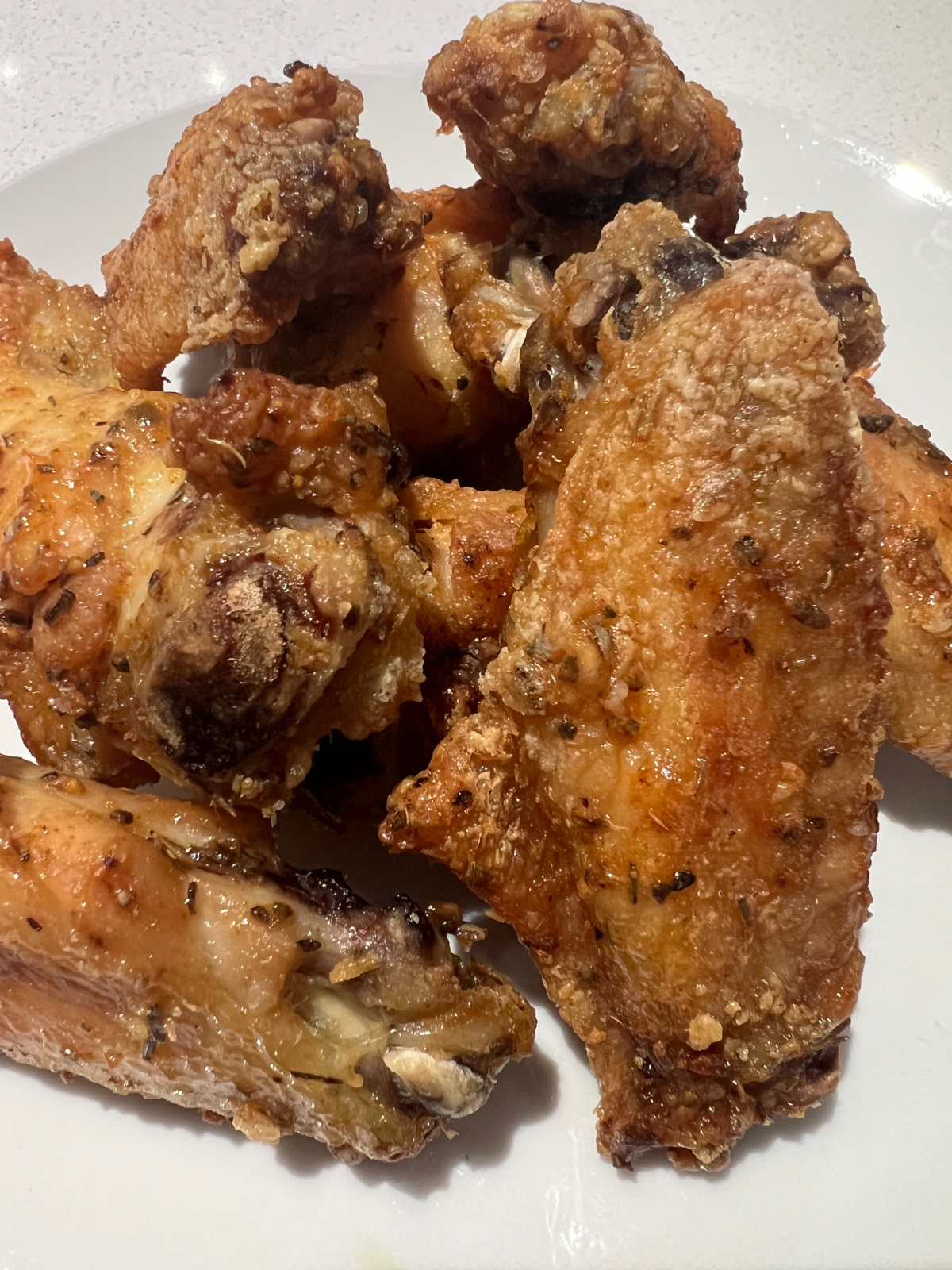

Here’s an easy dry rub chicken wing recipe you can make with spices you probably already have in the cabinet — smoked paprika, oregano, garlic powder, onion powder, mustard powder, and a little cayenne.
No marinade, no sauce, no special ingredients.
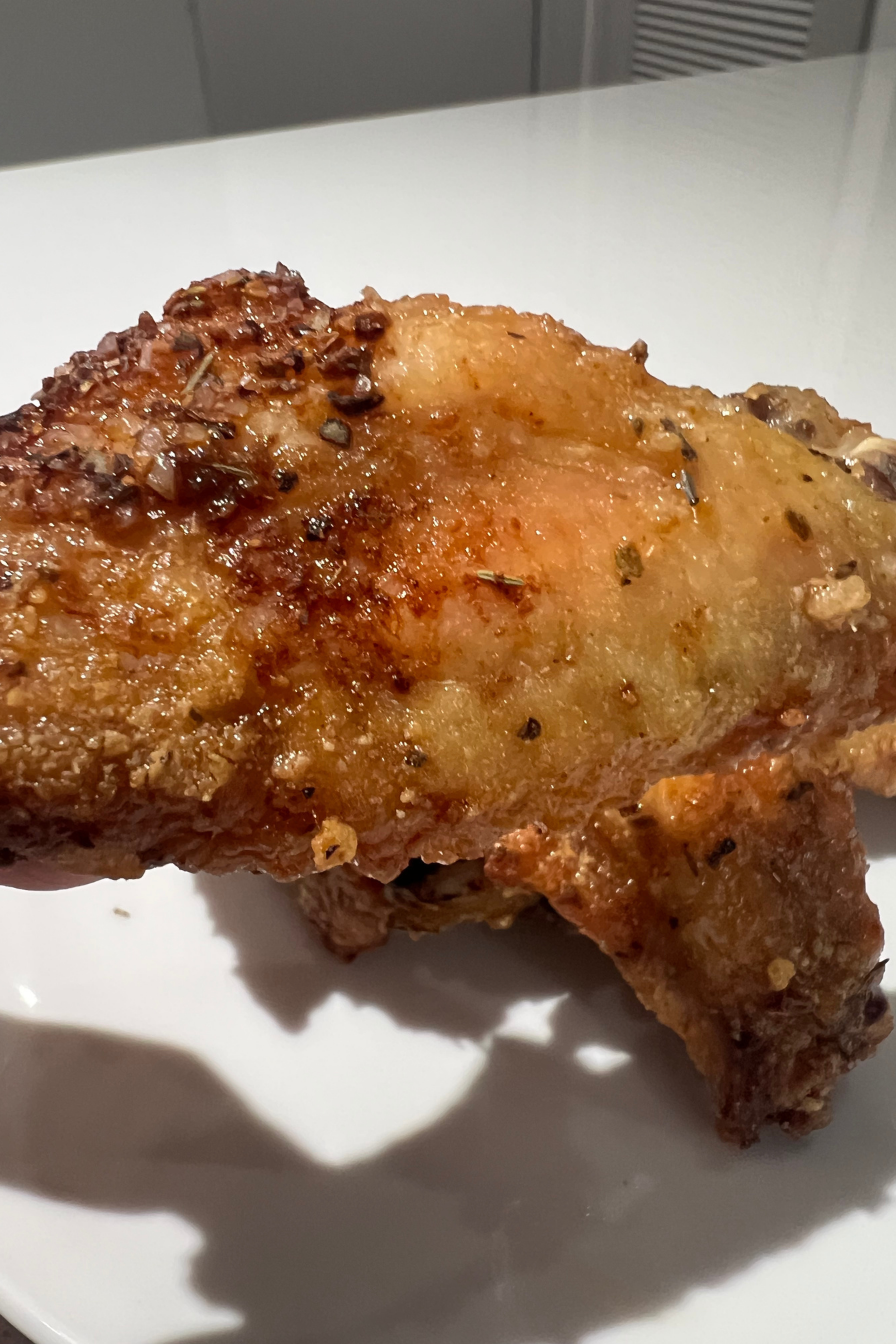
Just a rub, a coating, and a hot oven, and the wings come out with skin that blisters and crackles.
These are the wings I make for game day get-togethers, dinner parties, and any night when I want finger food that disappears before I’ve finished setting the table.
They’re the kind of appetizer that looks like it took more effort than it did, and they’re just as good as a main dish with a side of coleslaw or a baked potato.
The dry rub is the whole flavor — there’s no sauce to hide behind, which means the spice blend has to actually taste like something, and this one does.
The technique is what makes them crispy.
Two pounds of wings get tossed in a spice-and-starch mixture — cornstarch for the crispy coating, a little baking powder to help the skin blister, and the dry rub for flavor — then drizzled with oil and arranged on a wire rack over a foil-lined baking sheet.
The rack lifts the wings out of their rendered fat so they roast instead of fry, and the baking powder raises the pH of the skin so it browns and crisps faster.
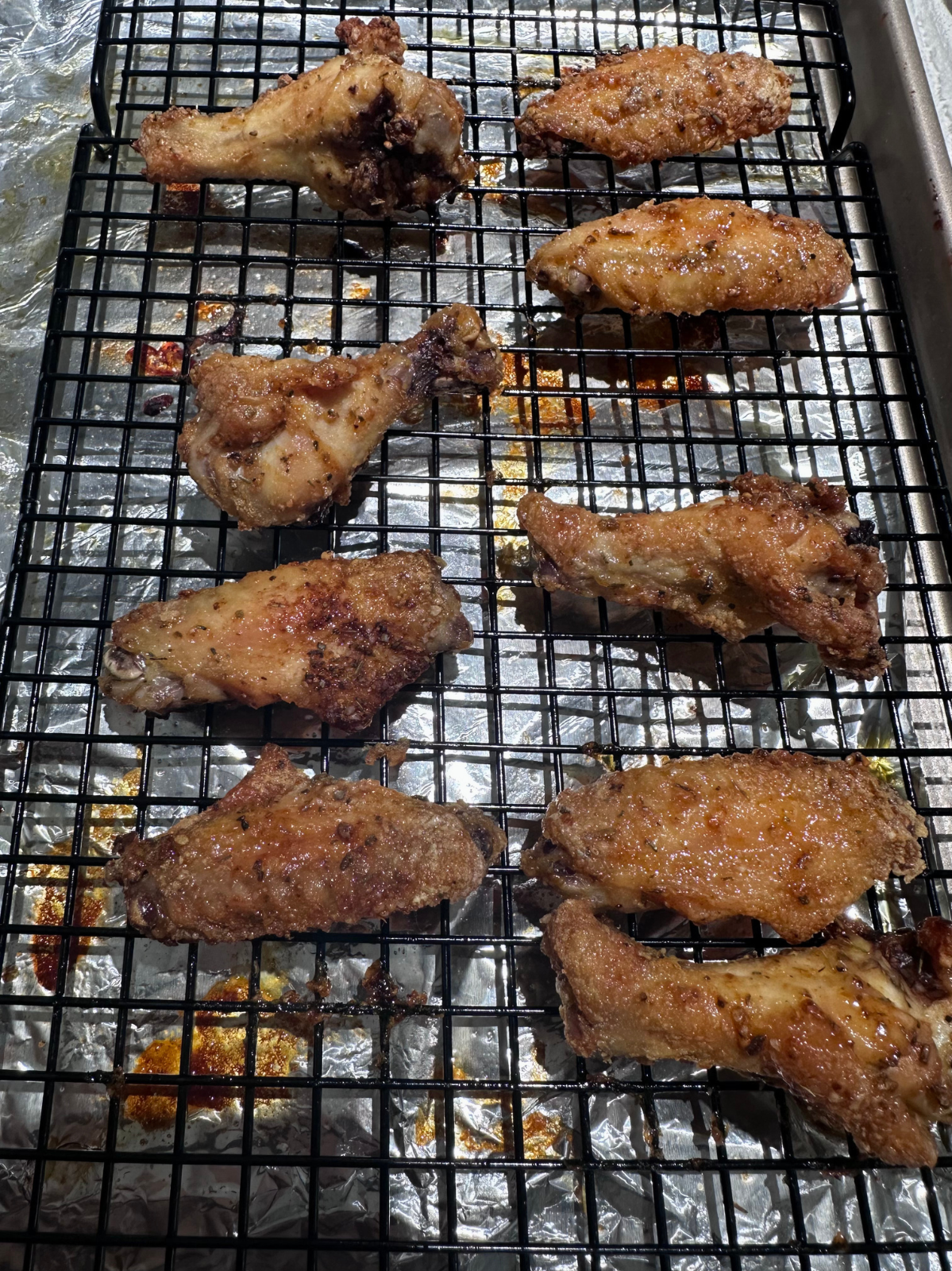
They bake at 425°F for about 40 to 45 minutes, flipped once at the 25-minute mark, until the skin is golden, blistered, and crunchy and the internal temperature reaches 165°F.
They’re crispy enough to eat plain, and they’re also the base for any sauce you want to toss them in — buffalo, honey garlic, BBQ, or a simple lemon-pepper butter.
The recipe makes 4 appetizer servings and takes about 10 minutes of prep and 40 to 45 minutes in the oven.
It’s a baked chicken wings recipe that earns its place in the rotation.
Why This Recipe Works
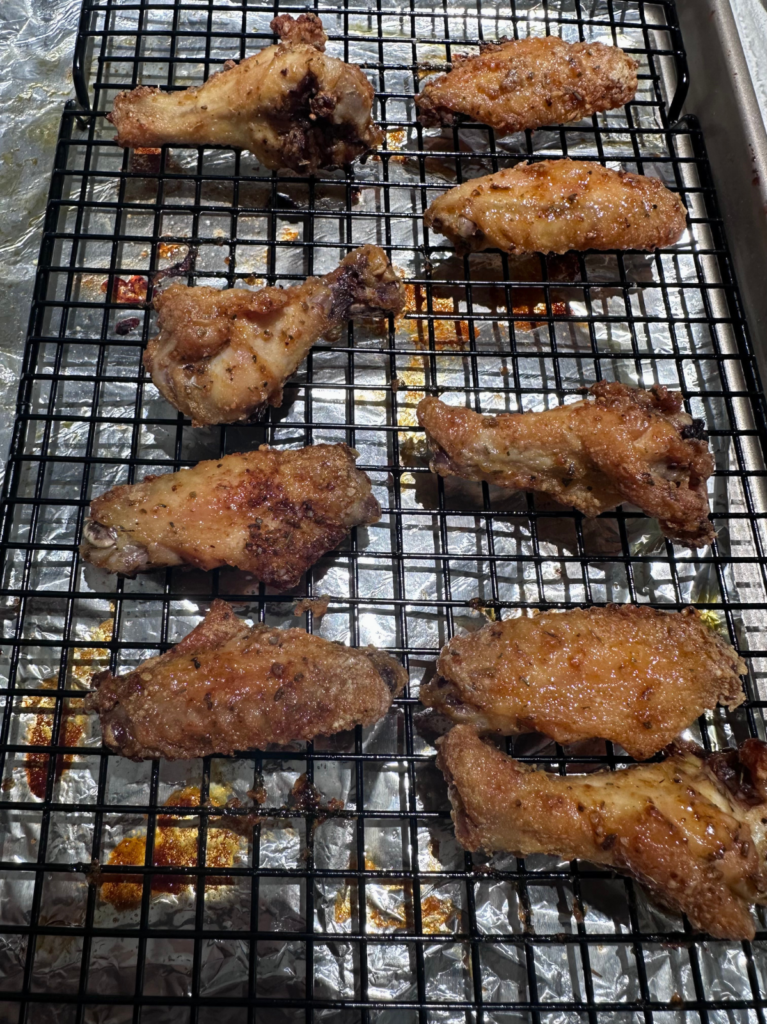
Baked chicken wings go wrong in three specific ways: soft, pale skin, wings that stick to the rack, and wings that taste bland. Here’s how this version solves each one.
1. Cornstarch and Baking Powder Together
Cornstarch absorbs the surface moisture of the wings and forms a thin coating that crisps up in the oven. Baking powder raises the pH of the chicken skin, which helps it blister and brown faster. Together they’re the difference between pale, rubbery wings and wings with a shatteringly crisp skin — without any frying.
2. Dredge the Wings in the Dry Rub First, Then Add the Oil
Tossing the wings in oil first and then adding the starch makes the starch clump. Tossing the dry spice-and-starch mixture on first, then drizzling the oil over the dusted wings, produces an even, fine coating that sticks to every piece. That order is the whole technique.
3. Use a Wire Rack and Leave Space Between the Wings
A wire rack lifts the wings out of their rendered fat, so they roast instead of frying in it. It also lets the hot air reach the bottom of the wings, which is what gives them a crispy texture on all sides. Leaving at least a half-inch between the wings is what lets that air circulate — crowded wings steam instead of crisping.
Ingredients That Matter
Chicken wings. Two pounds, split into flats and drumettes. Fresh or frozen (thawed) both work. Pat them completely dry before seasoning — wet wings won’t crisp.
Cornstarch. Two tablespoons. The coating that makes the wings crispy. Cornstarch absorbs surface moisture and forms a thin coating that crisps in the oven. Don’t substitute flour — flour produces a breadier texture that’s not what you want on wings.
Aluminum-free baking powder. Half a teaspoon. The ingredient that helps the skin blister and brown faster. Aluminum-free is important — aluminum-based baking powder can leave a metallic taste.
Kosher salt, garlic powder, onion powder, smoked paprika, dried oregano, mustard powder, cayenne pepper, and black pepper. The dry rub. Smoked paprika is the star — it gives the wings a smoky depth that plain paprika can’t. Mustard powder adds a savory background note that makes the rub taste more complex. The cayenne is adjustable — start with ½ teaspoon for mild heat, increase to 1 teaspoon for medium.
Avocado oil. One tablespoon. The oil that helps the seasoning and starch cling to the wings and helps them brown. Avocado oil has a high smoke point, which matters at 425°F.
Optional: fresh lemon zest. Grated over the wings right out of the oven, it cuts through the richness of the fat and brightens the whole dish. It’s optional, but if you have a lemon on hand it’s worth doing.
How to Make Crispy Baked Chicken Wings
(See the recipe card below — the steps are identical and the card is the single source of truth.)
Tips and Troubleshooting
The wings turned out pale and soft. They were wet when they went into the oven, or they were crowded on the rack. Pat them completely dry and arrange them in a single layer with at least a half-inch between each one.
The wings stuck to the rack. The rack wasn’t oiled, or the wings were wet. Spray or brush the rack with oil before arranging the wings.
The cornstarch coating is pasty. Too much cornstarch was used, or it wasn’t tossed evenly. Use the full 2 tablespoons but toss until every wing is dusted with a fine coating, and shake off the excess before arranging.
The wings are too salty. The rub has a full teaspoon of kosher salt, which is a lot for some palates. Reduce to ¾ teaspoon if you’re watching sodium.
The wings are undercooked in the center. They were too thick, or the oven ran cool. Use an instant-read thermometer — the thickest part should reach 165°F.
The wings are dry. They baked too long. Pull them at 165°F and check at the 35-minute mark instead of 40.
The wings aren’t crispy enough. The oven wasn’t hot enough, or the wings weren’t arranged with enough space. Preheat the oven fully to 425°F and use two racks if necessary.
The wings taste bland. The rub wasn’t generous enough, or the smoked paprika was skipped. Season generously and use the full amount of smoked paprika — it’s the flavor backbone.
Substitutions and Swaps
Chicken wings → drumsticks or chicken tenders. Same quantity. Drumsticks need 45 to 50 minutes; tenders need 20 to 25 minutes.
Cornstarch → potato starch or rice flour. Same quantity. Both produce a crispy coating.
Aluminum-free baking powder → skip it. The wings will be slightly less crispy and won’t blister as much, but they’ll still work. The baking powder is an upgrade, not a requirement.
Avocado oil → canola or vegetable oil. Same quantity. Any high-heat oil works.
Smoked paprika → regular paprika plus a pinch of liquid smoke. Same quantity of paprika plus ¼ teaspoon of liquid smoke mixed into the oil. Not identical, but close.
Mustard powder → skip it. The rub loses a little depth, but the wings are still good.
For a buffalo version: toss the baked wings in a mixture of ½ cup buffalo sauce and 2 tablespoons melted butter. Return to the oven for 5 minutes to set the sauce, then serve.
For a honey garlic version: toss the baked wings in a mixture of 3 tablespoons honey, 2 tablespoons soy sauce, 3 cloves minced garlic, and 1 teaspoon sesame oil.
For a lemon pepper version: toss the baked wings in a mixture of 2 tablespoons melted butter, the zest and juice of 1 lemon, 1 teaspoon black pepper, and a pinch of salt.
For boneless wings: use boneless skinless chicken thighs cut into 2-inch pieces, increase the cornstarch to ¼ cup, and bake 25 to 30 minutes.
Storage and Reheat
Refrigerate leftover wings in an airtight glass container for up to 4 days.
Reheat in an air fryer at 380°F for 4 to 5 minutes — this is the recommended method because it restores the original crunch. A 400°F oven on a wire rack for 8 to 10 minutes also works.
Avoid microwaving — the skin softens and the wings turn rubbery.
Freeze baked wings for up to 3 months. Thaw overnight in the fridge and reheat in the oven or air fryer.
Food safety: store leftovers within 2 hours of cooking. Reheat to 165°F before serving.
Crispy Baked Chicken Wings (Smoked Paprika and Herb Rub)
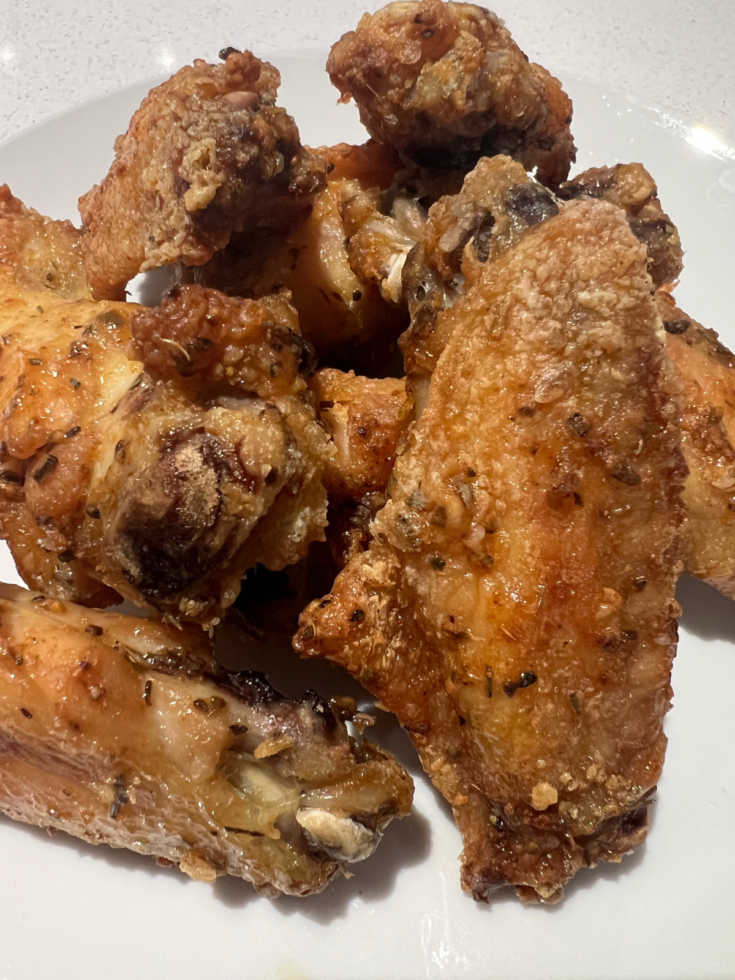
Extra-crispy oven-baked chicken wings tossed in a smoked paprika, oregano, and mustard dry rub, elevated on a wire rack for shatteringly crisp skin without deep frying.
Ingredients
Chicken Base
- 2 lbs chicken wings, split into flats and drumettes
Crispy Coating and Dry Rub
- 2 tablespoons cornstarch
- ½ teaspoon aluminum-free baking powder (helps the skin blister and crisp)
- 1 teaspoon kosher salt
- 1 teaspoon garlic powder
- 1 teaspoon onion powder
- 1 teaspoon smoked paprika
- ½ teaspoon dried oregano
- ½ teaspoon ground mustard powder
- ½ teaspoon cayenne pepper (adjust to taste)
- ½ teaspoon freshly cracked black pepper
Oil and Finish
- 1 tablespoon avocado oil
- Optional: fresh lemon zest or chopped fresh parsley, for finishing
Instructions
- Prep and Preheat: Preheat the oven to 425°F. Line a large rimmed baking sheet with aluminum foil and set an oven-safe wire rack on top. Lightly spray or brush the rack with oil.
- Dry the Wings Completely: Pat the chicken wings thoroughly dry with paper towels on all sides. Removing all surface moisture is essential for crisp skin.
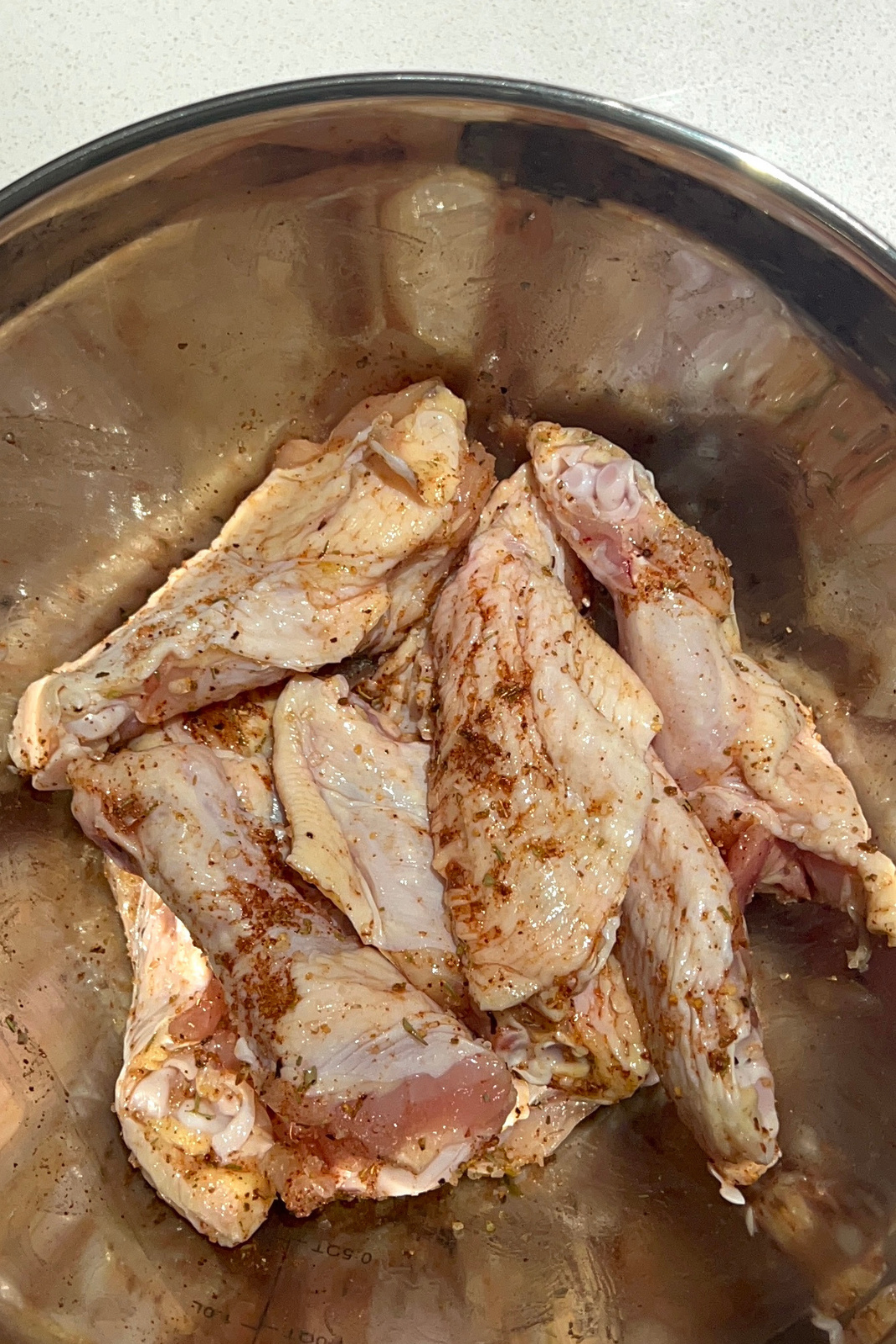
- Whisk the Seasoning and Starch: In a small bowl, whisk together the cornstarch, baking powder, kosher salt, garlic powder, onion powder, smoked paprika, dried oregano, mustard powder, cayenne pepper, and black pepper.
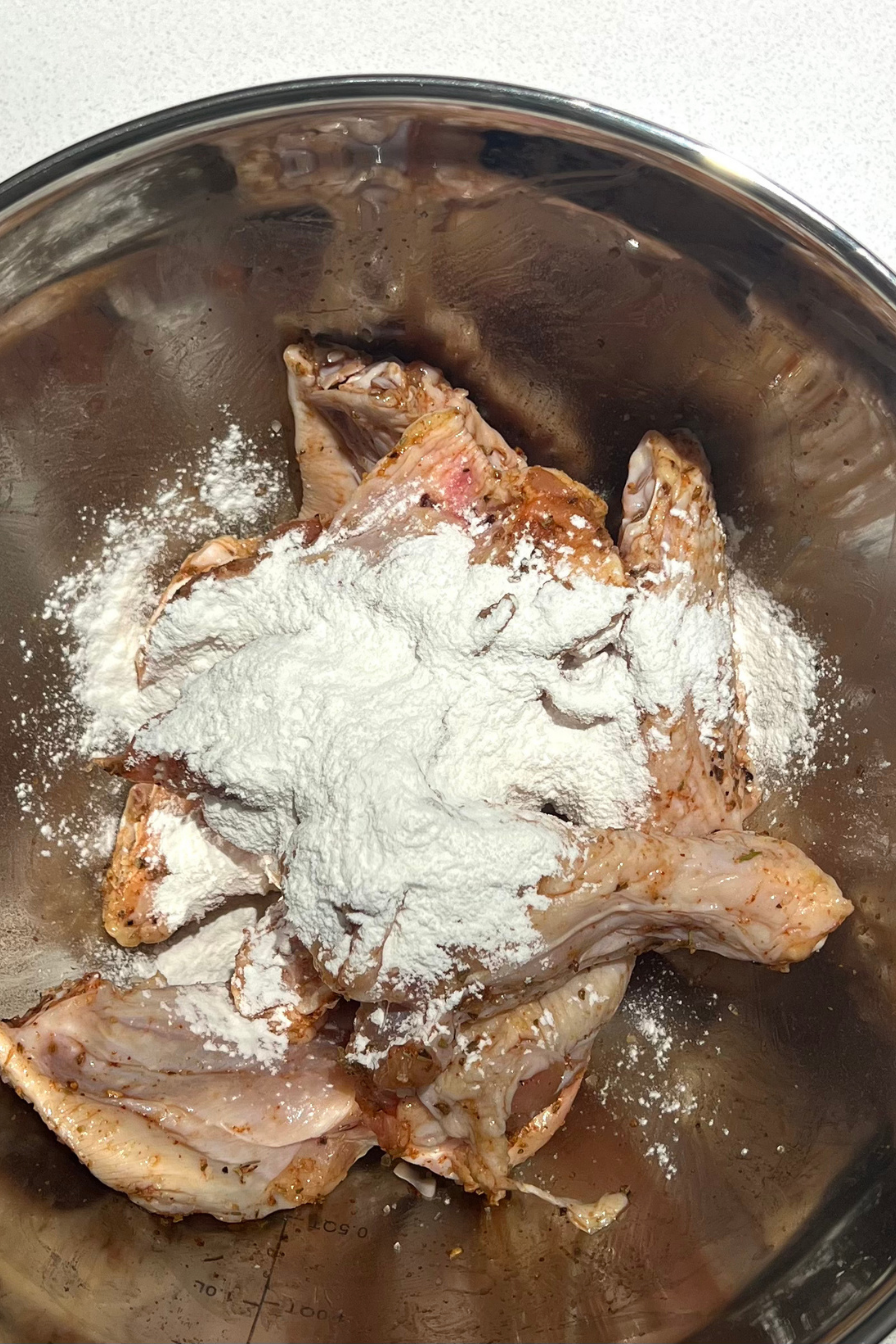
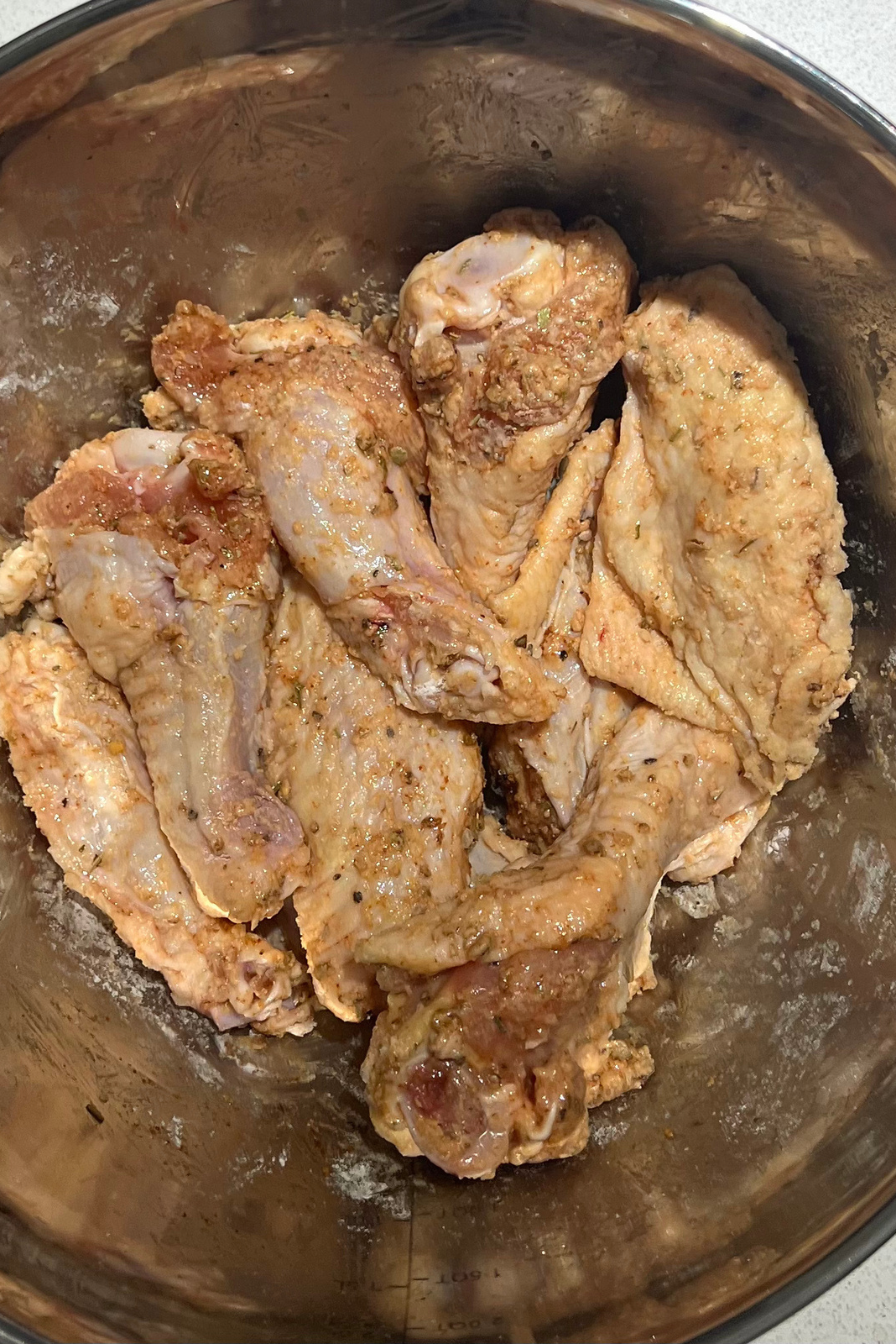
- Dredge First, Oil Second: Place the dry wings in a large bowl. Sprinkle the spice-and-starch mixture over the wings and toss until every wing is evenly dusted with a fine powder. Drizzle the avocado oil over the dusted wings and toss once more to coat. Tossing the starch on first prevents clumping.
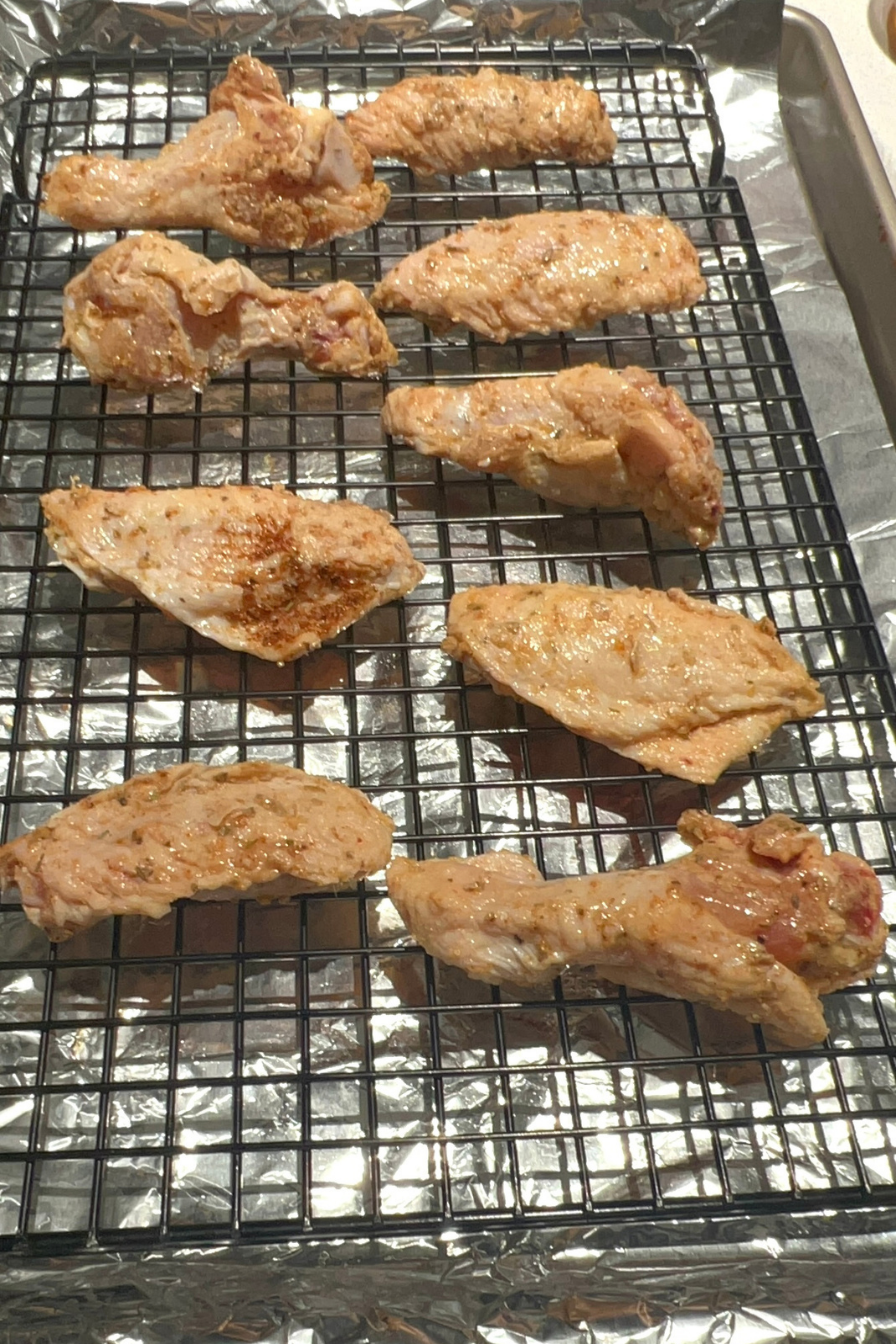
- Arrange on the Wire Rack: Lay the wings on the prepared rack in a single layer, leaving at least a half-inch of space between each piece. Don't overcrowd — hot air circulation is the key to crispy skin.
- Bake and Flip: Bake 25 minutes, then flip each wing with tongs. Bake another 15 to 20 minutes, until the skin is golden, blistered, and crunchy and the internal temperature reaches 165°F.
- Rest and Serve: Remove from the oven and let rest on the rack 3 minutes. Grate fresh lemon zest over the top if using, and serve immediately.
Notes
Notes
Estimated per serving: 205 calories · 16g protein · 2.5g carbs · 14g fat · 1g fiber · 880mg sodium
Nutrition varies by wing size. Verify against your labels. If you're watching sodium, reduce the kosher salt to ¾ teaspoon.
The baking powder helps the skin blister and brown faster — use aluminum-free, which doesn't leave a metallic taste.
Toss the dry spice-and-starch mixture on the wings first, then drizzle the oil over the dusted wings; that order produces an even, fine coating. The wire rack lifts the wings out of their rendered fat so they roast instead of fry, and the space between the wings lets the hot air circulate.
If you're watching sodium, reduce the kosher salt to ¾ teaspoon. Leftovers keep 4 days in the fridge; reheat in an air fryer at 380°F for 4 to 5 minutes to restore the crunch. Nutrition is an estimate and varies by wing size.
Frequently Asked Questions
How do I get crispy wings in the oven?
Three things: a cornstarch coating with a little baking powder, a wire rack, and space between the wings. Cornstarch and baking powder help the skin crisp and blister, the rack lifts the wings out of their fat, and the space lets hot air circulate. Bake at 425°F for 40 to 45 minutes, flipping once.
What does the baking powder do?
Baking powder raises the pH of the chicken skin, which helps it blister and brown faster. It’s a small amount — half a teaspoon for two pounds of wings — but it’s a real difference in crispness. Use aluminum-free baking powder; the aluminum-based kind can leave a metallic taste.
Can I skip the baking powder?
Yes. The wings will be slightly less crispy and won’t blister as much, but they’ll still work. The baking powder is an upgrade, not a requirement.
Can I use frozen wings?
Yes, but thaw them completely in the refrigerator first. Frozen wings release a lot of water when they thaw, and wet wings won’t crisp.
Why did my wings turn out soft?
They were wet when they went into the oven, or they were crowded on the rack. Pat them completely dry and arrange them in a single layer with space between each one.
Do I need a baking rack?
A wire rack is the single biggest upgrade for baked wings — it lifts them out of their rendered fat so they roast instead of frying in it, and it lets the hot air reach the bottom of the wings. Without a rack, the wings still work but the bottom won’t be as crispy.
How do I know when the wings are done?
Use an instant-read thermometer. The thickest part of the wing should reach 165°F. The skin should also be golden and blistered.
What sauces go with baked wings?
Buffalo, honey garlic, BBQ, lemon pepper, ranch, blue cheese, or a simple garlic butter. The wings are also good plain with a squeeze of lemon.
More Easy Chicken Recipes You’ll Love
Chicken Karaage — crispy Japanese fried chicken with a rice flour coating.
Pesto Chicken — seared thighs baked with pesto and mozzarella.
Closing
I’ve made these baked chicken wings more times than I can count, and the two things that changed everything for me were the baking powder and the order of the coating — dry rub first, then oil.
The first batch I made was pale and rubbery, and the baking powder and the dredging order fixed that completely.
If you make the buffalo version or toss them in honey garlic, let me know how they turn out in the comments.