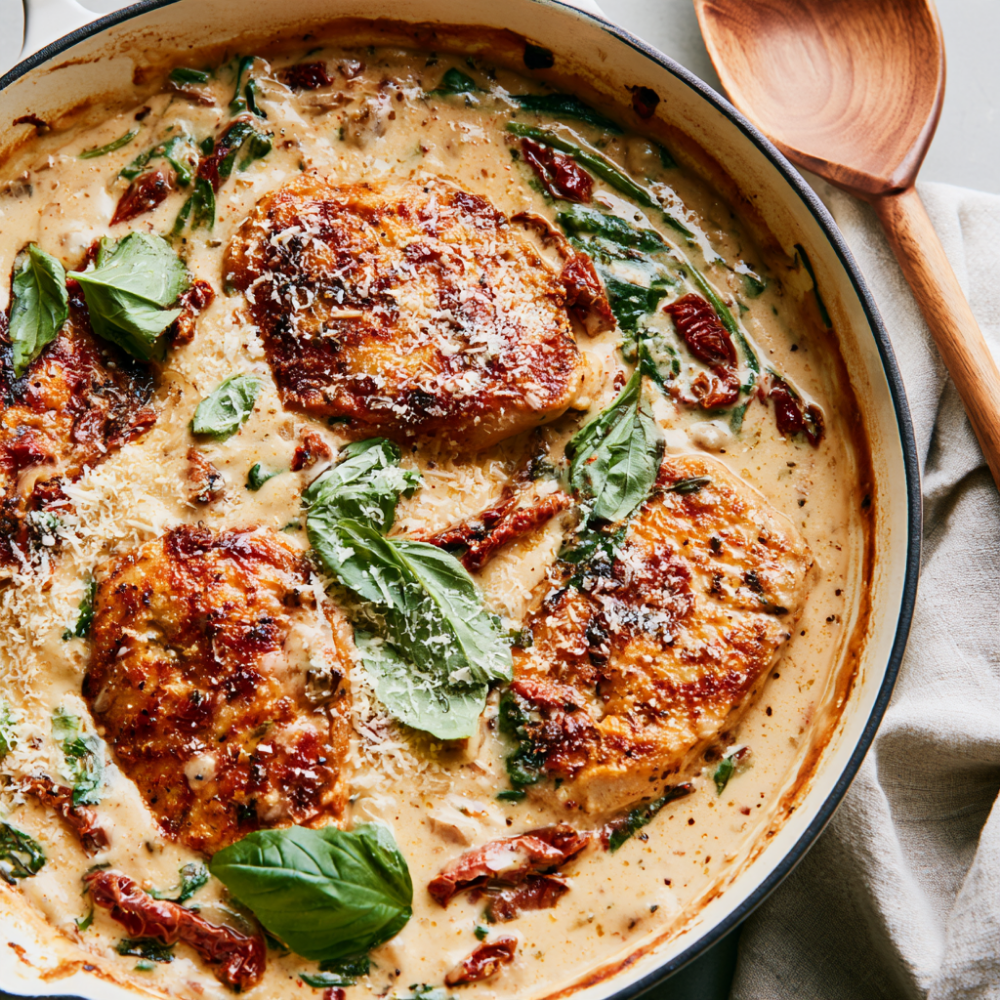

There is nothing more crave-worthy on a chilly autumn night than this creamy, savory Tuscan chicken.
It’s the kind of dinner that fills the kitchen with the smell of garlic and sun-dried tomatoes and makes everyone wander in asking what’s cooking: golden-seared cutlets, a velvety garlic cream sauce, wilted spinach, and a squeeze of lemon.
Effortless to make, family-friendly, and full of the season’s warmth in one bite.
It’s also high in protein — about 39–41 grams per serving — and comes together in 30 minutes in one skillet.
The trick is the creamy finish. Instead of relying on a pint of heavy cream, this version uses cream cheese and Parmesan whisked into the reduced pan sauce over gentle heat.
That’s what gives you the rich, velvety texture that clings to every bite without the heaviness. And a squeeze of lemon at the end keeps it from tasting too rich.
The best part is that it’s genuinely better on day two. Make it on a Sunday, and you’ve got dinner handled through Wednesday.
Two things decide whether this turns out silky and luxurious or grainy and broken, and neither is optional.
Pound the chicken to an even ½-inch thickness. Uneven cutlets cook unevenly — thin edges dry out while thick centers stay raw. Place each breast between two sheets of plastic wrap and pound from the center outward. This is the single most important step for tender chicken.
Add the cream cheese and Parmesan over low heat and never let the sauce boil. Both dairy products break when they hit high heat. Reduce the heat to low, add the cream cheese a few pieces at a time, and whisk until smooth. This is the difference between a silky, glossy sauce and one with tiny curds floating in it.
Everything else is forgiving, flexible, and takes about 15 minutes of actual work.
Why This Recipe Works
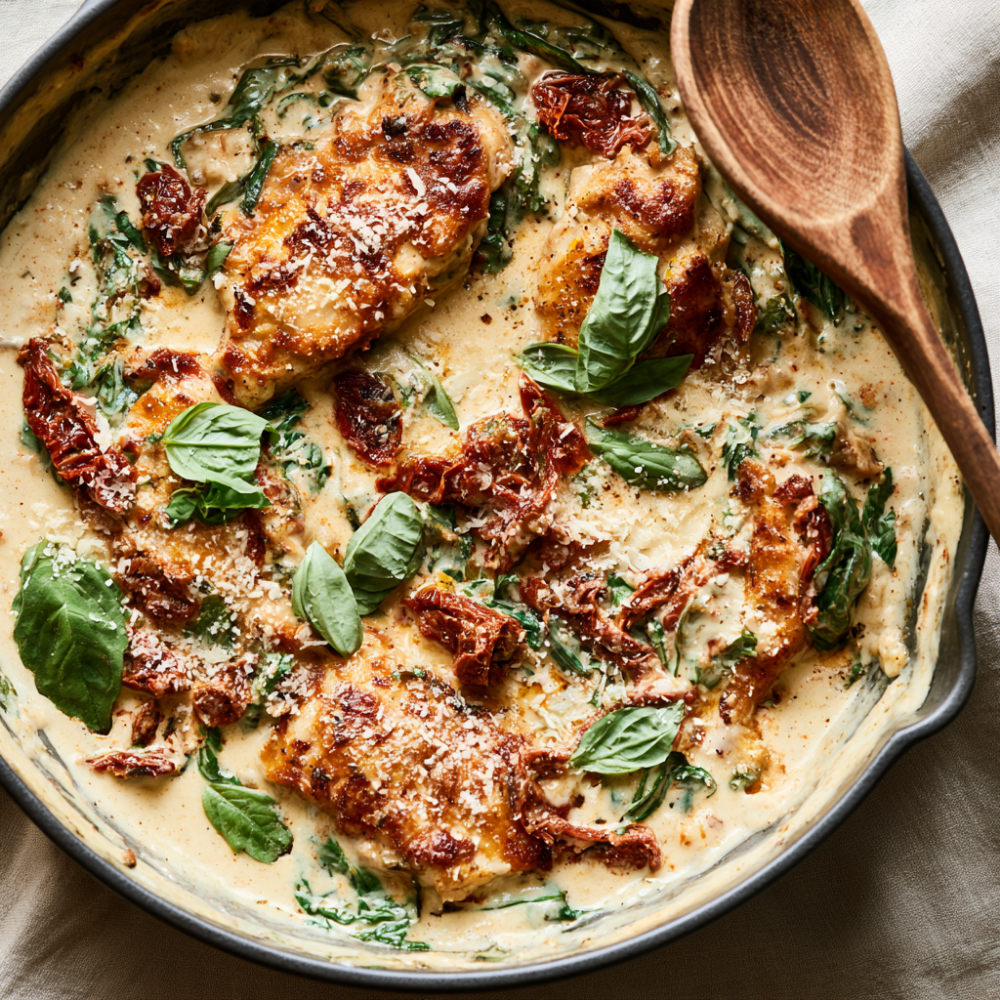
Chicken cutlets cook in minutes. Pounding chicken breasts to an even ½-inch thickness means each cutlet cooks in 3–4 minutes per side. That’s what makes the 30-minute claim real, not aspirational.
Searing builds the flavor base for the entire sauce. The deeply caramelized browned bits left in the skillet after the chicken comes out become the sauce’s foundation. Deglazing with white wine lifts every bit of that flavor into the pan sauce.
Tomato paste adds depth that sun-dried tomatoes alone can’t provide. A tablespoon of tomato paste cooked with the garlic for one minute gives the sauce a deeper, more savory backbone without making it taste like tomato sauce.
Sun-dried tomatoes bring concentrated sweetness and tang. They’re the signature ingredient in Tuscan chicken. Oil-packed sun-dried tomatoes are softer and more flavorful than dry-packed ones, and you can use the oil they’re packed in to sear the chicken.
Cream cheese is the reliable thickener. Full-fat cream cheese melts smoothly into hot sauces. It gives you a rich, velvety texture without the curdling risk that comes with Greek yogurt or heavy cream.
Parmesan adds salt, umami, and body. A half cup of freshly grated Parmesan melts into the sauce, adding savory depth that makes the dish taste as if it came from a restaurant kitchen.
Add the spinach before the dairy. This is the order that matters. Spinach releases water as it wilts, and if you add it after the cream cheese, that water thins the sauce. Adding it first gives the moisture time to cook off before you add the dairy.
Fresh lemon juice brightens the whole dish. A tablespoon at the end cuts through the richness of the cream cheese and Parmesan and keeps the sauce from tasting heavy.
It’s genuinely better on day two. The chicken absorbs the sauce overnight, and the flavors meld. Make it on Sunday, and you’ve got lunch or dinner handled through Wednesday.
Creamy Tuscan Chicken
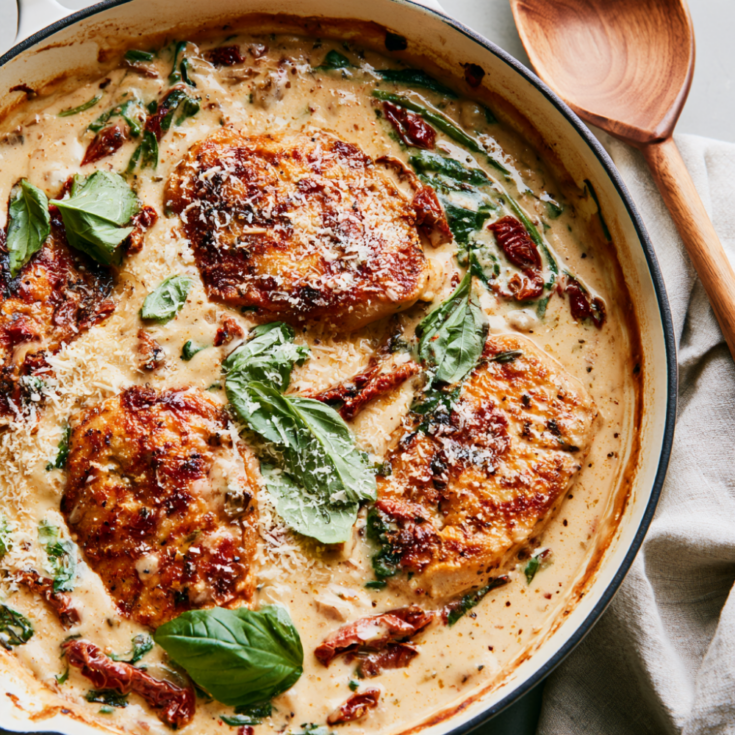
Golden-seared chicken cutlets simmered in a creamy garlic, sun-dried tomato, spinach, and Parmesan sauce made without heavy cream.
Cream cheese gives the sauce its silky texture, while Parmesan adds savory depth, and a little lemon keeps the finished dish from feeling too rich.
Everything comes together in one skillet for an easy weeknight dinner that's ready in about 30 minutes.
Ingredients
For the Chicken:
- 1¼ lbs boneless, skinless chicken breasts
- 1 tbsp olive oil (or oil from the sun-dried tomato jar)
- 1 tsp Italian seasoning
- ½ tsp garlic powder
- ¾ tsp kosher salt
- ½ tsp black pepper
For the Tuscan Sauce:
- 1 tbsp unsalted butter
- 1 tbsp reserved sun-dried tomato oil (or olive oil)
- 4 cloves garlic, finely minced
- ½ cup oil-packed sun-dried tomatoes, drained and chopped
- 1 tbsp tomato paste
- ½ cup dry white wine
- 1 cup low-sodium chicken broth, plus 2–4 tbsp more if needed
- ½ tsp red pepper flakes (optional)
- ¼ tsp black pepper
- 3 oz full-fat cream cheese, softened and cut into small cubes
- ½ cup freshly grated Parmesan cheese
- 5 oz fresh baby spinach
- 1 tbsp fresh lemon juice
- 2 tbsp chopped fresh basil or parsley, for serving
For Serving:
- Chickpea pasta, regular pasta, roasted spaghetti squash, steamed green beans, or crusty bread
- Extra grated Parmesan
- Lemon wedges
Instructions
1. Prepare the chicken. Place the chicken breasts between two sheets of plastic wrap or parchment paper. Pound them from the center outward until they are an even ½-inch thick. Cut each breast in half crosswise to make 4 evenly sized cutlets.
Pat the chicken very dry with paper towels. Season both sides with the Italian seasoning, garlic powder, salt, and black pepper.
2. Sear the chicken. Heat the olive oil in a large skillet over medium-high heat until shimmering. Add the chicken in a single layer. If the skillet is too small to comfortably hold all four pieces, cook them in two batches rather than crowding the pan.
Cook for about 3–4 minutes on the first side, then flip and cook another 2–4 minutes, depending on thickness.
The chicken should be deeply golden on the outside and cooked through in the center. The thickest part should reach 165°F on an instant-read thermometer. Transfer it to a clean plate when done and loosely cover with foil.
Thickness varies, so use the thickest cutlet and a thermometer as your guide rather than relying strictly on the clock.
3. Build the Tuscan base. Reduce the heat to medium. Add the butter and the reserved sun-dried tomato oil to the same skillet.
Use 1 tablespoon of the oil from the sun-dried tomato jar to sear the chicken. If the pan looks dry before building the sauce, add another tablespoon of olive oil or butter.
Once the butter melts, add the garlic and chopped sun-dried tomatoes. Cook for about 30–45 seconds, stirring constantly, until the garlic is fragrant.
Add the tomato paste and cook for about 1 minute, stirring, until it darkens slightly.
4. Deglaze the skillet. Pour in the white wine and immediately scrape the browned bits from the bottom of the skillet. Simmer for 2–3 minutes, until the wine has reduced noticeably and the strong alcohol smell has cooked off.
Pour in the chicken broth and add the red pepper flakes if using and the black pepper. Simmer for about 2 minutes.
The liquid should still look fairly loose. Don't reduce it until thick at this stage, because the cream cheese and Parmesan will thicken the sauce considerably.
5. Add the spinach. Add the spinach and stir until just wilted, about 1–2 minutes. If the spinach releases a lot of moisture, let the sauce simmer for another 30–60 seconds.
6. Make the creamy sauce. Reduce the heat to low. Add the softened cream cheese a few pieces at a time, whisking constantly until completely melted and smooth. Sprinkle in the Parmesan a little at a time, whisking until incorporated.
Do not let the sauce boil after adding the cheese. Gentle heat is enough.
If the sauce becomes thicker than you want, add 1 tablespoon of chicken broth at a time until it reaches a silky, spoonable consistency. The finished sauce should coat the chicken rather than sit in a stiff mound on top.
7. Balance the flavor. Stir in the lemon juice. Taste the sauce before adding more salt. The Parmesan, sun-dried tomatoes, and chicken broth already add plenty of seasoning.
If the sauce tastes heavy, add another teaspoon of lemon juice. If it tastes flat, add a small pinch of salt.
8. Return the chicken. Return the chicken and any accumulated juices from the plate to the skillet. Spoon the sauce over the chicken and let it warm gently for about 1–2 minutes.
Do not simmer the chicken for much longer. The cutlets are thin and can become dry if left in the sauce too long.
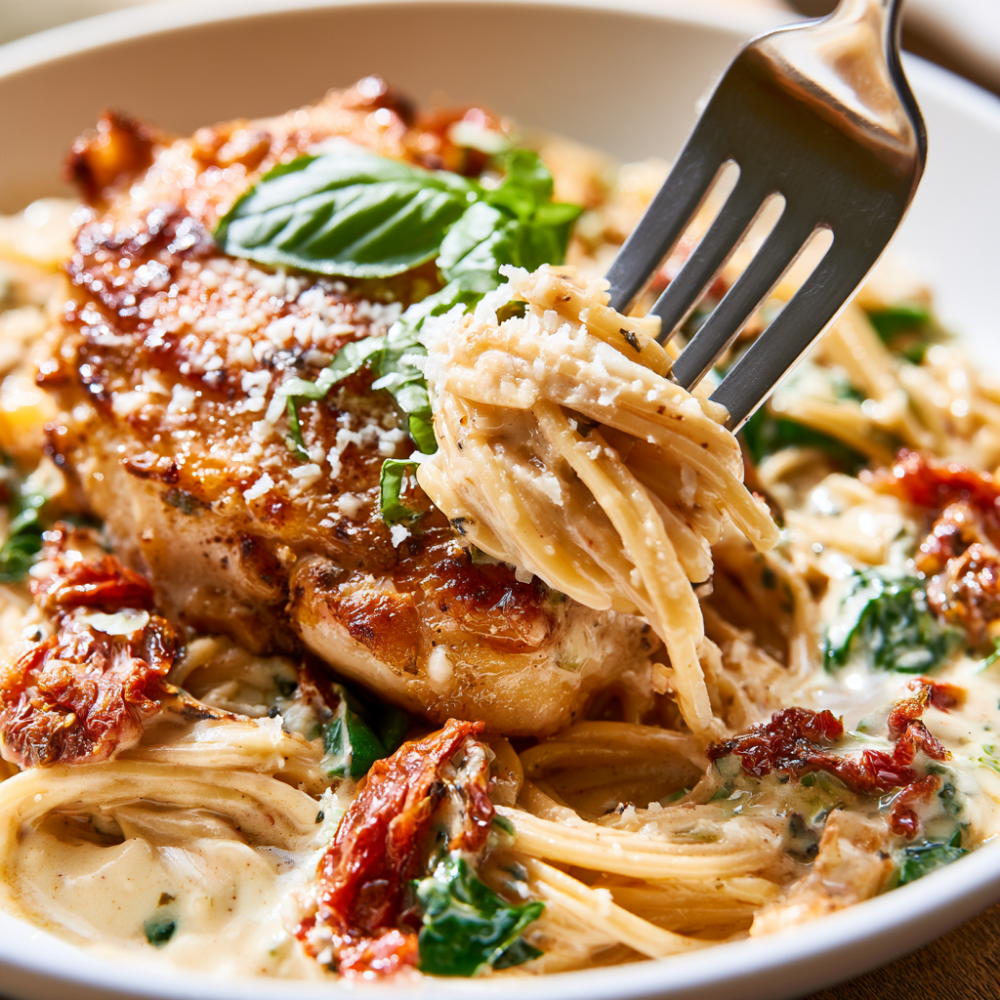
9. Serve. Scatter the fresh basil or parsley over the top. Finish with additional Parmesan and lemon wedges. Serve immediately with chickpea pasta, regular pasta, roasted spaghetti squash, steamed green beans, or crusty bread.
If serving over pasta: A splash of starchy pasta water is a better thinning agent than plain broth. It helps the sauce cling to the noodles instead of sliding off.
Notes
Protein per Serving: About 39–41g
Nutrition note: Protein and calories vary by brand and exact ingredients. A reasonable estimate is about 500–530 calories and 39–41g protein per serving before pasta, bread, or other sides. Calculate with your specific products for the most accurate numbers.
Make-ahead: Refrigerate the finished chicken in an airtight container for up to 4 days. For the best texture, reheat gently in a skillet over low heat with 1–2 tablespoons of chicken broth. Stir the sauce occasionally and stop heating as soon as the chicken is hot. Reheat pasta or other sides separately.
Freezing: This recipe is best refrigerated rather than frozen because the cream cheese and Parmesan sauce can separate somewhat after freezing and thawing. If you freeze leftovers, thaw them overnight in the refrigerator, then reheat very gently in a skillet with a splash of chicken broth. Whisk the sauce as it warms to help bring it back together.
Troubleshooting
The sauce looks grainy or separated.
Remove the skillet from the heat and whisk in 1 tablespoon of warm broth at a time until the sauce comes back together. The sauce will still taste good — it just may not look as glossy. Next time, make sure the cream cheese is at room temperature and the heat is on low before adding it.
The sauce is too thick.
Add chicken broth 1 tablespoon at a time, whisking after each addition, until it reaches a silky, spoonable consistency.
The sauce is too thin.
Simmer gently over low heat for 1–2 minutes to reduce, or add an extra tablespoon of Parmesan. Don’t boil — high heat will break the dairy.
The chicken turned out dry.
You likely overcooked it. Use an instant-read thermometer and pull the chicken at 165°F. Also, don’t let it simmer in the sauce for more than 1–2 minutes after returning it to the skillet.
The sauce tastes flat.
Add a pinch of salt, a squeeze of lemon juice, or both. Sun-dried tomatoes and Parmesan vary widely in saltiness so the sauce may need adjustment at the end.
Tips for the Best Creamy Tuscan Chicken
- Use evenly pounded chicken cutlets. This is the easiest way to prevent one end from becoming dry while the center is still cooking.
- Pat the chicken dry before seasoning. Surface moisture prevents good browning.
- Don’t crowd the skillet. Cook in batches if necessary.
- Use freshly grated Parmesan. Pre-shredded Parmesan doesn’t melt into the sauce as smoothly.
- Soften the cream cheese before cooking. Cold chunks take longer to melt and are more likely to leave small lumps.
- Add the spinach before the dairy. This gives the spinach time to wilt and release its water, which cooks off before you add the cream cheese.
- Don’t boil the sauce after adding the cream cheese and Parmesan. Gentle heat keeps the sauce smooth.
- Keep the sauce slightly looser than you think you need before adding the chicken. It thickens as it cools.
- Taste before adding extra salt. Sun-dried tomatoes and Parmesan can vary considerably in saltiness.
- The lemon juice is important. It doesn’t make the sauce taste lemony; it balances the cheese’s richness.
- For the best flavor, use oil-packed sun-dried tomatoes rather than dry-packed tomatoes.
- If using very large chicken breasts, divide them into more than two pieces before pounding, so the finished cutlets aren’t oversized.
- If serving over pasta, save a splash of pasta water before draining. It’s the best way to loosen the sauce.
Easy Variations
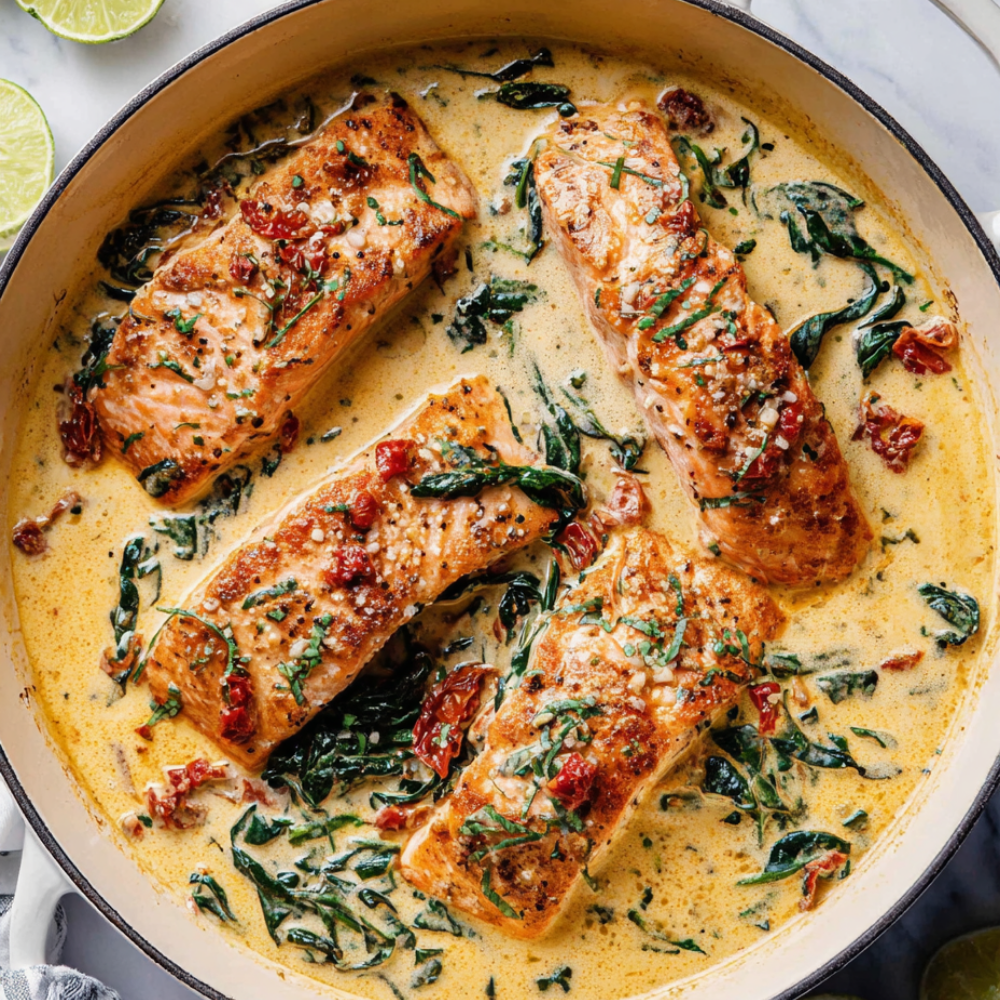
Creamy Baked Chicken (Baked Tuscan Chicken). Sear the chicken on the stovetop, transfer it to a baking dish, pour the finished sauce over, and bake at 375°F for 15–20 minutes—about 39–41g protein per serving.
How To Bake Tuscan Chicken. Same as above, but skip the stovetop sear and bake the seasoned chicken at 400°F for 20–25 minutes, then spoon the sauce over the top—about 39–41g protein per serving.
Tuscan Chicken With Coconut Milk (Dairy-Free). Skip the cream cheese and Parmesan. Use ½ cup of full-fat coconut milk and 2 tablespoons of nutritional yeast instead. About 37–40g protein per serving.
How To Make Tuscan Lemon Chicken. Add 2 tablespoons fresh lemon juice and 1 teaspoon lemon zest to the sauce with the broth. Skip the white wine—about 39–41g protein per serving.
Tuscan Garlic Chicken. Double the garlic to 8 cloves and add 1 teaspoon of garlic powder to the sauce—about 39–41g protein per serving.
Tuscan Chicken Skillet (With Artichokes). Add 1 cup of quartered marinated artichoke hearts to the skillet along with the sun-dried tomatoes—about 39–41g protein per serving.
Healthy Tuscan Chicken (Lower Fat). Use light cream cheese and an extra ¼ cup of Parmesan for body. Skip the butter and use only the sun-dried tomato oil—about 39–41g protein per serving.
What Goes With Creamy Tuscan Chicken
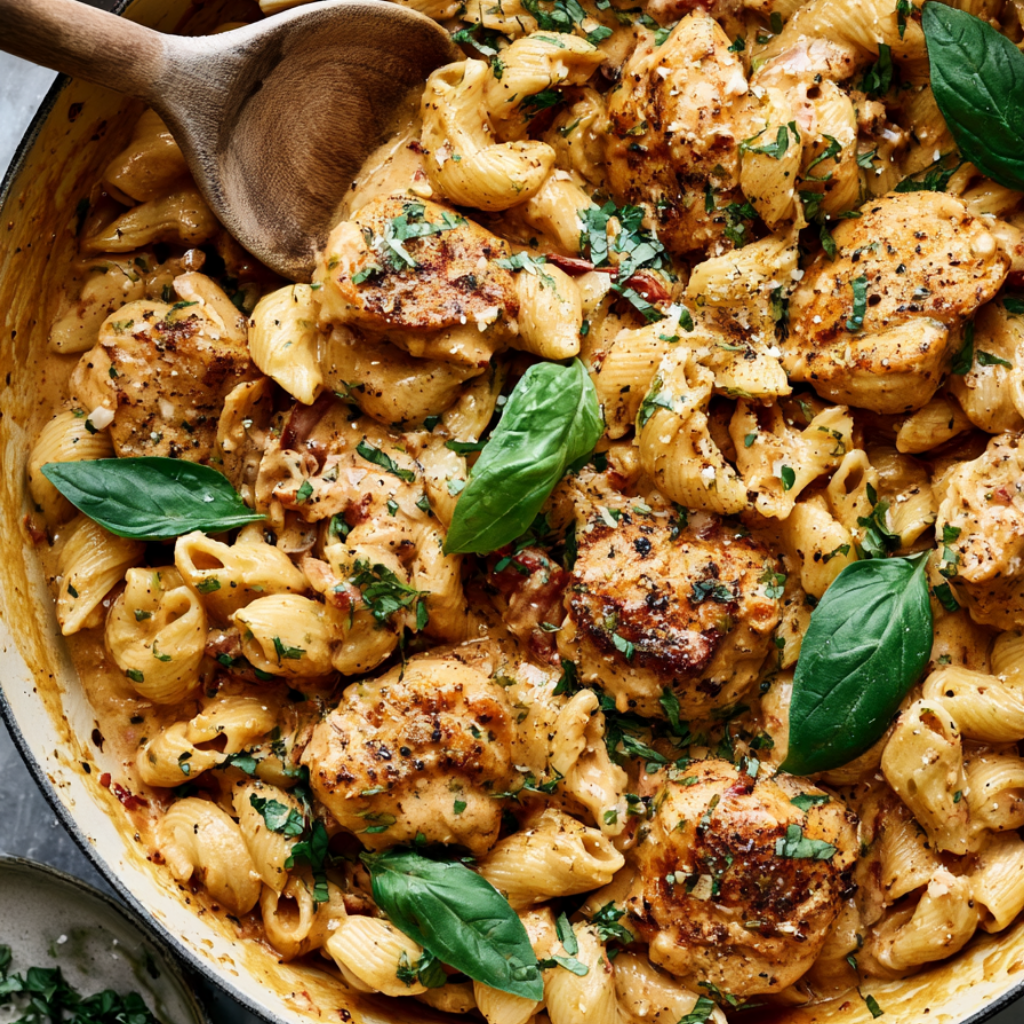
This dish is a complete meal on its own, but it also pairs well with:
- Chickpea pasta, linguine, or fettuccine. The sauce clings beautifully to the pasta.
- Roasted spaghetti squash. A lower-carb option that soaks up the sauce.
- Steamed green beans or roasted broccolini. A simple green side that balances the richness.
- Creamy mashed potatoes or polenta. For a comfort-food version.
- Crusty Italian bread. For soaking up every drop of sauce.
- A simple arugula salad with lemon vinaigrette. A bright, fresh counterpoint.
Storage and Food Safety
Refrigerator: Store the chicken and sauce together in an airtight container for up to 4 days. Reheat gently on the stovetop over low heat with a splash of broth, or in the microwave at 70% power.
Freezer: The chicken and sauce freeze for up to 3 months, but the sauce may separate after thawing. Cool completely, then transfer to a freezer-safe container. Thaw overnight in the refrigerator, then reheat gently in a skillet with a splash of chicken broth, whisking as it warms.
Reheating: Reheat gently on the stovetop over low heat or in the microwave at 70% power. High heat will make the sauce split.
Food safety: Cook chicken to 165°F. Refrigerate leftovers within 2 hours. Reheat leftovers to 165°F throughout.
Frequently Asked Questions
How much protein is in each serving?
About 39–41 grams per serving. Most of it comes from the chicken (about 35–37g per serving), with the rest from the cream cheese and Parmesan.
What is creamy Tuscan chicken?
Creamy Tuscan chicken is an Italian-American dish of seared chicken cutlets in a creamy garlic sauce with sun-dried tomatoes and spinach. It’s typically served over pasta, mashed potatoes, or polenta.
Can I use chicken thighs instead of breasts?
Yes. Boneless, skinless thighs work well and are more forgiving. Sear them for 5–6 minutes per side and cook to 165°F. About 37–40g protein per serving.
Can I make this without cream cheese?
Yes. Use ½ cup of heavy cream instead and add it over low heat after the broth reduces. The sauce will be slightly thinner but still rich and delicious—about 39–41g protein per serving.
Can I make this dairy-free?
Yes. Skip the cream cheese and Parmesan. Use ½ cup of full-fat coconut milk and 2 tablespoons of nutritional yeast instead. About 37–40g protein per serving.
Why did my sauce turn out grainy?
The cream cheese was cold when you added it, or the heat was too high. Soften the cream cheese first and reduce the heat to low before adding it. If the sauce is already grainy, remove it from the heat and whisk in a tablespoon of warm broth at a time until it comes back together.
Why did my sauce turn out thin?
You didn’t reduce the broth enough before adding the dairy, or the spinach released too much water. Simmer the broth for an extra 2–3 minutes before adding the cream cheese, and add the spinach before the dairy so its moisture cooks off.
Can I add white wine?
Yes, and it’s recommended for depth. If you’d rather skip it, substitute an extra ½ cup of chicken broth plus 1 tablespoon of lemon juice.
Can I make this ahead of time?
Yes. Make the chicken and sauce up to 2 days ahead and refrigerate. Reheat gently on the stovetop. The flavor actually improves overnight.
Is this recipe gluten-free?
Yes, as written, but check your broth, cream cheese, and any packaged ingredients to confirm.
Can I double this recipe?
Yes. Use a larger skillet or cook the chicken in two batches. Double all sauce ingredients, but use a 14-inch skillet or a wide Dutch oven so the sauce reduces properly.
What goes with creamy Tuscan chicken?
Chickpea pasta, roasted spaghetti squash, steamed green beans, mashed potatoes, polenta, or crusty bread.
More High-Protein Italian Recipes You’ll Love
- Chicken Piccata: 30-Minute Lighter Lemon Caper Chicken
- Creamy Butternut Squash & Turkey Sausage Pasta Bake
- One-Pot Creamy Chicken Pot Pie Pasta
- Crockpot Chicken and Potatoes: The Garlic Parmesan Dump-and-Go Dinner
Conclusion
This creamy Tuscan chicken is the Italian bistro dinner that doesn’t require a bistro kitchen.
Golden-seared chicken cutlets in a rich garlic, sun-dried tomato, and spinach sauce made with cream cheese and Parmesan instead of heavy cream.
About 39–41 grams of protein per serving, and it comes together in 30 minutes in one skillet.
The keys are simple: pound the chicken to an even thickness, sear it in a single layer without crowding, don’t let the garlic brown, cook the tomato paste for a full minute, deglaze the pan thoroughly, add the spinach before the dairy, reduce the heat to low before adding the cream cheese, whisk the Parmesan in gradually, and finish with lemon juice.
Do that, and you’ll have a Tuscan chicken that tastes like something you’d order at a nice Italian restaurant.
Make it on a weeknight when you want something that feels special but comes together in half an hour. Or make it on Sunday and portion it into containers for the week. It’s even better on day two.