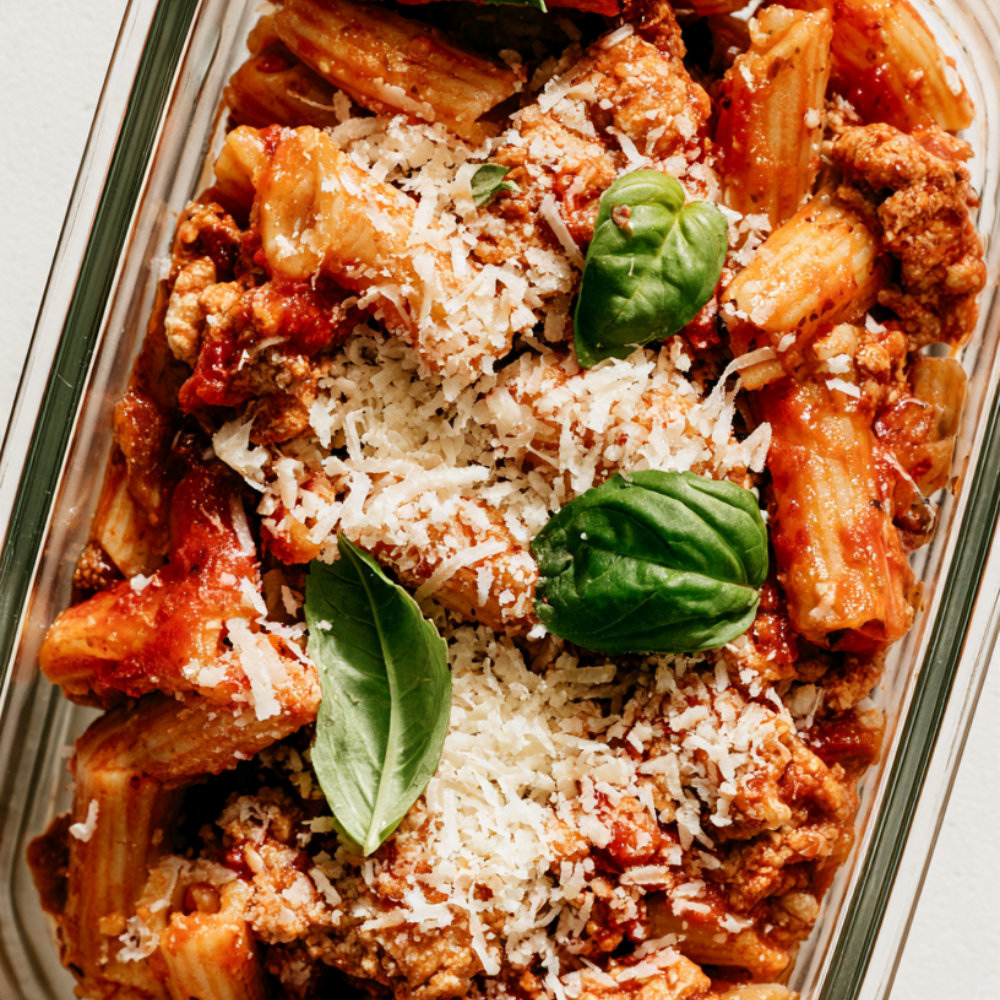

Whether you want something warm and satisfying on a Wednesday night but don’t want to feel sluggish an hour later, or you’re meal prepping on Sunday and need a lunch that’s still good by Friday — this is the one.
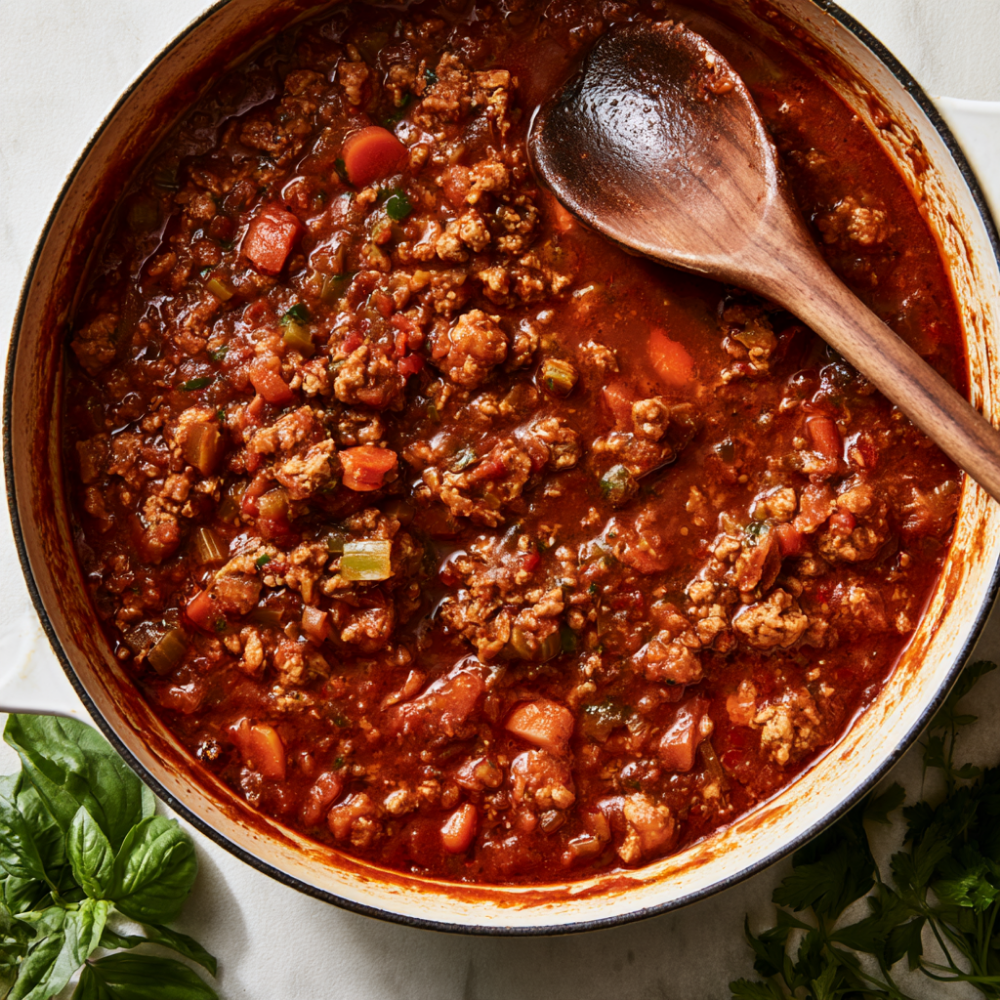
It’s a rich, slow-simmered turkey bolognese with hidden carrots, celery, and zucchini, tossed with high-protein chickpea pasta and portioned into containers. Six bowls, about 38–42 grams of protein each.
It’s comfort food that happens to be healthy, and it’s built from pantry staples and a couple pounds of ground turkey, so it doesn’t wreck your grocery budget either.
The pasta is the trick. Chickpea pasta holds its structure far better than regular pasta in the refrigerator — it doesn’t turn to mush, and it doesn’t absorb so much sauce that it dries out.
If you can’t find chickpea pasta, whole wheat pasta is the next best option.
The best part is that tomato-based pasta dishes actually improve with time. The sauce thickens, the flavors meld, and by day three you’ve got something that tastes as it came out of a restaurant kitchen, not a plastic container. Make it once on Sunday, and you’ve got lunch or dinner handled through Thursday.
Three things decide whether this holds up all week, and none of them are optional.
Cook the pasta about 2 minutes under al dente. Chickpea pasta softens noticeably in the refrigerator. Undercooking it gives you margin. Fully cooked pasta turns to mush by day two.
Toss the pasta with sauce immediately after draining. Don’t let it sit naked in the colander. The sauce coats every piece and prevents sticking.
Save some sauce back. Don’t use every drop of bolognese on the pasta. Keep a cup or so in a separate container so you can loosen day-three or day-four bowls with sauce instead of water.
Everything else is forgiving, flexible, and takes about 40 minutes of hands-on work.
Why This Recipe Works
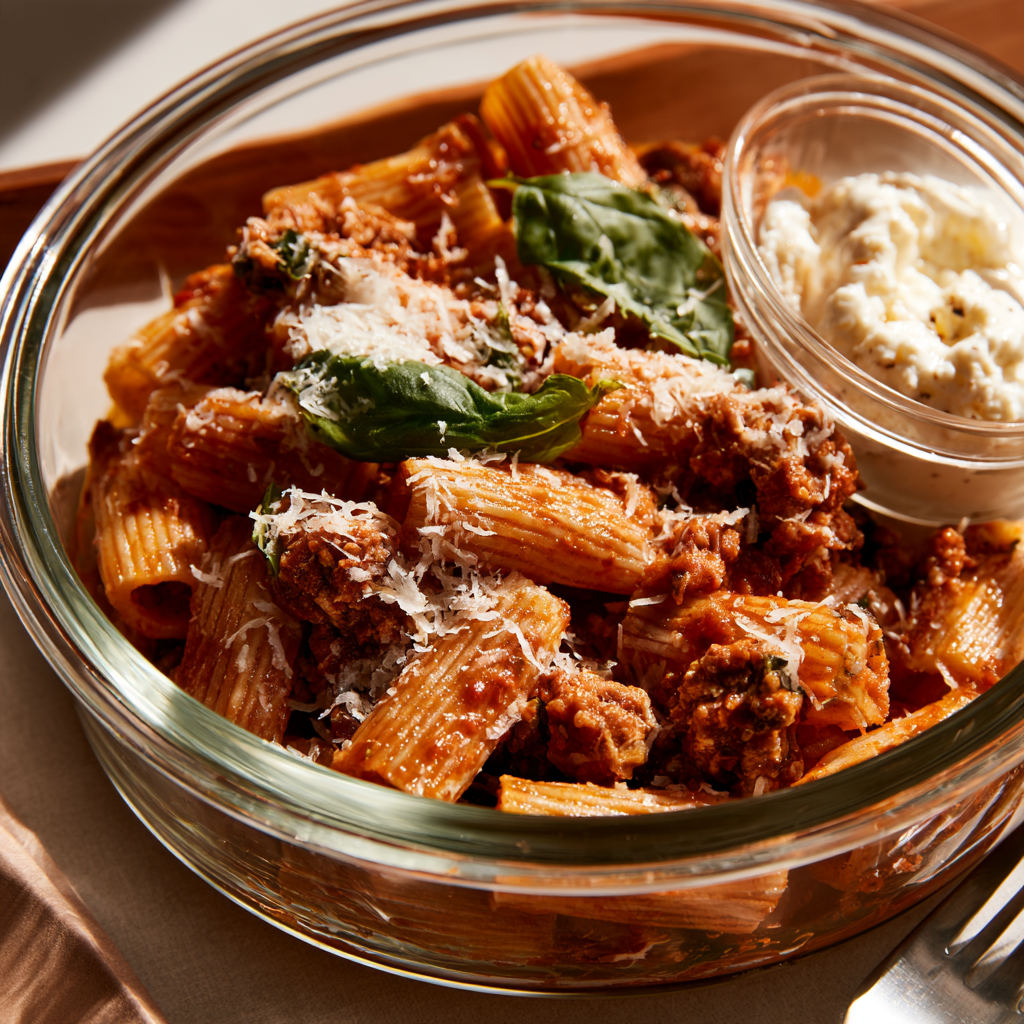
Lean ground turkey keeps the fat low without losing the richness. Bolognese is traditionally made with beef and pork, but 93% lean ground turkey has enough fat to taste savory while keeping the macros in check.
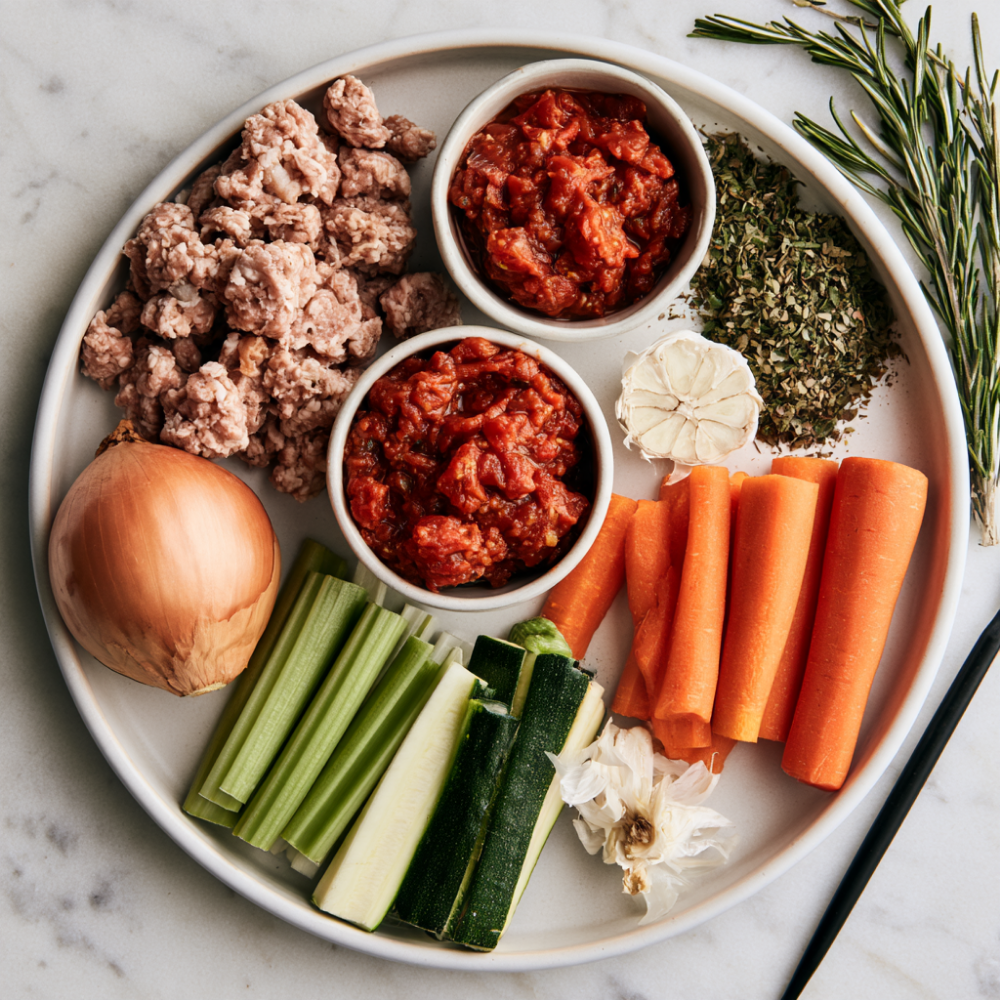
The hidden vegetables add body and nutrition. Finely diced carrots and celery and grated zucchini cook down into the sauce and disappear. They add sweetness, moisture, and fiber without anyone noticing.
Browning the turkey in two batches builds real flavor. Crowding the pot steams the meat. Two batches means every piece gets direct contact with the pan and develops browned edges.
Toasting the tomato paste is what makes it taste slow-simmered. Two to three minutes of stirring until it darkens and sticks to the pot is the difference between a sauce that tastes like canned tomatoes and one that tastes like it cooked all day.
Chickpea pasta is a meal-prep hero. Regular pasta absorbs sauce and water in the refrigerator and turns soft. Chickpea pasta holds its shape and texture for days, and it adds 10–14 grams of protein per serving.
Tomato-based sauces improve overnight. Unlike creamy pasta dishes, which can break or separate, tomato-based sauces meld and deepen in the refrigerator. Day three is genuinely better than day one.
It’s a complete meal in one container. It has protein from the turkey and pasta, vegetables built into the sauce, and Parmesan on top. You don’t need to pack anything else.
Healthy Turkey Bolognese Meal-Prep Pasta Bowls
A rich, savory turkey bolognese loaded with finely chopped carrots, celery, zucchini, garlic, and tomatoes, tossed with high-protein chickpea pasta and portioned into six easy meal-prep bowls.
The sauce is deeply flavorful, the vegetables blend naturally into the bolognese, and the pasta holds up well for several days in the refrigerator.
Reheating
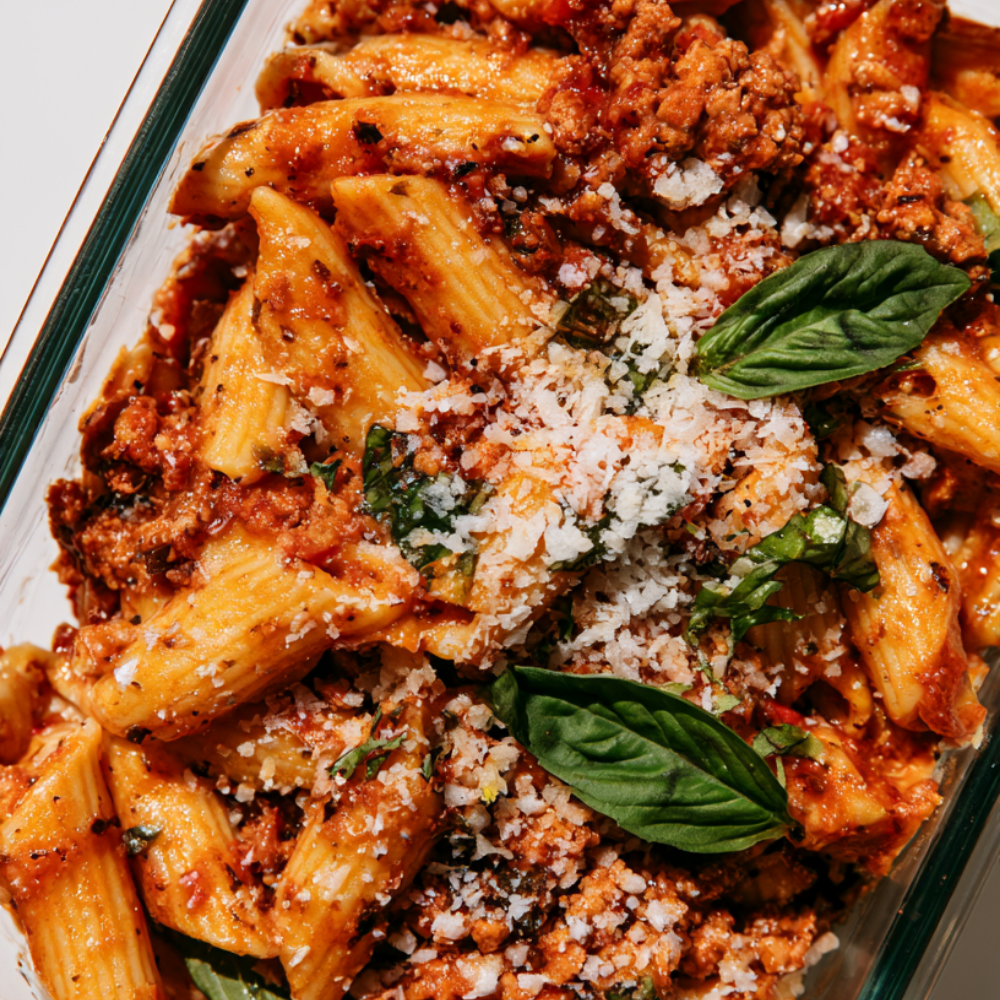
For the best texture, remove the Parmesan and any ricotta or cottage cheese before reheating. Add 1–2 tbsp water or chicken broth to the pasta. Cover loosely with a microwave-safe lid or damp paper towel. Microwave at medium-high power for 1½–2½ minutes, depending on the portion and microwave, stirring halfway through. Continue heating in short 20–30 second intervals until hot throughout. Stir well before serving. Add the Parmesan and ricotta or cottage cheese after reheating. If the pasta seems dry, add another splash of broth rather than microwaving it longer.
Freezer
For best texture, freeze the bolognese separately from the pasta if you know you’ll be freezing the meals. Cool the sauce completely, portion into freezer-safe containers, and freeze for up to 3 months. Cook fresh pasta when you’re ready to eat the frozen bolognese. If you prefer to freeze the complete pasta bowls, cool them completely before freezing and use freezer-safe containers. Thaw overnight in the refrigerator before reheating. The chickpea pasta will be softer after freezing and thawing, but the meal will still be flavorful and convenient.
Tips for the Best Meal Prep Pasta
Cook the pasta about 2 minutes under al dente. Chickpea pasta softens noticeably in the refrigerator. Undercooking it gives you margin. Fully cooked pasta turns to mush by day two.
Toss the pasta with sauce immediately. Don’t let it sit in the colander. The sauce coats every piece and prevents sticking.
Make the sauce slightly saucier than you think. The pasta absorbs sauce in the refrigerator. If it looks perfect going into the containers, it’ll be dry by day three.
Save some sauce back. Keep about a cup of bolognese in a separate container. When day-three pasta gets dry, adding sauce is much better than adding water.
Grate the zucchini and squeeze it dry. Zucchini holds a lot of water. Squeeze it in a clean kitchen towel or paper towels before adding it to the sauce.
Brown the turkey in two batches. A crowded pot steams the meat. Two batches means every piece gets direct contact with the pan and develops browned edges.
Toast the tomato paste for 2–3 minutes. This is the difference between a sauce that tastes like canned tomatoes and one that tastes like it cooked all day.
Don’t skip the balsamic vinegar and honey. They balance the tomatoes’ acidity and add depth. A little sweetness makes the sauce taste richer.
Reserve pasta water before you drain. It’s starchy, salty, and free. It’s the adjustment tool for the sauce.
Cool before sealing, but don’t wait 20 minutes. Once the heavy steam subsides, seal and refrigerate. The goal is to avoid leaving cooked food sitting at room temperature for an extended period.
Keep the ricotta or cottage cheese separate. Mixed into the containers, it doesn’t improve the four-day texture. As a topping added after reheating, it adds a creamy contrast to the rich tomato sauce.
Add a splash of broth or extra sauce when reheating. The pasta absorbs liquid as it sits. A tablespoon or two loosens the sauce and keeps the pasta tender.
Eat the oldest containers first. These are best on days 2–4.
Easy Variations
Creamy Pasta Meal Prep. Stir ½ cup of full-fat Greek yogurt or ¼ cup of heavy cream into the sauce off heat before tossing with the pasta. About 38–42g protein per serving.
Turkey Bolognese with Regular Pasta. Swap the chickpea pasta for regular pasta. It won’t hold up as well in the refrigerator — plan to eat within 3 days. About 30–34g protein per serving.
Spicy Turkey Bolognese. Double the red pepper flakes and add 1 teaspoon of Calabrian chili paste with the tomato paste. About 38–42g protein per serving.
Turkey Bolognese with Hidden Mushrooms. Add 8 oz of finely chopped cremini mushrooms with the onion and cook until they release their liquid and brown. About 38–42g protein per serving.
Turkey Bolognese Zucchini Noodles. Swap the pasta for 6 cups of spiralized zucchini. Don’t cook the zucchini — toss it raw with the warm sauce right before portioning. About 34–38g protein per serving.
Turkey Bolognese with Lentils. Swap 1 lb of the turkey for 1 cup of dried lentils, cooked. Add an extra cup of broth. About 30–34g protein per serving.
Turkey Bolognese Lasagna. Layer the bolognese with lasagna noodles and ricotta in a 9×13 dish. Bake at 375°F for 35 minutes. About 38–42g protein per serving.
Pasta Meal Prep for the Week (Double Batch). Double everything and portion into 12 containers. Freeze half for weeks you don’t have time to cook.
Easy Meal Prep Pasta with Jarred Sauce. Short on time? Use 2 jars of good-quality marinara instead of crushed tomatoes. Add the tomato paste and seasonings as directed. About 36–40g protein per serving.
Pasta Lunches for Work. Portion into 6 containers and pack a small side salad or roasted vegetables to go with it. About 38–42g protein per serving.
Homemade Pasta Meal Prep. Make your own pasta dough, cut it into pappardelle or tagliatelle, and cook it fresh. Toss with the bolognese and portion. About 38–42g protein per serving.
Storage and Food Safety
Refrigerator: Store in airtight containers for up to 4 days. Cool briefly before sealing, then refrigerate promptly.
Freezer: Freeze the bolognese separately from the pasta for the best texture, up to 3 months. If freezing complete bowls, cool completely first, then freeze in freezer-safe containers. Thaw overnight in the refrigerator before reheating.
Reheating: Add a splash of broth or extra sauce, cover with a damp paper towel, and microwave 1½–2½ minutes, stirring halfway. Add Parmesan and ricotta after reheating.
Food safety: Cook ground turkey to 165°F. Refrigerate leftovers within 2 hours. Reheat leftovers to 165°F throughout.
Frequently Asked Questions
How much protein is in each bowl?
About 38–42 grams per serving. Most of it comes from the ground turkey (about 30g per serving) plus the chickpea pasta (about 8–10g) and Parmesan.
Can I use regular pasta instead of chickpea pasta?
Yes, but it won’t hold up as well in the refrigerator. Regular pasta absorbs more sauce and turns soft by day three. Chickpea pasta and whole wheat pasta both hold their structure better.
Why did my pasta turn out mushy?
Two likely reasons: you cooked it fully instead of 2 minutes under al dente, or you used regular pasta instead of chickpea or whole wheat pasta.
Why did my pasta turn out dry?
The sauce was too thick, or the pasta absorbed too much liquid in the refrigerator. Make the sauce slightly saucier than you think you need, save some sauce, and add a splash of broth when reheating.
Does chickpea pasta taste different?
It has a slightly nuttier, earthier flavor than regular pasta. Once it’s coated in a rich bolognese sauce, most people can’t tell the difference.
Can I make this vegetarian?
Yes. Skip the turkey and add 2 cups of cooked lentils or 1 lb of finely chopped mushrooms. Add an extra cup of broth—about 24–28g protein per serving.
Can I make this dairy-free?
Yes. Skip the Parmesan and use nutritional yeast instead. About 36–40g protein per serving.
Is this recipe gluten-free?
Yes, if you use chickpea pasta and confirm your broth, tomatoes, and seasonings are gluten-free. Chickpea pasta is naturally gluten-free.
Can I double this recipe?
Yes. Use a larger Dutch oven or two pots. Portion into 12 containers and freeze half.
How long does this last in the refrigerator?
Up to 4 days. It’s best on days 2–4, when the flavors have fully melded.
Can I eat this cold?
Yes. It’s actually very good cold, straight from the refrigerator, like a pasta salad.
More High-Protein Meal Prep Recipes You’ll Love
- Creamy Butternut Squash & Turkey Sausage Pasta Bake
- High-Protein Cheesy Bacon Cheddar Mini Meatloaves
- Crockpot Ground Turkey, Sweet Potato & Broccoli Casserole
Conclusion
These healthy turkey bolognese meal-prep pasta bowls are the kind of lunch that tastes even better as the week goes on.
A rich, slow-simmered sauce with lean ground turkey, hidden carrots, celery, and zucchini, tossed with high-protein chickpea pasta and topped with Parmesan. About 38–42 grams of protein per bowl.
The keys are simple: brown the turkey in two batches, toast the tomato paste for a full 2–3 minutes, cook the pasta 2 minutes under al dente, toss it with the sauce immediately, save some sauce back, and add a splash of broth or extra sauce when reheating.
Do that, and you’ll have meal-prep pasta that holds up all week.
Make six on Sunday, stack them in the refrigerator, and you’ve got lunch or dinner handled through Thursday.