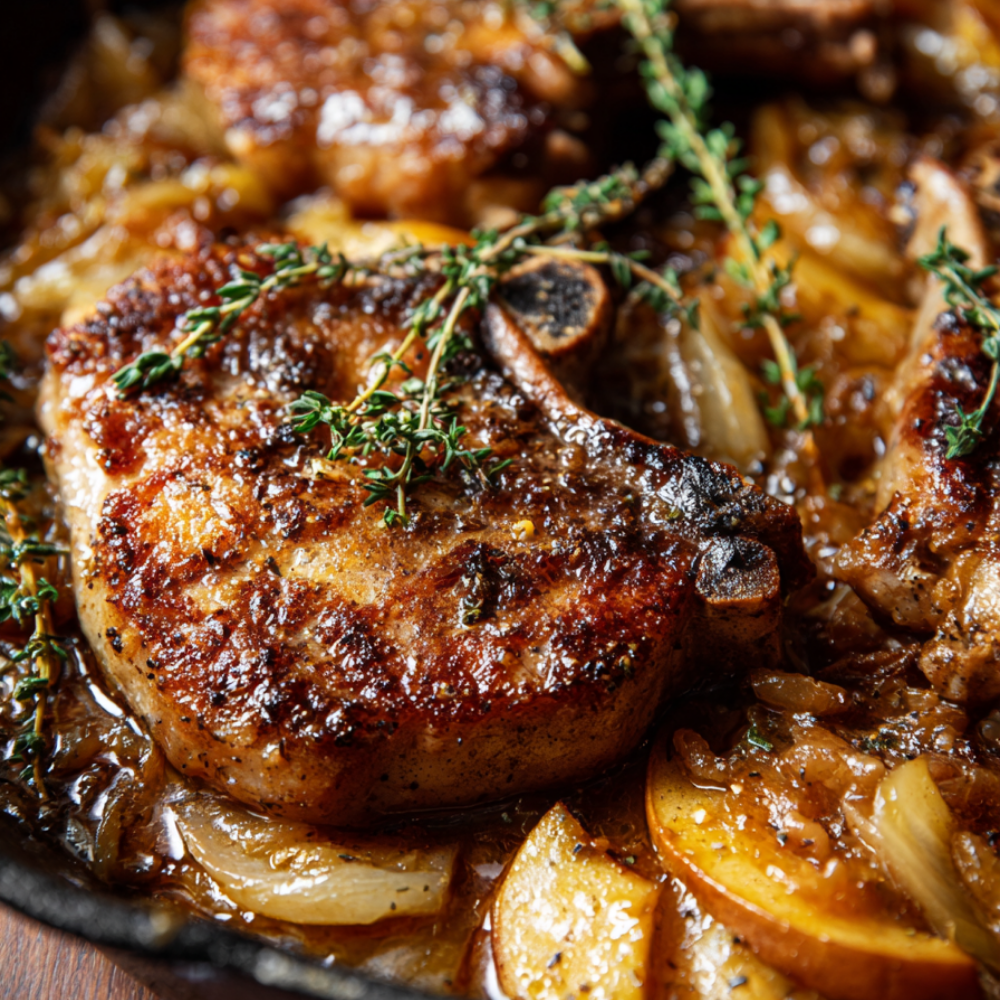

A cast iron skillet was made for a specific kind of fall evening. The windows are dark by six. Someone has already put on a sweater. And the smell coming off the stove is apples and onions caramelizing together with thyme — sweet, savory, and rich enough to make everyone in the house wander into the kitchen to see what is happening.
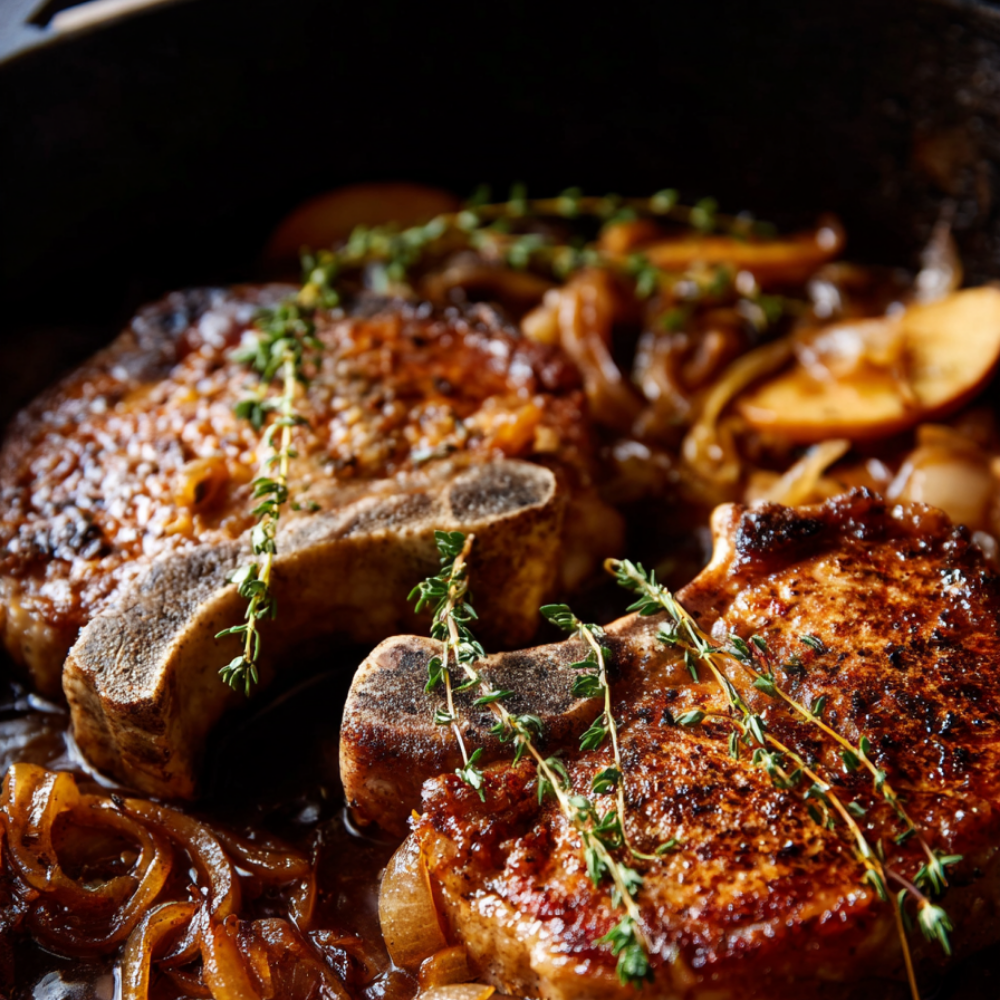
That is this dinner. Two bone-in pork chops with a deep golden sear, resting on a bed of caramelized apples and onions, with a glossy pan sauce made from the drippings, apple cider vinegar, and a knob of cold butter swirled in at the end.
It is one pan. It takes thirty minutes. It looks like something you would pay thirty dollars for at a restaurant.
And it is genuinely high in protein — thirty-eight grams per serving, from the chop alone. Pork chops are one of the most underrated proteins in the grocery store. They are cheaper than beef, leaner than most cuts of steak, and when cooked properly, every bit as satisfying.
The catch is that pork chops are also one of the most commonly overcooked proteins in a home kitchen. The old “cook to 160°F” rule is still floating around, and it is what turns a pork chop into shoe leather. Modern pork is leaner and safer than it was thirty years ago, and the USDA updated the guideline to 145°F with a three-minute rest in 2011. Pull at 140°F and let carryover heat finish the job for a chop that is juicy, faintly pink in the middle, and genuinely worth making at home.
A dry brine, a hard sear, and a pan sauce pull it all together. Three small techniques, and the difference between a pork chop you tolerate and one you make on repeat.
Why This Recipe Works
- A dry brine is the single biggest upgrade you can make to a pork chop. Salting the chop and letting it sit for an hour draws moisture to the surface, dissolves the salt, and pulls it back in as a concentrated brine. The meat seasons all the way through and stays juicier.
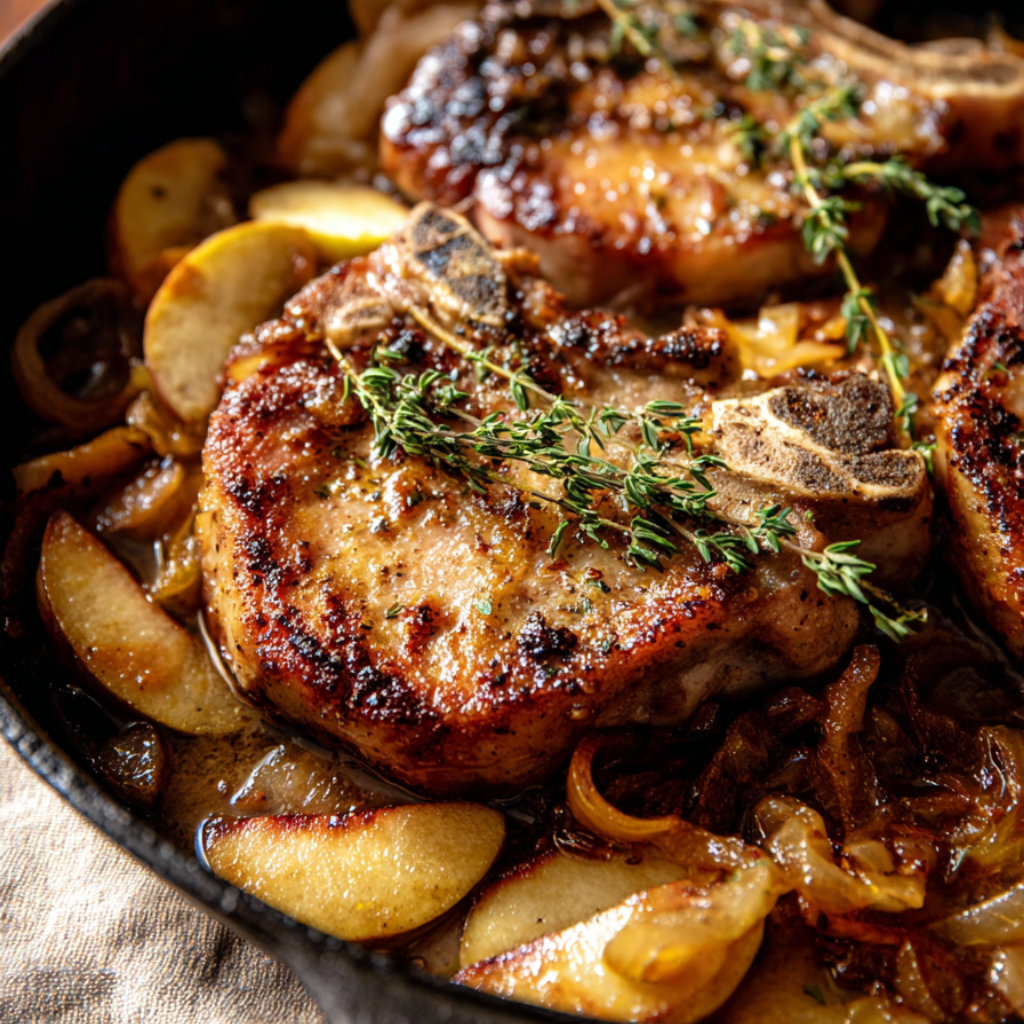
- Searing hard in a cast iron skillet builds the crust and the pan sauce at the same time. A screaming-hot pan develops a deep golden-brown crust on the chop and leaves behind the browned bits that become the base of the sauce.
- Pulling at 140°F and resting is what keeps the chop juicy. Modern pork is safe at 145°F after a three-minute rest. Carryover heat brings the chop from 140 to about 145 while it rests, so it is both safe and not overcooked.
- Caramelizing the apples and onions in the same pan does two jobs. They pick up the pork drippings and the browned bits, and they release their own sugars into the sauce.
- Apple cider vinegar is the acid that makes the whole pan taste finished. Pork and apples are sweet together. Without vinegar, the sauce tastes heavy.
- Cold butter swirled in off the heat is what turns a pan sauce glossy. Butter added over direct heat separates. Off the heat, it emulsifies and gives the sauce body and shine.
- Fresh thyme is the herb that ties pork and apples together. It is the note that makes the whole plate read as fall.
Skillet Pork Chops with Apple Cider Pan Sauce
Bone-in pork chops dry brined and seared in a cast iron skillet, served over caramelized apples and onions with a glossy apple cider pan sauce. One pan, thirty minutes, thirty-eight grams of protein per serving.
For the Pork Chops
- 4 bone-in pork chops (1 inch thick, about 10 oz each (2½ lbs total))
- 1 tbsp kosher salt
- 1 tsp black pepper
- 1 tsp garlic powder
- 1 tsp smoked paprika
- 1 tbsp olive oil
For the Apples and Onions
- 2 tbsp unsalted butter (divided)
- 2 medium firm-tart apples (Honeycrisp, Braeburn, or Pink Lady, cored and cut into ½-inch wedges)
- 1 large yellow onion (thinly sliced)
- 4 cloves garlic (smashed and peeled)
- 4 sprigs fresh thyme (plus more for garnish)
For the Pan Sauce
- ¾ cup low-sodium chicken broth
- ¼ cup apple cider vinegar
- 1 tsp Dijon mustard
- 1 tsp maple syrup or honey
- 2 tbsp cold unsalted butter (cut into cubes)
- Kosher salt and black pepper to taste
- For Serving
- Flaky salt
- Fresh flat-leaf parsley (chopped)
- Roasted potatoes or mashed potatoes
Instructions
- Dry brine the chops. Pat the pork chops completely dry with paper towels. Season generously on both sides with kosher salt, pressing it into the meat. Place them on a wire rack over a sheet pan and refrigerate uncovered for at least 1 hour, or up to 24. The surface should look dry and slightly tacky when they are ready.
- Season and temper. Pull the chops from the refrigerator 20 minutes before cooking. Pat them dry again if any surface moisture remains. Season with the black pepper, garlic powder, and smoked paprika.
- Heat the skillet. Place a large cast iron skillet over medium-high heat and let it preheat for 3 to 4 minutes, until a drop of water flicked into the pan evaporates on contact. Add the olive oil and swirl to coat.
- Sear the chops. Lay the chops in the skillet with space between them. Sear undisturbed for 3 to 4 minutes per side, until a deep golden-brown crust forms. If the chops are touching, cook them in two batches. Transfer the chops to a plate and set aside. They will not be fully cooked through — that is intentional.
- Sauté the apples and onions. Reduce the heat to medium. Add 1 tbsp of butter to the skillet and let it melt into the drippings. Add the apples, cut-side down, and the sliced onion. Cook 5 to 6 minutes, stirring occasionally, until the apples are golden and the onion is softened.
- Add the garlic and thyme. Add the smashed garlic and the thyme sprigs. Stir and cook for 30 seconds, until fragrant. The thyme will begin to pop and release its leaves into the pan.
- Build the sauce. Pour in the chicken broth and apple cider vinegar. Scrape up every browned bit from the bottom of the skillet with a wooden spoon. Stir in the Dijon and maple syrup. Simmer 2 to 3 minutes, until the liquid has reduced by about a third.
- Return the chops. Nestle the pork chops back into the skillet, spooning some of the apples and onions over the top. Cover the skillet and cook 3 to 4 minutes more, until the chops reach an internal temperature of 140°F, as measured with an instant-read thermometer inserted away from the bone.
- Rest the chops. Transfer the chops to a cutting board and rest 5 to 10 minutes, loosely tented with foil. Carryover heat will bring them to about 145°F, the USDA-safe temperature for pork, with a three-minute rest.
- Finish the sauce. While the chops rest, turn the heat off under the skillet. Add the cold butter cubes one at a time, swirling the pan constantly, until each piece melts before adding the next. The sauce should turn glossy and coat the back of a spoon. Taste and adjust salt and pepper.
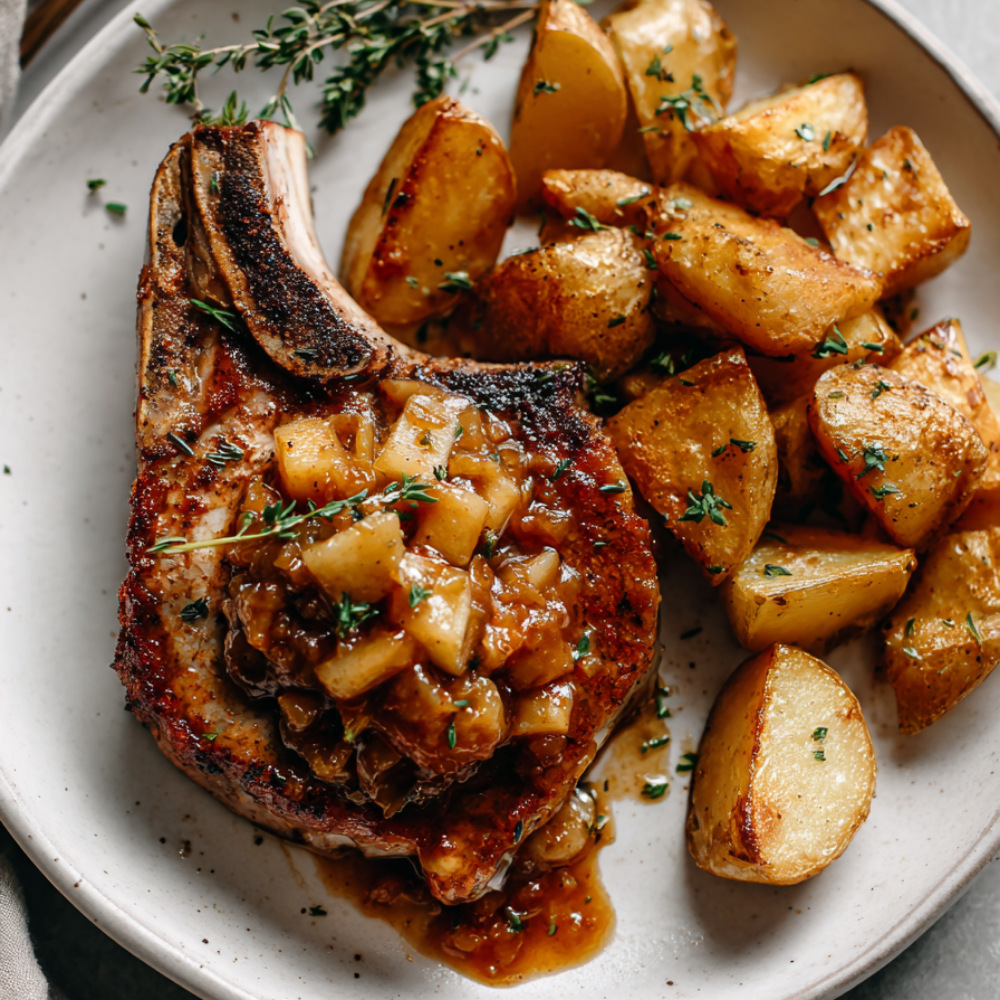
- Serve. Plate each chop and spoon the apples, onions, and pan sauce over the top. Finish with fresh thyme, chopped parsley, and a pinch of flaky salt. Serve with roasted or mashed potatoes.
Protein per Serving: 38 g.
Nutrition Note: Protein calculated from 4 bone-in pork chops, about 10 oz each, yielding roughly 5.5 to 6 oz of cooked meat per chop (≈150g total protein), divided by 4 servings — about 38g per serving. About 490 calories per serving without sides. Sodium comes mostly from the dry brine and the broth — use low-sodium broth and adjust at the end.
Tips for the Best Pork Chops
- Dry brine for at least an hour. This is the single biggest upgrade. Salt draws moisture to the surface, dissolves, and gets pulled back in as a concentrated brine that seasons the meat all the way through.
- Pull the chops at 140°F, not 145°F or 160°F. Carryover heat brings them to 145°F during the rest, which is the safe modern standard for pork. Cooking past 145°F is what makes a chop dry and chalky.
- Use a cast iron skillet. It holds heat through the sear, develops a deeper crust, and gives you the browned bits that become the pan sauce.
- Let the pan preheat fully before adding the chops. Three to four minutes over medium-high. If a drop of water does not evaporate on contact, the pan is not ready.
- Sear without moving the chops. Resist the urge to peek. A full three to four minutes per side without touching is what builds the golden crust.
- Rest the chops before slicing. Five to ten minutes, loosely tented. Slicing too early dumps the juices onto the board instead of keeping them in the meat.
- Add the cold butter off the heat, one cube at a time. This is the emulsification step. Butter added over direct heat separates. Off the heat, it turns the sauce glossy.
Troubleshooting
- The chops turned out dry and tough. They were cooked past 145°F. Pull at 140°F and let the carryover heat finish them during the rest. Use an instant-read thermometer.
- The sear is pale and uneven. The pan was not hot enough, or the chops were wet. Pat them dry and preheat the skillet for a full 3 to 4 minutes.
- The chops stuck to the pan. The pan wasn’t hot enough when the chops went in, or you added the oil to a cold pan. Heat the pan first, then add the oil, then add the chops.
- The pan sauce tastes flat. It needs acid or salt. Add 1 tsp more apple cider vinegar and taste again before adding salt.
- The sauce is greasy and separated. You added the cold butter over direct heat. Turn the heat off and swirl the pan constantly while adding the butter one cube at a time.
- The apples turned to mush. They were sliced too thin or cooked too long. Cut them into ½-inch wedges and pull them off the heat as soon as they are golden at the edges.
- The pan sauce is too salty. The dry brine and the broth stacked. Use low-sodium broth next time, and taste before adding any salt at the end.
- The sauce is too thick. It reduced too far while the chops rested. Loosen with 2 tbsp of broth or water and swirl until it thins out.
Easy Variations
- Oven-Baked Pork Chops. Sear the chops on the stovetop, then transfer the whole skillet to a 400°F oven for 6 to 8 minutes, until the chops reach 140°F. Build the pan sauce on the stovetop while the chops rest.
- Bone-In Pork Chops with Rosemary. Swap the thyme for 3 sprigs of fresh rosemary and add 1 tsp of chopped rosemary to the pan sauce at the end.
- Maple-Dijon Pork Chops. Increase the maple syrup to 1 tbsp and the Dijon to 2 tsp. The sauce becomes sweeter and sharper, and it pairs well with a starchier side like mashed potatoes.
- Pork Chops with Bacon and Apples. Cook 4 slices of bacon in the skillet first, crumble them, and use the bacon drippings to sear the chops. Sprinkle the crumbled bacon over the finished plate.
- Gluten-Free Pork Chops. The recipe is naturally gluten-free as written. Verify your chicken broth and Dijon mustard are gluten-free.
Storage and Food Safety
Refrigerator: Store the chops and apples together in an airtight container for up to 3 days. Keep any leftover pan sauce separate. Reheat gently on the stovetop over medium-low heat with a splash of broth, or cover and bake at 325°F for 12 minutes. Do not microwave the chops — they toughen quickly.
Freezer: Freeze cooked chops without the sauce for up to 2 months, wrapped tightly and bagged. Thaw overnight in the refrigerator and reheat covered at 325°F for 15 minutes. The pan sauce separates when frozen — make it fresh.
Make Ahead: Dry brine the chops up to 24 hours ahead. Sear them up to a day ahead and refrigerate; build the apples, onions, and pan sauce fresh the day you serve. The full dish is at its best within 30 minutes of cooking.
Food Safety: Pork must reach an internal temperature of 145°F and rest for 3 minutes, per the USDA. This recipe pulls the chops at 140°F and lets carryover heat finish the job during the rest. Use an instant-read thermometer inserted into the thickest part of the chop, away from the bone. Cool leftovers within 2 hours and refrigerate promptly. Reheat leftovers to 165°F.
Frequently Asked Questions
How much protein is in each pork chop? About 38g per serving across four chops. Bone-in chops at 10 oz each yield roughly 5.5 to 6 oz of cooked meat after the bone and cook loss.
What temperature should pork chops be cooked to? 145°F with a three-minute rest, per the USDA. This recipe pulls them at 140°F and lets carryover heat bring them to 145°F during the rest.
Can I use boneless pork chops? Yes. Boneless chops cook faster — start checking at 2 to 3 minutes per side and pull at 140°F. The pan sauce will be slightly less rich without the bone.
What is a dry brine and why does it matter? It is salting the chop and letting it sit uncovered in the refrigerator. The salt draws moisture out, dissolves, and gets pulled back in as a concentrated brine. It seasons the meat all the way through and keeps it juicy.
Do I have to dry brine for a full hour? An hour is the minimum. Thirty minutes helps, but a full hour or overnight makes a noticeable difference.
What kind of apple works best? A firm-tart apple — Honeycrisp, Braeburn, Pink Lady, or Granny Smith. Soft apples turn to sauce as they cook.
More High-Protein Dinner Recipes You’ll Love
- Italian Chicken Cutlets — 43g protein, shatter-crisp panko, pan-fried or air-fried.
- One-Skillet Smothered Pork Chops — 40g Protein, Creamy Onion Gravy
- Country-Style Boneless Pork Ribs In The Crockpot (Fall-Off-The-Fork Tender!)
Conclusion
Pork chops have a reputation problem, and it is not their fault. Decades of “cook to 160°F” turned a lean, flavorful cut into something dry and forgettable. Modern pork is leaner and safer than it used to be, and 145°F with a three-minute rest is the standard now. Pulled at 140°F and rested, a pork chop comes out juicy, faintly pink, and genuinely worth making at home.
The rest of the recipe is built on three small techniques. Dry brine the chop so it seasons all the way through. Sear it hard in a cast iron skillet so you get both a crust and the browned bits that become the sauce. And finish the pan sauce with cold butter off the heat, one cube at a time, so it turns glossy instead of greasy.
Caramelized apples and onions in the same pan. Apple cider vinegar, broth, Dijon, and thyme. One skillet, thirty minutes, and thirty-eight grams of protein per serving.
It is the kind of fall dinner that makes the whole house smell like something worth sitting down for. Make it once this season, and it earns a permanent spot in the rotation.