Potatoes au gratin is one of my favorite fall and winter dishes, and it was one of the first recipes I learned as a kid who just loved eating. I didn’t know anything about authentic technique back then — I knew what tasted good, and I knew I wanted to make it myself.
The first version I learned started with a roux, the same way you start clam chowder. I made the roux a little thicker for the gratin, got a creamy finish, and didn’t think much about the potatoes themselves.
Many years later I learned that the traditional French method doesn’t use a roux at all. The cream gets thickened by the starch that’s already in the potatoes, which is why the classic version calls for starchy potatoes and heavy cream and nothing else.
No flour, no milk, no roux to babysit. I’ve made it that way ever since, and it’s easier than the version I learned as a kid — and richer, because the potato starch and the cream do the work together instead of a flour paste getting in the way.
My husband loves this dish, and I serve it alongside holiday mains — turkey, steak, prime rib — because it goes with all of them and it looks beautiful on the table. But I also make it on a random Tuesday in January, because a dish this good shouldn’t be saved for two days a year.
The most important detail is not rinsing the sliced potatoes. The surface starch is what thickens the cream, and rinsing it down the drain means you’re baking potatoes in thin cream instead of a velvety sauce. It’s the single step that makes the traditional method work, and it’s the one most recipes get wrong.
Why This Recipe Works
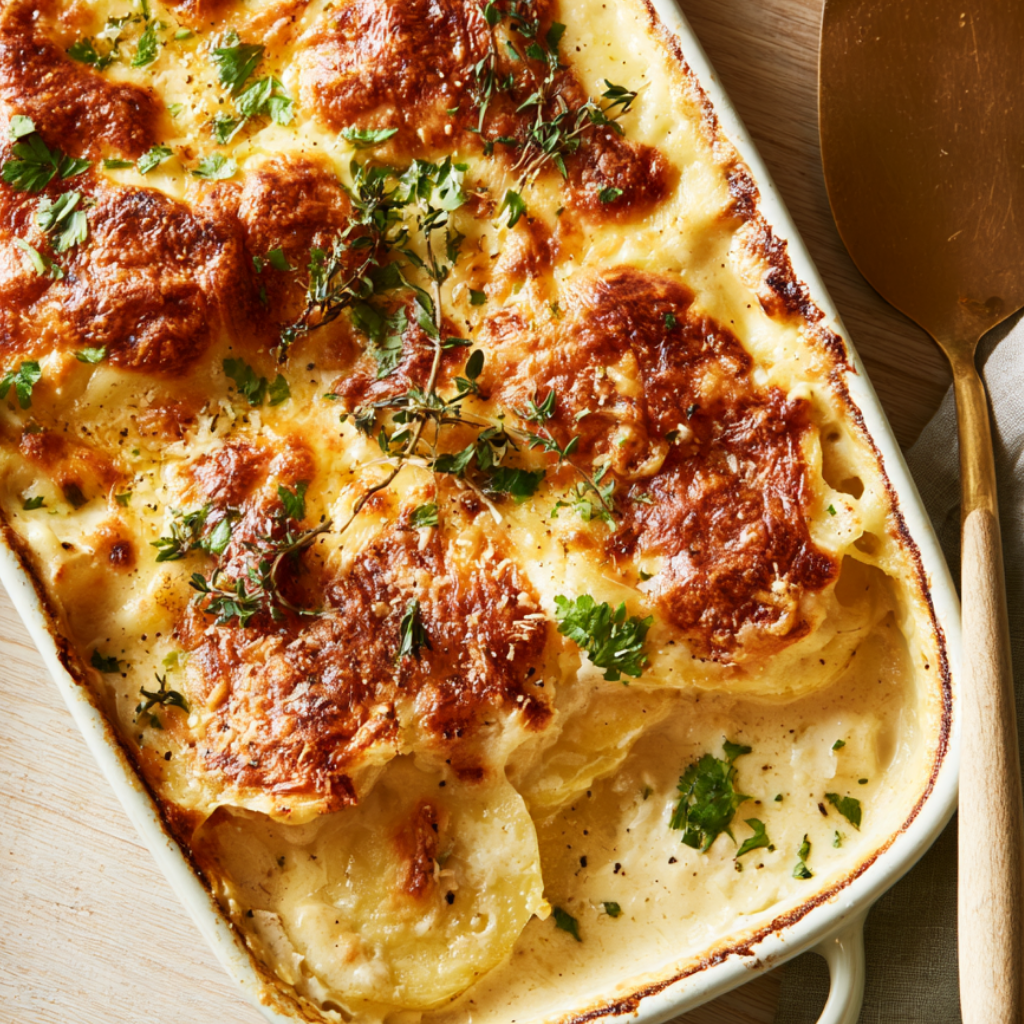
Not rinsing the sliced potatoes is what thickens the cream. Potatoes release starch from their cut surfaces, and that starch is what turns heavy cream into a velvety sauce as it bakes. Rinse the slices, and you wash the starch away, and the gratin bakes up with thin, watery cream instead of a cohesive sauce. This is the whole technique, and it’s the reason the traditional method doesn’t need flour.
Starchy potatoes — Yukon Gold or Russet — are the right choice, not waxy ones. Waxy potatoes like Red Bliss hold their shape but release very little starch, and the cream stays thin. Yukon Gold and Russet have enough starch to thicken the cream and enough structure to hold their shape in thin slices. That’s why you use starchy potatoes for mashed potatoes.
Slicing to a uniform eighth of an inch is what makes the layers cook evenly. Thick slices stay firm while thin ones turn to mush, leaving the dish uneven. A mandoline is the fastest way to get there, but a sharp knife and a steady hand work. Uniform slices also stack more tightly, helping the starch and cream do their job.
Rubbing the dish with a cut garlic clove is the classic French move that perfumes the whole gratin. It’s a small step that takes ten seconds, and it gives you a subtle garlic aroma that’s different from minced garlic cooked into the cream. Both go in — the rubbed dish and the infused cream — and together they’re what makes this taste like a restaurant gratin.
Infusing the cream with garlic, thyme, and nutmeg before it goes on the potatoes is what seasons every layer. Gently heating the cream with the aromatics lets them steep, and pouring it warm over the potatoes means it starts working immediately. Pouring cold cream over cold potatoes takes longer to warm up, and the seasoning doesn’t distribute as evenly.
Baking covered first, then uncovered, is what sets the potatoes before the crust forms. The covered stage traps steam and lets the cream gently boil around the potatoes, drawing out the starch. The uncovered stage browns the cheese and evaporates the surface moisture. Doing it the other way around gives you a burnt top and undercooked potatoes.
Resting for 15 to 20 minutes before serving is what makes clean slices. The starch continues to set as the dish cools, and the cream thickens into a sauce that holds the layers together. If you slice it hot, the gratin runs all over the plate. Once rested, it holds its shape, and the texture is velvety instead of loose.
Ingredients That Matter
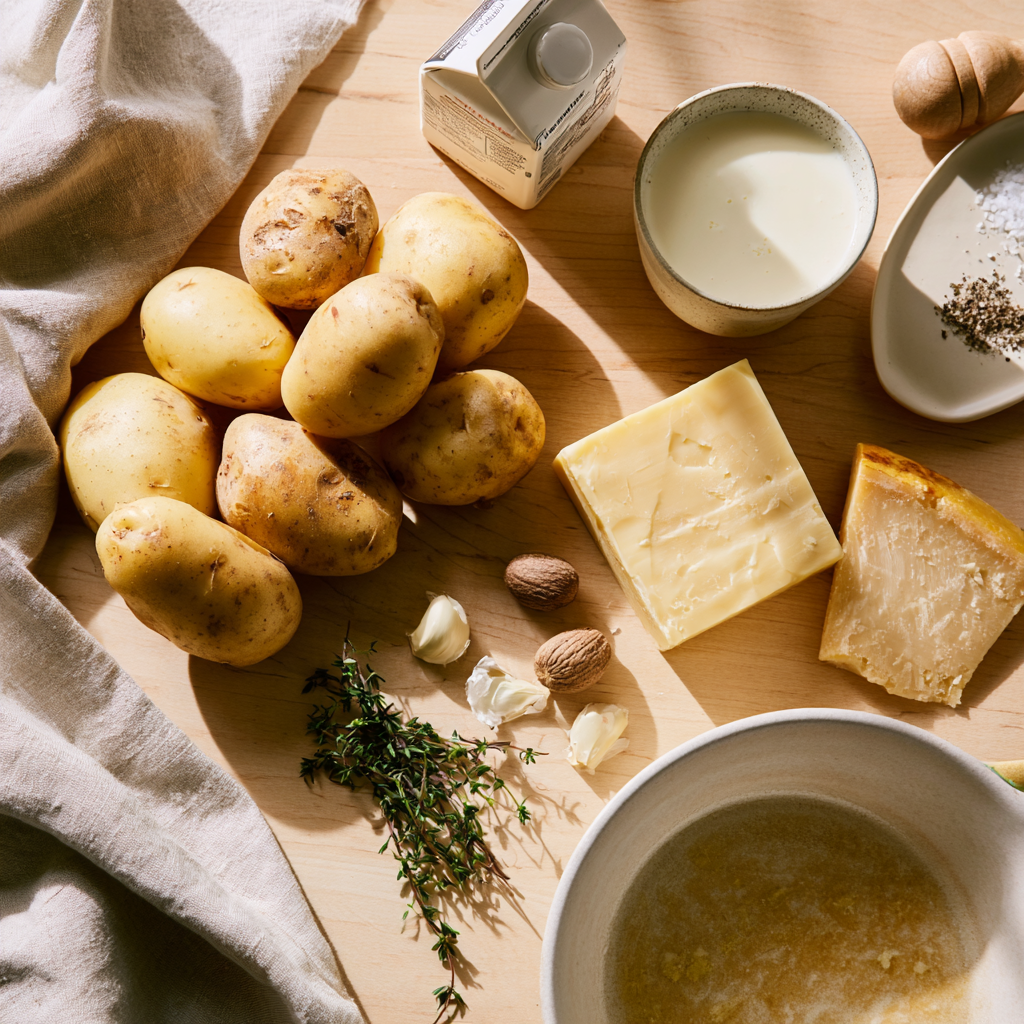
Most of this list is flexible. Three ingredients are easy to get wrong, so those are the ones worth explaining.
Yukon Gold or Russet potatoes, sliced and not rinsed. This is the starch source and the structure. Yukon Gold is creamier, and Russet is starchier — both work, and the choice comes down to texture preference. Don’t rinse or soak the slices. The surface starch is the thickener.
Heavy cream, not half-and-half or milk. Heavy cream has enough fat to emulsify with the potato starch and stay smooth through a long bake. Half-and-half or milk will curdle and split, and the gratin will be watery. This is not a place to cut fat — the recipe depends on it.
Gruyère, freshly shredded. Gruyère is the classic cheese for a French gratin — nutty, melting, and not too sharp. Comté works as a substitute, and Parmesan is the finishing cheese for the top. Pre-shredded cheese is coated in cellulose and doesn’t melt as smoothly, so grate it from a block.
How to Make It
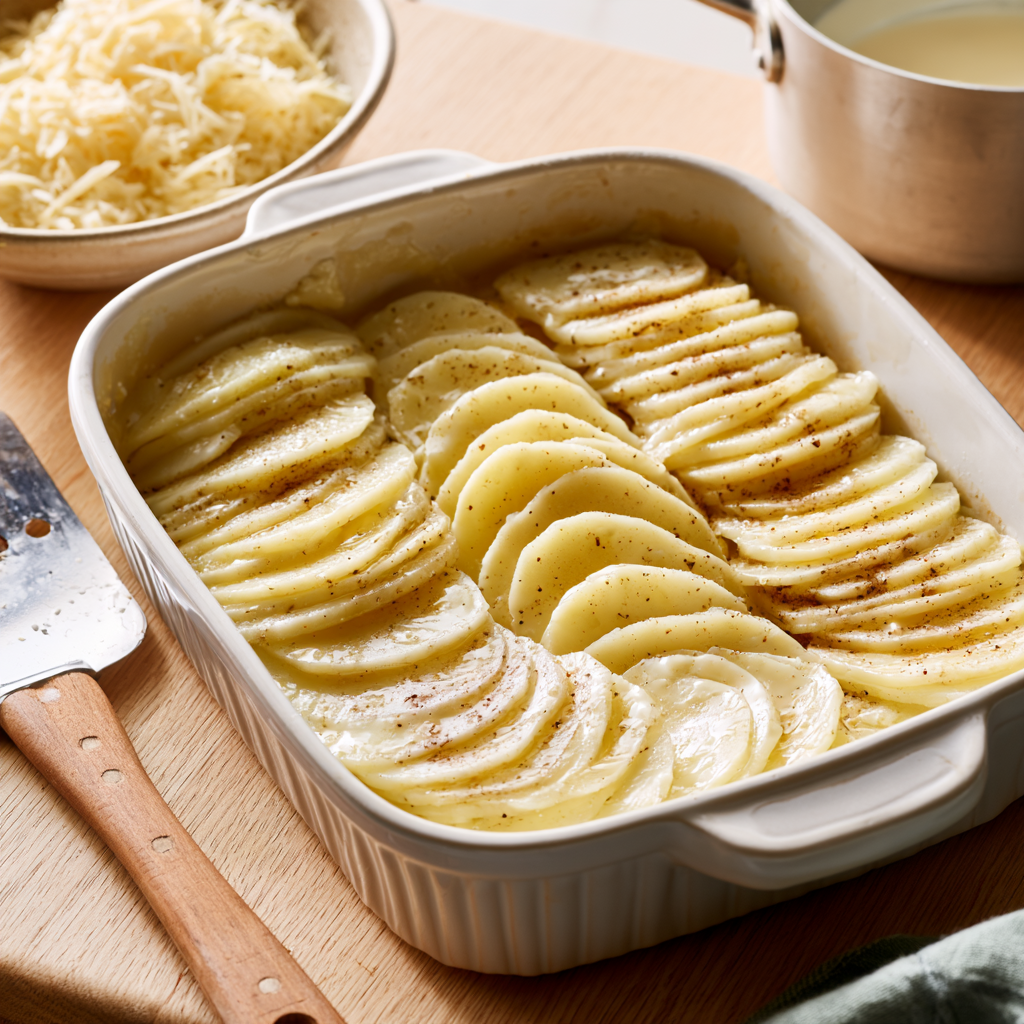
Step 1: Prep the dish and preheat the oven.
Preheat the oven to 375°F. Rub the cut sides of a halved garlic clove all over the inside of a 2-quart baking dish or a 9×13-inch ceramic dish, until you can smell the garlic. Generously grease the dish with 1 tablespoon softened butter.
Step 2: Infuse the cream.
In a saucepan over medium-low heat, combine 2 cups heavy cream, 3 minced garlic cloves, 1 teaspoon fresh thyme leaves, 1¼ teaspoons kosher salt, ¼ teaspoon black pepper, and ⅛ teaspoon freshly grated nutmeg. Heat gently for 4 to 5 minutes, until hot and simmering around the edges — do not boil. Turn off the heat and let it steep while you layer the potatoes.
Step 3: Layer the potatoes and cheese.
Arrange one-third of the sliced potatoes in overlapping rows in the buttered dish. Sprinkle with ⅓ cup of shredded Gruyère. Repeat with another third of the potatoes and another ⅓ cup of Gruyère. Top with the final layer of potatoes.
Step 4: Pour the cream.
Whisk the warm cream and pour it slowly over the layered potatoes. Press down gently with the back of a spatula so the cream rises through the layers and completely submerges the potato slices. If the top layer isn’t covered, add a splash more cream.
Step 5: Bake covered.
Cover the dish tightly with aluminum foil and bake at 375°F for 45 minutes. The cream should be bubbling gently around the edges of the dish — that’s the starch activating.
Step 6: Bake uncovered for the crust.
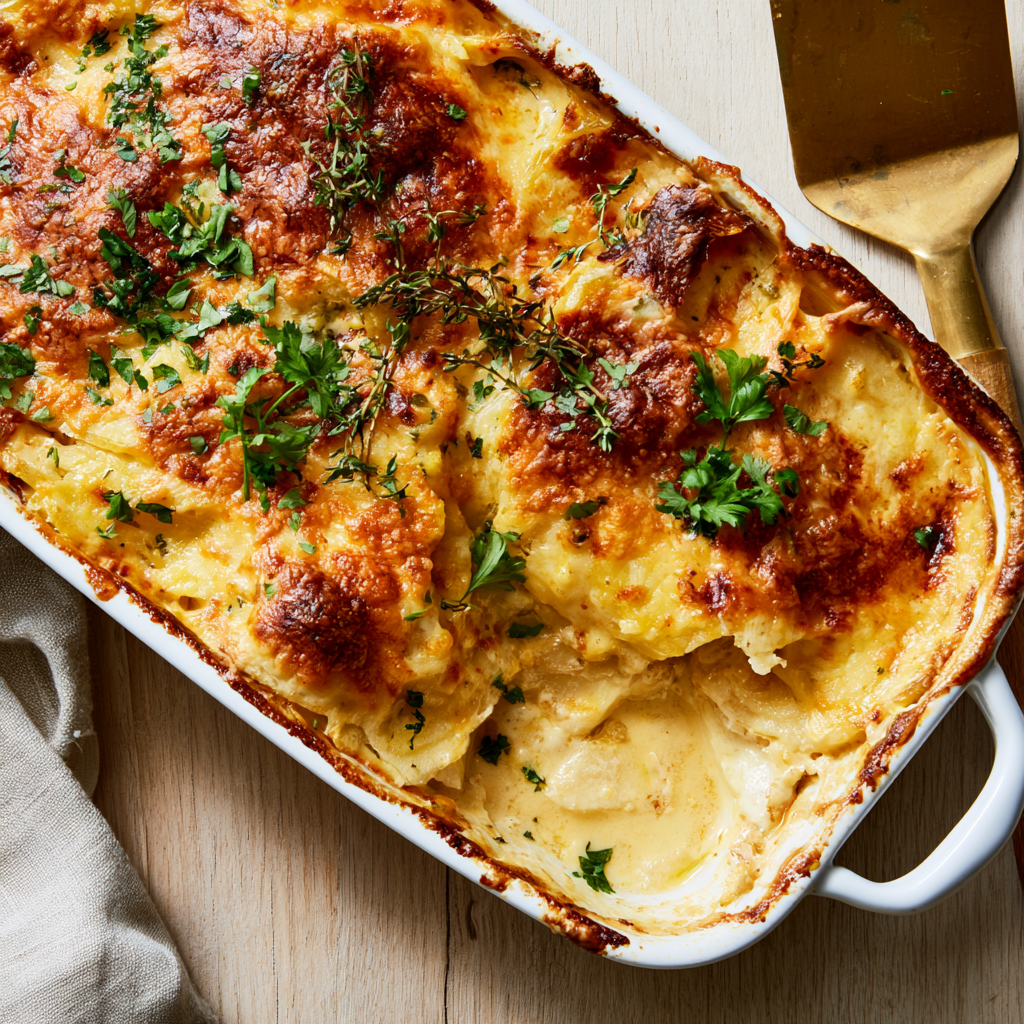
Remove the foil and evenly top with the remaining ⅓ cup Gruyère and ⅓ cup grated Parmesan. Return to the oven uncovered and bake for 20 to 25 minutes, until the potatoes are tender when pierced with a knife and the top is bubbling and deeply golden brown. If you want a darker crust, broil on high for 60 seconds, watching closely.
Step 7: Rest and serve.
Remove from the oven and let it rest undisturbed for 15-20 minutes. The layers should look set, and the cream should have thickened into a sauce. Garnish with fresh parsley or chives and serve warm.
Tips and Troubleshooting
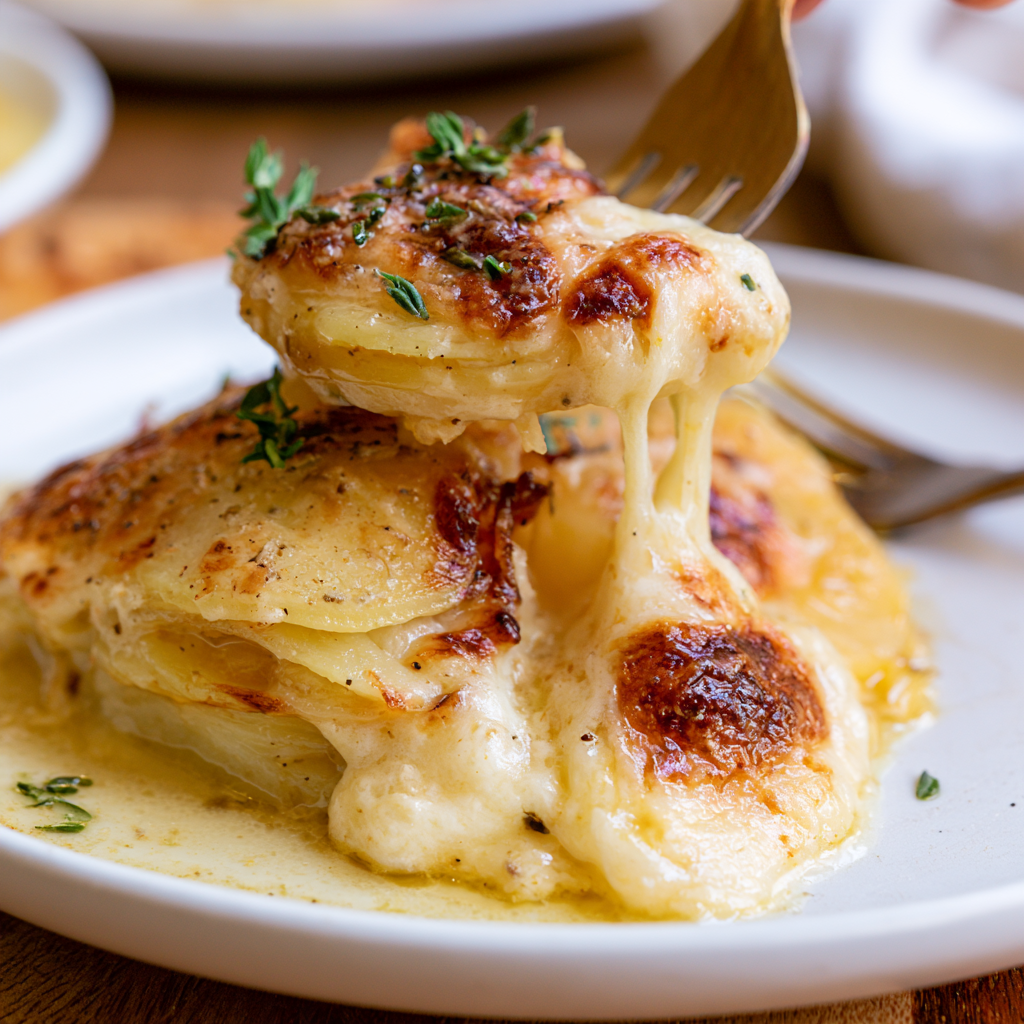
The gratin is watery. The potatoes were rinsed, or the cream was half-and-half or milk. Don’t rinse the slices, and use heavy cream.
The cream curdled or split. The oven was too hot, or the cream boiled on the stovetop before it went into the dish. Heat the cream gently until it simmers at the edges only, and bake at 375°F, not higher.
The potatoes are still firm after baking. The slices were too thick, or the covered bake wasn’t long enough. Slice to an eighth of an inch and bake covered for the full 45 minutes before uncovering.
The top burned before the potatoes were done. The oven rack was too high, or the broiler was on too long. Bake on the middle rack, and broil for only the last minute, if at all.
The layers fell apart when sliced. It wasn’t rested long enough. Let it sit for the full 15 to 20 minutes — the starch needs that time to set.
The dish tastes flat. It needs more salt, or you skipped the nutmeg and thyme. Taste the cream before it goes on the potatoes and adjust the seasoning.
The cheese didn’t melt smoothly. It was pre-shredded, or you added it too early. Grate from a block and add it in the last 20 to 25 minutes of the uncovered bake.
Storage and Make-Ahead
You can assemble the gratin through Step 4 up to a day ahead, cover it, and refrigerate. Add 10 to 15 minutes to the covered bake time if you bake it from cold.
Leftovers keep in a sealed container in the refrigerator for up to 4 days. Reheat in a 350°F oven for 15 to 20 minutes, covered with foil, until heated through. The microwave works but makes the potatoes rubbery.
I don’t recommend freezing the assembled dish. The cream separates, and the potatoes turn grainy on thawing.
Store leftovers in the refrigerator within 2 hours of cooking, and discard anything left at room temperature for more than 2 hours.
Potatoes Au Gratin — Classic French Starch & Cream Method

Paper-thin Yukon Gold potatoes baked in garlic, nutmeg, and thyme-infused heavy cream, layered with aged Gruyère and Parmesan. Thickened by potato starch — no flour, no milk, no roux.
Ingredients
- 2½ lbs Yukon Gold or Russet potatoes, peeled and sliced into uniform ⅛-inch rounds (do not rinse)
- 1 large garlic clove, halved
- 1 tbsp unsalted butter, for greasing
- 2 cups heavy cream
- 3 cloves garlic, finely minced
- 1 tsp fresh thyme leaves
- 1¼ tsp kosher salt
- ¼ tsp freshly cracked black pepper
- ⅛ tsp freshly grated nutmeg
- 1½ cups (6 oz) freshly shredded Gruyère or Comté, divided
- ⅓ cup freshly grated Parmigiano-Reggiano, divided
- 2 tbsp fresh parsley or chives, chopped, for garnish
Instructions
- Preheat the oven to 375°F. Rub the inside of a 2-quart or 9x13-inch baking dish with the cut garlic clove, then grease generously with butter.
- Heat the cream, minced garlic, thyme, salt, pepper, and nutmeg in a saucepan over medium-low heat for 4 to 5 minutes, until hot and simmering at the edges. Do not boil. Turn off the heat and steep.
- Layer one-third of the potatoes in overlapping rows, sprinkle with ⅓ cup Gruyère, and repeat. Top with the final layer of potatoes.
- Pour the warm cream over the potatoes and gently press with a spatula so it rises through the layers and covers the top.
- Cover tightly with foil and bake for 45 minutes.
- Uncover, top with the remaining Gruyère and Parmesan, and bake 20 to 25 minutes until tender and deeply golden. Broil for 60 seconds for a darker crust if desired.
- Rest 15 to 20 minutes before serving. Garnish with fresh herbs.
Notes
Notes: Assemble up to a day ahead and refrigerate; add 10-15 minutes to the covered bake time. Refrigerate leftovers for up to 4 days, and reheat best in a 350°F oven. Not recommended for freezing. Nutrition information is an estimate.
Nutrition (per serving, estimated): About 390 calories, 10g protein, 25g carbs, 28g fat, 3g fiber, 580mg sodium.
FAQ
Can I use Russet potatoes instead of Yukon Gold?
Yes. Russets are starchier and give you a slightly thicker sauce, while Yukon Golds are creamier and hold their shape a little better. Both work well.
Do I really not need to rinse the potatoes?
Correct. The surface starch is what thickens the cream. Rinsing the slices washes it away, and you end up with a watery gratin.
Can I use half-and-half or milk instead of heavy cream?
No. Heavy cream is what emulsifies with the potato starch and stays smooth through the long bake. Half-and-half and milk will curdle, and the gratin will be thin.
Can I make this without cheese?
You can, but it becomes a gratin in the older sense — potatoes baked in cream. It’s still good, but the cheese is what most people expect.
Can I make this ahead of time?
Yes. Assemble through the cream step up to a day ahead, cover, and refrigerate. Add 10 to 15 minutes to the covered bake time.
What do you serve with potatoes au gratin?
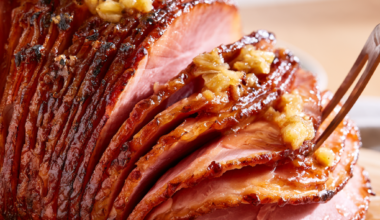
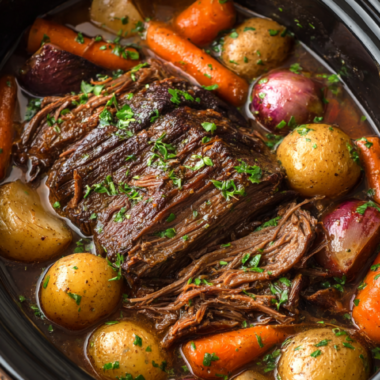
Turkey, steak, prime rib, roast chicken, or ham. It’s a classic holiday side, and it pairs well with anything with a pan sauce to soak up.
More Easy Healthy Dinner Recipes You’ll Love
- Warm German Potato Salad (Authentic, No Mayo, 35 Minutes)
- Loaded Baked Potato Meal Prep — 45g Protein, Fall & Winter Work Lunches
- Breakfast Potatoes Recipe (The Boiling Trick That Makes Them Extra Crispy!)
Closing
Make these potatoes au gratin for a holiday table or a random Tuesday in January, because a dish this good shouldn’t wait for a special occasion.
The technique in the recipe card — not rinsing the potatoes, infusing the cream with garlic and thyme, baking covered before uncovering, and resting before you slice — is what makes the layers set into a velvety, cohesive gratin instead of a watery casserole.
This is the version I make now, and it’s easier and better than the roux version I learned as a kid. If you try it with Comté or add a different herb, let me know how it turns out.