Some weeknights call for dinner that feels like a restaurant, but you still want it done in half an hour with one pan to wash. Chicken Marsala is the answer to that night. Golden seared cutlets, deeply browned mushrooms, a glossy Marsala pan sauce finished with cold butter, and a handful of fresh parsley. About 38–42 grams of protein per serving, elegant enough for a date night at home, fast enough for a Tuesday.
Most people assume chicken marsala is fussy because it sounds like something you’d order at a nice Italian restaurant. It isn’t. The whole dish is five components and one skillet, and the technique is more forgiving than it looks — as long as you get two things right.
The chicken comes out of the pan before you build the sauce. This is the single most important decision in the recipe. If you leave the cutlets in the skillet while the mushrooms sauté and the wine reduces, the chicken overcooks and turns rubbery. Sear it, remove it, build the sauce, return it at the very end. It takes an extra 30 seconds of moving things around, and it’s the difference between a great Marsala and a mediocre one.
Sear the chicken in two batches. 1½ lbs of chicken cutlets will not fit in a single layer in a standard 12-inch skillet. If you crowd the pan, the chicken steams instead of sears, and you lose the golden crust that makes this dish taste like a restaurant version. Cook in two batches, four to five minutes each. It’s worth the extra step.
Why This Chicken Marsala Works
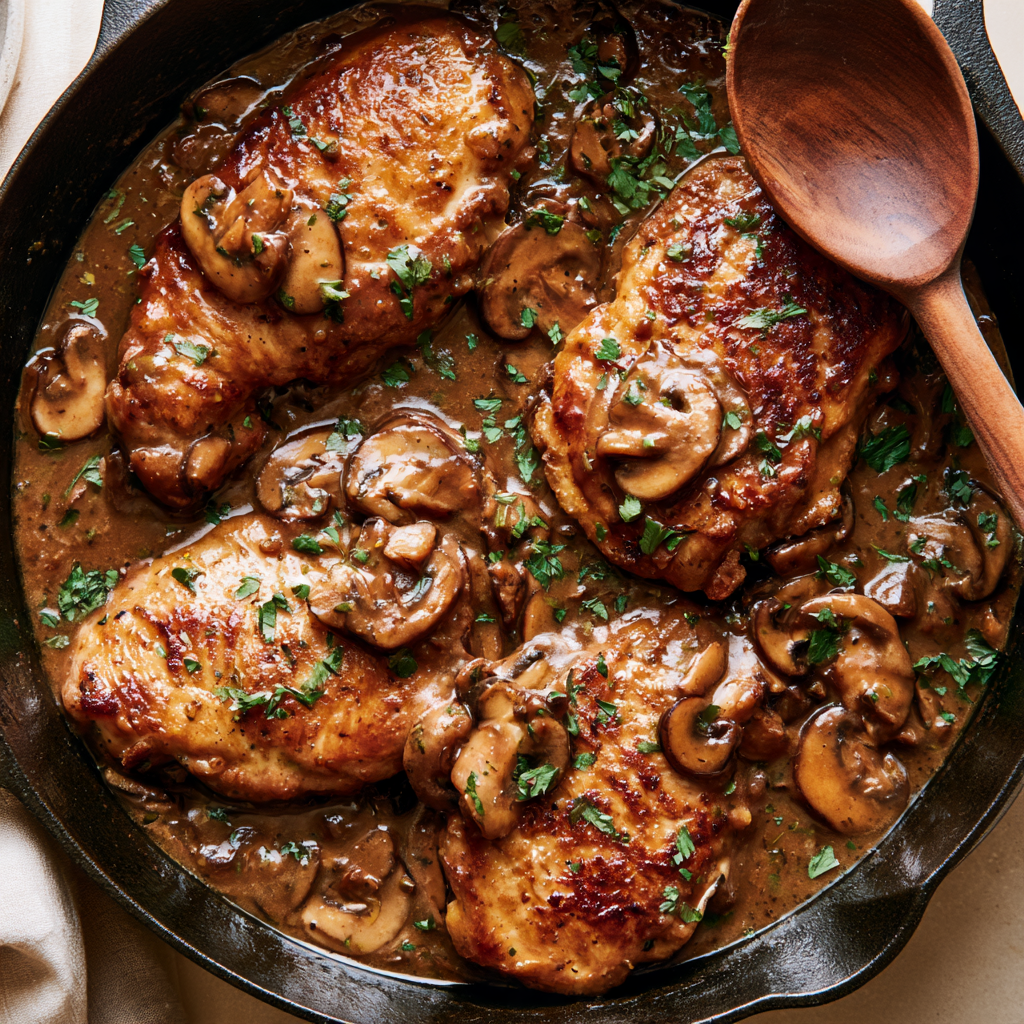
Chicken cutlets cook in minutes. Pounding chicken breasts to ¼-inch thickness means each cutlet cooks in 2–3 minutes per side. That’s what makes the 30-minute claim real, not aspirational. If you skip the pounding, thick breasts take 8–10 minutes per side and dry out at the edges before the center cooks.
The flour dredge does two jobs. It gives the chicken a golden crust when seared, and it thickens the pan sauce as it cooks. Skipping the flour means a thin sauce and pale chicken. The flour that clings to the cutlets dissolves into the sauce as it simmers, which is what gives the sauce its body without needing a cornstarch slurry.
Dry Marsala is the right wine. Dry Marsala is nutty, slightly sweet, and savory. It’s the wine chicken marsala was built around. Sweet Marsala is for dessert and will make the sauce taste like syrup. If you can, buy a bottle of dry Marsala you’d actually drink — a $12 bottle lasts months and makes a noticeable difference over cooking Marsala, which is often salty and flat.
Build the sauce in the same pan. After the chicken comes out, add the mushrooms to the same skillet and pick up all the browned bits left behind from the chicken. Then add the wine and deglaze the pan, lifting every bit of that flavor into the sauce. This is why one-skillet cooking isn’t just about fewer dishes — it’s about building flavor in layers.
Butter goes in at the end, off heat. Swirling cold butter into a finished sauce emulsifies it and gives it a glossy, velvety texture. Adding butter earlier or over high heat makes the sauce split and turn greasy. This is the same technique restaurants use to finish pan sauces, and it’s why homemade marsala can taste just as good as a restaurant version.
Fresh parsley and lemon brighten the whole dish. Marsala and mushrooms are rich and earthy. A handful of parsley and a squeeze of lemon keep the finished plate from tasting heavy. Without them, the sauce can taste one-dimensional.
It reheats well if you’re careful. The chicken and sauce reheat beautifully on the stovetop over low heat with a splash of broth. The mushrooms hold their texture. And if you’re serving it over pasta, keep the pasta separate until you reheat so it doesn’t turn mushy.
It’s a genuine one-skillet meal. Everything happens in the same pan. The only other tools you need are a cutting board, a meat mallet (or a heavy pan), and a plate to hold the chicken while you build the sauce.
30-Minute One-Skillet Chicken Marsala
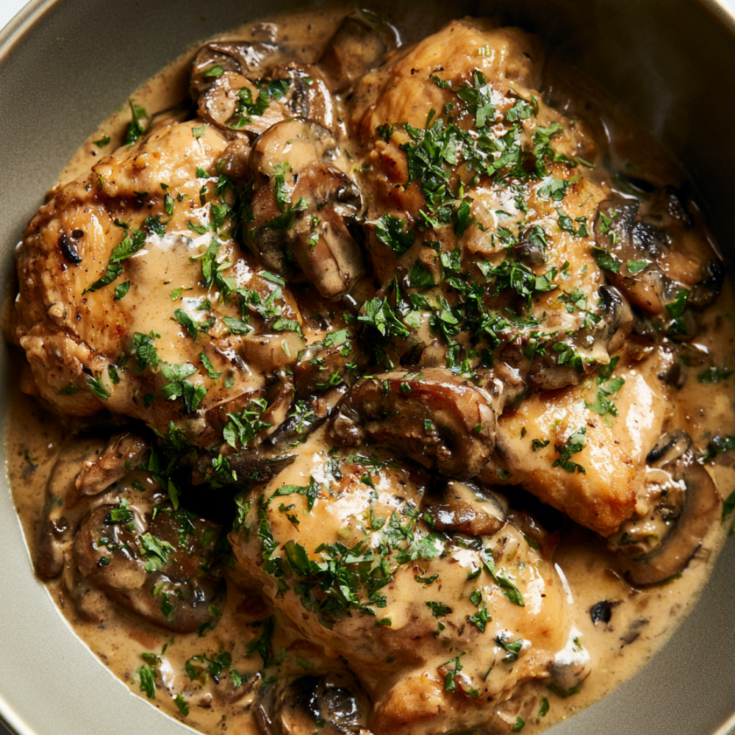
Restaurant-quality chicken marsala in 30 minutes and one skillet. Golden seared chicken cutlets in a savory mushroom-marsala pan sauce, finished with cold butter and fresh parsley. Serve over pasta, mashed potatoes, or polenta.
Ingredients
- 1½ lbs boneless, skinless chicken breasts (about 4 breasts)
- ½ cup all-purpose flour
- 1½ tsp kosher salt, divided
- ½ tsp black pepper
- 1 tsp garlic powder
- ½ tsp smoked paprika
- 3 tbsp olive oil, divided
- 3 tbsp unsalted butter, divided
- 1 lb cremini mushrooms, sliced ¼-inch thick
- 1 small shallot, finely diced (about ¼ cup)
- 3 cloves garlic, minced
- ¾ cup dry Marsala wine
- ¾ cup low-sodium chicken broth
- ½ cup heavy cream (optional, for a creamier sauce)
- 1 tbsp fresh lemon juice
- ¼ cup fresh parsley, chopped
- Flaky sea salt, for finishing
Instructions
1. Pound and dry the chicken. Place each chicken breast between two sheets of plastic wrap. Using a meat mallet or the bottom of a heavy skillet, pound from the center outward until each breast is an even ¼-inch thick. Pat the cutlets completely dry with paper towels.
2. Dredge the chicken. In a shallow dish, whisk together the flour, 1 teaspoon kosher salt, black pepper, garlic powder, and smoked paprika. Dredge each cutlet in the flour mixture, shaking off the excess. Place the dredged cutlets on a plate. Use the remaining ½ teaspoon of salt to season the finished sauce.
3. Sear the chicken in two batches. Heat 1½ tablespoons of the olive oil in a large skillet over medium-high heat until shimmering. Add two cutlets and cook for 2–3 minutes per side, until golden brown. The chicken does not need to be cooked through — it will finish in the sauce. Transfer the seared cutlets to a plate. Add the remaining 1½ tablespoons olive oil and sear the remaining two cutlets. Transfer to the plate.
Let the seared cutlets cool on the plate while you build the sauce. That's fine — they warm back through in the sauce at the end.
4. Sauté the mushrooms. Reduce the heat to medium. Add 1 tablespoon of the butter to the skillet. Once melted, add the sliced mushrooms and cook for 6–8 minutes, stirring occasionally, until they've released their liquid and the skillet is nearly dry. The mushrooms should be deeply browned, not just softened.
5. Add the shallot and garlic. Add the diced shallot and cook for 2 minutes, until softened. Add the minced garlic and cook for 30 seconds, until fragrant.
6. Deglaze with Marsala. Pour in the Marsala wine and scrape the bottom of the skillet with a wooden spoon to lift any browned bits. Simmer for 2–3 minutes, until the wine has reduced by about half and the raw alcohol smell has cooked off.
7. Add the broth and reduce. Pour in the chicken broth and add the remaining ½ teaspoon of kosher salt. Simmer for 4–6 minutes, until the sauce has reduced by about half and coats the back of a spoon. If you're using heavy cream, stir it in now and simmer for 1 more minute.
Without the heavy cream, the sauce will be slightly thinner. It still coats the chicken and tastes excellent — it just has a lighter body. If you want a thicker sauce without cream, simmer for 1–2 extra minutes to reduce further.
8. Finish the sauce. Remove the skillet from the heat. Add the remaining 2 tablespoons of butter and swirl until melted and incorporated. Stir in the lemon juice. Taste and adjust salt and pepper.
9. Return the chicken. Return the seared chicken cutlets to the skillet along with any accumulated juices. Spoon the sauce over the top and let the chicken sit in the sauce for 1–2 minutes to warm through. If the chicken needs more cooking, cover the skillet and simmer over low heat for 1–2 minutes, until the thickest part reaches 165°F.
10. Serve. Sprinkle with fresh parsley and flaky sea salt. Serve immediately over pasta, mashed potatoes, polenta, or with crusty bread.
Notes
- Make-ahead: Store the chicken and sauce together in an airtight container for up to 4 days. Reheat gently on the stovetop over low heat with a splash of broth, or in the microwave at 70% power. Keep any pasta, mashed potatoes, or polenta separate and combine just before serving.
- Freezer: The chicken and sauce freeze well for up to 3 months. Cool completely, then transfer to a freezer-safe container. Thaw overnight in the refrigerator and reheat gently. The sauce may separate slightly after freezing — whisk in a tablespoon of warm broth and a small piece of butter to bring it back together.
- Protein per Serving: About 38–42g
- Nutrition note: Protein varies depending on the chicken, flour, broth, and butter amounts you use. Estimated per serving without sides: ~420 calories, 38–42g protein, ~12 g carbs, ~22 g fat.
A Quick Note on Searing Chicken Cutlets
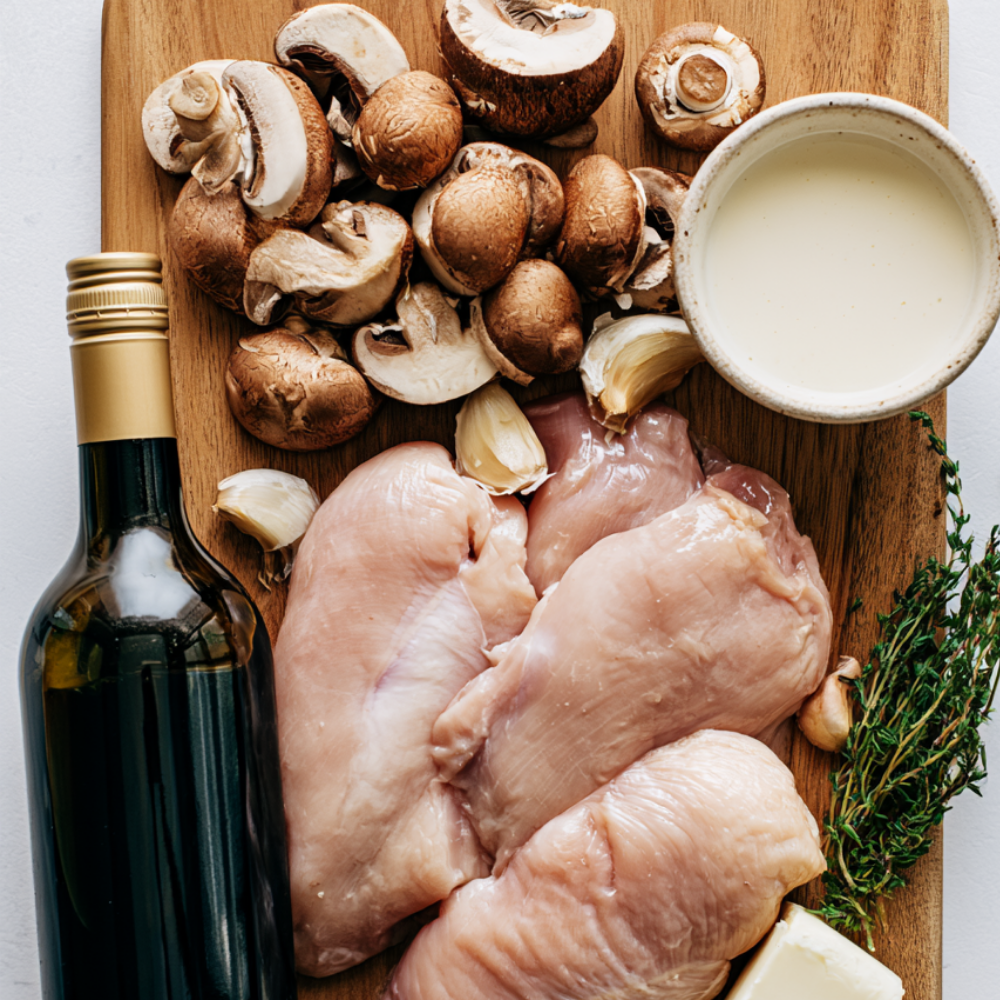
Three things determine whether chicken marsala tastes restaurant-quality or home-cooked-and-fine:
Pound the chicken to an even ¼-inch thickness. Uneven cutlets cook unevenly — thin edges dry out while thick centers stay raw. Place the breast between two sheets of plastic wrap and pound from the center outward with a meat mallet or the bottom of a heavy pan. Work from the middle toward the edges so the thickness stays even.
Dry the chicken before dredging. Surface moisture prevents the flour from adhering and creates steam instead of a crust. Pat each cutlet dry with paper towels before dredging. This 30-second step makes a visible difference.
Sear in a hot pan with room between the pieces. Medium-high heat, a thin film of oil, and a single layer. If the cutlets touch, they steam. Sear in two batches if needed. The goal is a deep golden crust, not just a pale browning.
A Quick Note on the Sauce
Three things determine whether the sauce turns out glossy and coating or thin and watery:
Cook off the alcohol. After adding the Marsala, simmer for 2–3 minutes before adding the broth. This cooks off the raw alcohol taste and concentrates the wine’s flavor. If you skip this step, the sauce tastes sharp and boozy.
Reduce, don’t just simmer. “Simmer until thickened” is vague. The visual cue is this: the sauce should reduce by about half and coat the back of a spoon. That’s usually 4–6 minutes over medium heat. If the sauce is thin, keep simmering. If it’s too thick, add a splash of broth.
Finish with cold butter, off heat. Remove the pan from the heat, add the butter, and swirl until it melts into the sauce. This is what gives the sauce its gloss and body. If you add butter over high heat, it splits and turns greasy.
Troubleshooting
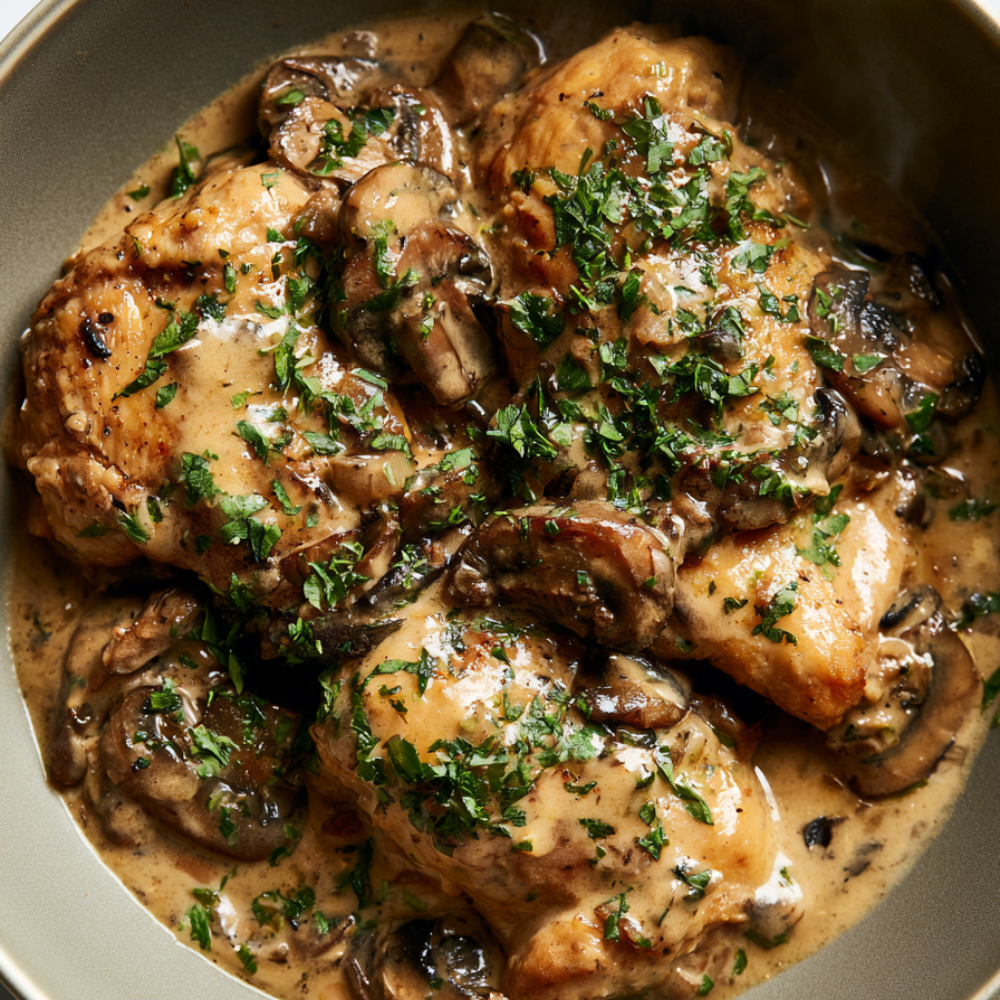
The sauce is too thin. Keep simmering. The sauce needs to reduce by about half and coat the back of a spoon. If it’s been 8+ minutes and it’s still thin, your skillet may be too large (more surface area, less depth) or your heat too low. Increase the heat slightly and keep reducing. If you’re out of time, whisk in a small cornstarch slurry (1 tsp cornstarch + 1 tbsp cold water) and simmer for 1 more minute.
The sauce is greasy or split. You added the butter over high heat or while the sauce was still boiling. Butter must go in off heat and be swirled, not stirred, into the finished sauce. If it’s already split, remove the pan from the heat and whisk in 1 tablespoon of warm broth until the sauce comes back together.
The chicken is dry. You overcooked it during the sear or left it in the pan while the sauce reduced. Sear the cutlets for 2–3 minutes per side only, remove them to a plate, and return them at the very end just to warm through.
The sauce tastes flat or bland. It needs salt or acid. Taste and add more kosher salt, a squeeze of lemon, or both. Marsala is naturally sweet, and without enough salt or acid the sauce can taste one-dimensional.
The mushrooms are watery. You didn’t cook them long enough. Mushrooms release a lot of water, and the pan needs to be nearly dry before you add the shallot. If they’re still releasing liquid, keep cooking. Undercooked mushrooms make a watery sauce.
The chicken didn’t sear — it looks pale and steamed. The pan wasn’t hot enough, the chicken was wet, or you crowded the pan. Pat the chicken dry, get the oil shimmering before adding the cutlets, and sear in two batches with room between the pieces.
Key Tips
- Pound to an even ¼ inch. Uneven cutlets cook unevenly. Pound from the center outward.
- Dry before dredging. Moisture prevents the flour from adhering and creates steam instead of a crust.
- Sear in two batches. 1½ lbs of cutlets won’t fit in a single layer in a 12-inch skillet. Crowding steams the chicken instead of searing it.
- Brown the mushrooms properly. Mushrooms release a lot of water. Cook them until the skillet is nearly dry and the mushrooms are deeply browned. Undercooked mushrooms make a watery sauce.
- Use dry marsala. Sweet Marsala is for dessert and will make the sauce taste like syrup.
- Cook off the alcohol. Simmer the wine for 2–3 minutes before adding the broth. This removes the raw alcohol taste and concentrates the flavor.
- Reduce the sauce until it coats a spoon. This is the visual cue for doneness.
- Add butter off heat. Cold butter swirled into a finished sauce emulsifies it and gives it gloss. High heat makes it split.
- Finish with lemon and parsley. The acid and herbs keep the rich sauce from tasting heavy.
- Season at the end. The flour and broth carry salt. Taste the finished sauce and adjust before serving.
- If you’re making pasta, start the water first. The 30-minute claim is for the Marsala alone. If you’re serving it over pasta, get the water boiling before you start the chicken so everything finishes at the same time.
Easy Variations
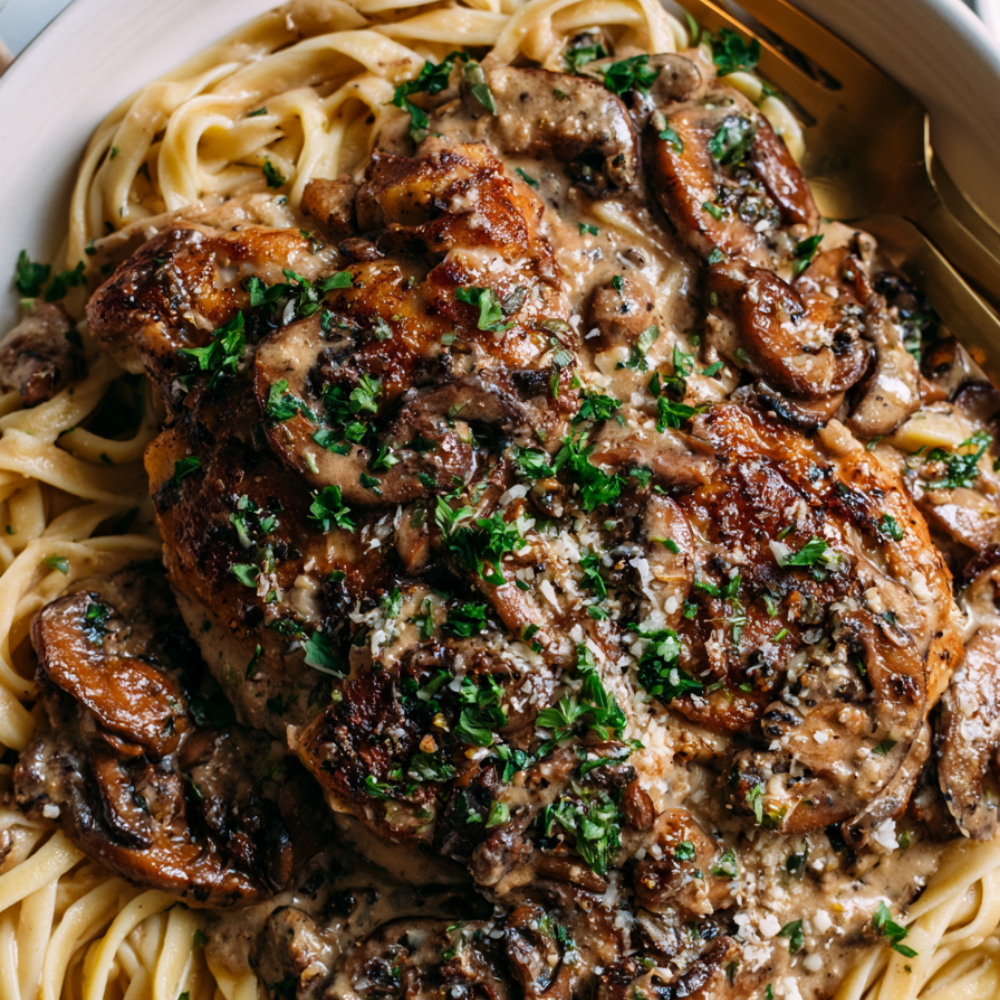
Creamy Chicken Marsala. Add ½ cup of heavy cream after the broth reduces. Simmer for 1 more minute, then finish with butter and lemon as directed. The sauce becomes richer and slightly thicker. About 38–42g protein per serving.
Chicken Marsala Pasta. Cook 12 oz of fettuccine or linguine according to package directions. Toss the drained pasta with the finished sauce and sliced chicken. Add a splash of pasta water to loosen the sauce if needed. About 34–38 g of protein per serving.
Chicken Marsala Casserole. Cook 12 oz of pasta. Combine the cooked pasta, sliced chicken, and Marsala sauce in a greased 9×13 baking dish. Top with 1 cup of shredded mozzarella and ½ cup of grated Parmesan. Bake at 375°F for 20 minutes, until bubbly. About 36–40g protein per serving.
Crock Pot Chicken Marsala. Skip the pounding and dredging. Place 2 lbs of chicken thighs in a slow cooker with the mushrooms, shallot, garlic, Marsala, and broth. Cook on low for 5–6 hours. Remove the chicken and shred it. Stir in the butter, lemon juice, and parsley. Serve over pasta or mashed potatoes. About 38–42g protein per serving.
Chicken Marsala Crockpot With Cream. Follow the crockpot version above, but stir ½ cup of heavy cream into the sauce after removing the chicken. About 38–42g protein per serving.
Shredded Chicken Marsala. Follow the crockpot version. Shred the chicken and return it to the sauce for a shredded-chicken version that works in sandwiches, over rice, or in tacos. About 38–42g protein per serving.
Storage and Food Safety
Refrigerator: Store the chicken and sauce together in an airtight container for up to 4 days. Keep any pasta, mashed potatoes, or polenta in a separate container.
Freezer: The chicken and sauce freeze well for up to 3 months. Cool completely, then transfer to a freezer-safe container. Thaw overnight in the refrigerator before reheating. The sauce may separate slightly after freezing — whisk in a tablespoon of warm broth and a small piece of butter to bring it back together. Do not freeze pasta or potatoes with the sauce.
Reheating: Reheat gently on the stovetop over low heat with a splash of broth, or in the microwave at 70% power in 60-second intervals. High heat will split the sauce.
Food safety: Cook chicken to 165°F. Refrigerate leftovers within 2 hours. Reheat leftovers to 165°F throughout.
Frequently Asked Questions
What is chicken marsala?
Chicken marsala is an Italian-American dish of seared chicken cutlets in a pan sauce made with marsala wine, mushrooms, and butter. It’s typically served over pasta, mashed potatoes, or polenta.
What kind of Marsala should I use?
Dry marsala. Sweet Marsala is for dessert and will make the sauce taste like syrup.
Can I make chicken marsala without wine?
Yes. Substitute ¾ cup low-sodium chicken broth mixed with 2 tablespoons balsamic vinegar and 1 teaspoon honey. The flavor will be slightly different but still good.
Can I use cooking Marsala?
Cooking Marsala is often loaded with salt and has a flatter flavor than drinking Marsala. If you can, buy a bottle of dry Marsala you’d actually drink.
Why did my chicken turn out dry?
Two likely reasons: you overcooked it while searing, or you left it in the pan while the sauce reduced. Sear the cutlets for 2–3 minutes per side, remove them, and return them to the sauce only at the very end.
Why did my sauce turn out thin?
You didn’t reduce it enough. After adding the broth, simmer until the sauce coats the back of a spoon — usually 4–6 minutes. The flour from the chicken dredge also thickens the sauce, so don’t skip it.
Why did my sauce turn out greasy?
You added the butter over high heat or too early. Butter should go in off heat, swirled into the finished sauce.
Can I make this without flour?
Yes, but the sauce will be thinner, and the chicken won’t have the same golden crust. Use gluten-free all-purpose flour or cornstarch instead. If using cornstarch, use ¼ cup instead of ½ cup.
Can I use chicken thighs instead of breasts?
Yes. Boneless, skinless thighs work well. Pound them to an even thickness, dredge, and sear for 3–4 minutes per side. About 36–40 g of protein per serving.
Can I make this dairy-free?
Yes. Skip the butter and heavy cream. Use olive oil for the finish and add an extra squeeze of lemon.
How do I meal prep this?
Cook the chicken and sauce, then cool completely. Store the chicken and sauce together in one container and any pasta, potatoes, or polenta in a separate container. Reheat gently on the stovetop over low heat with a splash of broth. Holds for up to 4 days.
Can I make this ahead for a dinner party?
Yes. Make the chicken and sauce up to 1 day ahead and refrigerate. Reheat gently on the stovetop. The flavor actually improves overnight. Make any pasta or sides fresh the day of serving.
What’s the best side for chicken marsala?
Fettuccine, linguine, or pappardelle are the classic choices. Creamy mashed potatoes and polenta both work well because they soak up the sauce.
Is chicken marsala gluten-free?
Not as written, because of the flour dredge. Use gluten-free flour or cornstarch and check your broth and Marsala.
Can I double this recipe?
Yes. Use a larger skillet or cook the chicken in three batches. Double all sauce ingredients, but use a 14-inch skillet or a wide Dutch oven so the sauce reduces properly.
More High-Protein Chicken Recipes You’ll Love
- High-Protein Chicken Pot Pie Casserole: All the Comfort, None of the Guilt
- Healthy Chicken Cordon Bleu: High-Protein, Lightened-Up Weeknight Dinner
- High-Protein Baked Chicken Spaghetti: Cozy, Creamy, and Cheesy Comfort Food
Conclusion
This 30-minute one-skillet chicken marsala proves restaurant-quality food doesn’t require a restaurant kitchen.
Golden seared chicken cutlets in a savory mushroom-Marsala pan sauce, finished with cold butter, fresh lemon, and parsley. About 38–42 grams of protein per serving.
The keys are simple: pound the chicken to an even thickness, dry it before dredging, sear it in two batches, remove it before building the sauce, brown the mushrooms properly, cook off the alcohol, reduce the sauce until it coats a spoon, and finish with cold butter off heat.
Do that, and you’ll have a chicken marsala that tastes like something you’d order at a nice Italian restaurant.
Make it on a weeknight when you want something that feels special but comes together in half an hour. Or make it on Sunday and portion it into containers for the week — it’s even better on day two.