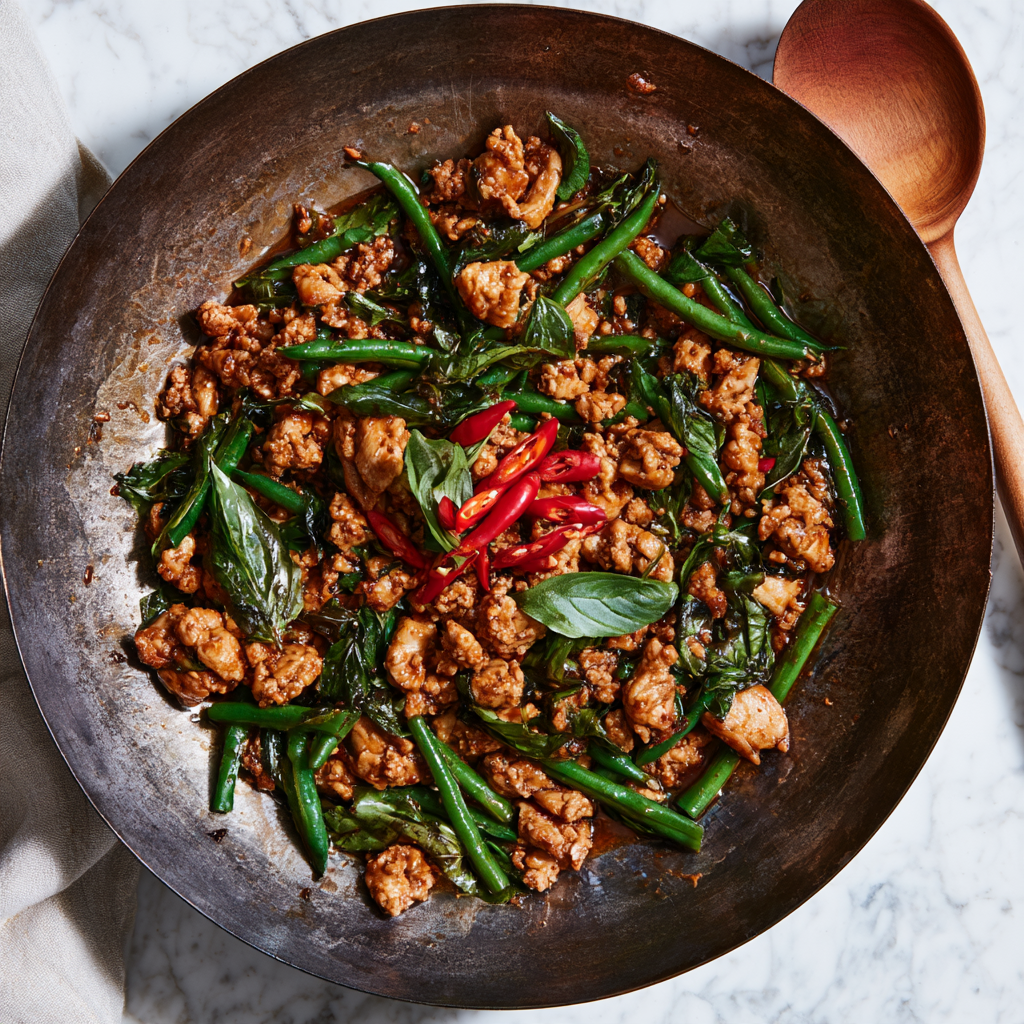

Thai basil chicken—pad krapow gai—is the dish I order first at any Thai restaurant and the one I make at home more than almost anything else.
It’s the kind of food that hits you immediately: garlic and chile blooming in a screaming hot wok, ground chicken browning fast, oyster sauce and fish sauce hitting the pan and reducing into a glossy, savory glaze, and a full cup of Thai basil going in at the very end so it wilts without losing its punch.
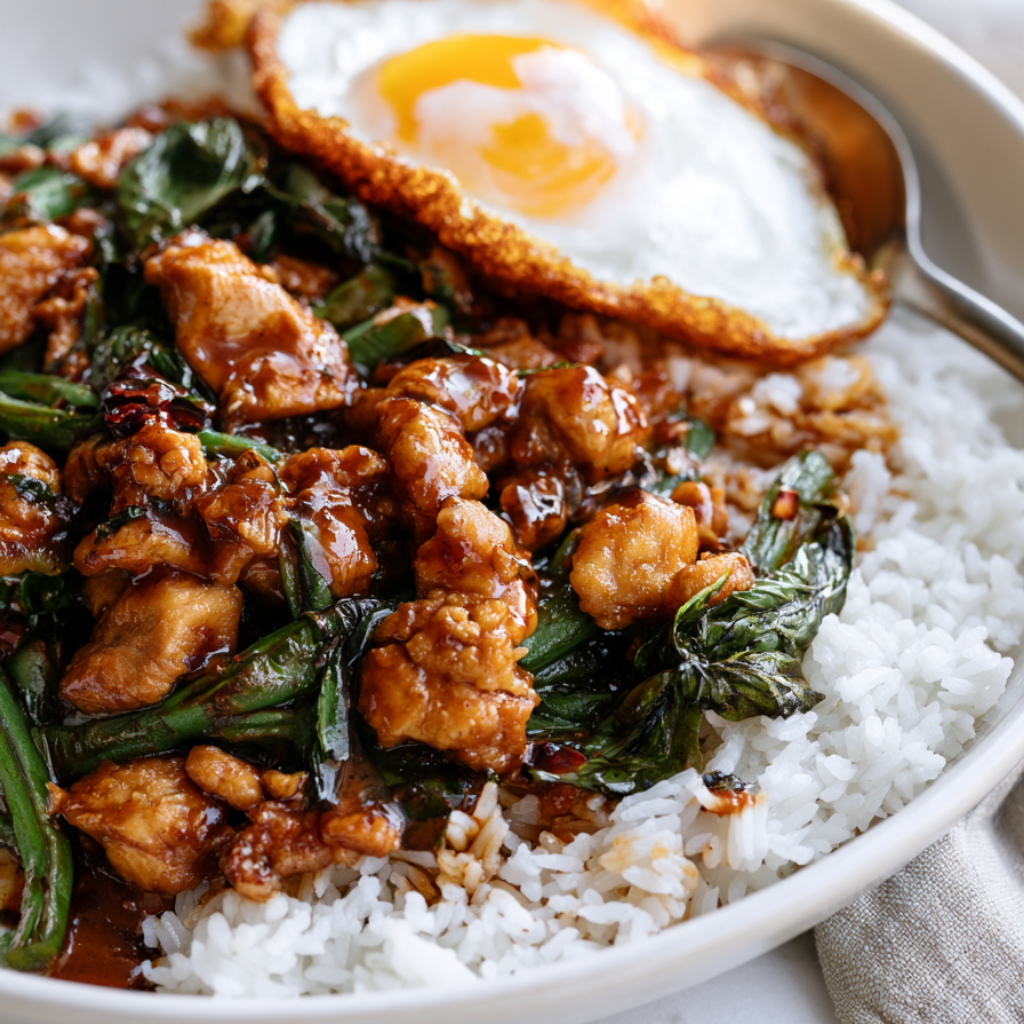
Served over jasmine rice with a crispy fried egg on top, it’s one of the best 15-minute dinners in the world.
This version is inspired by Chef Kris Yenbamroong of Night + Market in Los Angeles, whose pad krapow gai recipe has become one of the most-cooked Thai dishes in American home kitchens.
Chef Yenbamroong’s version uses ground dark-meat chicken for richness and a bird’s-eye chile for heat.
I’ve adapted it in a few ways: swapping the dark meat for ground chicken breast to make it leaner and higher in protein, doubling the garlic, pushing the chile quantity just slightly higher for a touch more heat, and adding optional dark soy sauce for a deeper color.
The technique—the wok, the sauces, the basil off the heat, the crispy egg—is all faithful to his method.
The result is a dish that keeps everything that makes pad krapow gai great, with about 45 grams of protein per serving.
It’s a real dinner, not a takeout indulgence.
It’s ready in 15 minutes. It’s made in one pan. And it tastes as if it came from a Bangkok street stall, not your kitchen on a Tuesday.
Why This Recipe Works
This isn’t a complicated dish, but a few small decisions make it work better than most Thai basil chicken recipes. Here’s what actually matters:
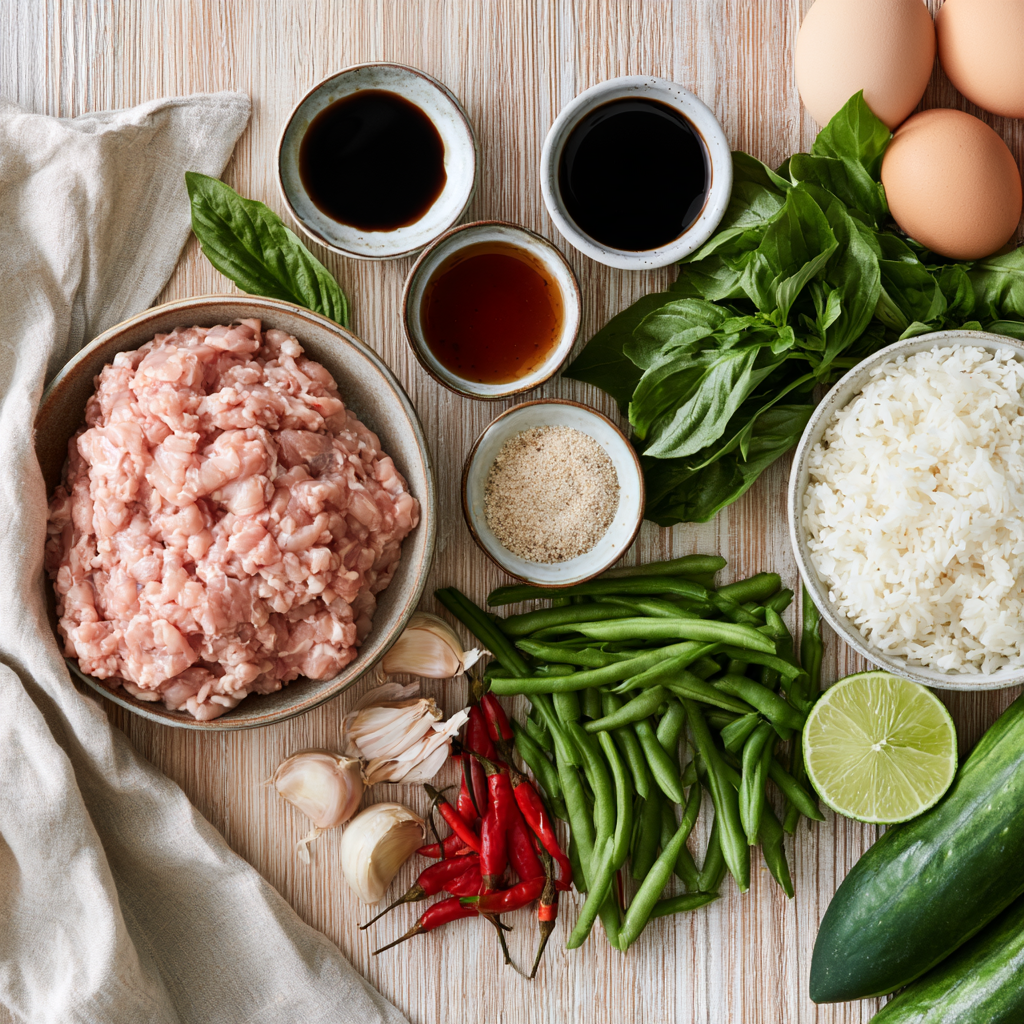
Prep Everything Before the Wok Goes On. This dish cooks in about 4 to 5 minutes from the moment the chicken hits the pan. You won’t have time to mince garlic or measure sauces while the chicken cooks. Line up the garlic, chiles, sugar, sauces, and basil next to the stove before you turn on the heat. This is the single most important thing you can do for a fast stir-fry.
Cook Hot and Fast in a Screaming Hot Wok or Skillet. Pad krapow gai is a stir-fry, not a slow simmer. The wok needs to be ripping hot before anything goes in—medium-high to high heat, with the oil shimmering. That high heat is what browns the chicken instead of steaming it, blooms the garlic and chile in seconds, and reduces the sauces into a glossy glaze.
Cook the Chicken in Two Batches. Two pounds of ground chicken is a lot for a standard 12-inch skillet or home wok. If you add it all at once, the sheer volume will instantly drop the pan temperature, release moisture, and steam the chicken instead of searing it. Cook in two batches—half the chicken, garlic, and chiles at a time—then return everything to the pan before the sauces go in. This is the fix that guarantees browning instead of steaming.
Don’t Stir Constantly. Let the chicken sit against the hot surface for 30 seconds at a time so it develops color and wok char. Stirring constantly keeps the chicken moving and prevents browning.
Ground Chicken Breast Instead of Dark Meat. Chef Yenbamroong’s original uses ground dark meat for richness and fat. Ground chicken breast is leaner and higher in protein—about 45 grams per serving in this version versus roughly 32 with dark meat—but it’s also milder and drier. The two-batch method and slightly more oil fix that.
Bloom the Garlic, Chile, and Sugar Together. Add the garlic, minced chiles, and a pinch of sugar to the oil at the same time as the chicken. The sugar isn’t there to make the dish sweet—it’s there to balance the salt from the fish sauce and oyster sauce and to help the chicken brown faster.
Three Sauces, Three Jobs. Oyster sauce brings sweetness and body. Fish sauce brings salt and umami. Thai seasoning sauce brings a savory, almost soy-like depth. Together they season the chicken and reduce into a glossy coating.
Add the Basil Off the Heat. Thai basil and holy basil are delicate. If they sit in a hot pan for more than 30 seconds, they turn black and bitter. Turn off the burner, add the basil and white pepper, and toss just until the leaves wilt.
Prik Nam Pla on the Side for Extra Heat. If you want more spice, serve prik nam pla—Thai chile fish sauce—on the side. It’s thinly sliced bird’s-eye chiles in fish sauce, with a squeeze of lime. Red pepper flakes at the table work too.
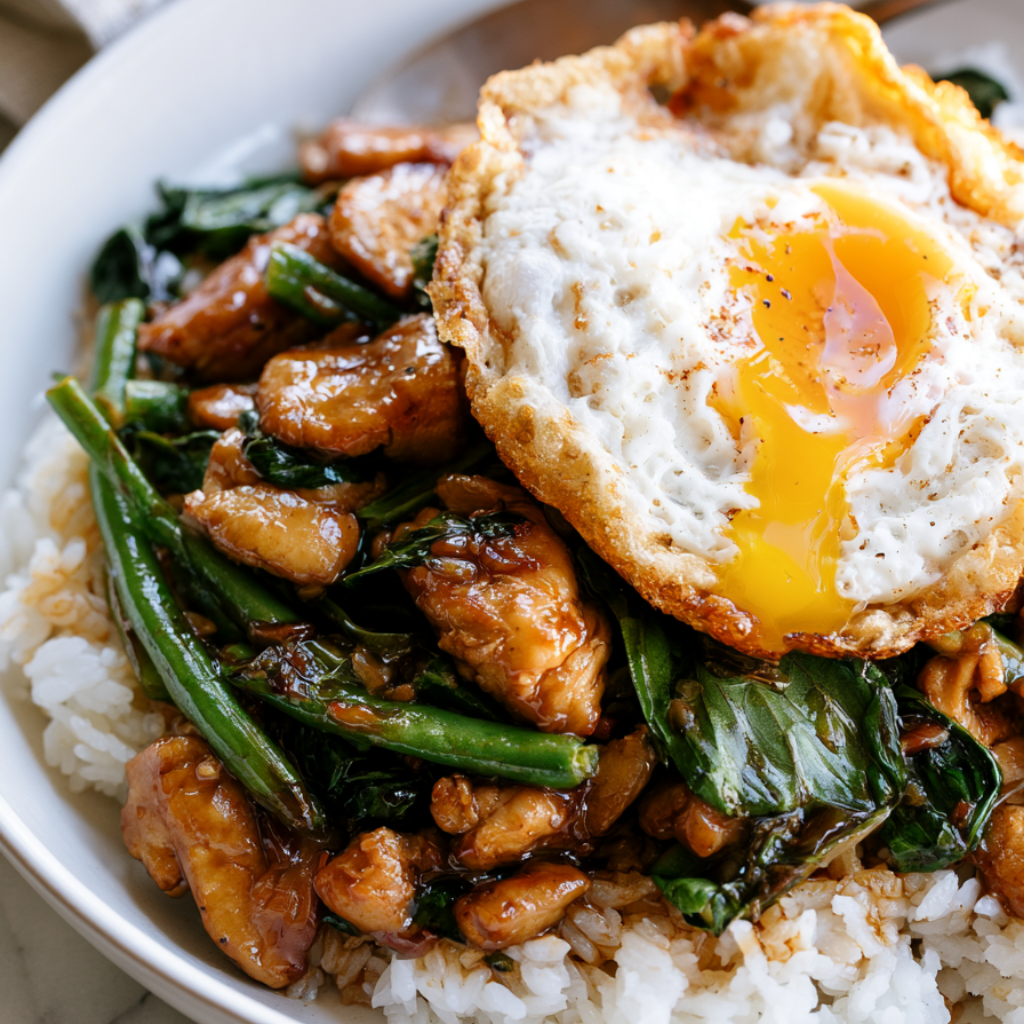
The Crispy Fried Egg Is Not Optional. Kai dao, the crispy fried egg, is what makes pad krapow gai feel like street food. Fry the egg in a shallow pool of hot oil until the edges are lacy, blistered, and crisp. The yolk stays runny, so it runs into the rice and sauce when you break it.
Serve Over Jasmine Rice. Jasmine rice soaks up the sauce and provides a neutral base for the spicy, salty chicken.
Spicy Thai Basil Chicken (Pad Krapow Gai)
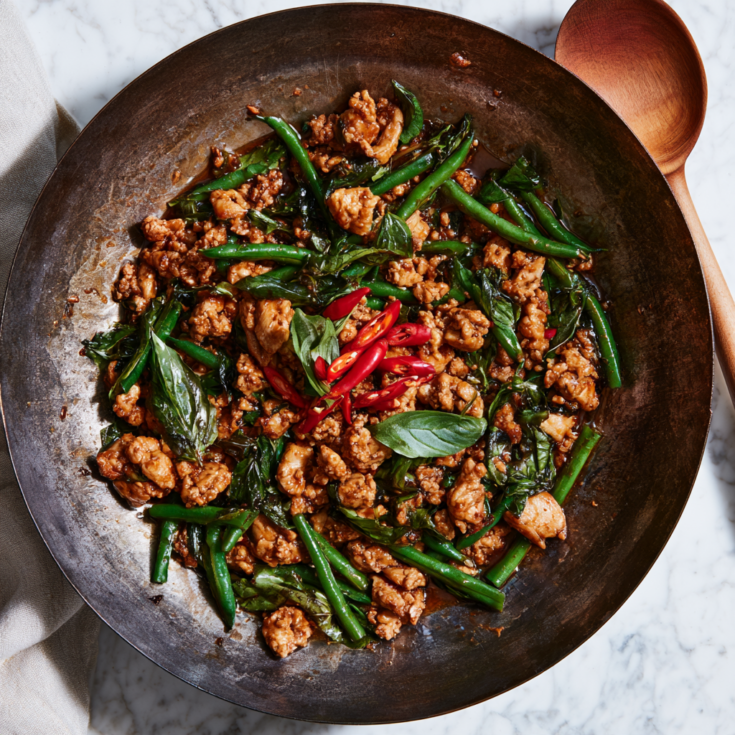
A fast, spicy Thai basil chicken made with ground chicken breast, green beans, and holy basil in a glossy oyster-fish sauce glaze. Inspired by Chef Kris Yenbamroong of Night + Market.
Ingredients
For the Thai Basil Chicken
- 2 lbs ground chicken breast
- 3 tbsp vegetable oil, divided
- 4 cloves garlic, minced (about 2 tbsp)
- 1 to 1½ bird's eye chiles, thinly sliced (about 1¼ tsp minced) or 1 serrano chile
- 2 tsp granulated sugar or palm sugar
- 8 oz green beans, trimmed and cut into ½-inch pieces
- 3 tbsp oyster sauce
- 2 tbsp fish sauce
- 1 tbsp Thai seasoning sauce (Golden Mountain brand)
- 1 tsp dark soy sauce (optional, for color)
- 1 cup loosely packed Thai basil or holy basil leaves
- ½ tsp ground white pepper
- Red pepper flakes, for serving (optional)
For the Crispy Fried Eggs (Kai Dao)
- 4 large eggs
- ¼ cup vegetable oil, for frying
For Serving
- Steamed jasmine rice
- Prik nam pla (Thai chile fish sauce), optional
- Lime wedges
- Sliced cucumber and tomato
Instructions
- Prep everything first. This dish cooks in about 4-5 minutes once the chicken hits the pan. Mince the garlic, slice the chiles, measure the sugar, trim and cut the green beans, and line up the oyster sauce, fish sauce, Thai seasoning sauce, and dark soy sauce next to the stove. Set the basil and white pepper aside in a small bowl for the very end.
- Heat the wok or skillet. Heat a large wok or 12-inch skillet over high heat for 2 to 3 minutes, until it's ripping hot. Add 2 tablespoons of the vegetable oil and swirl to coat.
- Sear the first batch of chicken. Add half the ground chicken, half the minced garlic, half the sliced chiles, and 1 teaspoon of the sugar to the hot pan. Cook for 2 to 3 minutes, breaking the chicken into small crumbles with a wooden spoon but letting it sit against the hot surface for 30 seconds at a time so it browns. Transfer the cooked chicken to a bowl.
- Sear the second batch. Add the remaining 1 tablespoon of oil to the pan and repeat with the remaining chicken, garlic, chiles, and sugar. Cook for 2 to 3 minutes, until browned and cooked through.
- Combine and add the green beans. Return the first batch of chicken to the pan along with the green beans. Stir and cook for 1 minute, until the green beans are crisp-tender but still bright green.
- Glaze with sauce. Pour in the oyster sauce, fish sauce, Thai seasoning sauce, and dark soy sauce if using. Stir constantly for 30 to 60 seconds, until the sauces reduce slightly and coat every piece of chicken and green bean in a glossy glaze.
- Wilt the basil off the heat. Turn off the burner. Add the Thai basil leaves and ground white pepper. Toss for 15 to 20 seconds, just until the basil wilts. The residual heat is enough—basil that sits over heat turns black and bitter.
- Fry the eggs. While the chicken finishes, heat the ¼ cup of vegetable oil in a small skillet or wok over high heat until it shimmers. Crack one egg directly into the oil and fry for 45 to 60 seconds, spooning hot oil over the top, until the edges are deeply golden, lacy, and crisp and the yolk is still runny. Transfer to a paper-towel-lined plate and repeat with the remaining eggs.
- Serve. Spoon the Thai basil chicken over steamed jasmine rice and top with a crispy fried egg. Serve with prik nam pla on the side for extra heat, plus lime wedges and sliced cucumber and tomato to balance the spice. Red pepper flakes at the table work too.
Notes
Protein per Serving: About 45gNutrition Note:
Make-Ahead and Storage Instructions
Make Ahead: You can mince the garlic and chiles up to 2 days ahead and store them covered in the refrigerator. Whisk the sauces together in a small bowl up to 3 days ahead. Trim and cut the green beans up to 2 days ahead. Cook the chicken fresh—this dish takes 5 minutes once the pan is hot.
Refrigerator: Store leftovers covered in an airtight container for up to 3 days. The basil will darken as it sits. Reheat gently in a skillet over medium heat for 2 to 3 minutes, or in the microwave for 90 seconds. Fry a fresh egg each time you reheat a portion.
Freezer: The cooked chicken (without the basil) freezes well for up to 2 months. Cool completely, then transfer to a freezer-safe container. Thaw overnight in the refrigerator and reheat in a skillet over medium-high heat. Add fresh basil off the heat before serving.
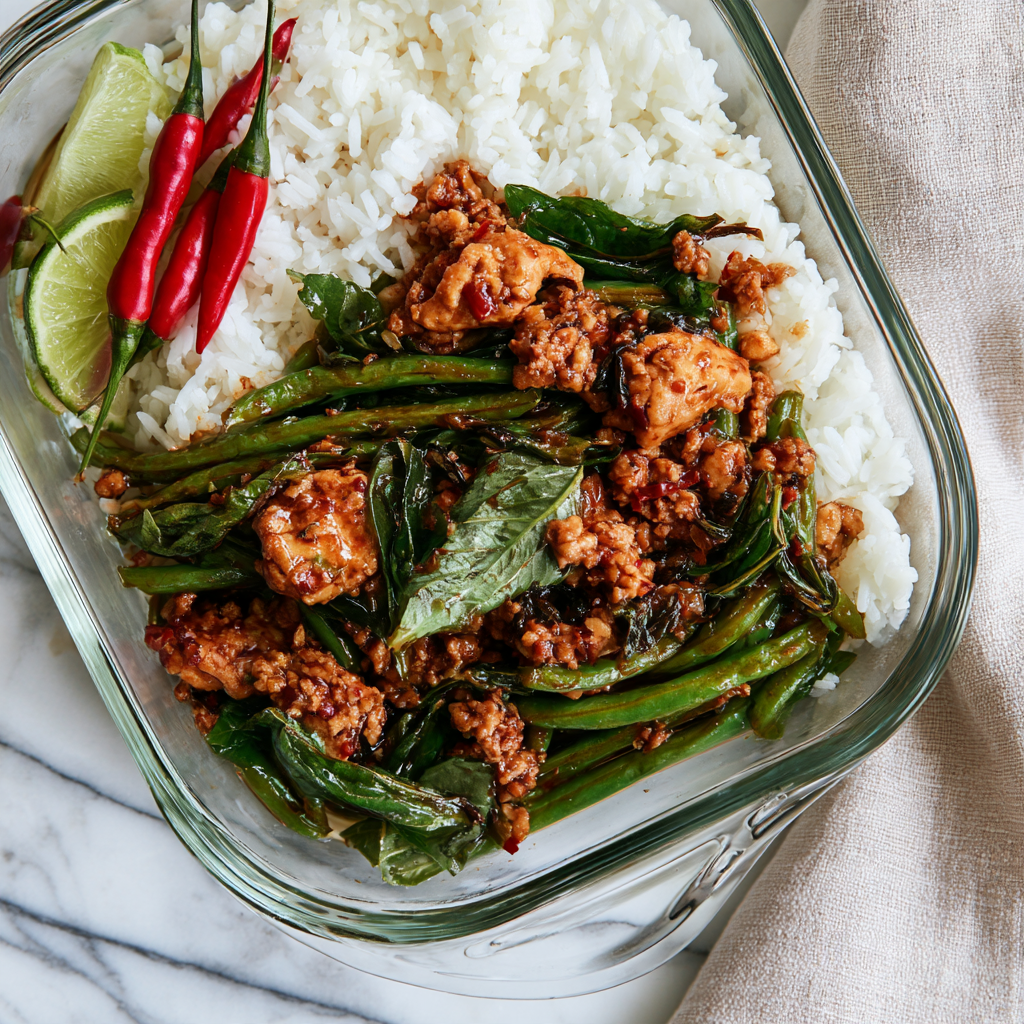
Meal Prep: Portion the chicken and jasmine rice into meal prep containers. Store the crispy fried egg separately or fry one fresh each morning. This dish holds up beautifully in the refrigerator for 3 days.
Tips for the Best Thai Basil Chicken
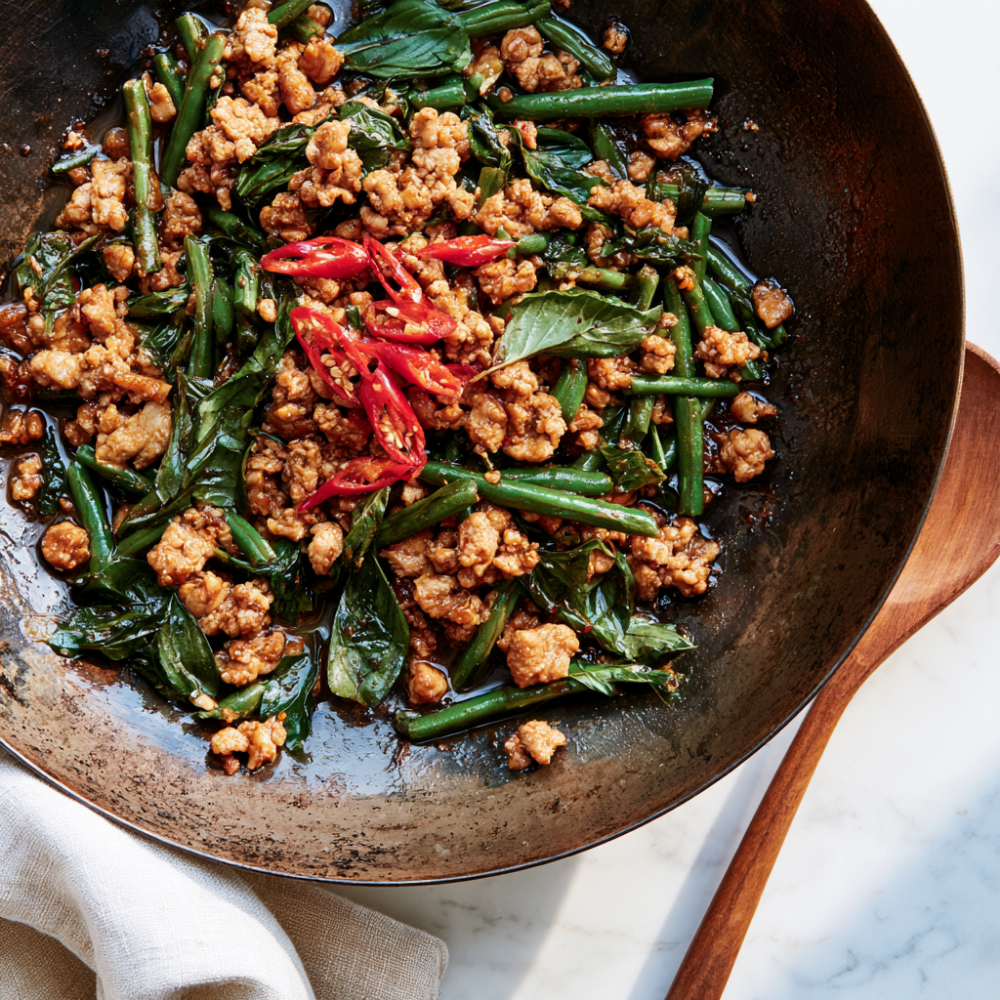
Prep everything before the wok goes on. This dish cooks in 4-5 minutes. Line everything up next to the stove before you turn on the heat.
Get the pan ripping hot. Pad krapow gai is a stir-fry, not a simmer. The wok or skillet needs to be screaming hot before you add the oil.
Cook the chicken in two batches. Two pounds of ground chicken is a lot for a standard skillet. Cooking in two batches keeps the pan hot so the chicken browns instead of steaming.
Don’t stir constantly. Let the chicken sit against the hot surface for 30 seconds at a time so it develops color and wok char.
Add the garlic, chiles, and sugar at the same time as the chicken. The sugar balances the sauces’ salt and helps the chicken brown faster.
Use all three sauces. Oyster sauce for sweetness and body, fish sauce for salt and umami, and Thai seasoning sauce for savory depth.
Add the basil off the heat. Turn off the burner, then add the basil and white pepper and toss just until the leaves wilt.
Serve prik nam pla on the side. For more heat, serve thinly sliced bird’s eye chiles in fish sauce with a squeeze of lime on the side. Red pepper flakes work too.
Fry the egg in a shallow pool of oil. The egg needs enough oil to make the edges lacy and crisp. Fry for 45 to 60 seconds and spoon the hot oil over the top.
Taste before serving, then adjust. Fish sauce and oyster sauce brands vary in salt. Taste the finished chicken and add more fish sauce, sugar, or chiles if needed.
Easy Variations
Thai Basil Beef. Swap the ground chicken breast for 2 lbs of thinly sliced flank steak or ground beef. Sear the beef quickly over high heat for 1 to 2 minutes per side, then proceed with the recipe.
Thai Basil Pork. Swap the chicken for 2 lbs of ground pork. The pork is richer and slightly sweeter, closer to the classic Northern Thai version.
Extra Spicy Thai Basil Chicken. Add 1 extra bird’s eye chili and serve with red pepper flakes or extra prik nam pla on the side.
Thai Chicken Bowl (Meal Prep Version). Portion the Thai basil chicken over jasmine rice with sliced cucumber, cherry tomatoes, and a lime wedge into meal prep containers. Fry a fresh egg each morning.
Thai Mint Chicken. Swap half the Thai basil for fresh mint leaves. The mint brings a cooler, more herbal finish that pairs beautifully with the chile heat.
Ground Chicken Basil Lettuce Wraps. Skip the rice and serve the Thai basil chicken in butter lettuce cups with extra basil, sliced cucumber, and a squeeze of lime.
Storage and Food Safety
Refrigerator: Store leftovers covered in an airtight container for up to 3 days. Reheat gently in a skillet over medium heat or in the microwave.
Freezer: The cooked chicken (without the basil) freezes for up to 2 months. Cool completely, then transfer to a freezer-safe container.
Make Ahead: Mince the garlic and chiles up to 2 days ahead. Whisk the sauces together up to 3 days ahead.
Food Safety: Ground chicken must reach an internal temperature of 165°F before serving. Cool leftovers within 2 hours and refrigerate promptly. Reheat leftovers to 165°F. Do not leave the chicken at room temperature for more than 2 hours.
Frequently Asked Questions
How much protein is in Thai basil chicken? About 45g per serving, based on 2 lbs of ground chicken breast across 4 servings. Using ground chicken thighs drops the protein to about 34g per serving.
What is pad krapow gai? Pad krapow gai is the Thai name for stir-fried chicken with holy basil. It’s one of Thailand’s most popular street food dishes and is typically served over jasmine rice with a crispy fried egg on top.
Who is Chef Kris Yenbamroong? Chef Kris Yenbamroong is the chef-owner of Night + Market, a Thai restaurant group in Los Angeles with locations in West Hollywood, Silver Lake, and Venice. His pad krapow gai recipe is one of the most-cooked Thai dishes in American home kitchens.
What are bird’s eye chiles and where can I find them? Bird’s eye chiles are small, slender red chiles about 1 to 2 inches long—and they’re hot, roughly 10 times hotter than a jalapeño. Look for them at Asian grocery stores. If you can’t find them, use 1 serrano chile (the best substitute) or 1 to 2 teaspoons of red pepper flakes, the easiest pantry substitute.
Can I use ground chicken thighs instead of breast? Yes. Ground chicken thighs are richer and slightly more forgiving, but the protein drops to about 34g per serving, and the fat goes up by about 10g.
What if I can’t find Thai basil or holy basil? Thai basil has a slightly spicy, anise-like flavor and holds up better in a hot pan. If you can’t find it, regular Italian basil works, but the flavor will be different.
What if I can’t find Thai seasoning sauce? Golden Mountain is the most common brand. If you can’t find it, substitute light soy sauce with a small pinch of sugar.
Can I make this less spicy? Yes. Use 1 bird’s eye chile (or 1 serrano) or skip the fresh chiles entirely and use ½ teaspoon of red pepper flakes.
Why did my basil turn black? The basil sat over direct heat for too long. Turn off the burner, then add the basil and white pepper and toss just until the leaves wilt.
Can I make this gluten-free? Yes. Use gluten-free oyster sauce, gluten-free fish sauce, and gluten-free Thai seasoning sauce or tamari.
What do I serve with Thai basil chicken? Serve with steamed jasmine rice, a crispy fried egg, and prik nam pla on the side. Sliced cucumber and tomato balance the spice.
More Chicken Breast Recipes You’ll Love
Pan-Seared Chicken with Creamy Mushroom Sauce
High-Protein Coconut Curry Chicken Crockpot Recipe
Thai Coconut Curry Chicken with Peppers
Conclusion
Spicy Thai basil chicken earns its spot in the weekly rotation. It’s spicy, garlicky, and undeniably delicious. And with about 45 grams of protein per serving, it’s a real meal that keeps you full.
This version is inspired by Chef Kris Yenbamroong’s pad krapow gai from Night + Market and keeps all the fast wok cooking, savory sauce glaze, and bright basil finish you love.
The ground chicken breast swap keeps it leaner and higher in protein. The slightly bumped chile quantity brings just a touch more heat. And the crispy fried egg on top makes the whole bowl taste like street food.
The three things that make it work are these. Prep everything before the wok goes on. Cook the chicken in two batches, so it browns instead of steaming. And add the basil off the heat so it stays bright green.
About 45 grams of protein per serving. Four generous portions. Ready in about 15 minutes, one pan, and endlessly adaptable with beef, pork, or a milder spice level.
Make it tonight and add it to your weekly rotation. This Thai basil chicken earns a permanent spot on the table.