There’s a certain kind of weekend dinner that has to please everyone at the table — the kids, the adults, the person who doesn’t like “too much sauce,” and the one who wants something that feels like a holiday even if it’s just a Sunday. This stuffed manicotti is the dish I make for that table. It’s rich and cheesy and baked until the top is golden and bubbling, and it’s mild enough that nobody at the table needs a separate meal.
Most people don’t make manicotti at home because of the shells. Boiling them until they’re soft enough to stuff makes them slippery and tear-prone, and by the time they come out of the oven, they’re mushy.
This version skips the boiling entirely.
You fill raw shells in a zip-top bag with the corner snipped off, then cook them in the sauce under a tight cover of foil. It’s faster, it’s cleaner, and the pasta comes out tender instead of soft.
And it’s the kind of recipe that’s fun to make with help. Piping the filling into the shells is a job a kid can do — it’s basically a craft project that ends in dinner — and the assembly is forgiving enough that a less-than-perfect pipe still bakes into something good.
That’s what makes this a holiday weekend dish in our house: everyone gets a job, and everyone eats.
The most important detail is mixing the ricotta with an egg before the beef goes in.
Ricotta holds a lot of whey, and without a binder, it releases that liquid as it bakes, turning the whole thing loose and watery.
The egg sets the filling so it slices cleanly, and it’s the difference between a stuffed shell that holds its shape and one that spills out onto the plate.
Why This Recipe Works
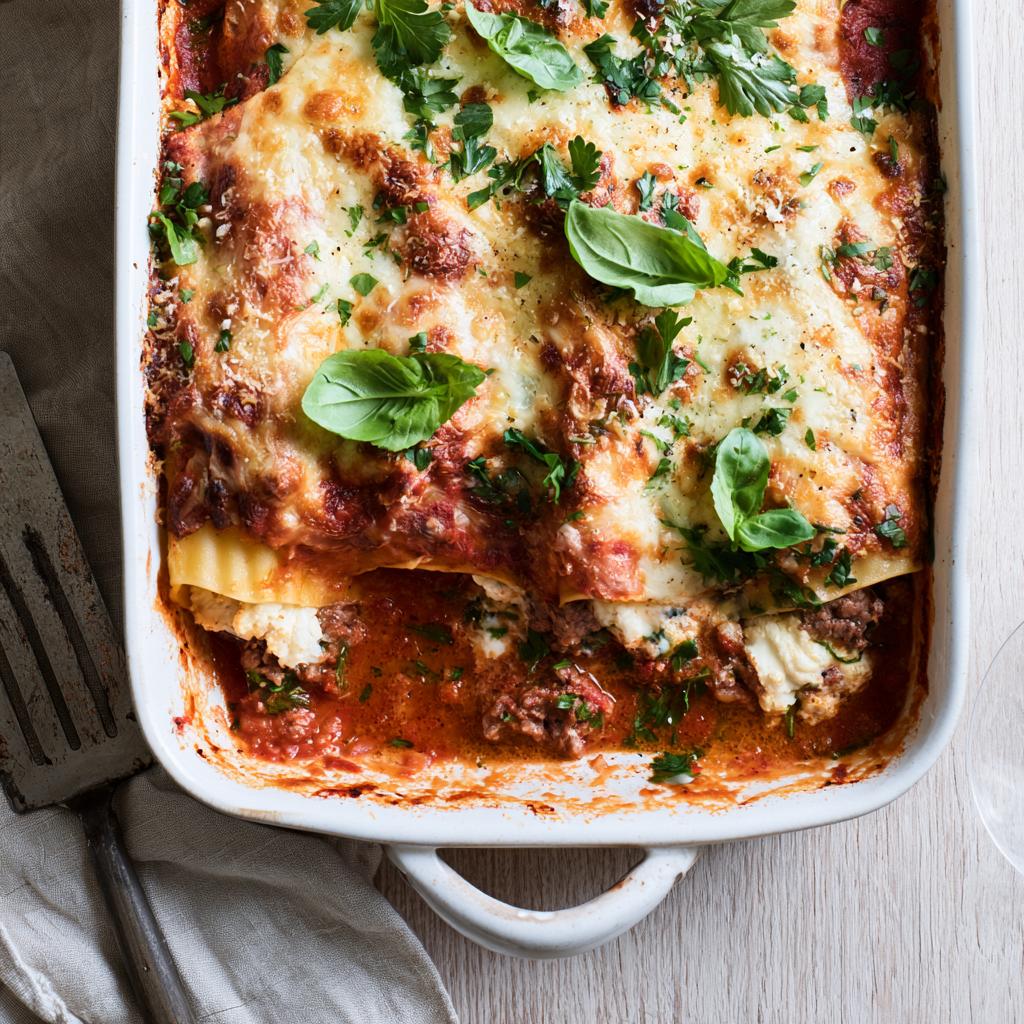
Filling raw shells and baking them in sauce is what keeps the pasta tender instead of mushy. Boiling manicotti shells first helps them absorb water, then take on more from the sauce in the oven, so by the time they come out, they’ve lost all their structure. Raw shells absorb exactly what they need from the sauce and finish al dente. The half cup of water poured around the edges gives them enough liquid to fully hydrate.
The zip-top bag method is what makes filling the shells fast and mess-free. A spoon into a soft shell splits the walls and takes forever. A gallon bag with a half-inch corner snipped off fits into the shell opening, and you can pipe from both ends in seconds. It’s also a step a kid can do without making a disaster.
The egg in the ricotta binds the filling and keeps it from turning watery. Ricotta releases whey as it heats, and without something to hold it together, that whey ends up in the bottom of the dish. A beaten egg sets the filling into a firm, sliceable texture, and it’s the difference between a clean portion and a puddle.
Extra-lean ground beef and tomato paste are what keep the filling rich without making it greasy. 90/10 or 93/7 beef browns without leaving a pool of fat, and the caramelized tomato paste adds a deep, savory note that makes the beef taste as if it cooked longer than it did. It’s the same move that makes a good Bolognese taste finished.
The butter topping is gone, and the dish is better for it. Dotting butter over whole-milk ricotta and mozzarella creates pools of orange grease on top of the casserole. The cheese has enough fat on its own, and the broiler gives you the golden crust without it.
Baking covered first, then uncovered, cooks the pasta through before the cheese browns. The covered stage traps steam, letting the raw shells hydrate and the filling set. The uncovered stage melts and browns the cheese. Doing it the other way around gives you burnt cheese and crunchy pasta.
Resting for 10 minutes before serving is what makes clean portions. As the dish cools, the filling and cheese continue to set, and the sauce thickens. Served straight from the oven, it slides apart on the plate.
Ingredients That Matter
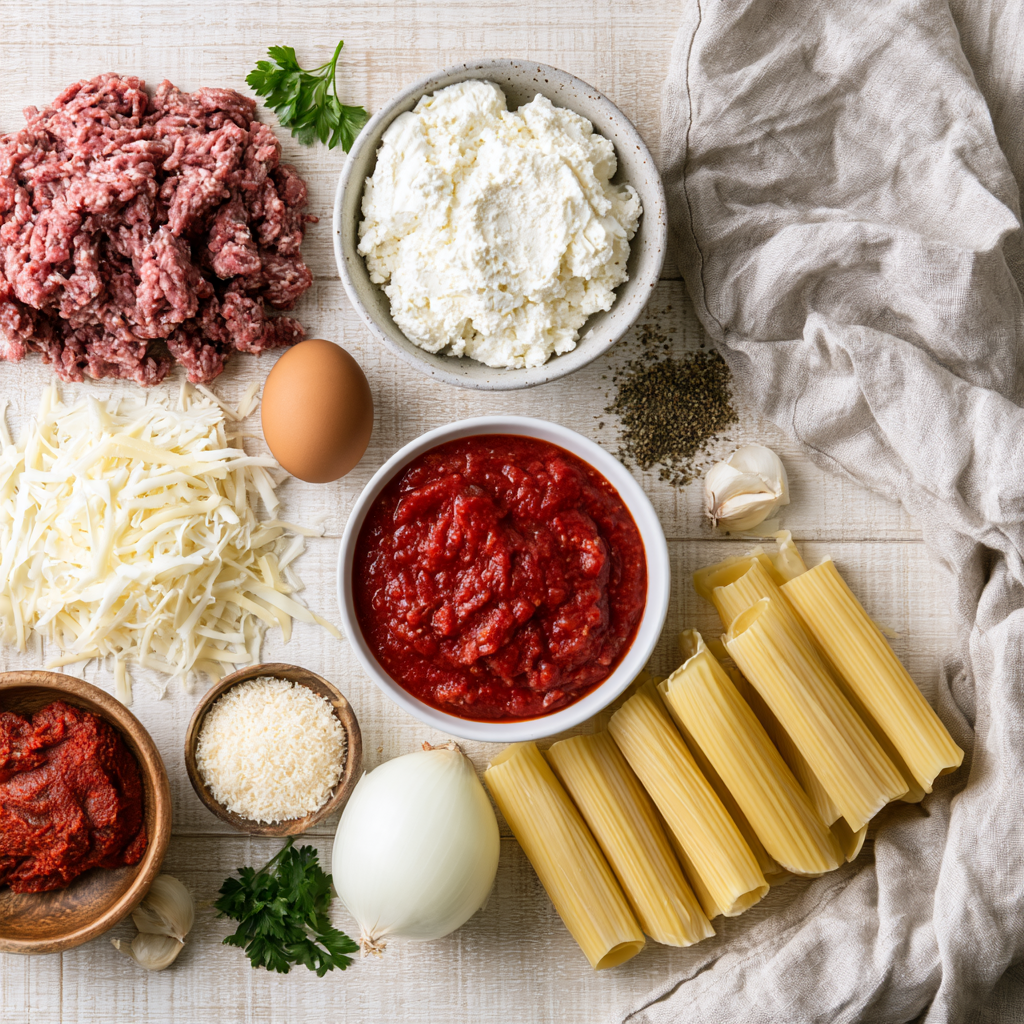
Most of this list is flexible. Three ingredients are easy to get wrong, so those are the ones worth explaining.
Uncooked manicotti shells. This is the whole technique. Do not boil them. Fill them raw and let the sauce and the covered bake do the work. If a shell cracks while you’re filling it, it will still bake fine — just nestle it back into the dish.
Whole-milk or part-skim ricotta, drained. Ricotta holds a lot of liquid, so draining it for a few minutes in a strainer removes some whey before it goes into the filling. Whole milk is richer; part-skim is lighter and drains faster. Either works, but drain it.
Extra-lean ground beef, 90/10 or 93/7. Lean beef keeps the filling from turning greasy and lets the ricotta and mozzarella do the richness. 80/20 works, but you’ll want to drain the fat before the tomato paste goes in.
How to Make It
Step 1: Brown the beef.
Heat 1 tablespoon of olive oil in a skillet over medium-high heat. Add 1 diced medium yellow onion and 1 pound of 90/10 ground beef. Cook for 5 minutes, breaking the beef into fine crumbles, until browned. Add 4 minced garlic cloves, 2 tablespoons tomato paste, 1 teaspoon Italian seasoning, ½ teaspoon red pepper flakes (if using), 1 teaspoon kosher salt, and ¼ teaspoon black pepper. Cook for 2 minutes, until the tomato paste turns deep brick-red. Remove from the heat and cool for 5 minutes.
Step 2: Mix the filling.
In a large bowl, whisk together 15 ounces drained ricotta, 1 cup shredded mozzarella, ½ cup grated Parmesan, 1 beaten egg, and ¼ cup chopped parsley until smooth. Fold in the cooled beef mixture until thoroughly combined.
Step 3: Pipe the filling into raw shells.
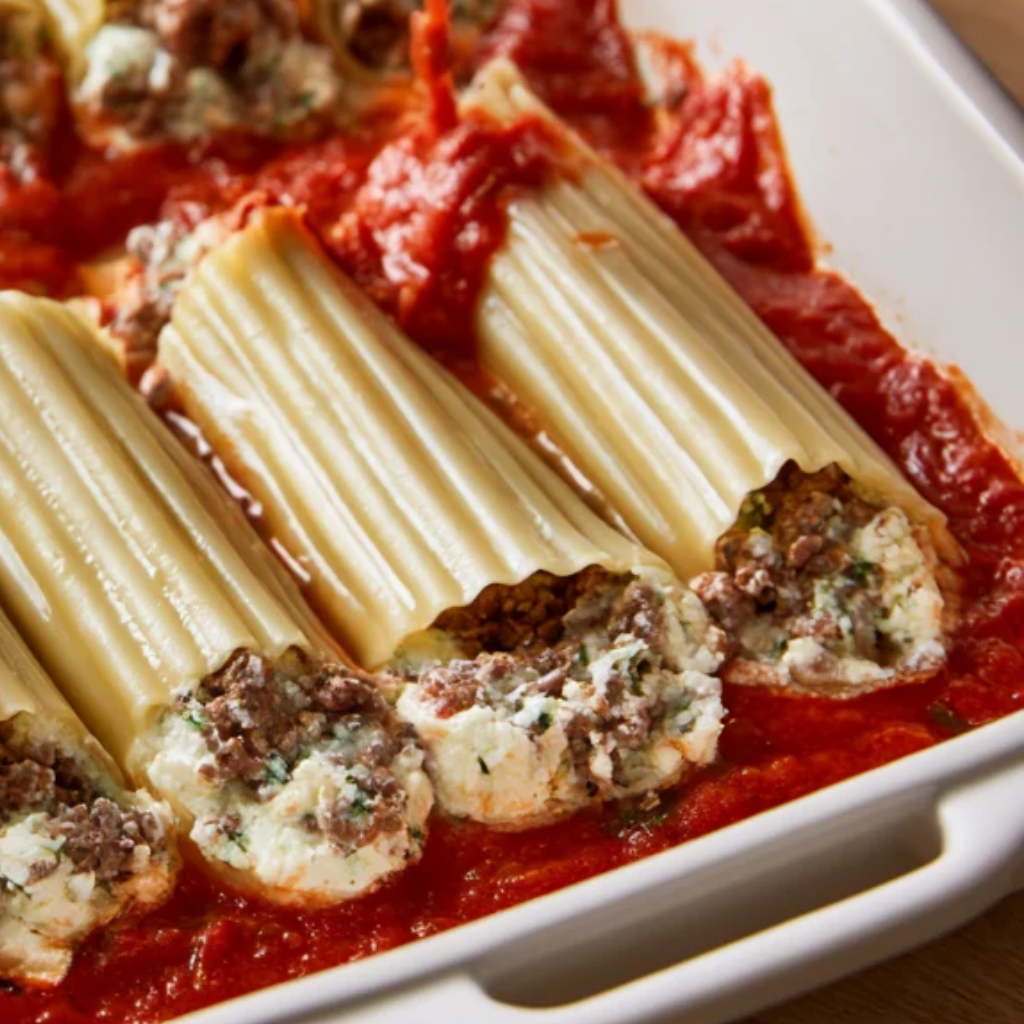
Spoon the filling into a gallon zip-top bag and snip off a ½-inch corner. Insert the tip into each raw, uncooked manicotti shell and pipe from both ends until fully filled. The shell should feel heavy and full, with filling visible at both openings.
Step 4: Build the sauce bed.
Preheat the oven to 375°F. Pour 1½ cups of marinara across the bottom of a 9×13-inch baking dish. Arrange the stuffed shells in a single tight layer over the sauce.
Step 5: Cover and hydrate.
Pour the remaining 2 cups of marinara evenly over the top, ensuring every shell is fully covered. Pour ½ cup of water around the inner edges of the dish.
Step 6: Bake covered.
Cover the dish tightly with aluminum foil and bake at 375°F for 35 minutes, until the shells are tender and the sauce is bubbling at the edges.
Step 7: Add cheese and broil.
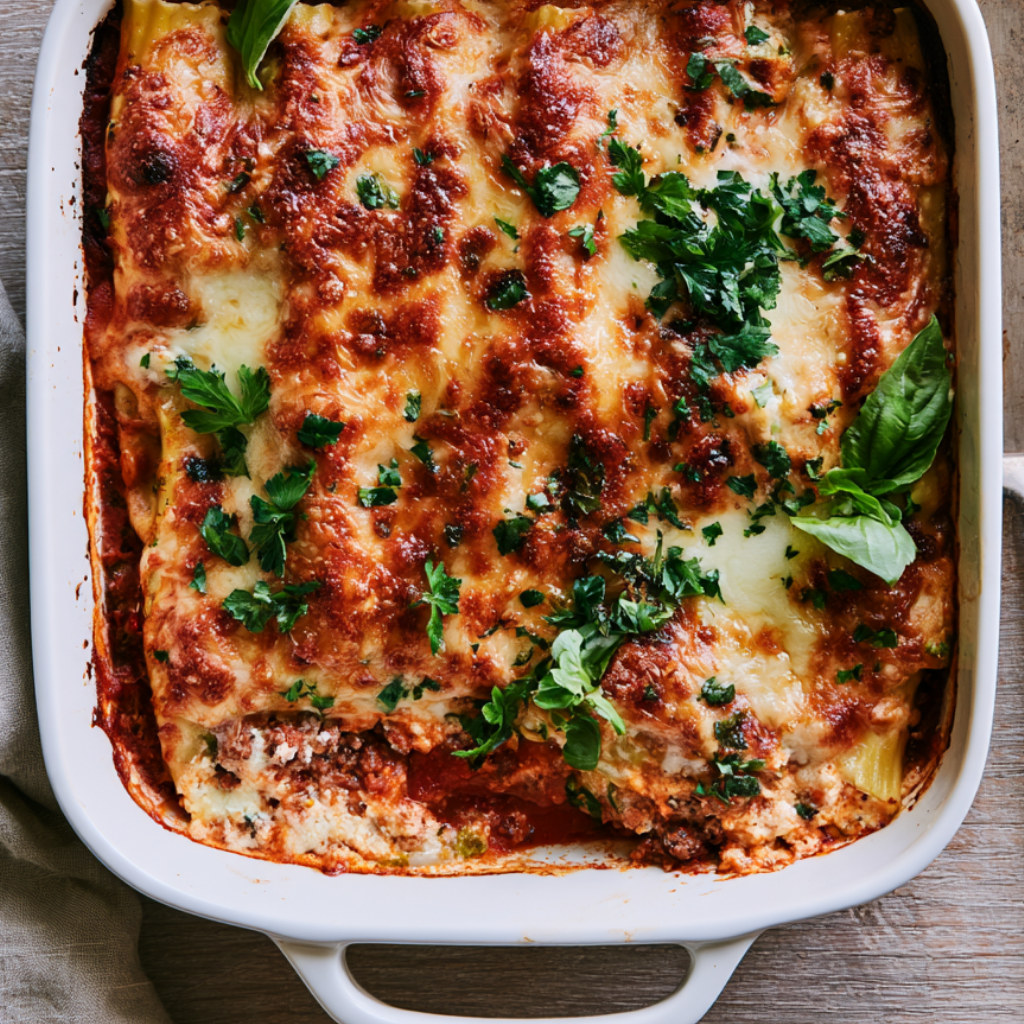
Remove the foil and top with the remaining 1 cup of mozzarella and ¼ cup of Parmesan. Return to the oven uncovered for 8 to 10 minutes, until the cheese is melted and bubbling. Broil for 1 to 2 minutes, until golden-brown spots appear — watch closely.
Step 8: Rest and serve.
Let the dish rest for 10 minutes before serving. The filling should look set, and the sauce should have thickened slightly.
Tips and Troubleshooting
The shells tore while filling. The filling was too thick, or the bag corner was too small. Snip a slightly larger corner and pipe slowly from both ends.
The pasta is still firm after baking. The shells weren’t fully covered in sauce, or the foil wasn’t tight. Make sure every shell is under the sauce and the foil seals against the dish.
The filling is watery. The ricotta wasn’t drained, or you left out the egg. Drain the ricotta in a strainer for 10 minutes and use the full egg.
The top is greasy. You added butter on top, or the beef was too fatty. Skip the butter and use 90/10 or leaner beef.
The cheese didn’t brown. The broiler wasn’t hot enough, or the dish was too far from the element. Broil on the middle rack for 1 to 2 minutes, watching closely.
The dish is dry. The sauce amount was too low, or the covered bake went too long. Use the full 3½ cups of sauce and the ½ cup of water, and check at 35 minutes.
The portions fell apart. It wasn’t rested long enough. Let it sit for the full 10 minutes before cutting.
Storage and Make-Ahead
You can assemble the dish through Step 5 up to a day ahead, cover it, and refrigerate. Add 10 minutes to the covered bake time if it goes into the oven cold.
Leftovers keep in a sealed container in the refrigerator for up to 4 days. Reheat in a 350°F oven, covered with foil, for 15 to 20 minutes, until heated through. The microwave works but makes the pasta soft.
The baked dish freezes well for up to 3 months. Thaw overnight in the refrigerator and reheat covered at 350°F for 25 to 30 minutes.
Store leftovers in the refrigerator within 2 hours of cooking, and discard anything left at room temperature for more than 2 hours.
Beef & Ricotta Stuffed Manicotti — No-Boil Method
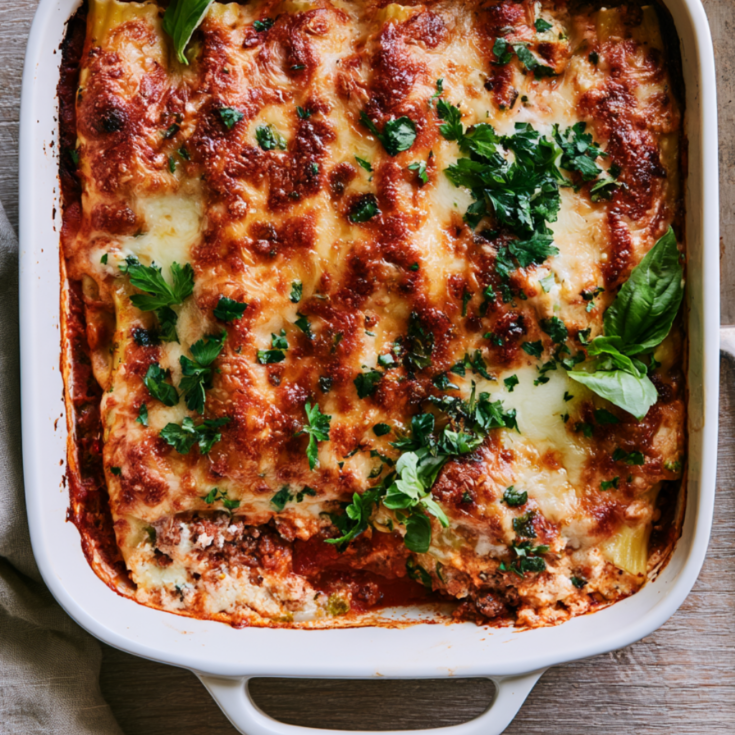
Tender manicotti shells stuffed with seasoned ground beef, ricotta, mozzarella, and Parmesan, baked in marinara under a golden cheese crust. No boiling required, with about 42 g of protein per serving.
Ingredients
For the beef filling:
- 1 lb extra-lean ground beef (90/10 or 93/7)
- 1 tbsp olive oil
- 1 medium yellow onion, finely diced
- 4 cloves garlic, minced
- 2 tbsp tomato paste
- 1 tsp dried Italian seasoning
- ½ tsp red pepper flakes (optional)
- 1 tsp kosher salt
- ¼ tsp freshly cracked black pepper
For the cheese filling:
- 15 oz whole-milk or part-skim ricotta, drained
- 2 cups shredded low-moisture mozzarella, divided
- ¾ cup freshly grated Parmesan, divided
- 1 large egg, lightly beaten
- ¼ cup fresh Italian parsley, finely chopped
For assembly:
- 14 uncooked manicotti shells
- 3½ cups (28 oz) high-quality marinara
- ½ cup water or beef broth
Instructions
- Brown the beef with the onion in olive oil for 5 minutes. Add the garlic, tomato paste, Italian seasoning, red pepper flakes, salt, and pepper, and cook 2 minutes until the paste darkens. Cool 5 minutes.
- Whisk the ricotta, 1 cup mozzarella, ½ cup Parmesan, egg, and parsley until smooth. Fold in the cooled beef.
- Spoon the filling into a zip-top bag, snip a ½-inch corner, and pipe into the raw shells from both ends.
- Preheat the oven to 375°F. Spread 1½ cups marinara in a 9x13 dish and arrange the shells in a single layer.
- Pour the remaining marinara over the top, covering every shell, and pour the water around the edges.
- Cover tightly with foil and bake 35 minutes until the shells are tender.
- Uncover, top with the remaining mozzarella and Parmesan, and bake 8 to 10 minutes until bubbling. Broil 1 to 2 minutes for golden spots.
- Rest 10 minutes before serving.
FAQ
Do I really not need to boil the shells?
Correct. The raw shells hydrate from the sauce and the half cup of water during the covered bake. Boiling them first softens them and makes them prone to tearing, and they turn mushy in the oven.
Can I use jumbo pasta shells instead of manicotti?
Yes. Jumbo shells are easier to fill and hold the filling well. You’ll need about 24 shells, and the bake time stays the same.
Can I use sausage instead of ground beef?
Yes. Use 1 pound of Italian sausage, casings removed, and brown it the same way. The flavor is richer and slightly spicier, and the protein count is similar.
Can I add spinach?
Yes. Stir in 2 cups chopped fresh spinach after it comes off the heat and let it wilt. Squeeze out any excess water before adding it to the filling.
Can I make this in the crockpot?
I haven’t tested a crockpot version, and the technique depends on a covered oven bake to hydrate the raw shells. A slow cooker doesn’t get hot enough to brown the cheese, and the shells would likely turn mushy.
What do you serve with stuffed manicotti?
Serve with a simple green salad with vinaigrette, roasted broccoli, or garlic bread. The dish is rich, so a bright vegetable balances it.
More Ground Beef Recipes You’ll Love
- Beef Pot Pie Recipe — Ground Beef, Budget-Friendly, Cozy Season Comfort
- Creamy Tomato Garlic Parmesan Ground Beef Bowtie Pasta
- Cottage Pie Recipe — Easy Ground Beef Dinner, Budget-Friendly & Cozy
Closing
Make this stuffed manicotti on a weekend when the whole family is at the table, and let the kids help pipe the filling into the shells — it’s the kind of job that turns dinner into a project everyone’s part of.
The technique in the recipe card — filling the shells raw, the egg in the ricotta, the covered bake, and the broil at the end — is what makes it come out tender and cheesy instead of mushy and watery.
It’s the version that earns its place on the holiday table, and it’s the one I’d hand you first. If you try it with sausage or add spinach, let me know how it turns out.