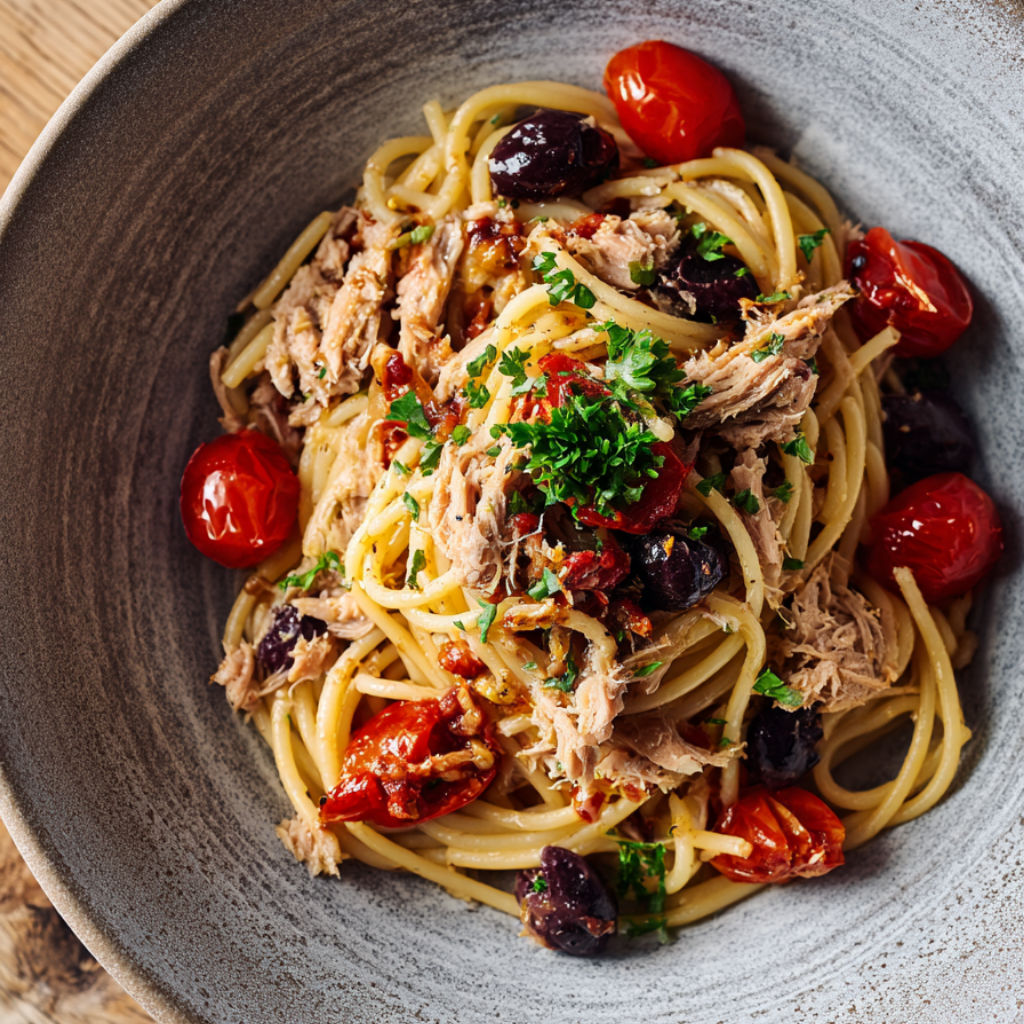

When I think of the perfect quick, one-pan pasta lunch, I think of this: pasta al tonno.
The dish lives or dies on the tuna, and the best version isn’t the can — it’s the glass jar, where tender tuna is packed in good olive oil and tastes like fish instead of salt.
A can will do in a pinch. A jar makes it something you’d order at a restaurant.
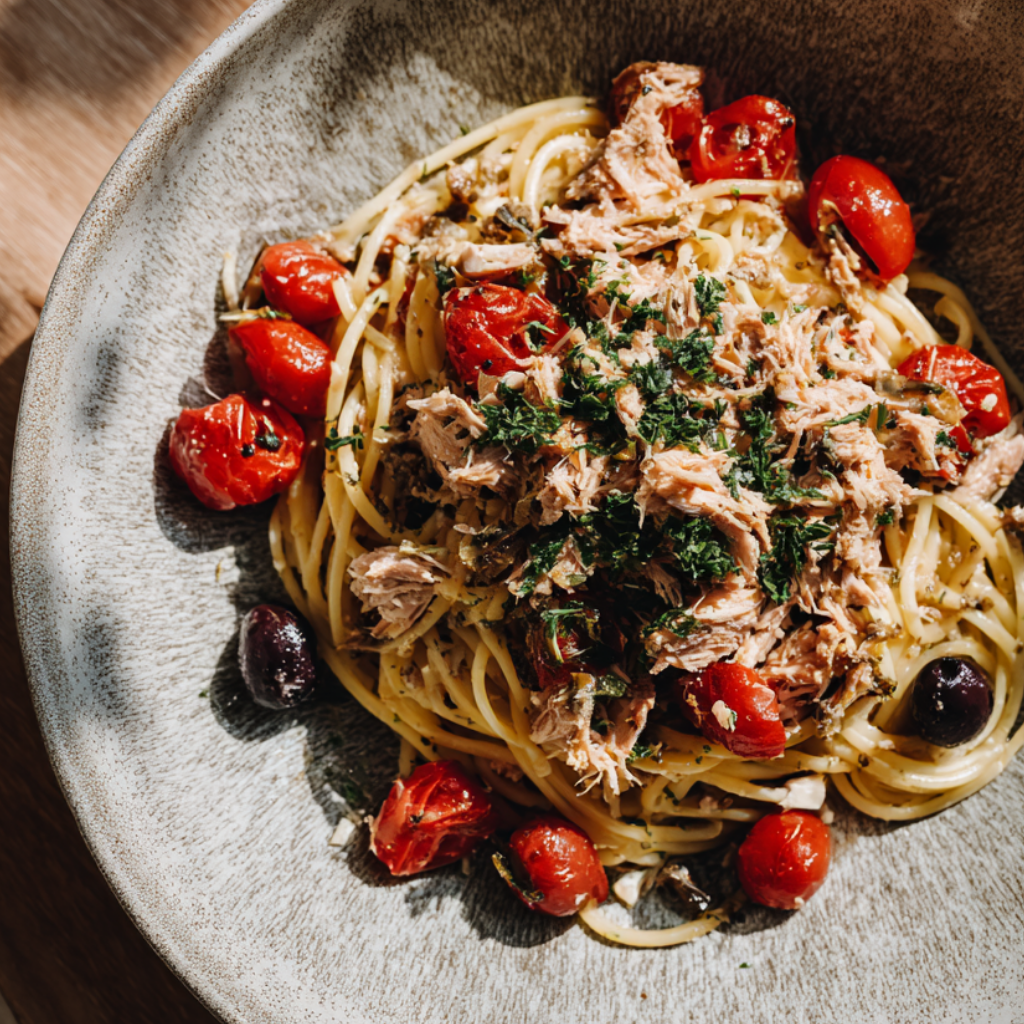
Everything else in the bowl exists to support that tuna without covering it up. Sweet cherry tomatoes that burst in the pan, briny olives for the tang, garlic bloomed slowly in olive oil, and a squeeze of lemon.
There’s no cream and no heavy sauce — the gloss comes from the olive oil and the starchy pasta water emulsifying into a coating that clings to every strand. A pinch of red pepper flakes if you want heat. That’s it.
This dish is built for quality ingredients, so use the ones you like. You want to taste the olives, the tomatoes, and the tuna, and nothing should overpower anything else.
The technique is what lets them all show up at once.
It’s also the kind of pasta I make on a slow weekend afternoon with a friend and a glass of wine, when lunch turns into two hours at the table.
It’s gorgeous to look at; it’s bright and savory and satisfying, and it’s about 28 grams of protein without a drop of cream. If you use fresh pasta, it’s even better. I can’t wait for you to try it and tell me what you think.
Why This Recipe Works
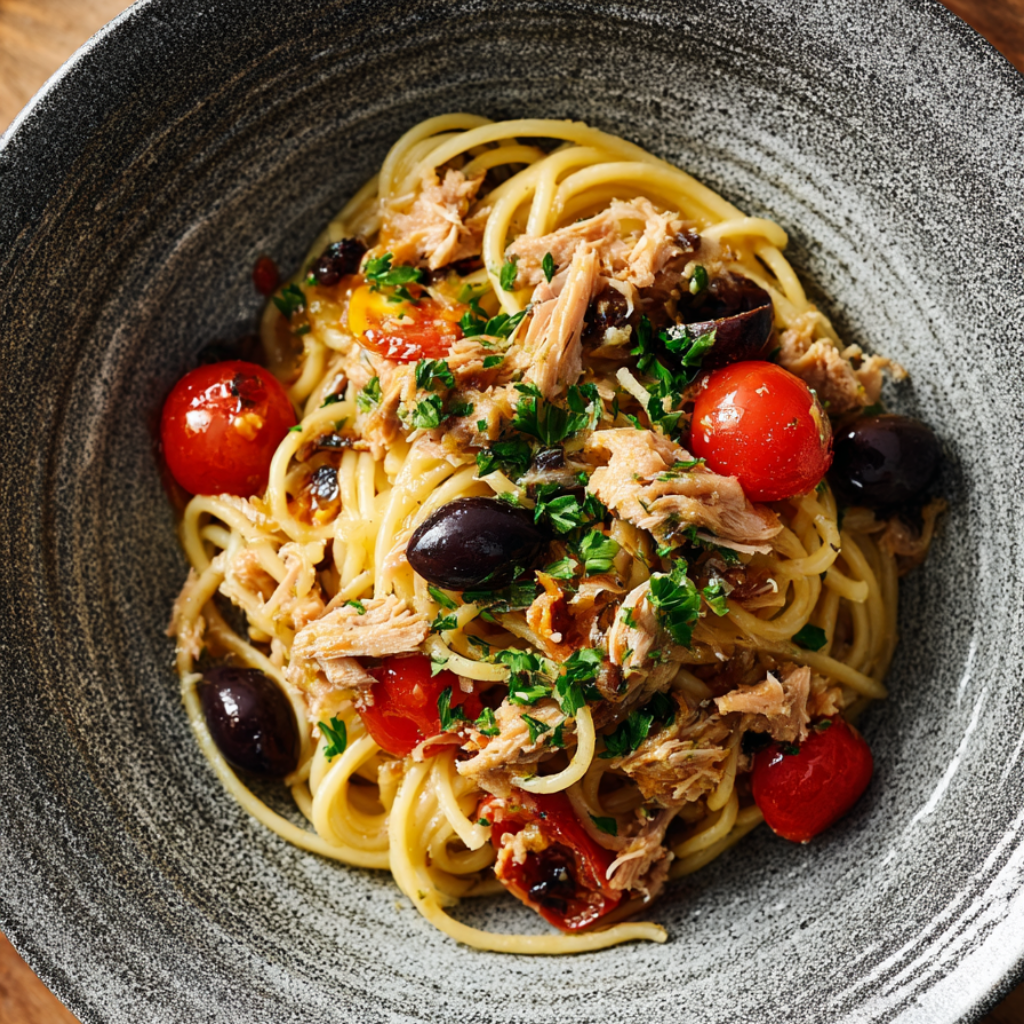
Cooking the pasta 2 minutes short of al dente keeps it from going mushy. The spaghetti finishes cooking in the skillet with the sauce, absorbing the tomato juices and the starchy water. If it’s already fully cooked when it goes in, it overcooks in the pan and turns soft.
Blooming the garlic over medium-low heat for one to two minutes is what keeps it from turning bitter. Paper-thin garlic slices go from pale gold to burnt in under fifteen seconds. Cooking them gently and then adding the tomatoes immediately — which drops the pan temperature — is what stops the garlic before it scorches.
Olives or capers are the briny backbone that makes the dish taste Mediterranean. Canned black olives are dull and rubbery, and they add nothing. Kalamata or Castelvetrano olives bring tang and acidity that cut through the olive oil and lift the sweetness of the burst tomatoes. Capers work the same way if you don’t have olives.
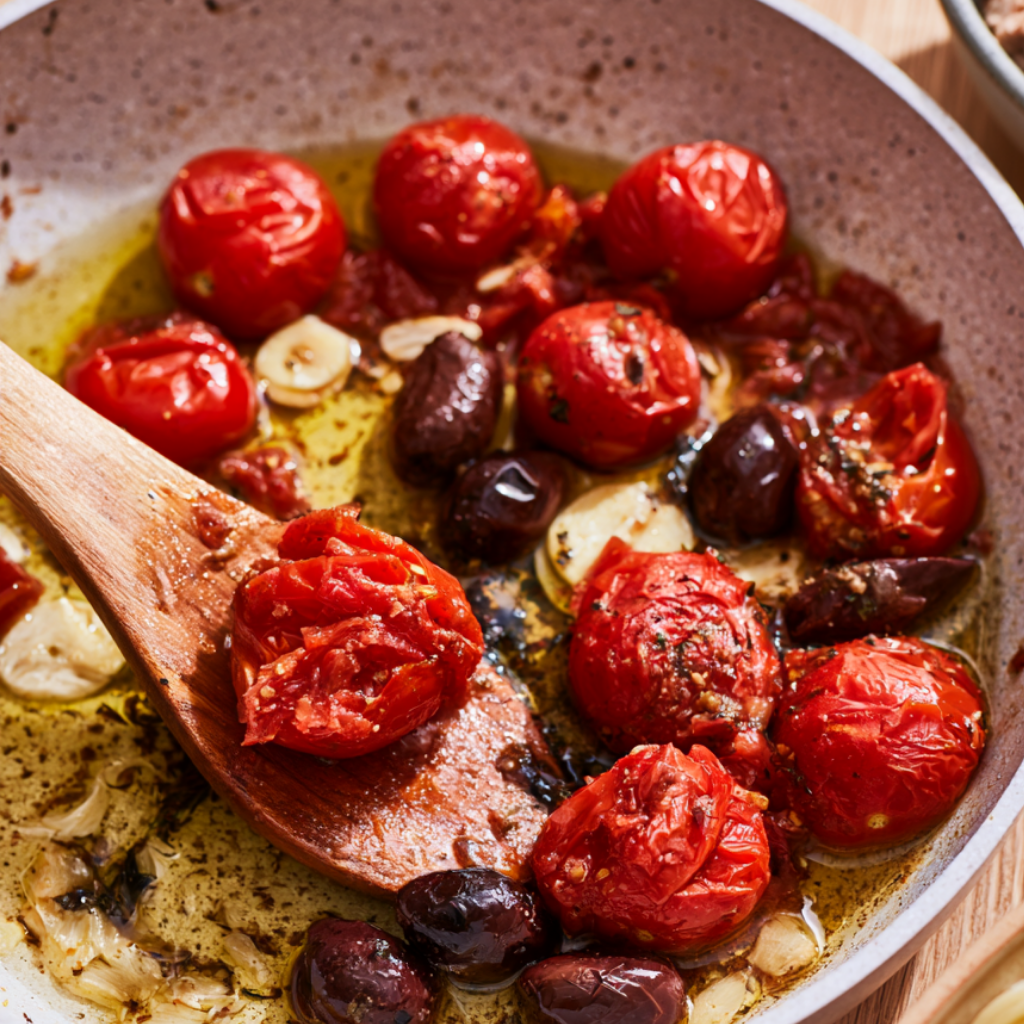
Smashing half the tomatoes with the back of a spoon is what creates the sauce. Leaving the tomatoes whole leaves you with a pan of liquid and chunks. Smashing half releases their juices and creates a loose, rustic sauce the pasta can absorb.
The starchy pasta water and olive oil emulsify into a glossy sauce when you swirl them together off the heat. This is the technique that makes the dish. The starch in the water binds the fat and liquid into a coating that clings to the noodles. If you add the oil after the pasta is off the heat, the noodles turn slick and greasy instead of glossy.
Add the tuna off the heat at the very end. Oil-packed tuna is delicate, and stirring it into a hot pan breaks it into flakes that disappear into the sauce. Folded in gently with the heat off, it stays in generous chunks that taste like tuna.
Fresh lemon zest and juice are the brightness that keeps the dish from tasting heavy. The zest carries the lemon oil, and the juice cuts through the olive oil. Add both during the emulsification stage, and a squeeze more at the table doesn’t hurt.
Ingredients That Matter
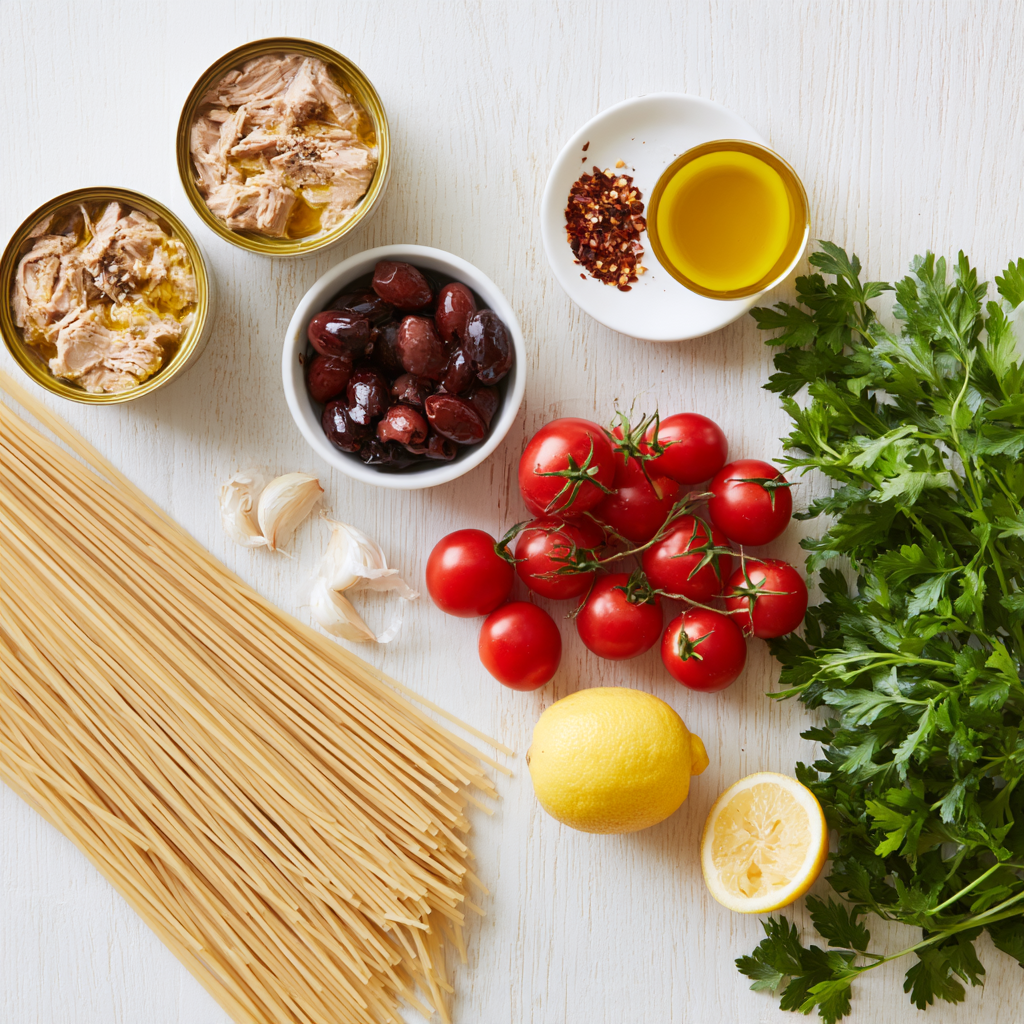
Most of this list is flexible. Three ingredients are easy to get wrong, so those are the ones worth explaining.
Oil-packed tuna (partially drained and flaked into large chunks): For the richest flavor and texture, use tuna packed in high-quality olive oil rather than water-packed. If your tuna is packed in good olive oil, keep a tablespoon or two of the flavorful tin oil to toss directly into the pasta sauce; if it is packed in water or cheap vegetable oil, drain it completely and rely solely on extra virgin olive oil. Gently flake the tuna into large, tender pieces with a fork so it stays satisfyingly chunky throughout the dish.
Kalamata or Castelvetrano olives, not canned black olives. This ingredient makes or breaks the dish. Kalamata brings a briny, slightly bitter tang; Castelvetrano is milder and buttery. Canned black olives are dull and rubbery and add nothing. If you don’t have olives, capers work.
Extra virgin olive oil, and plenty of it. Don’t skimp on the oil. Add a quarter cup to the pan for the garlic and tomatoes, and two more tablespoons during the emulsification. The oil is the sauce, and it needs to be good.
How to Make It
Step 1: Boil the pasta.
Bring a large pot of water to a rolling boil and season it generously with salt. Cook 8 ounces of spaghetti, bucatini, or linguine for 2 minutes less than the package directions, until barely al dente. Reserve 1 cup of the starchy pasta water before draining.
Step 2: Bloom the garlic and chili.
While the pasta cooks, heat ¼ cup of extra virgin olive oil in a large skillet over medium-low heat. Add 6 cloves of paper-thin sliced garlic and ¼ teaspoon of red pepper flakes. Sauté gently for 1 to 2 minutes, until the garlic is pale golden and fragrant — watch closely so it doesn’t brown or burn.
Step 3: Burst the tomatoes.
Add 12 ounces of halved cherry or grape tomatoes, ¼ cup of coarsely chopped olives (or 2 tablespoons of drained capers), and 1 teaspoon of kosher salt to the skillet. Turn the heat to medium and cook for 4 to 5 minutes, stirring occasionally, until the tomatoes collapse and release their juices. Use the back of a wooden spoon to smash about half of the tomatoes to form a loose sauce.
Step 4: Emulsify the pasta and sauce.
Transfer the hot drained pasta directly into the skillet. Pour in ⅓ cup reserved pasta water, 1 tablespoon lemon juice, the zest of 1 lemon, and the remaining 2 tablespoons olive oil. Toss and swirl vigorously over medium heat for 1 to 2 minutes, until the starchy water and oil unite into a glossy sauce that coats every noodle. Add another splash of pasta water if the pan looks dry.
Step 5: Fold in the tuna and serve.
Turn off the heat. Gently fold in 2 cans (5 oz each) of flaked oil-packed tuna and ½ cup of chopped fresh parsley, keeping the tuna in generous chunks. Taste and adjust with salt, black pepper, or extra lemon juice. Serve immediately, drizzled with fresh olive oil.
Tips and Troubleshooting
The pasta is mushy. You cooked it fully al dente instead of two minutes short, or it sat in the sauce too long. Cook it barely al dente and serve immediately.
The garlic tastes bitter. It browned instead of turning pale gold. Medium-low heat and one to two minutes is the window — add the tomatoes immediately to stop the cooking.
The sauce is greasy and won’t cling. You added the oil after the pasta came off the heat, or there wasn’t enough pasta water. Swirl everything together over medium heat with the starchy water until it emulsifies.
The sauce is dry. The pasta absorbed all the liquid. Add pasta water a splash at a time until the sauce loosens and coats the noodles.
The tuna disintegrated into flakes. You stirred it in over heat or broke it up too much. Fold it in gently with the heat off and keep the pieces large.
The dish tastes flat. It needs more salt, more lemon, or more olives. Taste before serving and adjust — the brininess is what makes this dish work.
The tomatoes didn’t burst. They were underripe, or the heat was too low. Cook them until the skins split and the juices release, and smash a few with the back of a spoon.
Storage and Make-Ahead
This pasta is best eaten immediately — the sauce clings and the tuna stays chunky right out of the pan. Leftovers keep in a sealed container in the refrigerator for up to 2 days. Reheat gently in a skillet over low heat with a splash of water, until just warmed through — the tuna will break up more on reheating.
You can slice the garlic and halve the tomatoes up to a day ahead and store them in the refrigerator. You can pit and chop the olives ahead. Flake the tuna right before it goes in.
I don’t recommend freezing this dish. The pasta absorbs the sauce, and the tuna turns watery on thawing.
Store leftovers in the refrigerator within 2 hours of cooking, and discard anything left at room temperature for more than 2 hours.
Tuna Pasta — Pasta al Tonno with Burst Tomatoes
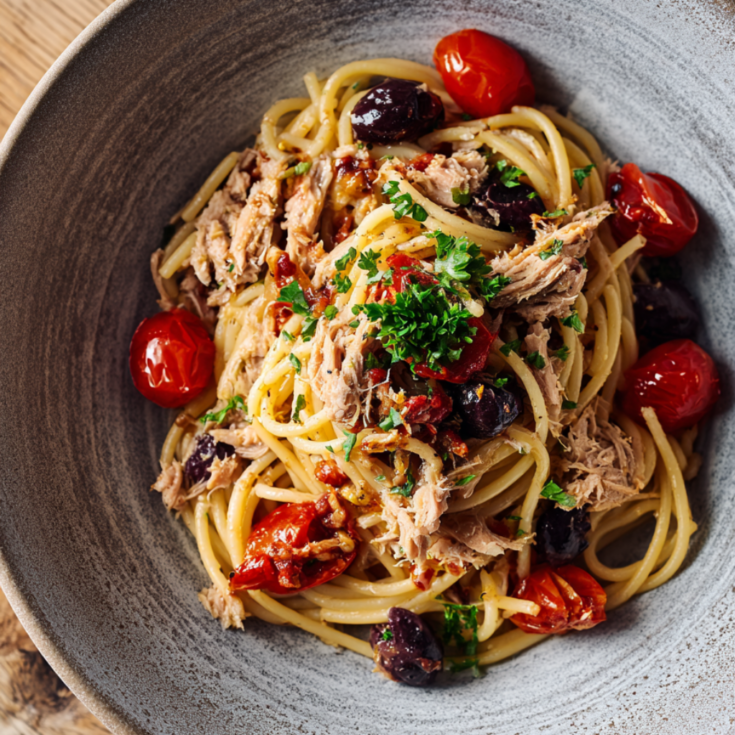
Silky spaghetti tossed with sweet burst cherry tomatoes, garlic, briny olives, fresh lemon zest, and tender oil-packed tuna. A 20-minute Mediterranean staple with about 28g protein per serving.
Ingredients
- 8 oz spaghetti, bucatini, or linguine
- ¼ cup plus 2 tbsp extra virgin olive oil, divided
- 6 cloves garlic, sliced paper-thin
- ¼ tsp red pepper flakes
- 12 oz cherry or grape tomatoes, halved
- ¼ cup pitted Kalamata or Castelvetrano olives, coarsely chopped (or 2 tbsp drained capers)
- 1 tsp kosher salt, plus more for the pasta water
- 1 lemon, zested and juiced (1 tbsp juice)
- 2 cans (5 oz each) oil-packed tuna, partially drained and flaked into large chunks (see the notes)
- ½ cup fresh Italian parsley, finely chopped
Instructions
- Boil the pasta in well-salted water for 2 minutes less than the package directions. Reserve 1 cup pasta water, then drain.
- Heat ¼ cup olive oil in a large skillet over medium-low heat. Add the garlic and red pepper flakes and sauté 1 to 2 minutes until pale golden and fragrant.
- Add the tomatoes, olives, and salt. Cook over medium heat for 4 to 5 minutes, until the tomatoes collapse. Smash half of them with the back of a spoon.
- Add the hot pasta to the skillet with ⅓ cup pasta water, the lemon juice, zest, and remaining 2 tablespoons olive oil. Toss and swirl over medium heat for 1 to 2 minutes, until glossy and coated.
- Turn off the heat and gently fold in the tuna and parsley, keeping the tuna in chunks. Taste and adjust salt, pepper, or lemon. Serve immediately.
Notes
Notes: Best eaten right away. Leftovers keep refrigerated for up to 2 days and reheat gently with a splash of water. Not recommended for freezing. Nutrition information is an estimate.
Nutrition (per serving, estimated): About 490 calories, 28g protein, 52g carbs, 20g fat, 4g fiber, 580mg sodium.
If you’re using high-quality tuna packed in olive oil(like Ortiz, Rio Mare, or Tonnino), do not drain that liquid gold down the sink! The oil inside the tin has marinated with the fish, soaking up deep, savory umami flavor.
- How to use it: Drizzle 2 tablespoons of the flavorful oil directly from the tin into your pan when tossing the hot pasta with the starchy water. It creates a richer, silkier sauce emulsion that clings to every noodle strand!
- Using water-packed or vegetable oil tuna? Drain it completely—water will make your sauce soggy, and seed oils taste flat and heavy. Stick to fresh Extra Virgin Olive Oil for the best flavor!
FAQ
Can I use water-packed tuna instead of oil-packed?
Yes, but oil-packed is richer and more flavorful, and the oil is part of the dish. If you use water-packed, drain it well and add an extra tablespoon of olive oil to the pan.
Can I use canned tomatoes instead of fresh cherry tomatoes?
You can, but the dish changes — canned tomatoes make a heavier sauce, and the burst cherry tomatoes are what give this its fresh character. If you use canned, add a cup of drained, diced tomatoes and cook for 8 to 10 minutes.
Can I make this creamy?
You can, but it becomes a different recipe. Tuna Alfredo pasta is a cream-based dish with a completely different texture. This version is deliberately not creamy — the gloss comes from the olive oil and pasta water emulsion.
Can I make this cold as a pasta salad?
Yes. Toss the pasta, tomatoes, olives, and tuna with a vinaigrette of olive oil and lemon and refrigerate. It’s a different dish, but it works well as a cold lunch.
Can I use a different pasta shape?
Yes. Penne, rigatoni, and fusilli all work, though the timing changes slightly. Spaghetti and linguine are the classic choices because the sauce coats the strands.
Is this a high-protein recipe?
About 28g per serving from the tuna and olive oil. It’s a strong high-protein pasta dish, and the protein comes from real food rather than powder or supplements.
More High-Protein Meals You’ll Love
- Creamy Tuna Salad You’ll Want to Eat All Week for Easy Lunches
- Protein Pasta Salad Recipe — 32g Protein, Meal Prep Lunch
- Pescatarian Meal Prep for the Week — 5 Recipes, 32-38g Protein Each
Closing
Make this tuna pasta on a weeknight when you want something that tastes like the Mediterranean and takes less time than a delivery order.
The technique in the recipe card — garlic bloomed gently, tomatoes burst and smashed, the pasta emulsified with starchy water and olive oil over heat, and the tuna folded in off the heat — is what makes it glossy and briny instead of greasy and flat.