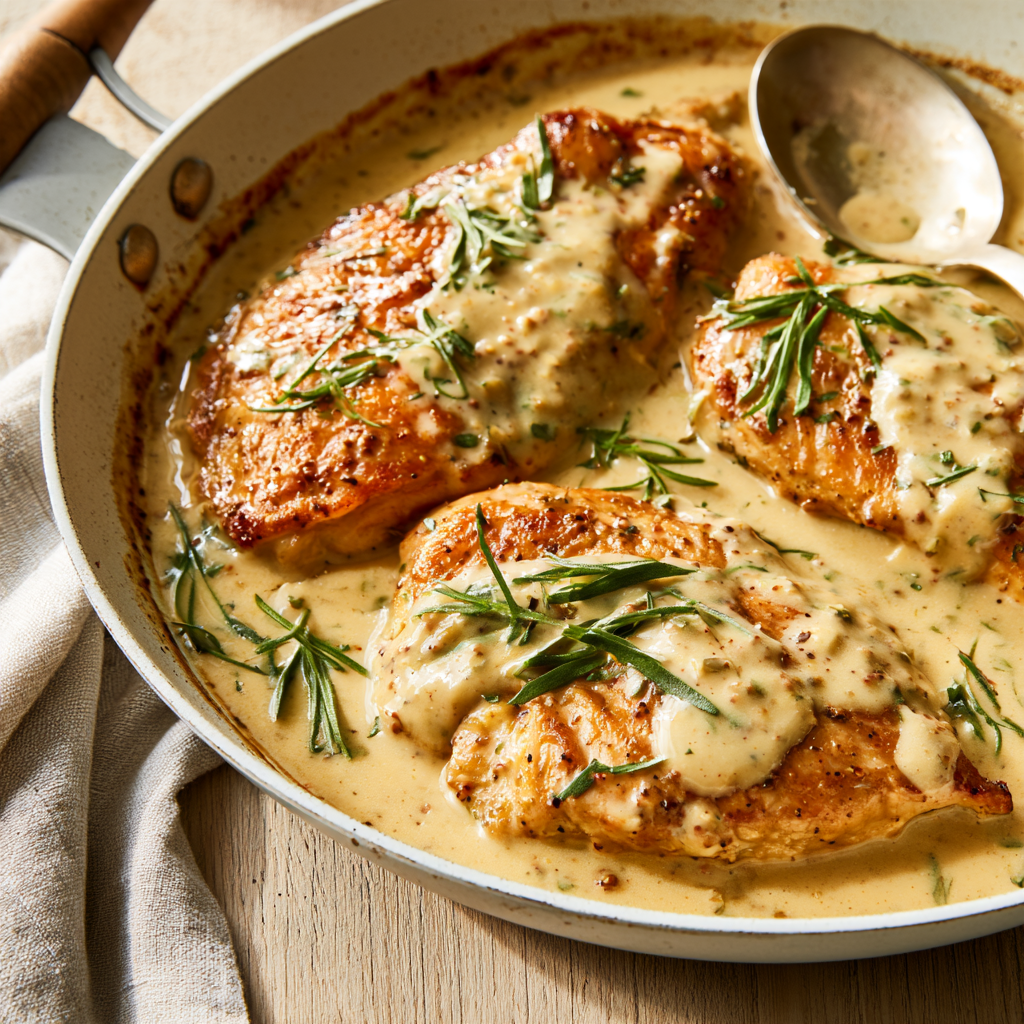

This dinner feels bistro-chic and cozy at once. Golden chicken cutlets, a pan sauce built on white wine, garlic, and two kinds of Dijon, and a generous spoonful of cream to pull it all together.
It’s a one-pan recipe with no fuss, and it goes with anything you have on hand—rice, dinner rolls, roast potatoes, or whatever vegetables are in the fridge.
The technique that makes it work is the pan sauce.
The chicken sears in a hot skillet, leaving behind a layer of browned bits, and those bits become the flavor base for everything that follows.
The wine goes in and lifts them off the bottom, the mustard and broth go in and reduce, and the cream goes in last, off the heat, so it emulsifies into something velvety instead of splitting.
It’s the same sequence a restaurant uses, and it takes about eight minutes.
And it’s built for chicken breasts, which are the protein most likely to dry out and the one most people have in the fridge. Pounding the cutlets to an even thickness and cooking them to 165°F keeps them juicy, and the sauce covers any imperfections anyway.
The whole thing comes to about 38 grams of protein per serving, and it’s on the table in 25 minutes.
Why This Recipe Works
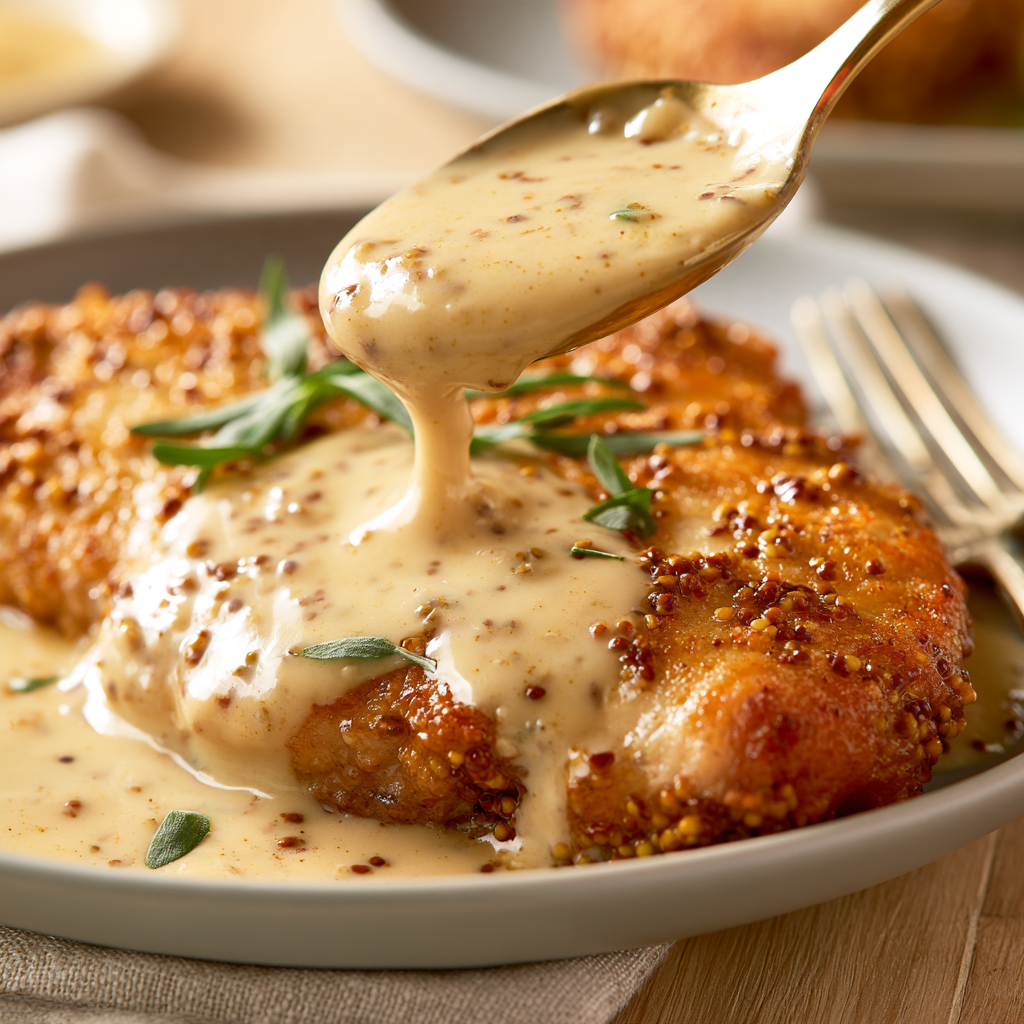
Pounding the chicken to an even thickness is what keeps it from drying out. Chicken breasts have a thick end and a thin tail, and by the time the thick center reaches 165°F, the thin end is already overcooked. Pound the whole cutlet to an even ¾-inch thickness; it cooks in about 8 minutes and comes out juicy from edge to center.
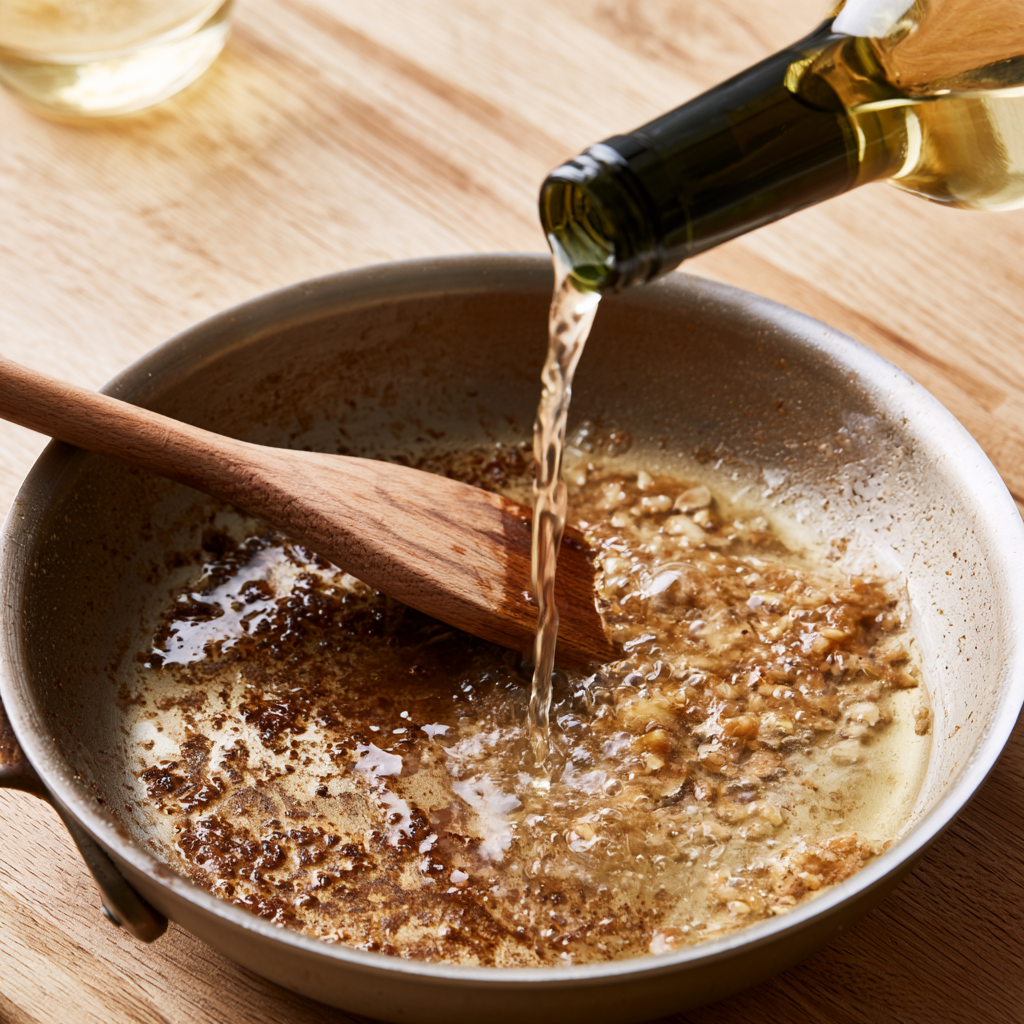
Keeping the pan dirty is what builds the sauce. Those browned bits stuck to the bottom of the skillet are the fond, and they’re the flavor backbone of the whole dish. Deglazing with white wine and scraping them up is what makes the sauce taste like it cooked for hours instead of minutes.
Two kinds of Dijon are what give the sauce its depth. Smooth Dijon brings the sharp, creamy heat, and whole-grain mustard brings texture and little pops of seed. Using only one gives you a flatter sauce — smooth alone is one-note, whole-grain alone is seedy without the body.
Whisk the mustard and cream together off the heat before adding them to the pan to keep the sauce from breaking. High heat makes cream and grainy mustard separate into an oily, grainy mess. Combining them in a bowl first, then adding them to a pan turned down to low, gives you a smooth, glossy sauce instead of a curdled one.
Simmer the sauce down to a glaze that coats the back of a spoon. Three to four minutes over medium-low is the window. Too short and it’s thin, too long and it’s gluey. The visual cue is the spoon test.
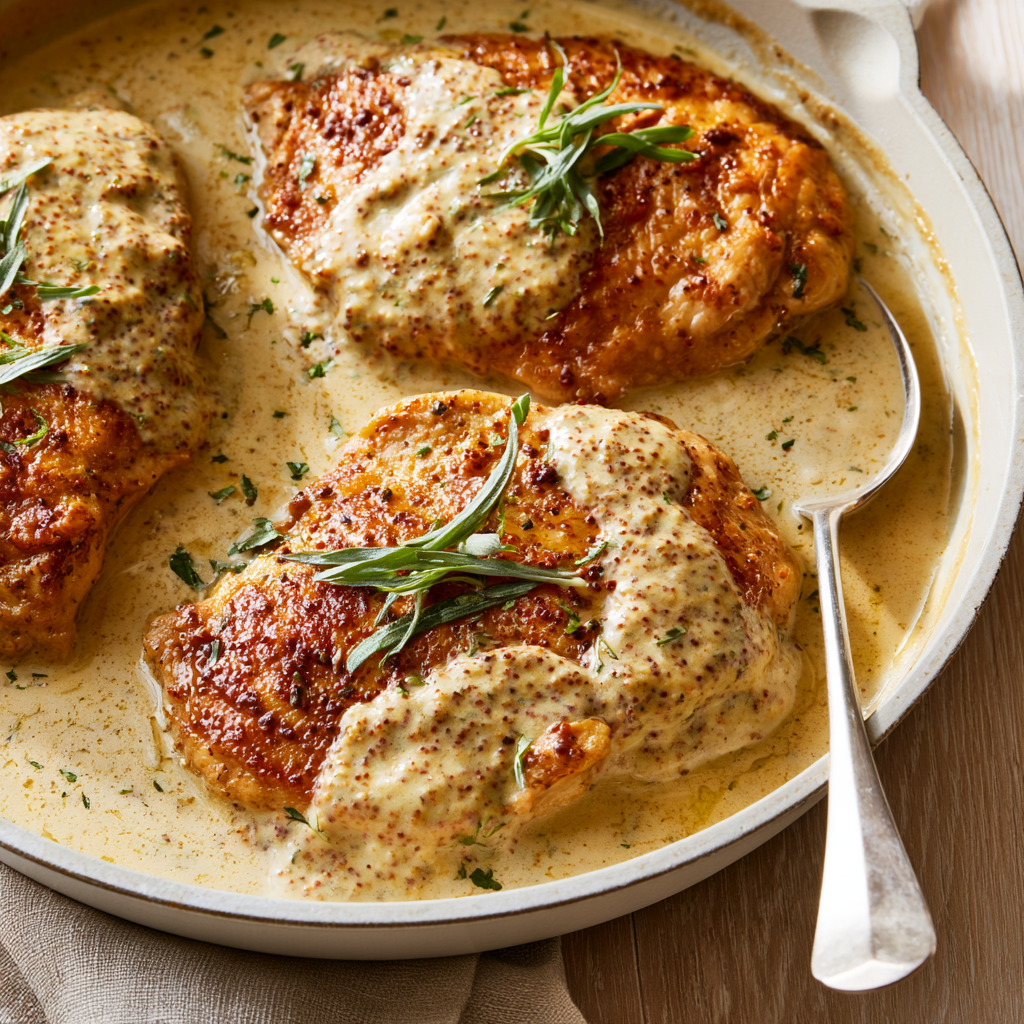
Nestling the chicken back into the sauce for a minute is what reheats it without overcooking it. The cutlets rest while the sauce comes together, and a minute in the warm sauce brings them back up to temperature. Any longer and they start to cook again.
Fresh tarragon or parsley at the end is what makes it taste finished. Tarragon is the classic French pairing with Dijon, and its anise note cuts through the cream. Parsley is milder but works. Either way, add it at the end, off the heat.
Ingredients That Matter
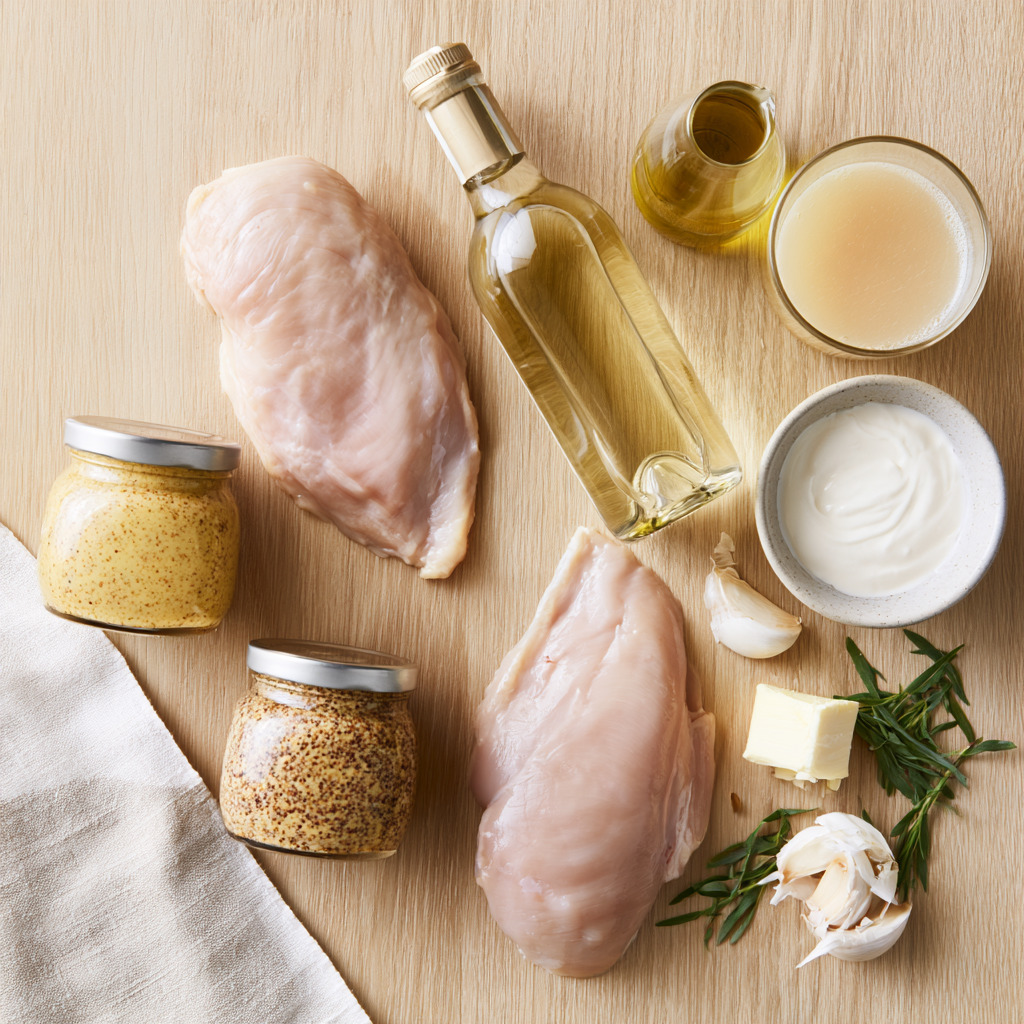
Most of this list is flexible. Three ingredients are easy to get wrong, so those are the ones worth explaining.
Boneless, skinless chicken breasts, halved into thin cutlets. Halve two large breasts horizontally to get four cutlets, and that’s the right size for a 25-minute cook. If your breasts are small, use four of them whole. Either way, pound them to an even thickness.
Two kinds of Dijon mustard — smooth and whole-grain. This is the flavor backbone, and the combination gives the sauce a layered taste. Smooth Dijon brings heat and creaminess, while whole-grain adds texture and a sharper bite. Don’t substitute yellow mustard — it’s a completely different flavor.
Use a dry white wine, like Sauvignon Blanc or Pinot Grigio. The wine is what deglazes the pan and gives the sauce its acidity. Use something you’d actually drink, and avoid “cooking wine,” which is salty and tastes like it. Chicken broth works if you’d rather skip the wine, but the sauce will be slightly less complex.
How to Make It
Step 1: Prep and season the chicken.
Halve 2 large boneless, skinless chicken breasts horizontally into 4 thin cutlets. Pound each cutlet to an even ¾-inch thickness between plastic wrap. Pat them dry and season both sides with 1 teaspoon kosher salt, ½ teaspoon black pepper, and ½ teaspoon garlic powder.
Step 2: Sear the chicken.
Heat 1 tablespoon of olive oil and 1 tablespoon of butter in a large skillet over medium-high heat. Add the cutlets and sear undisturbed for 4 to 5 minutes per side, until deeply golden brown and the center registers 165°F. Transfer to a plate and tent loosely with foil.
Step 3: Sauté the garlic and deglaze.
Reduce the heat to medium. Add the remaining 1 tablespoon of olive oil and 2 minced garlic cloves to the skillet and cook for 30 seconds, until fragrant. Pour in ⅓ cup of dry white wine and scrape up all the browned bits from the bottom of the pan with a wooden spoon. Simmer for about 2 minutes, until the wine reduces by half.
Step 4: Build the sauce.
In a small bowl, whisk ¼ cup smooth Dijon, 2 tablespoons whole-grain Dijon, ½ cup chicken broth, and ½ cup heavy cream until smooth. Pour the mixture into the skillet and simmer gently over medium-low heat for 3 to 4 minutes, until the sauce thickens into a glossy glaze that coats the back of a spoon.
Step 5: Combine and serve.
Nestle the chicken and any juices on the plate back into the sauce and spoon it over the top for 1 minute to reheat. Garnish with 1 tablespoon of fresh chopped tarragon or parsley and serve hot.
Tips and Troubleshooting
The chicken is dry. It was overcooked, or you didn’t pound it to an even thickness. Pound the cutlets and pull them at 165°F.
The sauce is grainy or separated. The cream and mustard went into a pan that was too hot. Whisk them together in a bowl first and add them over low heat.
The sauce is too thin. It didn’t reduce enough, or there was too much broth. Simmer for another 2 minutes and check the spoon test.
The sauce is too thick. It reduced too far. Whisk in a splash of broth or water until it loosens.
The sauce tastes too sharp. You used too much mustard, or the wine was too acidic. Add a pinch more cream and a small pinch of sugar.
The pan sauce tastes flat. It needs salt, or you need to scrape up the fond. Taste and adjust before serving.
The chicken stuck to the pan. The pan wasn’t hot enough, or the cutlets were wet. Pat them dry and wait for the oil to shimmer.
Storage and Make-Ahead
Store the chicken and sauce in a sealed container in the refrigerator for up to 3 days. Reheat gently in a skillet over low heat with a splash of broth, until just warmed through — reheating chicken breast aggressively dries it out.
You can pound and season the cutlets up to a day ahead and store them in the refrigerator. The sauce is best made fresh, but you can whisk the Dijon and broth mixture ahead and refrigerate it.
I don’t recommend freezing the finished dish. The cream sauce separates on thawing, and the chicken turns watery.
Store leftovers in the refrigerator within 2 hours of cooking, and discard anything left at room temperature for more than 2 hours.
Dijon Mustard Chicken — Creamy One-Skillet Bistro Dinner
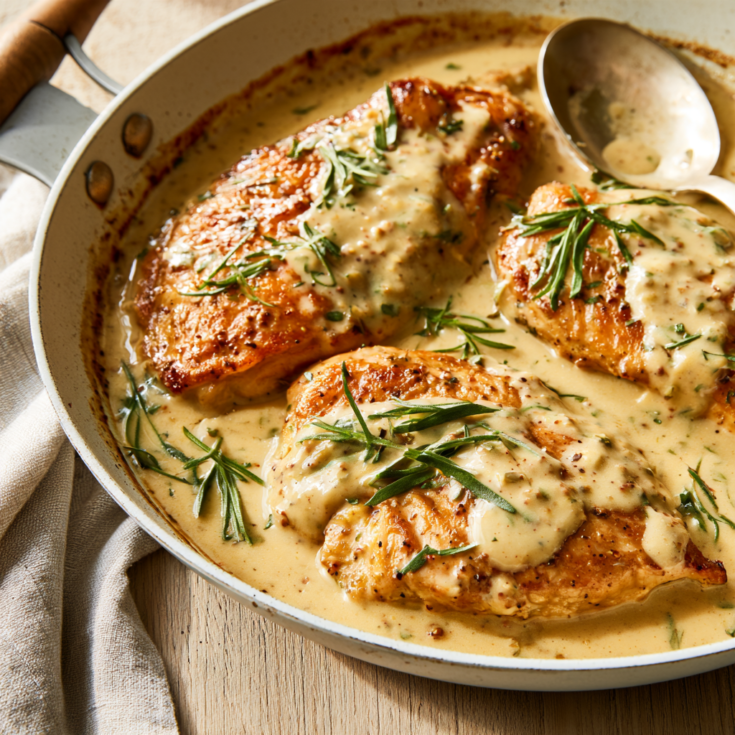
Tender, golden chicken cutlets simmered in a velvety white wine, garlic, and grainy Dijon cream sauce. A 25-minute bistro-style dinner with about 38g of protein per serving.
Ingredients
- 2 large boneless, skinless chicken breasts, halved horizontally into 4 cutlets
- 1 tsp kosher salt
- ½ tsp freshly cracked black pepper
- ½ tsp garlic powder
- 2 tbsp extra-virgin olive oil, divided
- 1 tbsp unsalted butter
- 2 cloves garlic, finely minced
- ⅓ cup dry white wine or low-sodium chicken broth
- ½ cup low-sodium chicken broth
- ¼ cup smooth Dijon mustard
- 2 tbsp whole-grain Dijon mustard
- ½ cup heavy cream
- 1 tbsp fresh chopped tarragon or flat-leaf parsley
Instructions
- Halve the chicken breasts into 4 cutlets, pound to an even ¾-inch thickness, pat dry, and season with salt, pepper, and garlic powder.
- Heat 1 tablespoon oil and the butter in a large skillet over medium-high. Sear the cutlets 4 to 5 minutes per side until golden and 165°F. Transfer to a plate and tent with foil.
- Reduce the heat to medium. Sauté the garlic 30 seconds, add the wine, and scrape up the browned bits. Simmer 2 minutes, until reduced by half.
- Whisk the Dijon, whole-grain mustard, broth, and cream in a bowl, then pour into the skillet. Simmer over medium-low heat for 3 to 4 minutes, until glossy and thickened.
- Return the chicken and juices to the pan for 1 minute to reheat. Garnish with tarragon or parsley and serve.
Notes
Notes: Leftovers keep refrigerated up to 3 days; reheat gently with a splash of broth. Not recommended for freezing. Nutrition information is an estimate.
Nutrition (per serving, estimated): About 380 calories, 38g protein, 4g carbs, 21g fat, 0g fiber, 520mg sodium.
FAQ
Can I use chicken thighs instead of breasts?
Yes. Boneless, skinless thighs work well and stay juicy, but they take longer to cook — about 6 to 7 minutes per side. Cook them to 175°F and make the sauce the same way.
Can I make this without wine?
Yes. Use an extra half cup of chicken broth and a tablespoon of lemon juice in place of the wine. The sauce will be slightly less complex but still good.
Can I use Greek yogurt instead of heavy cream?
Yes, but you need to temper it carefully. Whisk full-fat Greek yogurt with a spoonful of the hot sauce before adding it to the pan, and keep the heat low. It’s more likely to split than cream.
What’s the difference between smooth and whole-grain Dijon?
Smooth Dijon is blended into a creamy paste and brings heat and body. Whole-grain Dijon has visible mustard seeds, adding texture and a sharper bite. This recipe uses both for a reason.
What do you serve with Dijon mustard chicken?
Serve with rice, mashed potatoes, roast potatoes, egg noodles, or crusty bread to soak up the sauce. Green beans, asparagus, or a simple salad on the side.
Can I make this in a slow cooker?
I haven’t tested a slow cooker version, and the sauce depends on a stovetop reduction and a cream emulsion that a slow cooker can’t replicate. Use the skillet method.
More Chicken Breast Recipes You’ll Love
- One Pan Creamy Chicken Alfredo (No Heavy Cream & 45g Protein)
- Lemon Herb Chicken — Pan-Seared Cutlets with Lemon Butter Sauce, 15 Minutes
- Creamy Garlic Parmesan Chicken Pasta (38g Protein, Made Without Heavy Cream)
Closing
Make this Dijon mustard chicken on a weeknight when you want something that feels like a bistro dinner but takes less time than a delivery order.
The technique in the recipe card — pounding the cutlets even, keeping the pan dirty for the fond, and whisking the mustard and cream together off the heat — is what makes the chicken juicy and the sauce glossy instead of grainy.
It’s the version that earns its place in the rotation, and it’s the one I’d hand you first. If you try it with thighs or add a different herb, let me know how it turns out.